
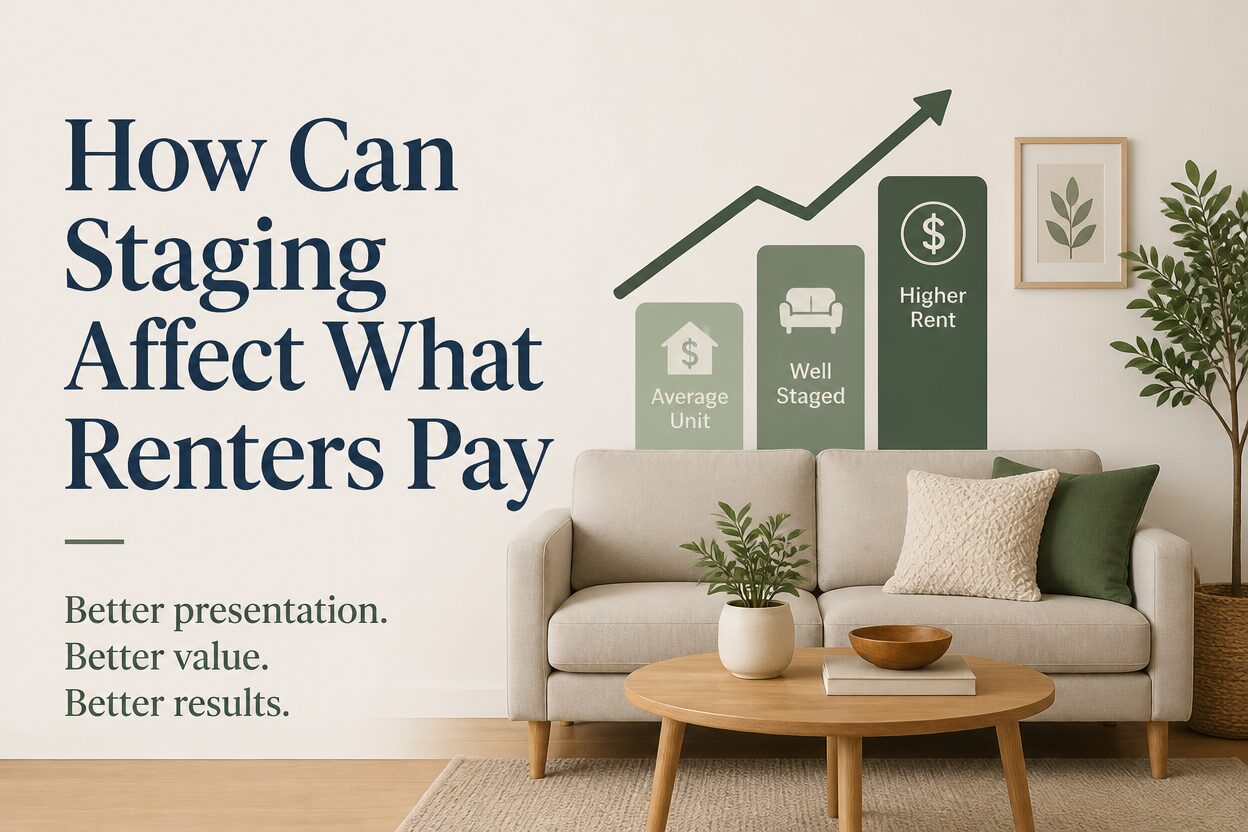
Staging changes what you feel. And what you feel quietly changes what you’ll pay.
I’ve watched renters walk into the exact same floor plan twice. Once empty. Once staged. Their brains did totally different math. Same square footage. Same neighborhood. Different rent tolerance. That’s the whole trick.
At Rental Secrets, we teach renters to spot these little pressure points during tours. Not to be cynical. To be clear-eyed. Because rent is usually a negotiation about perception.
Staging is price psychology in a hoodie
Look, staging isn’t just decorating. It’s a sales tool. Landlords and property managers know it. Good ones use it responsibly. Some use it to bulldoze your hesitation.
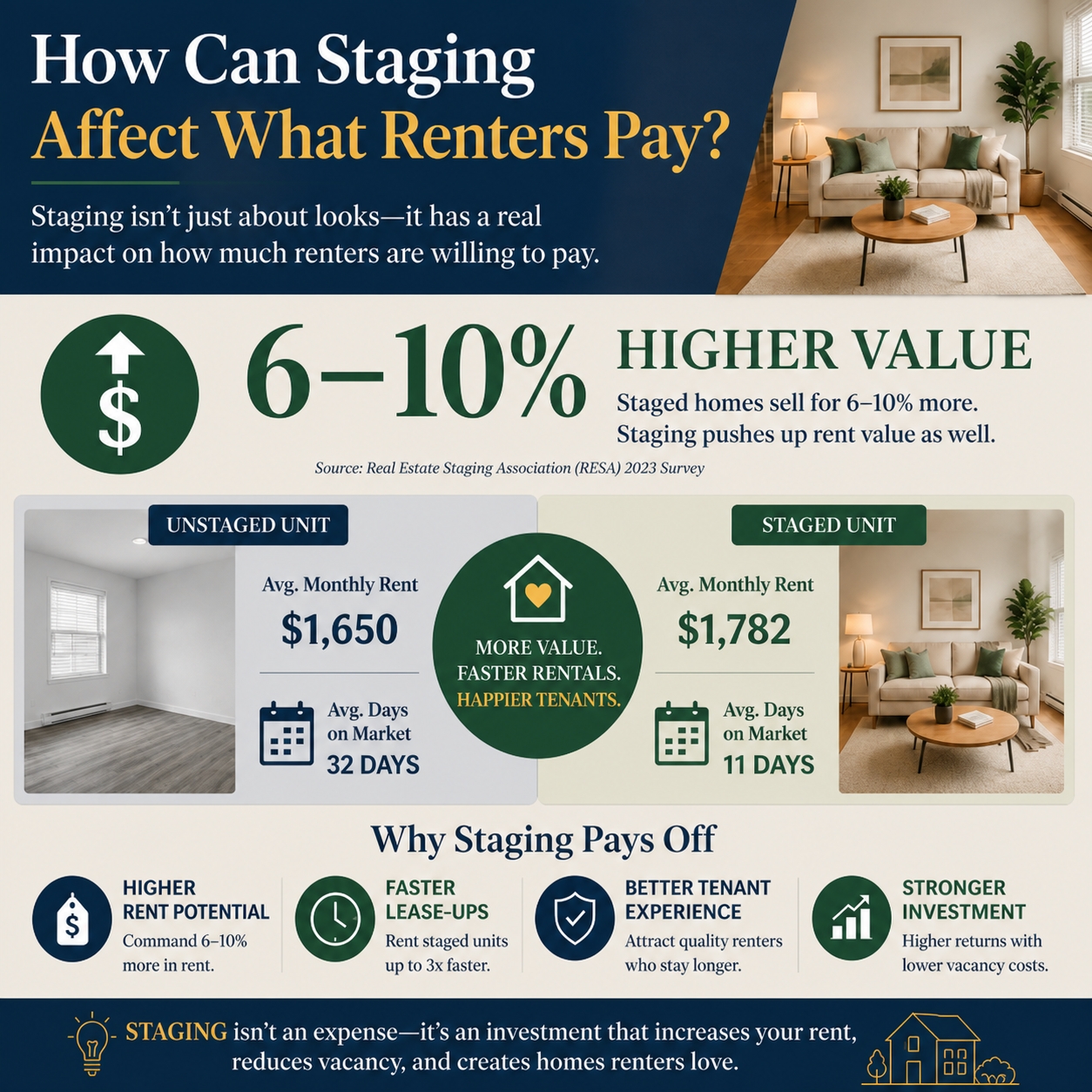
Staging does three things fast: it reduces uncertainty, it speeds up decision-making, and it makes the price feel justified. That’s why you’ll hear, “This one won’t last.” Sometimes that’s true. Sometimes it’s just staged urgency.
It makes the apartment feel bigger than it is
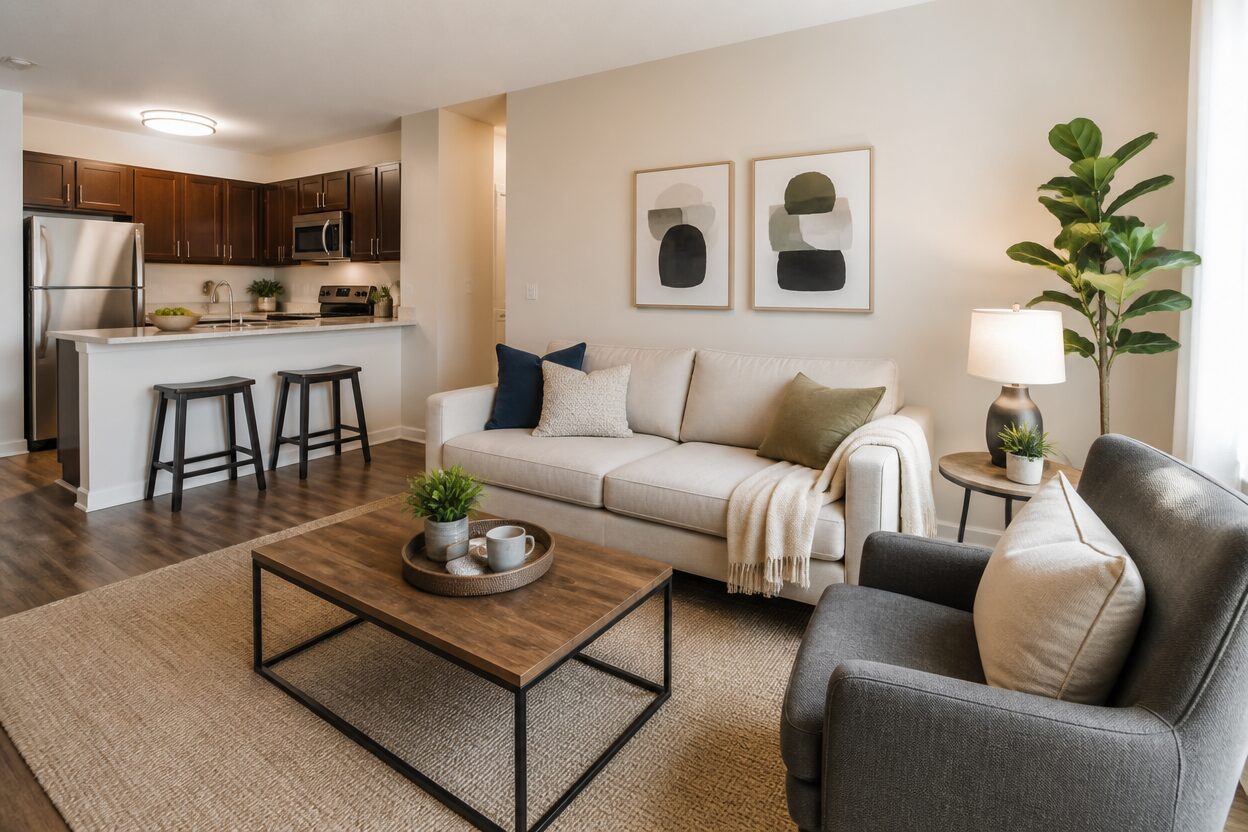
A slim sofa. A small dining set. A mirror aimed just right. Suddenly the living room feels “spacious.” Then you get home and your actual couch laughs at you.
We’ve had clients measure a staged bedroom and swear it could fit a king. Then the tape measure showed the reality. Full size, maybe a queen if you don’t mind side-stepping your nightstand forever.
It answers questions you haven’t asked yet
Staging slips solutions into your head. “Oh, a desk fits there.” “We could put the crib there.” “My exercise bike could go there.”
Once your brain starts planning your life inside the unit, you stop negotiating hard. You’re already moved in emotionally. That’s when price resistance softens.
The stuff you stop noticing when a place feels cozy
Honestly? Cozy is distracting. It’s supposed to be.
When I go on tours with friends (yes, I’m that person), I see the same pattern. The staged place gets extra forgiveness. The unstaged place gets grilled. Not fair. But real.
Staging mutes functional red flags
Smells are a big one. Staging plus a vanilla candle can cover up old carpet funk. Or pet history. Or the mystery odor that comes back when it rains.
Sound is another. Soft furnishings absorb noise. A staged unit can seem quieter. Then you move in with your own minimal furniture and suddenly you can hear the upstairs neighbor’s entire morning routine.
It changes how you interpret “value”
Here’s what I mean. A $2,300 rent with staged “luxury vibes” can feel more reasonable than a $2,150 rent that’s empty and echo-y. Same building. Different feeling.
That’s why we recommend you treat staging like makeup. Nice. Helpful. Not a structural feature.
How staging shapes negotiations without you noticing
Real talk: the negotiation starts the second you react to the unit.
If you’re starry-eyed in the living room, you’ll ask fewer hard questions. And your voice changes. I can hear it. Property staff can too. You sound sold. Which means they assume they don’t need to budge.
The staged unit creates the “anchor” price
Anchoring is simple. The first number that feels plausible becomes the reference point in your head. Staging helps that first number land smoothly.
So you’ll hear: “This is our renovated model at $X.” Later, when you see a less shiny unit, $X still haunts your brain. Even if it shouldn’t.
It speeds up your timeline, which weakens your leverage
Staging is designed to make you decide faster. Fast decisions tend to be expensive decisions.
One client of ours last month saw a staged unit and wanted to apply in the lobby. The manager was friendly. The unit was adorable. And the concessions? Vague. We slowed it down. Asked for the ledger of fees. Turns out the “deal” was eaten up by a big monthly trash charge and a mandatory package service fee. The staging didn’t cause that. It just kept the client from noticing it.
When you’re touring and trying to understand pricing, it helps to have a process. That’s why we built our property tour cost perspective tips page. It’s the stuff we actually use with renters who don’t want to overpay.
Tour tactics to neutralize staging so you can talk rent
But you don’t need to be immune to staging. You just need a few habits. Small ones. The kind you can do even if you’re nervous and the leasing agent is chatting the whole time.
Do the “empty room” reset in your head
Stand in a corner. Look at the walls. Then imagine the room with no furniture. It’s weirdly hard. Do it anyway.
I like to pick one “problem item” from my life. A desk. A sectional. A double stroller. Then I ask, “Where would this go without blocking a walkway?” If the answer is “uhhh,” the staging is doing too much of the work.
Ask pricing questions while you’re still unimpressed
Timing matters. Ask about total monthly costs early. Before you’re charmed. Before you’re picturing your houseplants in the window.
Questions we recommend keeping in your back pocket:
- “What’s the all-in monthly cost with every required fee?”
- “What internet setup is required, and what does it cost?”
- “What’s the typical renewal increase here?”
- “Is this price tied to a specific move-in date?”
- “What concessions are available, and what’s the catch?”
And yeah, ask to see an unstaged unit if possible. Or at least a unit that matches the one you’d actually get. Model units are basically movie sets.
Use staging as a negotiation opening, not a trap
This is where renters can flip the script. Staging a model unit comes at a significant cost. If a place is staged, it’s because they’re selling hard. That can mean they’re trying to hit a pricing target. Or they’ve got vacancy pressure. Or they’re competing with another property down the street.
So you can say something like, “We like the place, but we’re comparing a few options. What can you do on rent or fees if we apply this week?”
At Rental Secrets, our approach is simple. Make them talk in numbers. Not vibes. Vibes don’t pay your bills.
If you want the bigger framework we teach renters, it’s in our guide to touring rentals with a budget and negotiation mindset. It’s built for the moment when you’re standing in a staged living room trying not to get emotionally adopted by a throw pillow.
When staging is actually a good sign for renters and landlords
I’m not anti-staging. Not at all. It can be a green flag. Sometimes it’s the landlord saying, “We take turnover seriously. We care how this looks. We want stable tenants.”
For landlords and managers reading this. Staging can help you attract renters who pay on time and stay longer. But if you use staging to disguise issues, you’ll get faster move-outs. Higher churn. More online complaints. That stuff sticks.
Good staging signals maintenance and pride
Clean baseboards. Working blinds. No weird paint touch-ups. Those details often show up in staged units because someone had to prep the space properly.
So if the staging is paired with obvious care, renters tend to accept a bit higher rent. Not infinite rent. But higher. Because the risk feels lower.
Bad staging is a smoke machine
Rugs can hide damaged flooring. Air fresheners can hide moisture problems. Art can distract from cracked windows or sloppy caulk lines.
We tell renters to do one unglamorous thing. Open the cabinets. Look under sinks. Check for swelling or stains – the little signs. The cabinets under the sinks are almost never staged.
FAQs for How can staging affect what renters pay
Does a staged unit mean the rent is inflated?
Not always. Sometimes it just means the owner wants faster leasing and fewer days vacant. But staging does tend to support higher asking rents because it boosts perceived value. If you love a staged unit, keep your head. Compare it to at least one unstaged option in the same price band. Your negotiation stance gets stronger fast.
Should we negotiate differently if we toured a model unit?
Yes. Treat the model as marketing, not a promise. Ask to tour the exact unit you’d get or at least the same line and finish level. Then negotiate based on the real unit’s condition, view, noise, and move-in date. And push on fees. Fees are where a lot of “we can’t move on rent” magically becomes flexible.
One clean takeaway before you apply
Staging doesn’t change their fee schedule. Or the utilities. It changes you. Your urgency. Your willingness to forgive costs. Your perception of your negotiating power.
So tour with your eyes open. Ask cost questions early. And when the place feels weirdly perfect, pause for ten seconds. That pause can be worth a lot of money.