

Landlord retention and communication sounds soft. Like “be nice.” But it’s money. It’s time. It’s stress. And for renters, it can be the difference between a stable home and a jump in rent you didn’t budget for.
We work with renters all the time who think the only move is “ask for a discount.” Sometimes, sure. But a lot of the real savings comes from being the tenant a landlord doesn’t want to lose. That starts with how you communicate. Not with being fake. With being clear.
If you want the bigger picture on negotiating rent and using market reality instead of vibes, jump to our renter and landlord rental housing guide. That’s where we lay out the mindset shift we teach at Rental Secrets.
Why retention is the whole fight
Turnover is a headache for landlords. Vacancy, cleaning, showings, screening, paperwork. Even the good ones hate it. The not-so-good ones hate it too. That’s your opening.
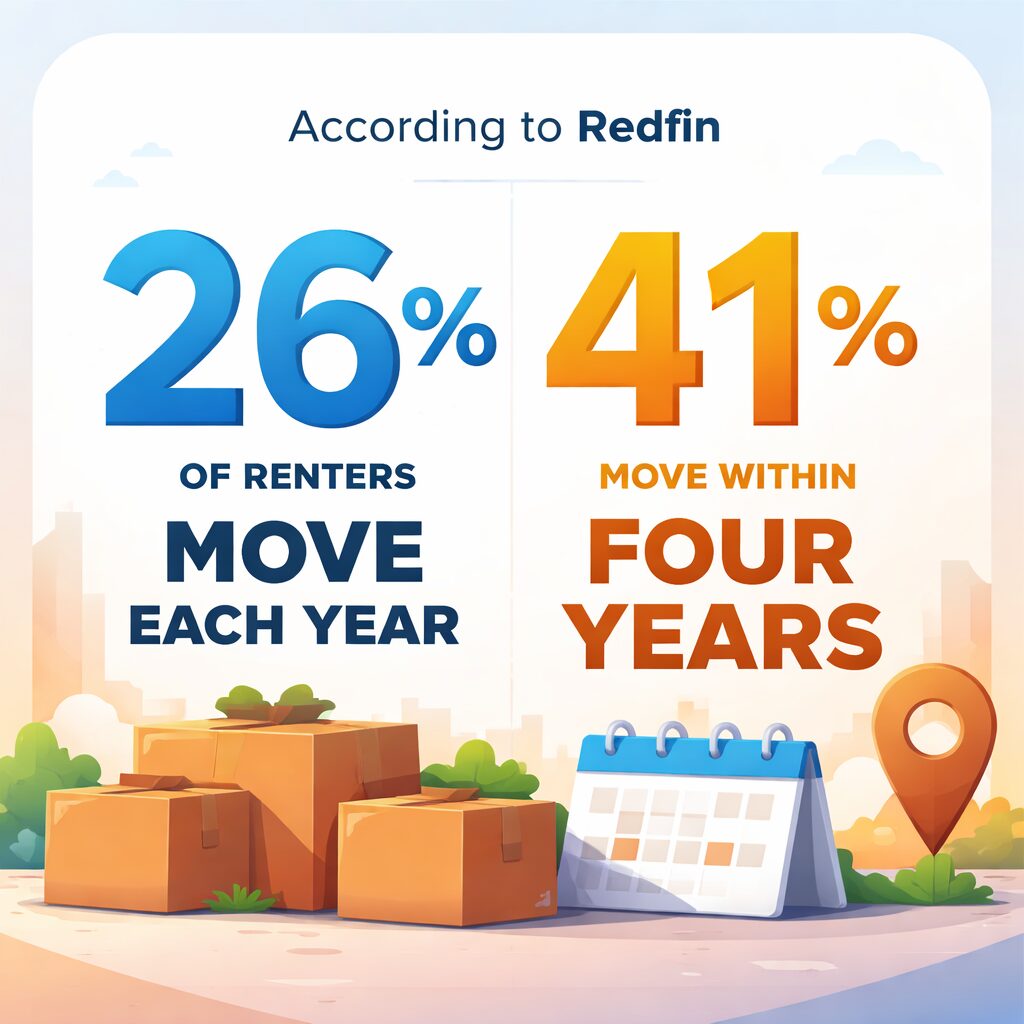
Here’s the math-y, not-emotional part. According to Redfin, 26% of renters move each year, while 41% move within four years. When churn is that normal, a landlord who finds a stable tenant tends to protect that stability.
Renters hear “retention” and think it’s only for landlords. Not really. Retention is how you keep moving costs down. How you avoid application fees. How you avoid that weird week in an Airbnb eating noodles off a paper towel while moving between rental units.
For renters: retention equals negotiating power
Look, we’ve watched this play out in real conversations. When you’re the tenant who pays on time, doesn’t create chaos, and communicates like an adult, you get taken seriously when you ask for something. A repair. A lease tweak. A softer rent increase. Sometimes a flat renewal.
And no, you don’t need to be a “perfect tenant.” You need to be predictable. Landlords love predictable. Most people don’t realize that’s what landlords are buying.
For landlords: retention equals lower risk
We’re blunt about this with property owners. You can chase top-of-market rent and churn people. Or you can price for stability and sleep. Not every market lets you choose. But most markets do, at least a little.
Also, replacing a tenant isn’t just a marketing problem. Screening is risk. A new tenant is an unknown. You don’t know if they’ll pay. You don’t know if they’ll complain to the city. You don’t know if they’ll be a nightmare with neighbors.

Communication that actually works
Most landlord-tenant communication fails for one boring reason. People wait too long. Then they send a big emotional message. Then the other side gets defensive. Classic.
Pick a channel and keep it consistent
Text feels easy. Email feels formal. Portals feel corporate. Phone calls feel “uh oh.”
We don’t care what you pick. We care that you pick one primary channel and stick to it. Consistency makes records. Records prevent arguments. And arguments are where costs appear out of nowhere.
Real talk: if something affects money or habitability, get it into writing. Even if you start with a text, follow with an email recap. Short. Clean.
Use the three-line message
This is the format we coach clients to use when they’re nervous they’ll sound “pushy.”
- Line 1: what’s happening (no backstory)
- Line 2: what you need and by when
- Line 3: how you’ll help make it easy
Example:
“Hey [Name], the kitchen sink is leaking under the cabinet. Can you send a plumber by Thursday? I’ll be home after 4pm and can leave the cabinet cleared out.”
That’s it. No rant. No “I can’t believe this.” No legal threats. Save the big guns for when you need them.
Don’t make them guess your goal
Want to renew? Say it. Want to renew but you’re worried about the rent? Say that too. Want to stay but need one change? Name it.
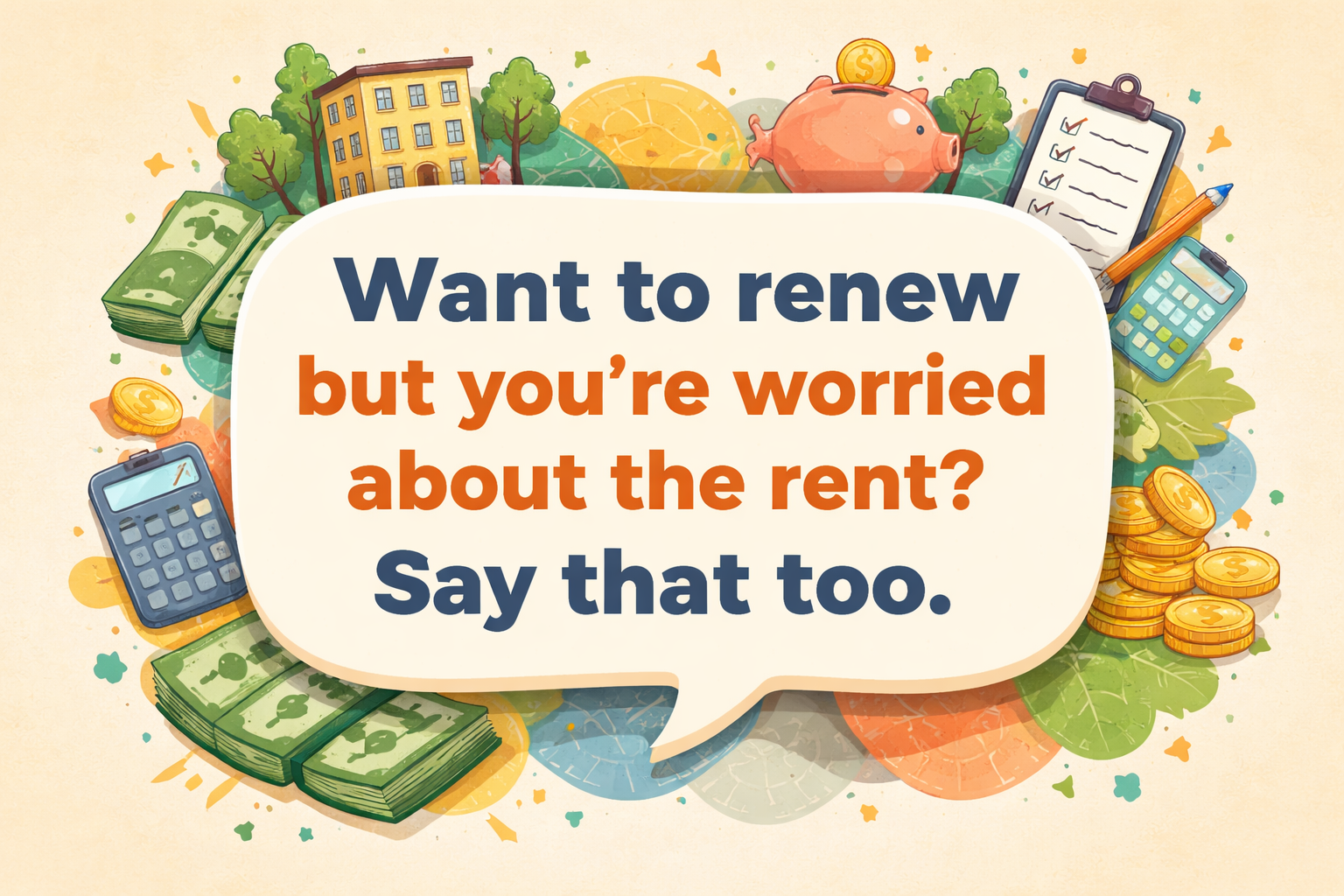
Hinting that you “liked the place” and “might stay” doesn’t cut it. The landlord will list the unit. Because why wouldn’t they? Be direct, so the landlord won’t even bother to look for someone else.
Rent renewal conversations without the weirdness
Most renters wait until they get the renewal notice, then panic. Most landlords wait until their calendar tells them to send it, then act rushed. Everyone loses.
Start earlier than you think
For renters, bring up renewal 75 to 90 days out. Yes, even if your lease says 30 days. You’re not “asking permission.” You’re signaling stability.
For landlords, giving tenants time reduces the last-minute scramble. And it cuts down the odds of an accidental holdover mess.
Why does early talk matter? Because waiting until the deadline creates sloppy decisions. The CFPB has reported that a large share of U.S. adults would struggle to cover an unexpected expense quickly, around 4 in 10 in recent survey years. When renters are pressed for time, they make expensive choices. That’s not good for the renter. It’s also not good for the landlord who wants stable payment.
Bring comps, not complaints
This is basically our whole Rental Secrets philosophy. Your leverage is market reality. Not anger. Not a sad story. Not “but I’ve been a good tenant.”
Good tenant behavior is a bonus. Pricing has to make sense. So bring two or three comparable listings. Same neighborhood feel. Similar size. Similar condition. Be honest about differences. Landlords can smell cherry-picking.
Then you make a simple ask. “We’d like to renew at X based on these comps. We’ve paid on time and plan to stay another year.”
And then. Stop talking. Seriously. Silence is your friend.
Offer trade-offs you can live with
Sometimes you won’t get the rent number you want. Fine. You can still negotiate value.
- Longer lease term
- Small upgrade instead of rent reduction
- Fixed increase schedule (so you can budget)
- Early renewal signing (stability for them)
But don’t offer what you can’t actually do. Don’t promise a two-year term if you might move for a job in nine months. Don’t offer to “handle minor repairs” unless you’re ready for the boundary problems that creates. That one backfires a lot.
Handling maintenance and complaints without burning trust
Maintenance is where relationships go to die. Because it’s inconvenient. Because it feels personal. Because it can get gross fast. Mold. Roaches. Heat not working. Fun stuff.
For renters: document like you’re calm, even if you’re not
Take photos. Date them. Keep it in a folder. Send a short message with the basic facts. Add one line about impact. “The leak is spreading into the cabinet floor.” Not “this place is falling apart.”
And when it’s urgent, say the word urgent. Don’t hint. Don’t hope they’ll infer it from your tone.
Also, don’t wait. I’ve seen tenants sit on a small leak for weeks because they “didn’t want to bother the landlord.” Then the cabinet swells, mold starts, and everyone’s mad. You didn’t save anyone any hassle. You multiplied it.
For landlords and managers: set response expectations in writing
A lot of owners say, “Just text me.” That sounds friendly. Then they miss a message, and the tenant feels ignored. Then you get a 2,000-word email at 11:58 pm. Avoidable.
Give tenants a simple repair protocol. What counts as an emergency? Who to contact after hours. What timeline can they expect for non-emergency issues? Not because you’re trying to sound corporate. Because clarity lowers conflict.
And yes, you’ll still get unreasonable requests. That’s part of it. But a written process makes it easier to say no without sounding like a villain.
Retention tactics that aren’t cheesy
Retention isn’t gift cards and “tenant appreciation” posts. Honestly, most renters don’t care. They want a stable home, quick fixes, and fair treatment.
Small upgrades that reduce complaints
You don’t need luxury. You need fewer recurring issues. Solid door locks. Good weather stripping. A faucet that doesn’t drip. A bathroom fan that actually vents.
Those upgrades cut noise. Literally and figuratively. Less back-and-forth. Less resentment. Less “you never fix anything.”
Be predictable about rent changes
Rent increases are emotional for renters. Even when they’re justified. Especially when they’re sudden.
If you’re a landlord, give a clear explanation that’s not patronizing. Tie it to market comps, insurance, taxes, or maintenance realities. Don’t overshare your entire financial life. But don’t act like it’s random.
If you’re a renter, ask for predictability as a negotiating point. “Could we lock in a 12-month renewal with a set increase, rather than month-to-month?” Budgeting loves predictability. So do landlords. Usually.
Respect the notice and legal stuff
This is where “good relationship” meets real consequences. Notices for entry, rent changes, non-renewal, and repairs. They’re not optional. They’re not vibes.
Landlords: follow your local rules to the letter. Tenants: learn what you’re entitled to so you don’t overreact or underreact. We’ve seen both. The tenant who ignores a valid notice. The tenant who thinks a casual text is a legal notice. It gets messy fast.
Scripts you can steal
Renter asking about renewal early
“Hey [Name], we’re planning ahead. We’d like to renew when the lease ends on [date]. When do you usually send renewal terms?”
Renter pushing back on an increase with comps
“Thanks for sending the renewal. We’d like to stay, but the increase is tough for our budget. We pulled a few comparable listings nearby that are coming in lower. Would you consider [your number] for a 12-month renewal? We can sign this week.”
Landlord setting repair expectations
“For non-emergency repairs, please submit through [portal/email]. We respond within 1 business day and usually schedule within 3 to 5 business days depending on vendor availability. For emergencies (no heat, active flooding, electrical hazard), call/text [number] anytime.”
Landlord addressing a complaint without getting defensive
“Got it. Thanks for flagging it. I’m scheduling a vendor and will confirm the appointment window by tomorrow at 5pm. If that timing doesn’t work, please reply with two windows that do.”
Where Rental Secrets fits in
Most renters come to us when they’re frustrated. They’ve tried being nice. They’ve tried being angry. Neither worked. So we do the boring thing. We bring the market. We clean up the communication. We make the ask land better.
And for landlords and managers, the same idea holds. Better communication reduces churn. It lowers complaints. It cuts time spent on back-and-forth that goes nowhere.
If you’re stuck in a specific situation, the move is usually not “send a longer message.” It’s sending a sharper one. With the right timing. With the right evidence. And a tone that doesn’t start a fight.
Disclaimer: This article does not constitute legal advice.