
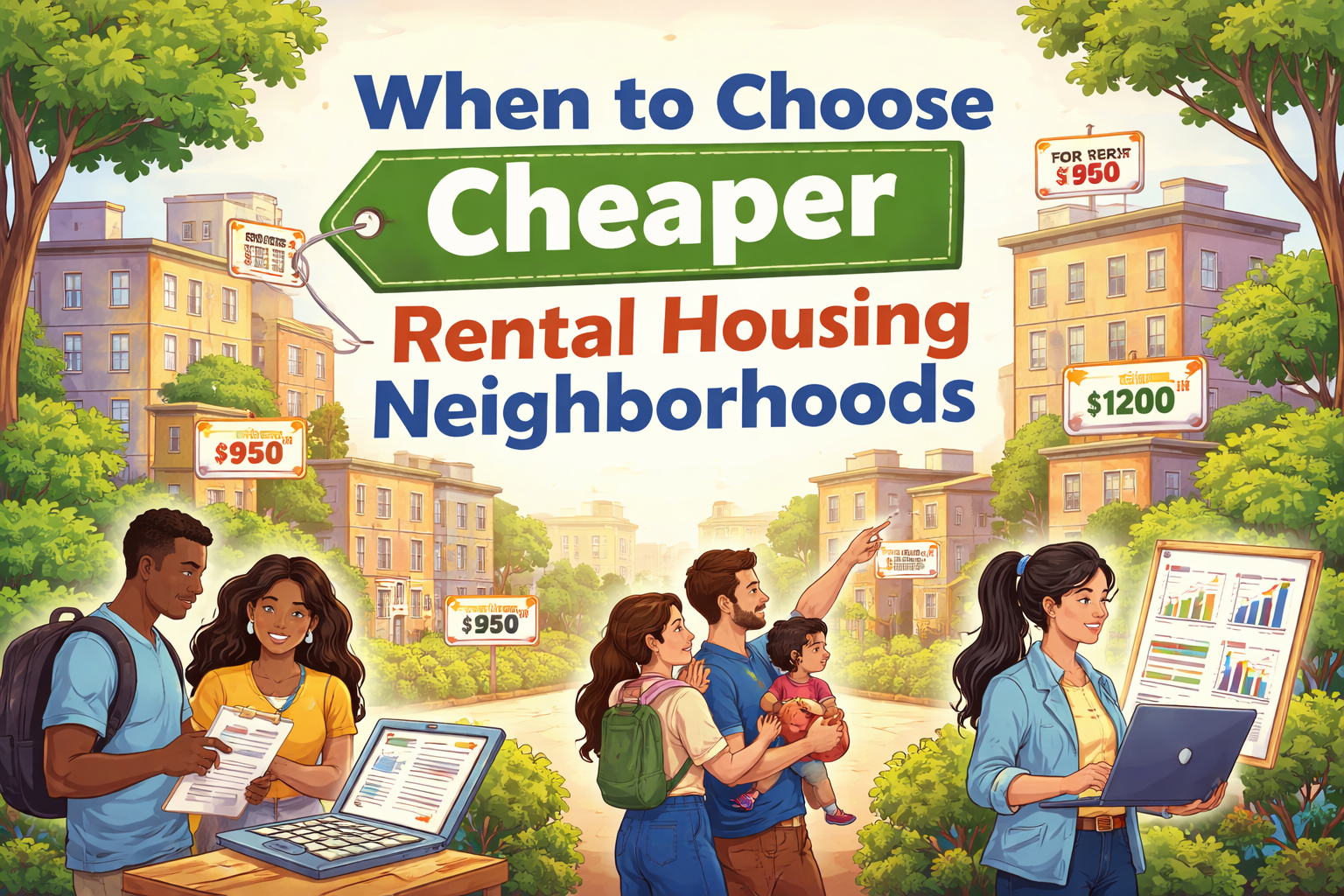
Choose a cheaper neighborhood when the math works and the stress doesn’t. That’s the whole thing. Rent is only one line item, and cheaper rent can quietly get expensive in other ways.
We work with renters all the time who think they’re being “smart” by picking the lowest rent they can find. Sometimes they are. Sometimes they just bought themselves a longer commute, higher car costs, and a landlord who’s hard to reach when the heater dies. Real talk, that’s not savings. That’s just swapping problems.
And yes. You can still negotiate in cheaper areas. In fact, you often have more room to negotiate because demand patterns can be weird. That mindset shift is basically our thing at Rental Secrets.
Cheap rent is a signal. Figure out what it is signaling
Ask what the neighborhood is trading away
Look, lower rent usually means one of three trades: distance, convenience, or certainty. Sometimes all three.
Distance is obvious. You’re farther from jobs, campus, child care, and the subway that actually runs late. Convenience is sneakier. Fewer grocery options. Fewer walkable errands. You end up paying in time. Or delivery fees. Or both.
Certainty is the one people miss. Cheaper areas can mean more turnover. More DIY landlords. More “that’s just how it is” maintenance. Not always. But often enough that we treat it like a real variable, not a vibe.
Run the all in monthly cost, not the rent
When I work with clients on this, the first thing I check is their real monthly burn rate. Not their rent number. Their whole setup.
- Commute cost (gas, parking, transit passes, rideshares on late nights)
- Commute time (because time turns into money eventually)
- Utilities and typical seasonal spikes
- Car insurance rates by zip code (this one surprises people)
- Groceries and basics (food deserts are a thing)
That list is short on purpose. You don’t need a spreadsheet addiction. You need clarity.
If you’re trying to get serious about cutting housing costs without doing something reckless, our rent budgeting and savings tips page is a good place to poke around. Not glamorous. Actually useful.

When cheaper neighborhoods make sense for renters
You’re buying flexibility, not locking yourself in
Cheaper areas are great when you need flexibility. Shorter lease. Month-to-month possibilities. A place to land while you job hunt, finish a semester, or wait out a breakup. Life happens.
If you’re a contractor or there’s talk of company relocation, you may want the cheaper area with an easy-to-sublet unit and negotiate a soft landing. You’ll save money and sleep better.
You can handle the commute, emotionally and financially
Some people can commute, and it doesn’t bother them. They like podcasts. They like quiet. They call it decompression time. Love that for them.
Other people get wrecked by it. They arrive home irritated. They stop going to the gym. They start paying for convenience because they’re tired. That’s how the cheap apartment starts eating your budget.
Families feel this even more. Child care pickup windows aren’t forgiving. Miss that cutoff twice and the “savings” are gone.
You’re okay with a simpler lifestyle for a while
In our experience, cheaper neighborhoods work best when you’re in a deliberate “simple season.” Paying down debt. Building an emergency fund. Saving for a down payment. Or just recovering from a year where everything cost more than it should’ve.
But it needs to be intentional. Not punishment. If you hate your daily life, you’ll bail early and pay moving costs.
When cheap neighborhoods are a trap. And you should pause
The unit condition hints at expensive headaches
Here’s what bugs me. People tour a unit, see peeling paint and a wobbly handrail, and tell themselves, “I can deal.” Sure. You can. The question is whether the property owner will deal when it matters.
Watch for patterns. Not scuff marks. Patterns.
Lights missing in common areas. A lock that doesn’t feel solid. Six different patches on the ceiling with no explanation. A bunch of window AC units hanging like they’re holding on by pure optimism. Those are the moments where we slow down and start asking sharper questions.
Your safety routine becomes a second job
Safety is personal. And it’s also practical. If you’re changing your behavior a lot just to feel okay, the neighborhood might be too “cheap” for you.
You stop going out after dark. You don’t want friends visiting. You’re constantly checking your car. That mental load is real. It leaks into your work and your relationships.
We’re not here to tell you what risk is acceptable. We are here to tell you to price the stress. People never price the stress.
How to shop a cheaper area like a negotiator
Use neighborhood reality to frame your offer
Most renters try to negotiate with feelings. “I love the place.” “I’m a good tenant.” “My budget is tight.” Landlords hear that all day. It doesn’t move numbers.
At Rental Secrets, we teach renters to talk like the market. Comparable rents. Vacancy time. Concession trends. Lease start dates. That kind of language. It’s not being cold. It’s being credible.
Cheaper neighborhoods often have more uneven demand. One street rents fast. The next one sits for 30 days. That’s opportunity. But only if you’re paying attention.
Ask questions that reveal the landlord’s pressure points
Try asking:
“How long has it been available?”
“Any other applications in?”
“What’s included, exactly, and what’s the usual utility cost?”
“Who handles maintenance, and what’s the typical response time?”
You’re not interrogating. You’re gathering facts. The answers shape what you ask for. Lower rent. Free parking. A carpet cleaning before move in. A longer lease with a smaller increase. Different moves for different situations.
If you want the bigger picture on renter strategy and how landlords actually think, our rental housing guide for renters and landlords is the place to look. The psychology part matters more than people expect.
Landlords and managers. Cheap neighborhoods can still mean stable tenants
Retention comes from reducing uncertainty
If you’re a landlord reading this, you already know cheap rent doesn’t automatically create loyalty. Stable tenants want predictability. Clear maintenance processes. No weird surprises at renewal.
One thing we see work: spell out expectations early. How to submit requests. What’s considered an emergency. Typical timelines. Tenants calm down when the system is obvious.
Offer the kind of concessions renters actually value
In more price sensitive areas, the best “deal” often isn’t dropping rent forever. It’s targeted relief.
Examples we’ve watched reduce turnover: including internet, covering lawn care, offering a small renewal credit, or doing one high-impact upgrade that makes the unit feel cared for (like better lighting or secure locks). Not flashy. Just smart.
And renters notice. They talk. They stay. They pay on time more often. It’s not magic. It’s basic relationship math.
FAQs for When to choose cheaper rental housing neighborhoods
How do we compare neighborhoods without obsessing over crime maps?
Use a few inputs. Visit at different times. Talk to someone local if you can (a barista, a cashier, a neighbor walking a dog). Check how the building is managed. And pay attention to what you change about your routine when you’re there. Your body usually tells you before your brain does.
What’s a reasonable rent discount for choosing a less convenient neighborhood?
Usually it needs to be big enough to cover the add-ons you’re accepting. Commute costs. Time loss. Higher insurance. Or paying for parking because street parking is chaos. In negotiations, we anchor to comparable units and days on market more than some universal “discount.” But if the rent drop doesn’t change your monthly life in a noticeable way, it’s probably not worth the trade.
Disclaimer: This article does not constitute legal advice.