

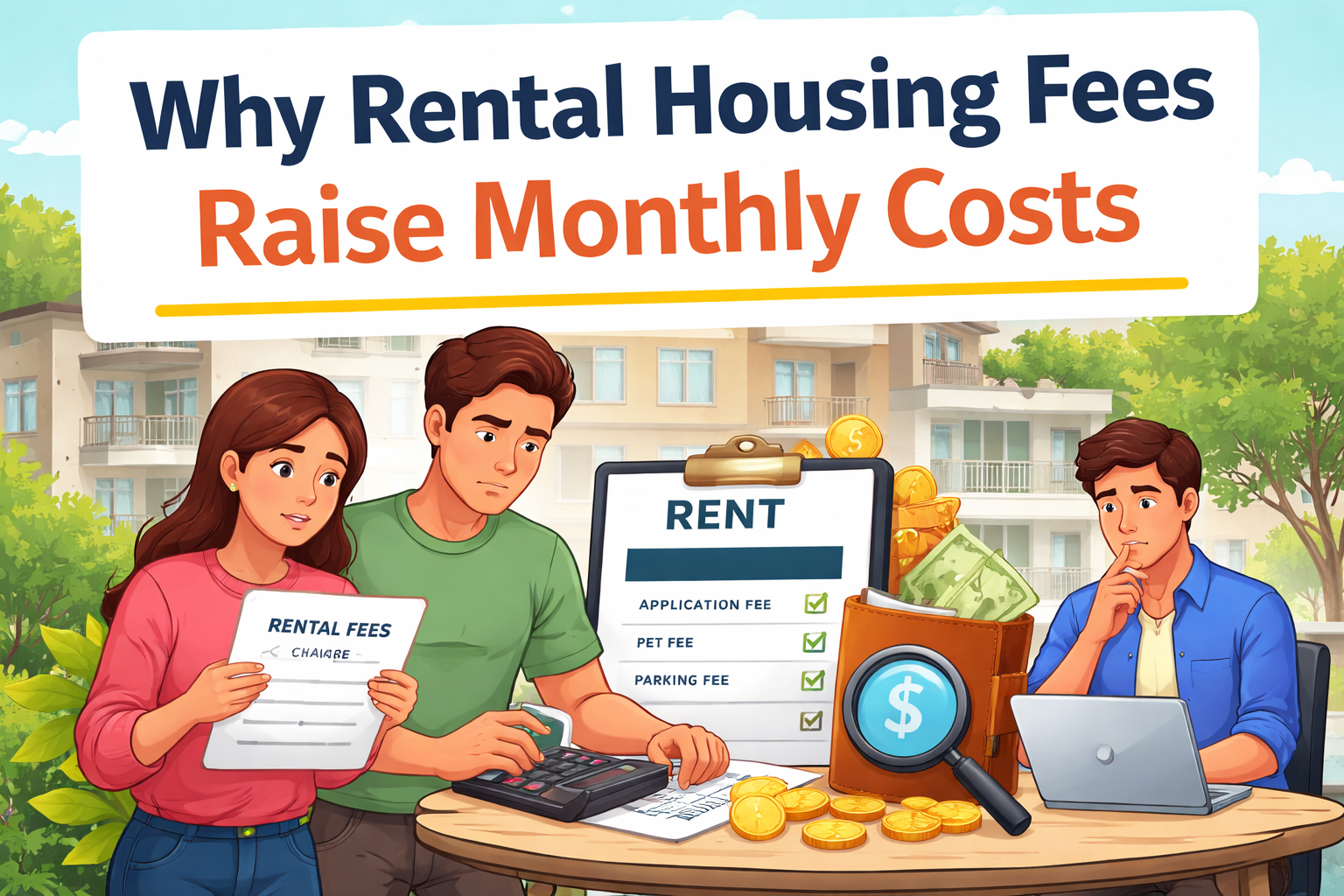
Rental fees are the quiet rent increase. That’s the whole thing. You think you found a place at $1,850. Then the add-ons show up, and suddenly you’re paying $2,050, and you’re not even sure why.
We see this constantly at Rental Secrets. Someone comes to us, annoyed at “rent being high.” But the rent wasn’t the only number. The fee stack did the damage.
Fees feel small because they show up in the wrong places
Look, your brain treats $35 differently than $1,850. Even when you pay that $35 every single month forever.
The ad shows base rent, while your bank account pays the total
Listings usually highlight the prettiest number. Base rent. Sometimes they bury the rest in a line like “additional fees apply.” That line should set off alarms. Quiet ones. But still alarms.
When we work with renters on this, the first thing we ask for is the full breakdown. Not just the lease. The fee schedule. The utility addendum. The pet addendum. The parking rules. All of it. Because the monthly cost is a math problem, not a vibe.
Monthly fees are basically rent with a costume
Some fees are legit pass-through costs. Some are “rent but we named it something else.” The difference matters. A lot.
Rent is the headline. Fees are the fine print. And fine print has a habit of becoming your reality.

The most common fee categories that jack up your monthly bill
Honestly? Most renters don’t miss the rent. They miss the little charges that pile up like laundry.
Admin, service, and technology fees
These are the fees that make people say, “Wait, what am I paying for?” Sometimes it’s a resident portal fee. Sometimes it’s a “package service” fee, even if you barely get deliveries. Sometimes it’s a flat “admin” charge every month because… reasons.
Here’s what I tell clients: when a fee is vague, ask for the exact service tied to it and whether it’s optional. If it’s not optional, treat it like rent. Because it acts like rent.
Utilities that aren’t really utilities
Water, sewer, trash, gas, electric. Normal. But the billing method is where costs get weird. Ratio utility billing systems. Shared meters. “Allocated” charges. And then a billing fee on top of the bill. Fun.
I used to assume “tenant pays utilities” was straightforward. Turns out it can mean ten different things depending on the building. Some buildings are fair. Some are chaotic. Most are somewhere in between.
- Flat utility fee (predictable, sometimes overpriced)
- Submetered (more accurate, can spike with usage)
- RUBS allocation (your bill depends on neighbors too)
- Mandatory trash valet (convenient, but you’re paying for it)
- Billing and processing charges (small, irritating, persistent)
If you’re trying to get serious about budgeting, our rent saving and budgeting resources can help you spot these patterns before you sign. That’s the moment that matters.
Why landlords charge fees in the first place
Real talk: not every fee is a cash grab. Some are. Some aren’t. Landlords and property managers have their own pressure cooker going on.
Cost recovery is real. So is risk management
Buildings have expenses that don’t neatly fit into “rent.” Water bills move. Insurance moves. Property taxes move. Maintenance costs jump when a vendor changes pricing. Owners hate surprises. Tenants hate surprises too. Everyone hates surprises.
Fees can be a way to match a cost to a specific behavior or service. Pet rent is a classic example. Pets can raise wear-and-tear and sometimes insurance costs. Not always. But often enough that managers price it in.
And deposits or monthly “risk fees” (like liability coverage requirements) are usually about protecting the owner from damage claims and lawsuits. That’s the business side. Not romantic. Just true.
Pricing psychology. Yes, it’s on purpose
Now the part that bugs people. Some pricing is designed to keep the advertised rent lower so the unit looks cheaper in search results. Then the fees show up later. Same total cost. Different presentation.
We teach renters to treat the ad rent like the starting bid. Not the final number. Because in our experience, the “final number” is what determines whether you can actually stay for a second year without stress.
Landlords reading this. You already know. Fee transparency is retention. Tenants who feel tricked don’t renew. They also don’t take care of the place the same way. That’s human nature, not a moral failing.
How fees sneak into lease negotiations and renewals
Most renters try to negotiate rent only. And then they sign a lease loaded with add-ons. That’s like arguing over the price of a flight and ignoring the baggage fees.
Ask for the fee sheet early. Then negotiate the right thing
Here’s what I say on calls. “Can you send me a full list of recurring monthly charges and one-time move-in charges?” Simple sentence. It changes everything.
Once you have the list, you can negotiate in a way that doesn’t feel emotional. It’s just math. And landlords respond better to math than to frustration. Most of the time.
Some fees are fixed by company policy. Fine. But you can still negotiate value. Maybe they won’t remove the $50 parking fee. But they might include an additional spot. Or swap to a cheaper spot. Or waive it for the first six months. Those are real concessions we’ve seen.
Renewals are where fee creep hits
Watch renewals closely. A landlord might keep your rent increase modest, then bump the “service fee” by $20, add a new trash program, or start charging for something that used to be included. It isn’t presented as a rent hike. But it lands the same.
If you want the broader approach we use, start with our main renter and landlord guide to understanding the rental process. It’s where we lay out how owners think and how you can negotiate without burning the relationship.
What to do next to keep monthly housing costs under control
So what actually works? Not “manifesting a cheaper apartment.” Actual moves.
Build a true monthly cost number before you apply
Before you pay an application fee, build your all-in monthly cost. Base rent plus every recurring fee plus a realistic utility estimate. And don’t forget parking, pet charges, and renter’s insurance.
If a property won’t provide a fee list up front, that’s information. Not always a dealbreaker. But it’s information.
Use fees to negotiate like a calm adult
When you negotiate, pick one or two items. Don’t fire off a list of ten demands. It reads as anxious. It also gets ignored.
Try something like: “We’re ready to sign this week. But the monthly total is higher than we budgeted because of the recurring fees. Can we waive the $35 tech fee, or reduce base rent by the same amount?”
That approach keeps it respectful. It keeps it logical. That’s how we do it at Rental Secrets, and it tends to preserve goodwill while still getting you a better deal.
FAQs for Why rental housing fees raise monthly costs
Are rental fees legally considered rent?
Usually no. Rent is typically the amount labeled as rent in the lease. Fees are separate line items. But for your budget, it’s all the same money leaving your account each month. Also, some local rules cap certain fees or require specific disclosures. The lease wording and your city or state rules matter a lot here.
What fees can I realistically negotiate?
In our experience, you’ll have the best luck with fees that are owner-controlled, like parking, storage, amenity fees, and sometimes admin or technology charges. Utilities are tougher when they’re pass-through or third-party billed, but you can still ask for clarity and caps. One-time move-in fees can sometimes be reduced or credited, especially if you’re signing a longer lease or moving in during a slower season.
Disclaimer: This article does not constitute legal advice.