
Your lease isn’t “just paperwork.” It’s the rulebook for your money. And your stress. When we review leases at Rental Secrets (or help clients get ready for one), we read them like someone’s about to test the limits. Because someone will. Sometimes it’s the landlord. Sometimes it’s the tenant. Sometimes it’s a roommate you barely know.
I’ve watched smart people sign a lease in five minutes. Then spend five months fighting over a $250 “mystery fee.” So yeah. Let’s talk about what a rental housing attorney actually looks for. The stuff that quietly costs you.
Rent math and fee traps hiding in plain sight
Real talk: most lease drama is money drama. Not because anyone’s evil. Because they use vague numbers.
Base rent, add-ons, and sneaky timing
When we go line by line, we want the rent amount, the due date, the grace period, and the late fee formula to all agree with each other. Sounds basic. It’s not.
If rent is due on the 1st, there’s a grace period until the 3rd, and late fees begin after the 2nd. These three lease terms can be interpreted as being in conflict with each other. The property manager chose the strict version, of course. An attorney will flag that as ambiguity and push for clean language.
And then the add-ons. Parking. Trash. “Resident benefits package.” HVAC filters billed monthly (yes, that’s a thing). If it’s mandatory, it should be listed like rent. With an amount. Not “as assessed.”
How increases and renewals actually work
This is where budgeting people get burned. Some leases sneak in an automatic renewal or a rent bump with vague notice rules. Or a “month-to-month conversion fee” that basically punishes you for not re-signing fast enough.
We usually push for clarity on three points: when you’ll be offered a renewal, how much notice either side must give, and what happens if you do nothing. Doing nothing shouldn’t cost you a kidney.
And if you’re trying to negotiate, this is where our approach at Rental Secrets tends to land. Landlords think in terms of risk and predictability. Not vibes. So we look for the parts of the lease that create landlord risk (unclear renewal timelines, messy fee language) and propose cleaner terms in exchange for pricing flexibility. Yes, you can do that.

Security deposits and move-out language that decides who pays
The deposit section reads like it’s about fairness. It’s really about leverage. Who has it at move-out?
What counts as damage versus normal wear
Most leases say something like “tenant responsible for damages beyond ordinary wear and tear.” Great. But what’s ordinary? Paint scuffs. Tiny nail holes. Worn carpet in a high-traffic area. That’s the battlefield.
An attorney will look for definitions, examples, or references to a move-in condition report. If the lease is silent, we’ll encourage clients to create their own paper trail anyway. Photos. Video. Dated notes. Boring. But, powerful.
This bugs me: leases that treat professional carpet cleaning as mandatory, no matter what. If the carpet isn’t dirty, why are you paying? Some states limit this. Some don’t. Either way, the clause should be specific and tied to actual condition, not just “because we said so.”
Deadlines, itemized statements, and where the deposit can vanish
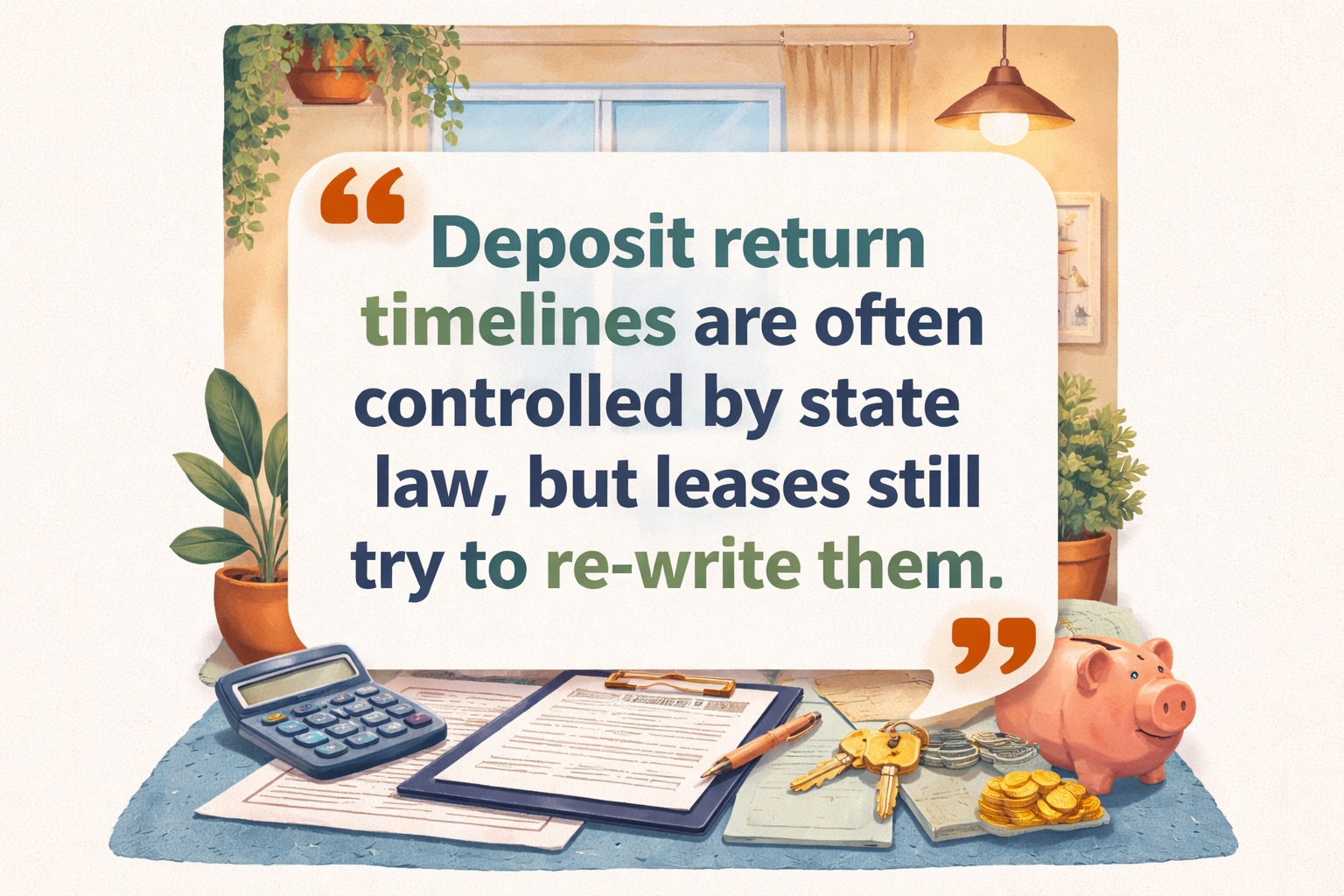
Deposit return timelines are often controlled by state law, but leases still try to rewrite them. If the lease gives the landlord longer than the state allows, that’s a red flag.
Also, the “itemized deductions” requirement. We want it in writing. We want an address for notices. And we want the lease to say what happens if you don’t provide a forwarding address (spoiler: you still have rights most of the time, but it gets messy).
If you’re working on better lease terms, the broader context matters too. We keep a running set of negotiation ideas inside our lease terms and negotiation resources. You don’t need to memorize the law. You need to know where landlords tend to push.
Repairs, habitability, and the slow leak that becomes your problem
Repairs feel like “maintenance stuff.” But they’re really about money and accountability. Who pays? Who responds? How fast?
Who is responsible for what
Look for the split between landlord maintenance and tenant maintenance. Filters. Light bulbs. Yard care. Pest control. And the big one: plumbing backups.
I’ve seen leases that make the tenant responsible for any clog, period. That sounds fine until the building has old pipes and you get a main-line backup. Attorneys look for language that shifts building infrastructure problems onto tenants. That shift is common. It’s also negotiable sometimes, especially if you’re signing in a competitive market where vacancy is rare.
And “tenant will keep premises in good condition” is normal. But “tenant accepts premises as-is and landlord makes no warranties” is where things start to smell off. Habitability isn’t optional in most places.
Notice procedures and the proof problem
Most tenants report repairs by texting. Totally human. Not always enough.
We look for the required method of notice. Portal. Email. Certified mail. If the lease says “written notice” and you only texted, the landlord may argue they never received proper notice. That matters when you’re requesting rent credits or trying to break a lease due to conditions.
Here’s a quick checklist we use when coaching renters. Keep it simple:
- Submit the request through the official channel (portal/email), not just text
- Describe the issue and the impact (leak under sink, water pooling, cabinet swelling)
- Ask for a timeline for entry and repair
- Take photos before and after
- Save every response, even the unhelpful ones – especially the unhelpful ones
Landlords reading this. You’ll like this too. Clear notice rules plus fast responses reduce conflict. And they reduce turnover. Tenants don’t move because you raised rent $50. They move because they feel ignored.
Rules that control your life more than you think
These sections don’t look expensive. They become expensive.
Occupancy, guests, roommates, and subletting
Guest policies are a classic. “No guest more than 7 days.” Or “14 days in any 6-month period.” If you’re dating someone, or you’ve got a parent visiting for a few weeks, this suddenly matters.
An attorney checks whether the guest rule is enforceable and how it interacts with occupancy limits and local codes. Also, what’s the penalty? A warning? A fee? A lease violation? Some leases jump straight to termination language. That’s intense.
Roommates. If you’re jointly and severally liable (most leases), you’re on the hook if your roommate disappears. No one explains that at the showing. It should be in your mental budget, though. One missed roommate payment can become your full payment. That’s the deal.
Entry, privacy, and “we can show the unit anytime”
Entry clauses get sloppy. “Landlord may enter at any time” is the kind of line that makes attorneys sit up. Most states require notice except emergencies. Even where notice isn’t strictly defined, reasonable notice is the standard landlords live by if they want to stay out of trouble.
Also, showing the unit before move-out. Some leases allow daily showings with minimal notice during the last 30 or 60 days. If you work nights, have kids, or just value peace, negotiate that. Limit showing hours. Require 24-hour notice. Put it in writing.
And yes, we talk about this stuff inside our rental housing guide for renters and landlords because it’s not just legal theory. It’s lifestyle. It’s sleep. It’s your peace of mind.
Default clauses, legal fine print, and how disputes actually play out
This is the “nobody reads it” part. It decides what happens when things go sideways.
Attorney fees, collection costs, and the scary add-ons
Many leases say the “prevailing party” in a dispute gets attorney fees. Some say only the landlord gets fees. Some add collection fees, admin fees, and interest.
An attorney will check whether those fee clauses are mutual (fairer) and whether they’re even allowed in your state as written. For renters trying to control downside risk, this matters. A small dispute can turn into a big bill fast.
One more: confession of judgment clauses. Rare in residential leases, but they pop up in certain areas and older forms. They’re a big deal. If you see language that sounds like you’re “waiving” your right to notice or a hearing, slow down.
Where disputes happen and what law applies
Venue and governing law clauses are usually boilerplate. Still. If your lease says disputes must be handled in a faraway county, that’s a practical barrier. That’s time off work. Childcare. Gas. All of it.
Also, watch arbitration clauses. Sometimes they’re fine. Sometimes they restrict your ability to bring claims, join with other tenants, or get certain remedies. Attorneys read these with a squint. Because the consequences are real and the language is slippery.
At Rental Secrets, we’re not trying to turn renters into litigators, nor are we attorneys. We’ve just read a lot of leases and are trying to keep you out of the mess. Most of our wins come from boring clarity up front. Cleaner clauses. Better documentation. Negotiation based on market reality, not emotion. Landlords tend to respect that. Even the tough ones. But it never hurts to have an attorney go over your lease if questions linger.
FAQs for What a rental housing attorney reviews in leases
Can I ask a landlord to change the lease, or is it take it or leave it?
You can ask. You might not get everything. But plenty of landlords will adjust terms when the request is specific and reasonable. Shorter notice for renewal decisions. Clearer late fee language. Showing windows. Even deposit and pet terms sometimes. We’ve seen it happen most often when the renter presents it as risk reduction and smoother operations, not a complaint.
What lease clauses usually cost renters the most money?
In our experience: vague fee sections (admin, package, “benefits”), harsh late fee structures, move-out cleaning requirements that aren’t tied to condition, and repair clauses that shift building problems onto tenants. Add automatic renewal penalties to that list. Those are the ones that blow up budgets without warning.