

Subletting can save your budget. Or it can blow up your lease. Both happen all the time. We’ve seen clients cut their rent in half with a clean, landlord-approved sublet. We’ve also seen surprise eviction notices land because someone “just found a roommate” and called it a sublet after the fact.
So here’s the lawyer-ish take, translated into normal-person language. With a little Rental Secrets attitude sprinkled in. Calm. Practical. Slightly suspicious of vague promises.
Subletting is not the same thing as getting a roommate
The labels matter because the lease cares
Real talk: tenants mix up sublet, roommate, and assignment constantly. Landlords do too. But the lease usually doesn’t.
Most of the time, a “roommate” situation means you’re still living there. You’re still the main tenant. You’re not handing over the place entirely.
A sublet usually means you’re letting someone else live in the unit (or a room) for a set time, while you remain on the lease. You’re still responsible. Rent, damage, noise complaints. All of it. Even if the subtenant is the nicest person alive. Nice doesn’t pay judgments.
An assignment is different. That’s you handing the lease over. New person steps into your shoes. In some states that’s treated very differently. In others, landlords write the lease so it’s basically “no” unless they say “yes.”
Where people get burned
I’m going to be annoying for a second. Because this is where the money leaks out.
People say “sublet” when they mean “I’m letting my friend crash for 2 months and they’ll Venmo me.” That’s the one that causes problems. Not always. But often enough that we ask about it in our first call with clients.
Also. If your lease says “occupants must be approved” and you ignore it, you’ve just handed your landlord a tool. They might never use it. Or they might use it the moment you request a repair, ask for a renewal discount, or push back on a fee. That’s the dynamic. It’s not personal. It’s leverage.

The lease clause you can’t afford to skim
Find the exact subletting language
Look, the lease is the battlefield map. We’re not being dramatic. We’re being accurate.
When we work with renters at Rental Secrets, one of the first things we check is the “assignment and subletting” section. It’s usually buried near the back. It tends to include:
- whether subletting is banned outright
- whether it’s allowed with written consent
- what counts as “consent” (email? formal addendum?)
- application fees or screening requirements for the subtenant
- limits on how long, and whether you can charge more than your rent
That last one gets spicy. Some leases allow subletting but ban “profiting.” Some cities also regulate that. And no, “it’s just $200 extra because my couch is nice” isn’t a legal argument.
Consent clauses can be reasonable or nasty
Many leases say the landlord can’t “unreasonably” withhold consent. Sounds good. Feels fair.
But “unreasonable” is fuzzy. Landlords tend to say no for reasons like poor credit, weak income, bad rental history, too many occupants, or the subtenant refusing to sign house rules. Those can be seen as reasonable.
And sometimes landlords just say no because they don’t want churn. They want stability. They don’t want a new person every 4 months. From their side, that’s risk management. From your side, it’s your life.
If you want a bigger picture on how leases usually handle this stuff, our renter and landlord guide to rental rules and lease strategy gives the context we end up explaining on repeat.
How a rental housing lawyer thinks about risk
Liability sticks to the original tenant
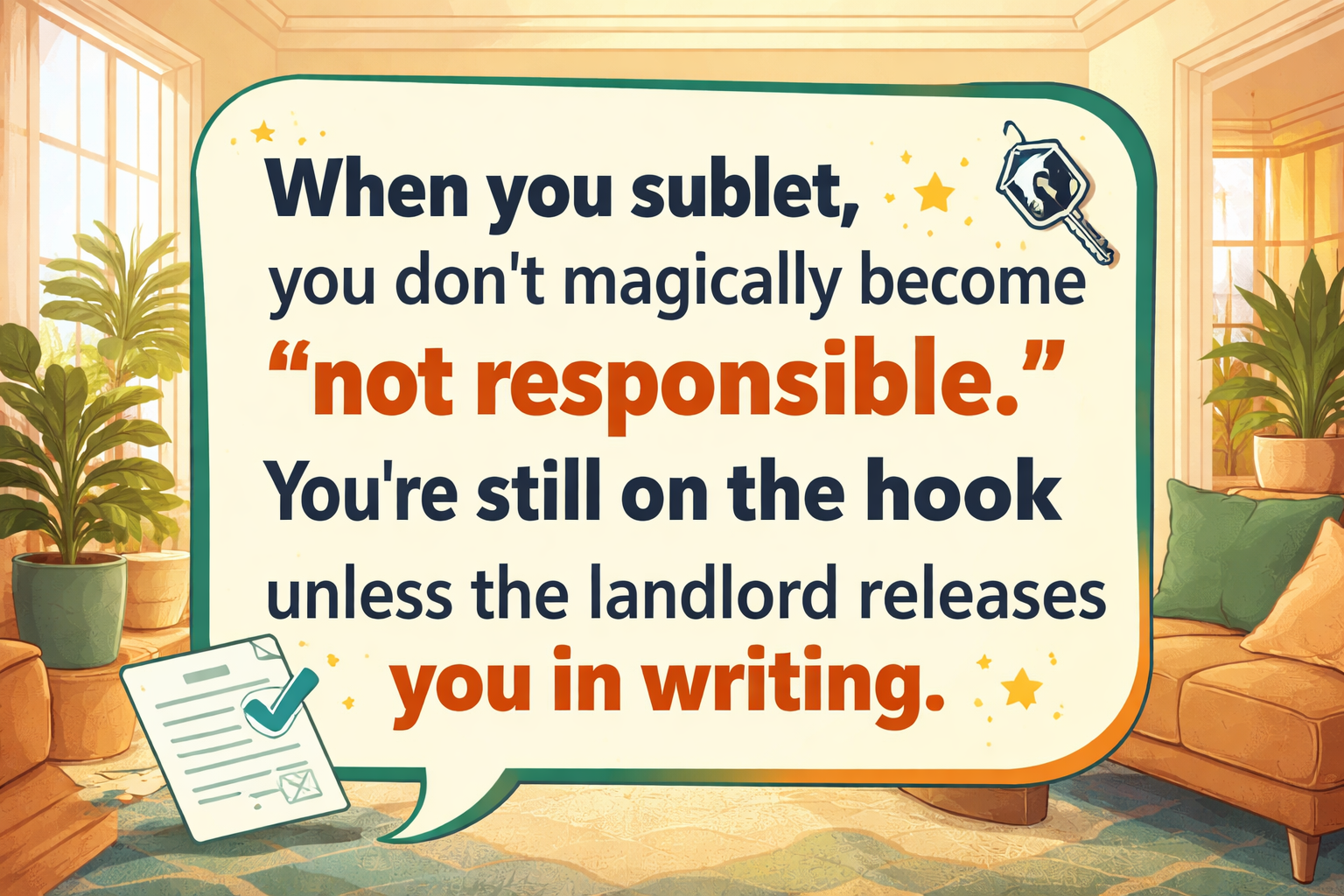
Here’s the thing. When you sublet, you don’t magically become “not responsible.” You’re still on the hook unless the landlord releases you in writing. Not “they said it’s fine on the phone.” Not “the property manager nodded.” In writing.
We’ve watched this play out in real time. Subtenant stops paying. The landlord doesn’t chase the subtenant first. They chase you. Because you’re the one they have a contract with. The subtenant might be a ghost. You aren’t.
Same for damage. We had a client who sublet a furnished place for a summer internship. The subtenant scratched the floors moving a desk. Security deposit gone. Then the landlord billed extra. The client was furious. Totally understandable. Also totally predictable.
Insurance and habitability issues aren’t just paperwork
Most renters don’t think about renters insurance until something goes wrong. Fire. Theft. Water damage. It’s always boring until it’s not.
If your subtenant causes a loss, your insurance may or may not play nicely, depending on your policy and whether the unit was your “primary residence.” Some policies hate subletting. Some don’t care. Many are vague. Vague is not your friend.
Habitability gets weird too. If the unit has mold or no heat and your subtenant is the one living there, they’re the one experiencing the problem. But you’re the one with the lease rights. That mismatch creates delays and drama. A lawyer sees that coming from a mile away.
If you want more roommate and shared living strategy, not just the legal edge cases, we keep a bunch of practical stuff in our roommates and shared living resources. It’s the stuff people wish they’d read before someone’s partner “basically moved in.”
Getting landlord approval without making it awkward
Ask like a professional, not like you’re confessing
Most renters approach this emotionally. “I’m stressed.” “I need help.” “Please.”
Landlords don’t respond best to that. Some do. Many don’t. What works better is treating it like a simple risk review.
We usually suggest you send a short message that answers the landlord’s unspoken questions. Who is it. How long. Why. How will they be screened. Who pays. What’s the plan if they don’t pay.
And yes, tone matters. You’re not asking for a favor. You’re proposing a controlled change that keeps rent coming in on time. That’s the angle.
Offer clean paperwork
Want to reduce friction? Make it easy for them to say yes.
In our experience, landlords relax when they see structure. Like:
1) A written request with dates.
2) The subtenant’s basic info (and permission to run screening if required).
3) A proposed sublet agreement.
4) A plan for keys, parking tags, building fobs, that sort of thing.
Less information is not safer. Turns out it often reads as sneaky. Landlords have been burned, too. They’re scanning for chaos. Don’t look chaotic.
Also. Don’t surprise them with “by the way, the person is moving in tomorrow.” That’s how you get a fast no. Or a fast notice.
The money side of subletting and why it affects negotiations
Subletting can strengthen your hand, or weaken it
This is where our Rental Secrets brain kicks in. Because subletting is not just a housing hack. It changes your negotiating position.
If your landlord believes you’re trying to sublet because you’re desperate, they may assume you’ll accept almost anything. In the landlord’s brain that translates into charging fees, creating strict terms, or just “no” for an answer.
If your landlord sees you as organized and low-drama, they tend to treat you like a long-term asset. That’s when you can ask for reasonable approvals. And sometimes, yes, it even sets up renewal conversations later. Not in a cheesy way. In a practical way. People keep tenants they trust.
Don’t ignore local rules and rent control quirks
Some cities treat subletting like its own universe. Rent-controlled units. Tenant protection ordinances. Limits on charging above legal rent. Required disclosures. Registration. The works.
And here’s a weird one. In a few places, an unauthorized sublet can trigger lease termination that’s faster than you’d expect. Not always. But it’s a risk you should know you’re taking before you take it.
If you’re subletting to cut costs, we’re into that. We love a clean budget win. Just don’t do it in a way that creates a bigger bill later. Legal fights are not budget friendly.
FAQs for What a rental housing lawyer says about subletting
Can my landlord say no to a sublet even if I have a great candidate?
Usually, yes, if your lease requires written consent and doesn’t limit the landlord’s discretion. If the lease says consent can’t be unreasonably withheld, you have more room. Still not a slam dunk. “Great candidate” to you can look risky to them. Low income. No rental history. Too many occupants. Or the building has rules you didn’t think about.
What we do with clients is frame the request like a risk-reduction package. Dates. Screening. written sublet terms. Clear responsibility. You’re trying to make “yes” feel safer than “no.”
If my subtenant doesn’t pay, can I just kick them out?
Not instantly. And not with DIY threats.
Eviction rules depend on your state and city. Sometimes you’re treated like a landlord for that purpose. You may need proper notice. You may need to file. If the subtenant is your roommate in the same unit, different rules can apply. It gets messy fast.
This is why we’re big on a written sublet agreement that spells out rent, due dates, late fees (if allowed), house rules, and move-out procedures. Not because paperwork is fun. Because the alternative is a headache with a person still living in your space.
Disclaimer: This article does not constitute legal advice.