
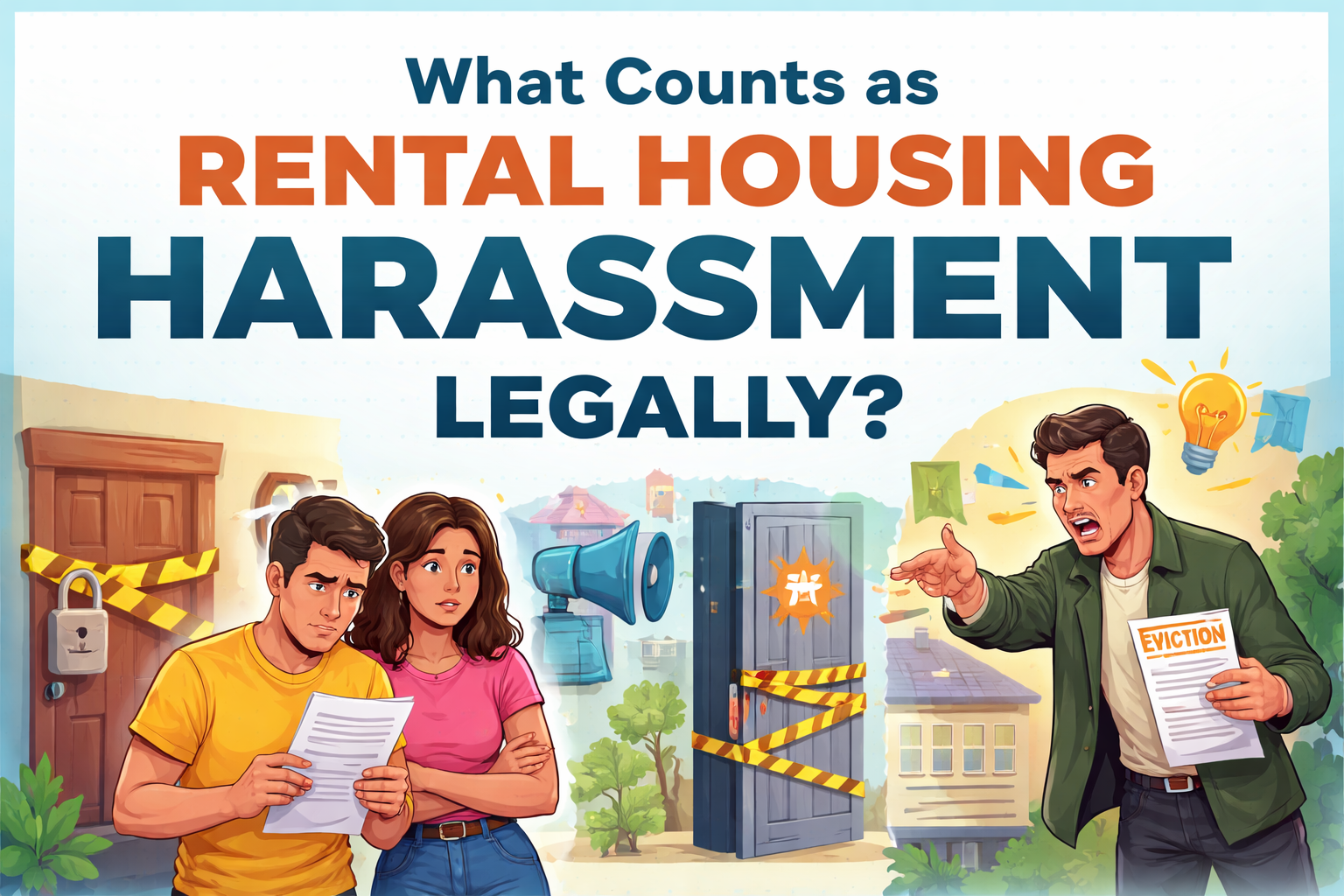
Rental housing harassment is basically a landlord (or someone acting for them) using pressure, intimidation, or repeated interference to make you give up rights. Or to make you leave. And yes, it can be “legal” harassment even when nothing is physically violent. A lot of renters think harassment has to look dramatic. It usually doesn’t.
Honestly, the messiest part is this. The rules aren’t identical everywhere. Cities and states define harassment a little differently, and some places have specific “tenant harassment” laws while others rely on general landlord-tenant rules, fair housing laws, or anti-retaliation protections. Still, the patterns are pretty consistent.
What the law usually means by rental housing harassment
Look, “harassment” isn’t just “my landlord is annoying.” It’s conduct that crosses into interference with your right to quiet enjoyment, retaliation, discrimination, or coercion. It’s the repeated stuff. The targeted stuff. The stuff that makes your home feel unstable on purpose.
Quiet enjoyment and interference is the workhorse concept
Most leases (and state laws) give you a right to live there without unnecessary intrusion. That includes privacy. Reasonable notice before entry. Repairs handled without turning your life into a circus.
When I work with clients on this, the first thing I check is the pattern. One weird maintenance visit might be sloppy management. Five surprise “inspections” after you ask for repairs. That starts smelling like pressure.
Harassment can be a tactic, not an accident
Some landlords genuinely don’t understand boundaries. Others do. And they push anyway because it’s cheaper than handling issues properly. This is where Rental Secrets talks a lot about landlord psychology. Not to villainize them. To predict behavior. Pressure often shows up when a landlord wants to avoid a repair bill, dodge rent control rules, or swap you for a higher-paying tenant.

Examples that tend to count as harassment in real disputes
So what actually gets labeled “harassment” when lawyers, judges, or tenant agencies look at it? Usually it’s conduct meant to force a result. Leave. Stop complaining. Pay extra. Give up a right.
Repeated illegal entry or aggressive access behavior
Landlords can enter for legit reasons. Repairs. Emergencies. Showing the unit (depending on your state and lease). But the tone and frequency matter. Constant pop-ins. “I’m coming in whether you like it or not.” Using a master key after you say no. That’s when it crosses the line.
Shutoff threats, lockouts, and other pressure plays
Self-help eviction tactics are a big red flag. Cutting utilities. Changing locks. Removing doors. Taking your stuff. Even threatening it repeatedly can matter, especially if it’s paired with other conduct.
Here’s a quick checklist we use when someone tells us “this feels off.” Not legal advice. Just what tends to show up in harassment cases and complaints:
- Threats to evict that don’t match the facts (especially after you assert rights)
- Frequent unannounced visits or “inspections” that disrupt your life
- Refusing repairs while blaming you or mocking you for asking
- Shutoff or lockout threats, even “jokes” about it
- Demanding illegal fees or rent hikes paired with intimidation
Real talk: harassment often hides behind “policy.” A landlord says it’s just procedure. But the procedure only shows up for you. Funny how that happens.
Retaliation and discrimination are often the legal hook
This bugs me because renters sometimes chase the word “harassment” when the stronger claim is retaliation or discrimination. And those can come with sharper remedies.
Retaliation often starts after a normal tenant move
You ask for repairs. You report code violations. You join a tenant union. You request your security deposit accounting. Then suddenly you get a rent increase, a notice, or constant nitpicking. That timing matters.
In our experience, retaliation cases are won or lost on documentation. Dates. Copies. Screenshots. Not vibes.
If you want a broader orientation on your baseline rights and what landlords can and can’t do, we keep a renter-friendly walkthrough in our rental housing guide for renters and landlords. It helps you spot when a “normal dispute” becomes something else.
Discrimination-based harassment has its own rules
Harassment can also be a fair housing violation when it targets a protected class. Race. Religion. Disability. Sex (including sexual harassment). Familial status. National origin. And state laws often add more categories.
Sexual harassment is a big one. “Go on a date and I’ll forgive rent.” Comments that get explicit. Repeated sexual texts. It’s not subtle. It’s also not rare.
Disability-related harassment shows up too. Landlords refusing reasonable accommodations, then punishing the tenant for asking. Or mocking them. Or creating delays that make the unit unusable. Sometimes it’s blatant. Sometimes it’s the quiet kind. “We lost your paperwork again.” Over and over.
What doesn’t usually count as legal harassment, even if it feels awful
Okay. This part can be annoying to hear. Not every frustrating landlord action is legally “harassment.” Sometimes it’s a lease dispute. Sometimes it’s poor management. Sometimes it’s just someone being rude. Rude isn’t always illegal.
One-off conflicts and legitimate enforcement
A landlord can enforce lease terms. Noise rules. Pet rules. Payment deadlines. They can send notices. They can schedule repairs. They can even decide not to renew in many places (unless restricted by local law), as long as it’s not retaliatory or discriminatory.
The property manager constantly sending late notices can seem like they’re targeting you. But, if it turns out the payments were actually late. The messages may be annoying, sure. But that’s not harassment. And the fix is boring. Autopay. Paper trail. Silence.
Sloppy repairs versus deliberate pressure
Habitability issues are serious. Mold. No heat. Leaks. But a slow repair timeline isn’t automatically “harassment.” It can be negligence. It can be a breach. It can trigger rent withholding rules in some states. But harassment usually needs that extra ingredient. Intent or coercive behavior. The landlord is trying to make your life harder so you’ll back off or move out.
Want the legal basics side of this, in plain language? Our tenant rights and legal basics resources are built for people who don’t want law school. They want clarity.
What we recommend doing when harassment might be happening
Thing is, you don’t have to wait until it becomes a full-blown disaster to act. Small steps early can prevent the spiral.
Build a record without turning your life into a courtroom
Keep it simple. Start a folder. Save texts and emails. If it’s calls, write a quick note after. Date. Time. What was said. If your state allows recording with one-party consent, some renters record. Others don’t. We’re not here to push you into risky moves. But documentation is the difference between “he said, she said” and “here’s the pattern.”
And take photos. Especially if the harassment involves property conditions, damage, notices taped to doors, or anything like that.
Use negotiation that actually works
This is where Rental Secrets leans in. Most renters go emotional first. Understandable. It’s your home. But emotional appeals usually don’t change landlord behavior. Clear boundaries and market-based leverage do.
We recommend writing a short message that does three things. Name the behavior. Reference the rule you’re relying on (notice to enter, quiet enjoyment, anti-retaliation, whatever applies). And asks for a specific change. A schedule. Written notice going forward. A single point of contact. Something concrete.
Sometimes that’s enough. Once a landlord realizes you’re organized, they tend to back off.
Other times, it won’t work if the landlord is committed to pushing you out. Then you’re into escalation. Tenant hotline. Local housing agency. Fair housing complaints. Legal aid. Private attorney. The path depends on your location and the facts. But your record is what makes the escalation real.
One more budgeting angle, because that’s why a lot of you are here. Harassment creates “hidden costs.” Missed work. Extra childcare. Moving expenses you didn’t plan for. When you document early and negotiate clearly, you’re protecting your cash flow as much as your sanity. That’s not dramatic. That’s practical.
FAQs for What counts as rental housing harassment legally
How many times does something have to happen before it’s harassment?
No magic number. Most of the time, repetition helps prove intent, but a single extreme act can matter. Illegal lockout. Utility shutoff. Explicit quid-pro-quo sexual demand. Those can be serious immediately. For the “gray area” stuff (constant texts, surprise entries, threats), a pattern is what turns it from annoying to legally meaningful.
Can a landlord harass you through a property manager or maintenance worker?
Yes. Legally, landlords are often responsible for what their agents do in the course of managing the property. If maintenance keeps entering without notice because “the owner told me to,” that’s not a free pass. Same with a property manager sending threatening messages. Save everything. Names, dates, screenshots. It’s all part of the same story.
Disclaimer: This article does not constitute legal advice.