
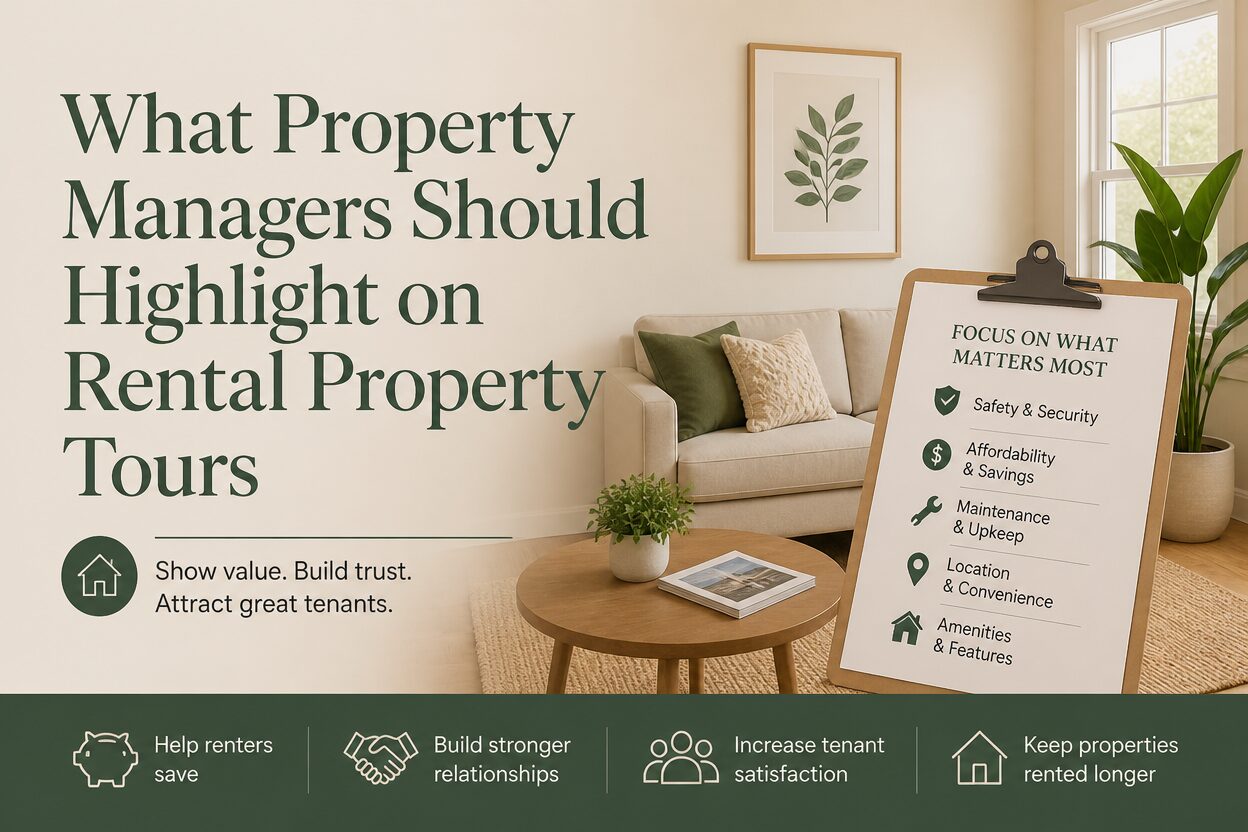
Don’t treat a rental tour like a scavenger hunt. Treat it like a money conversation. Because that’s what it is. Renters are silently doing math. Property managers are silently selling reassurance. When both sides name the right stuff out loud, tours go smoother. And leases get signed with way less weirdness.
We’re Rental Secrets. We teach renters how landlords think, and how to negotiate rent using what the market actually rewards. That means we see the same tour mistakes over and over. Some are small. Some cost people hundreds a month. So let’s talk about what property managers should highlight, and what renters should listen for.
Start with the stuff that changes a renters monthly budget
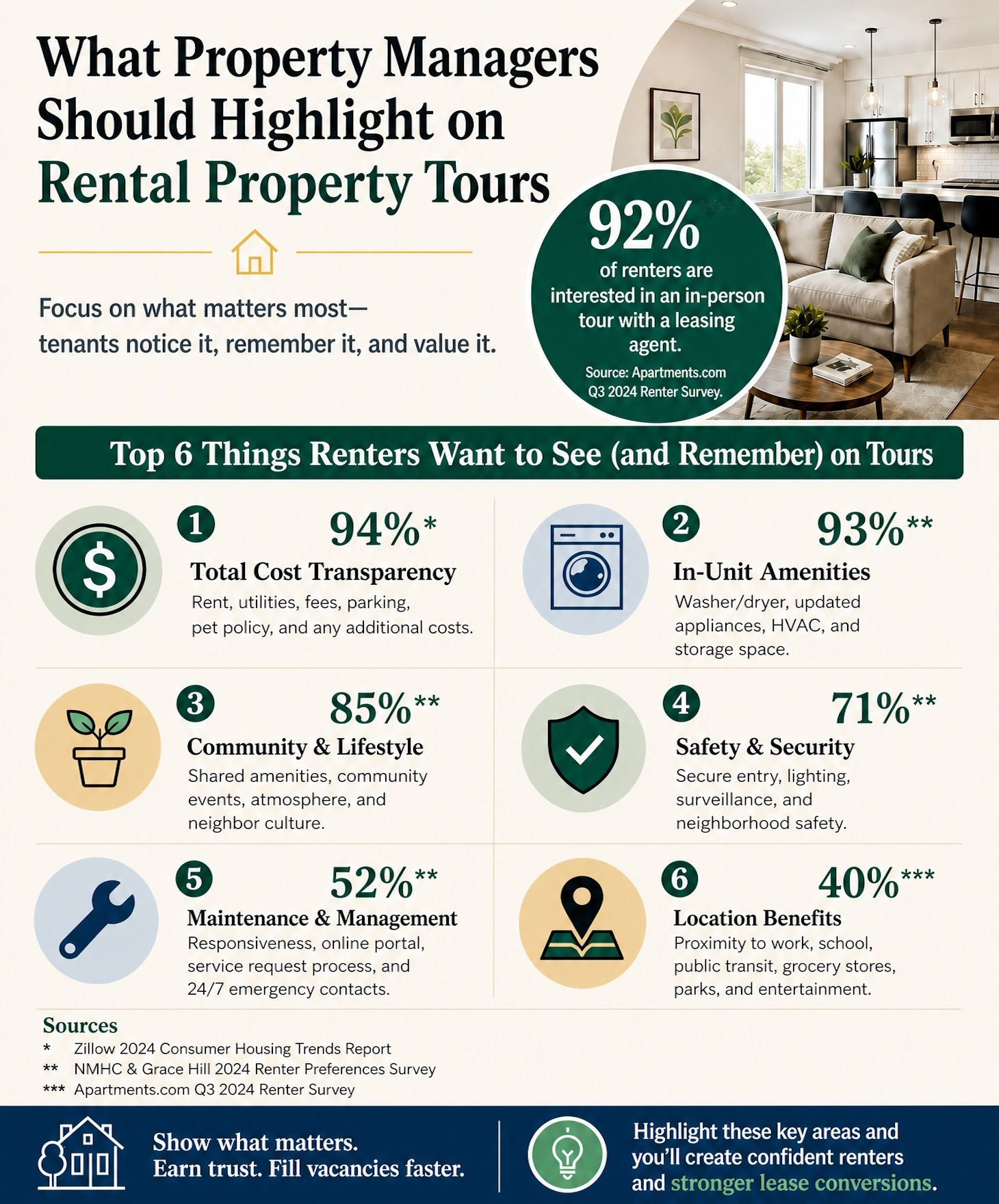
Most tours start with paint color and countertop sparkle. Honestly? That’s backwards for cost-conscious renters. The tour should start with what hits the wallet every month. Utilities. Fees. Parking. Internet. Trash. The unsexy stuff.
Be blunt about utilities and what is not included
When I’m coaching someone before a tour, the first thing I tell them to ask is: “What’s my total monthly out-of-pocket in a normal month?” Not just rent. Total.
Property managers should proactively answer it. And not in a vague way. Spell out what’s included, what’s billed back, and what’s tenant-set-up. Water and sewer sometimes get folded into rent. Or they get billed by usage. Or billed by a formula nobody can explain on the spot. That last one? It creates distrust fast.
And renters, listen for hedges. “Usually it’s around…” is fine. “It depends” without a range is not.
Talk fees early so nobody feels tricked
Application fees, admin fees, amenity fees, pet rent, pet deposits, parking permits, storage, trash service, valet trash, package lockers. I’m not even judging. Just say it.
Real talk: renters don’t get mad about fees as much as they get mad about surprises. A clean fee sheet on the tour is a trust-builder. It also saves the leasing team time because you won’t be doing the awkward “Oh yeah, that’s separate” dance later.
- What utilities are included vs tenant-paid
- Typical monthly ranges by season (winter vs summer)
- All recurring fees (not just move-in costs)
- Parking costs and rules
- Internet options and any exclusivity contracts
If you’re a renter and you want to go deeper on how to run a tour like a negotiation, our rental tour strategy guide for budget-smart renters gets really specific. Scripts. Red flags. The stuff people wish they’d asked.

Show the maintenance reality not the staged version
Renters don’t just rent square footage. They rent response time. They rent a working heater on the coldest night of the year. That’s the whole thing.
Property managers should highlight maintenance like it’s a feature, because it is. A good maintenance setup is basically insurance for a renter’s sanity.
Explain how work orders actually get handled
Is there an online portal? Text line? After-hours number? Who’s on call? What’s considered an emergency? A tour is the perfect moment to say: “Here’s how you reach us. Here’s what happens next. Here’s our typical timeline.”
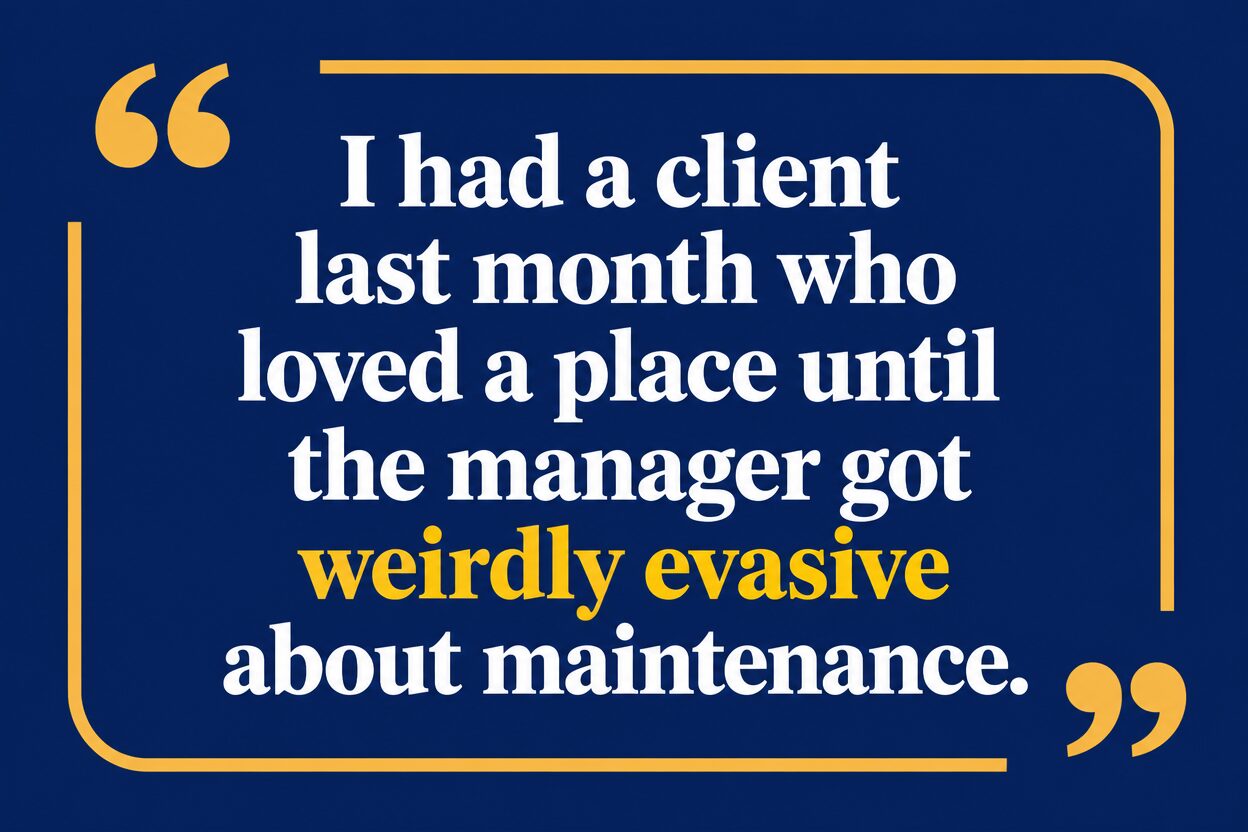
I had a client last month who loved a place until the manager got weirdly evasive about maintenance. Like, dodging. Turns out the property had a rotating door of vendors and no consistent schedule. The unit was fine. The system wasn’t. They passed. Smart move.
Prove the building is cared for with small tells
You don’t need to brag. Just point to the evidence. Filter change schedules. Pest control cadence. Common-area cleaning. How often they repaint between tenants. Whether HVAC is serviced yearly. If you’ve got records, even better.
Renters: take a quick look at the baseboards, the window tracks, the caulk around the tub. Not because you’re nitpicking. Because those spots reveal how turns are done. A fresh coat of paint can hide a lot. A sloppy bathroom seal can’t.
Highlight the rules that affect lifestyle and roommate math
Lots of people tour a place and only later realize the rules don’t match their life. Then they’re stuck. Or they lose the unit while they scramble. Property managers can prevent that by surfacing the big rules early.
Be clear about occupancy, roommates, and guarantors
Students and young professionals do roommate math. Families do school and space math. Both groups need clarity. How many occupants are allowed? Are roommates on separate leases or one joint lease? Is subletting allowed? What’s the policy on replacing a roommate mid-lease?
And guarantors. This one matters for first-time renters and students. Explain the standard. Income multipliers. Credit thresholds. Whether a guarantor needs to be in-state. Whether they accept third-party guarantee services. Don’t make people drag their parents into a paperwork maze for no reason.
Put pet policies and parking rules in plain language
Pet policies aren’t just “cats ok.” It’s breed restrictions, weight limits, deposits, pet rent, number of pets, and what counts as an ESA documentation wise. That last part is sensitive. Handle it respectfully. But do handle it.
Parking is also a sneaky budget item. Assigned spots versus first-come. Guest parking rules. Towing policy. If you’ve got street parking only, say so. Don’t wait until someone moves in and gets their first ticket. That’s how online reviews get spicy.
For property managers who want more ideas on setting expectations without sounding stiff, we keep a running set of training topics on our resources for rental property tours for landlords and property managers. It’s practical stuff. Not corporate fluff.
Point out value that supports rent without overselling it
Renters who budget carefully aren’t anti-amenity. They’re anti-paying for amenities they won’t use. So the tour should connect features to real value. Or just skip it.
Translate features into savings or convenience
In-unit laundry can mean you stop feeding a laundromat. Or stop losing hours every Sunday. Secure package lockers can mean fewer stolen deliveries. A well-lit parking area can mean fewer break-ins. A decent gym can replace a membership. Sometimes.
But don’t pretend a rusty treadmill is “luxury fitness.” That bugs people. Show what you have. Let it be what it is.
Be honest about noise, light, and the real vibe
We’ve watched renters get burned by “It’s a quiet community” lines that weren’t true. Quiet depends on where the unit sits. Near the dumpster? Near the pool? Facing the street? Top floor versus bottom? That’s what a renter needs to know.
Property managers should point out these trade-offs proactively. “This unit is closer to the gate, so you’ll hear cars.” That honesty earns trust. And it reduces complaints later. You’re basically pre-matching the unit to the right person.
Renters: ask to stand in silence for 20 seconds. I know it feels awkward. Do it anyway. You’ll hear the HVAC, the neighbor’s bass, the dog that barks at doors. That’s tour gold.
Use the tour to set up a smoother negotiation and a longer tenancy
This is where most property managers miss a real opportunity. A tour isn’t just a showing. It’s the start of a relationship. The best managers treat it like that.
Talk lease terms like a grown-up conversation
Explain lease length options and how pricing changes. Point out renewal practices. Are increases based on market? Is there a standard range? Are renewals offered early or last-minute? Renters who plan their budgets hate uncertainty. Give them a timeline.
And renters, yes, you can ask about flexibility. Not in a “slash my rent” way right out of the gate. But in a curious way. “Do you ever run specials?” “Is there any flexibility on move-in date?” “Are longer leases priced differently?”
At Rental Secrets, we coach renters to negotiate based on what owners actually care about: vacancy risk, timing, and tenant quality signals. Not vibes. When a manager highlights those same factors during a tour, it makes negotiations less adversarial. More like problem-solving.
Show how you communicate when things go wrong
Stuff will go wrong. A pipe leaks. A neighbor plays drums at midnight. A key fob stops working. The question isn’t whether problems happen. It’s how they’re handled.
Property managers should explain communication norms. Response windows. Escalation steps. Who to contact for what. And yes, what you expect from tenants too. Noise complaints need details. Maintenance requests need photos. Setting that standard early helps everyone.
I used to think renters didn’t care about this part. Turns out they care a lot. Especially families. Especially anyone who’s had a landlord ghost them before.
FAQs for What property managers should highlight on rental property tours
As a renter, what should I ask on a tour if I want leverage later?
Ask questions that reveal vacancy pressure and cost drivers. “How long has this unit been available?” “Do you have other similar units coming up?” “What’s the typical turnaround time between tenants?” Also ask about total monthly costs, not just rent. When you can calmly talk numbers, you negotiate from reality. Not hope.
As a property manager, what should I never gloss over during a tour?
Fees, utility responsibility, and any rule that could blow up after move-in (pets, parking, occupancy, subletting). Glossing over those creates short tenancies and bad reviews. It also wastes your team’s time. The cleanest tours are the ones where the hard stuff gets said out loud.
Quick next step for tours that feel fair and budget-smart
Property managers: lead with monthly cost clarity, maintenance reality, and the rules that change how people live. Renters: listen for specifics, ask for ranges, and don’t be shy about total budget impact.
If you want a sharper playbook for the whole process, keep our Rental Secrets tour and negotiation approach open in another tab. Bring it with you. Tours move fast. Your budget does not.
Disclaimer: This article does not constitute legal advice.