
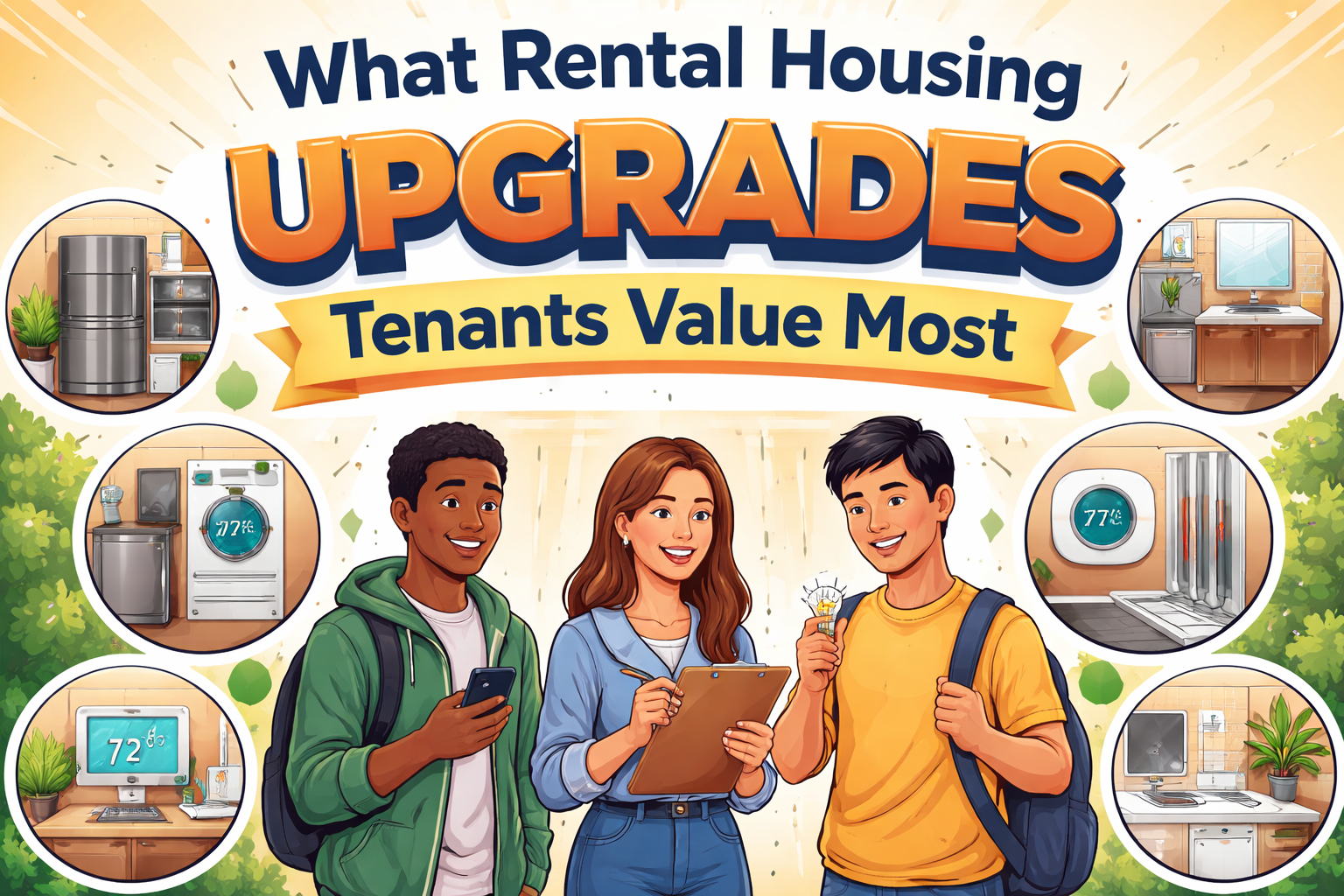
Tenants fall in love with upgrades, but when the honeymoon is over, the upgrades become old news. Their focus shifts to a desire for fewer annoying problems. Lower bills. A home that feels cared for. And yeah, a place that doesn’t make them feel like they’re begging for basic comfort.
We see this up close at Rental Secrets. Renters come to us thinking they need a sob story to get changes. Landlords come to us thinking tenants only want freebies. Both sides are half-right. But the real sweet spot is practical upgrades that reduce friction. Then you negotiate around them like an adult. Not like it’s a fight.
Comfort upgrades that people notice every single day
Look, tenants remember the stuff they touch daily. Not the fancy backsplash that just blends into the background 6 months into the lease.
In-unit laundry and dishwasher
If you’ve ever hauled wet clothes up stairs in February, you already know. Laundry is time, money, and sanity. In-unit laundry is a rent premium item for a reason. Same with a dishwasher. It’s not glamorous. It’s life.
For landlords, these can be expensive. Plumbing. Electrical. Permits. The whole thing. But when it’s feasible, it tends to cut turnover. And turnover is brutal. Paint. Cleaning. Vacancy. Leasing fees. People underestimate that stack of costs. And they happen every time someone moves out.
Better sound and better sleep
Noise is one of the fastest ways tenants get “done” with a place. Thin walls. Footsteps. Street noise. A neighbor who thinks 1:00 a.m. is prime time for rearranging furniture.
True soundproofing is hard. But targeted fixes help. Solid-core bedroom doors. Door sweeps. Weatherstripping. A rug policy with actual enforcement in upstairs units. Even sealing obvious gaps around outlets on shared walls (done safely) can cut the worst of it.
If you’re a renter, you can negotiate for small sound fixes way easier than you can negotiate for “make the building quiet.” Ask for a specific change. Offer a longer lease in exchange. Or ask for a small rent credit to buy thick rugs and felt pads. It’s often a win-win.

Lower utility bills beat cosmetic upgrades almost every time
Real talk: renters care about monthly outflow. Not just rent. The bill surprises are what blow up budgets. Especially for students and young families.
Efficient HVAC and smart thermostats
Old HVAC systems are money pits for everyone. Tenants sweat. Landlords get angry calls. The unit runs nonstop and still can’t keep up. Then comes the energy bill. Ouch.
A programmable or smart thermostat is a smaller upgrade with outsized impact. It doesn’t fix a dying system, but it helps with waste. And it signals “we maintain this place.” Tenants notice that signal more than landlords expect.
Windows, insulation, and weather sealing
People think windows are just pretty. Turns out they’re comfort and cost. Drafty windows mean cold spots, moisture, and a heater that never quits. For families with little kids, that’s not just annoying. It’s stressful.
Landlords don’t always want to replace windows. Fair. It’s pricey. But basic weather sealing and door adjustments are lower cost and still meaningful. Renters can pitch it as a shared benefit: fewer maintenance calls about “the heat doesn’t work,” fewer moisture issues, happier tenants.
If you’re negotiating, this is where market-based framing matters. Bring comparable listings that include “new windows” or “energy efficient” language. And then ask for either the upgrade or a rent adjustment that reflects you paying higher utilities. That mindset shift is what we teach at Rental Secrets. You’re not pleading. You’re pricing reality.
Also, if you want the bigger picture on renter and landlord dynamics, our rental housing negotiation and strategy main guide lays out how we think about this stuff.
Kitchens and bathrooms that feel clean and functional
Tenants don’t need luxury. They need “not gross” and “works the first time.” Bathrooms and kitchens are where a property either feels maintained or feels like a project.
Ventilation that prevents mold and misery
Bathroom fans that actually vent outside. Range hoods that aren’t just decorative. This is the unsexy upgrade that keeps complaints down.
We’ve had clients who thought they were “bad tenants” because they couldn’t stop mildew. Nope. They had no ventilation, and the landlord kept painting over it. Over and over. Paint doesn’t fix moisture. It just hides it for a minute.
Fixtures, water pressure, and lighting
A new faucet won’t change your life. Bad water pressure will ruin your mornings, though. Same with lighting that makes the bathroom feel like a basement.
Small swaps tenants love:
- Bright, neutral LED lighting in kitchen and bath
- A showerhead with decent pressure and a clean diverter
- Quiet-close toilet seat and solid, stable toilet installation
- Modern, easy-to-clean faucets that don’t drip
- GFCI outlets where they should be
Landlords: this list is your friend because it’s cheap relative to a full remodel. Renters: it’s your friend because it’s realistic to ask for. You’ll get more yeses.
Safety and security upgrades that build trust fast
Security is tricky. Some tenants want cameras everywhere. Others hate the idea. But everyone wants to feel like their door isn’t a suggestion.
Real locks and sensible entry systems
Deadbolts that work. Strike plates that are actually screwed into studs. Working window locks. Peepholes. Basic stuff.
Keyless entry can be a retention upgrade too. Not because it’s “smart.” Because people don’t want to pay $75 for a lockout at 11:30 p.m. after a long shift. You can set codes. You can change them at turnover. Less key drama.
Exterior lighting and well-maintained common areas
Tenants judge safety on the walk from the car to the door. A dark parking area and broken gate feels like “management doesn’t care.” Even if crime isn’t high.
Motion lights. Clear sightlines. Trimmed bushes near entrances. A clean, well-lit hallway. These upgrades are also landlord-friendly because they reduce liability headaches. And they cut down on the “I’m moving because I don’t feel safe” conversations.
If you’re a renter trying to negotiate these, don’t frame it like an accusation. No “your building is dangerous.” Keep it practical. “I’m ready to sign for 18 months, but I need the rear stair light fixed and the gate latch repaired.” Specific. Calm. Hard to argue with.
For landlords and managers working on retention conversations, we talk about this style of communication a lot in our landlord and tenant retention communication resources. It’s not therapy. It’s tactics.
Maintenance culture upgrades that tenants pay for without realizing it
It’s not a shiny upgrade. But it’s the reason tenants renew.
Fast repairs and predictable communication
Most renters will tolerate a dated cabinet. They won’t tolerate being ignored when the cabinet door falls off and no one responds for three weeks.
When we work with clients on this, first thing we check is the maintenance paper trail. Dates. Photos. Who said what. A clear record changes the tone. It turns “I feel like you’re not listening” into “Here are the three requests and the timeline.” Landlords respond to that. Most of the time.
Pest control and moisture prevention
Nothing breaks trust like pests. Roaches. Mice. Bed bugs. Even ants that keep coming back no matter how clean you are.
Proactive pest control, sealing entry points, and fixing leaks quickly. That’s not optional in many buildings. But even where it’s not legally required, it’s a huge value item. Tenants talk. Reviews follow. Vacancy follows after that.
Renters can negotiate around this, too. Ask what the property’s preventive schedule is. If there isn’t one, that’s information. Maybe you ask for a monthly rent that reflects the risk. Or you require professional treatment before move-in, written into the lease. Yes, written. Verbal promises disappear.
FAQs for What rental housing upgrades tenants value most
As a renter, what upgrade should we ask for without sounding demanding?
Ask for something specific, with a reason tied to cost or upkeep. “Can you install a programmable thermostat so our winter bill doesn’t spike?” lands better than “We want upgrades.” Another good one is weatherstripping or a door sweep if you can feel a draft. It’s cheap. It’s measurable.
As a landlord, which upgrades actually help retention versus just raising expectations?
In our experience, retention usually comes from reliability more than flash. Strong maintenance response times, ventilation, efficient heating and cooling, and security basics tend to reduce move-outs. Full cosmetic remodels can raise expectations fast. Then you’re stuck keeping everything “perfect” or tenants get picky. The safer bet is functional improvements tenants feel every day, plus communication that doesn’t vanish when a problem pops up.
Disclaimer: This article does not constitute legal advice.