


Walk in. Look around. And don’t get distracted by the cute throw pillows they staged on the couch. A rental tour is basically a live negotiation preview. You’re not just checking vibes. You’re collecting leverage.
We’ve sat in on a lot of tours with students and first-time renters at Rental Secrets. The pattern’s always the same. People notice the paint color. They miss the stuff that costs real money later.
So here’s what to watch for. The practical stuff. The sneaky expensive stuff. And the little signals that tell you whether the landlord’s going to be chill or a headache.
Start outside before they start selling you
Honestly? The outside tells the truth. Inside can be staged. Outside is harder to fake.
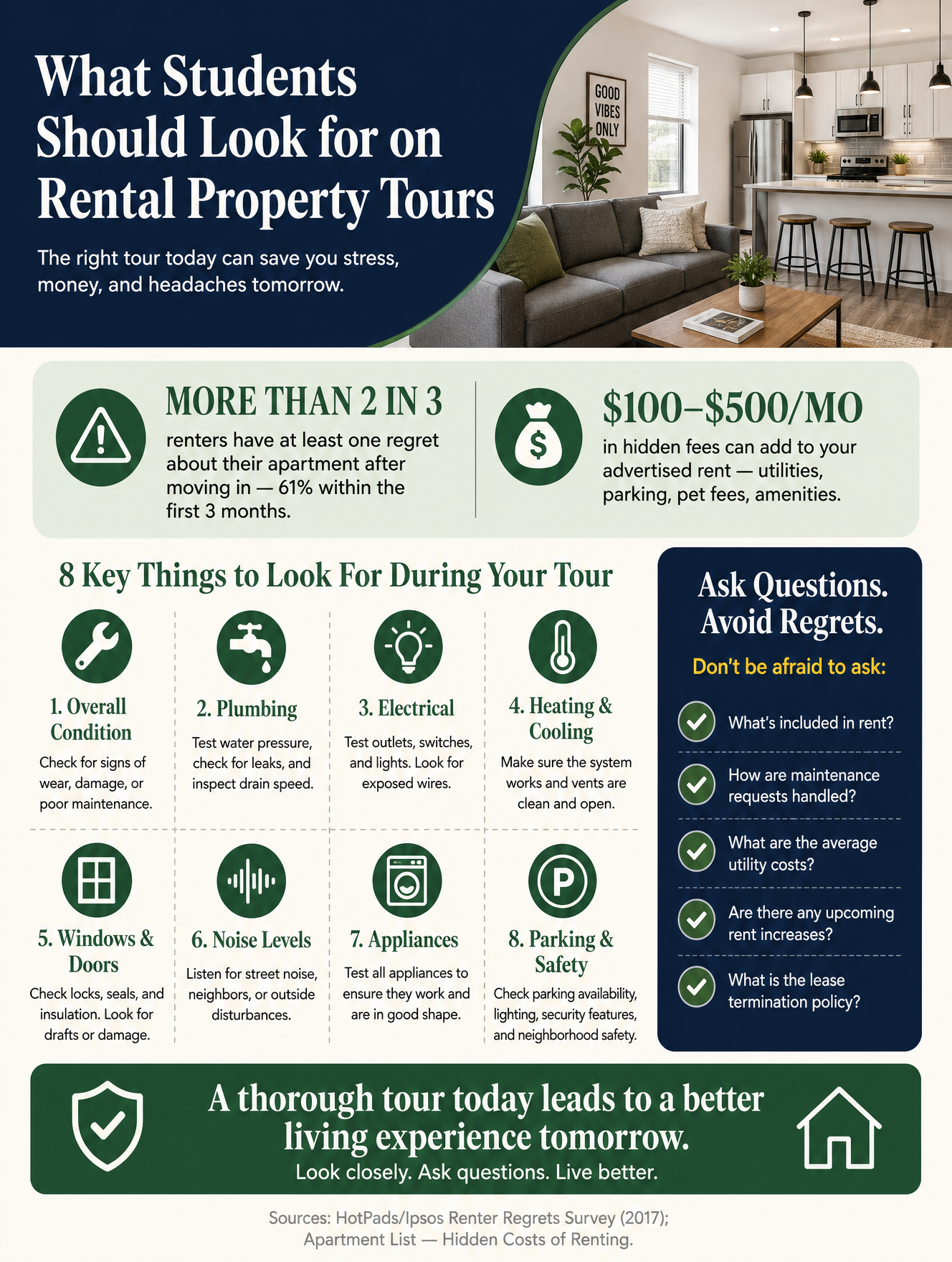
Parking and lighting are not “extras”
Ask yourself a blunt question. Are you going to feel okay walking in at night with a backpack and groceries?
Check the lighting in the lot, near entrances, and along the path you’ll actually take. Look for dead bulbs. Look for dark corners. And yeah, it matters even if you “only” come home late once a week. That’s the night you remember.
Parking too. Not just “is there parking.” But what kind. Assigned? First come? Street parking with permit drama? Some places do the classic move where they show you an empty lot at 11 a.m. Then you move in and it’s musical chairs at 9 p.m.
Building maintenance tells you how repairs will go
Peel your eyes off the flowers. Look at the gutters. The railings. The stairs. The mailbox area. If the handrail is loose, the odds they fix your broken fridge fast aren’t great.
I had a client who ignored a “small” sign: the main entry door didn’t latch. Two months later? Packages kept disappearing. The landlord acted surprised. Of course.
Also, take a second to peek at the trash area. If it’s overflowing on a random Tuesday, that’s usually a management problem, not a tenant problem.

Inside the unit, hunt for money leaks
Here’s the thing. Cheap rent can get expensive fast if the place leaks heat, leaks water, or forces you into laundromat life.
Windows, doors, and the draft test
Open and close the windows. Then, lock them. Actually, lock them. Wiggle them a little. If they rattle like a shopping cart wheel, your utilities will feel it.
Same with exterior doors. Stand inside and look for daylight around the frame. If you can see light, you can feel cold air. And if you can feel cold air, your winter bill’s about to do something rude.
Water pressure and hot water reality
Turn on the shower. Turn on the sink. Flush the toilet while the water’s running. This isn’t being picky. It’s being normal.
Ask where the water heater is and how old it is. You don’t need the exact install date. You’re listening for whether they answer cleanly or get weird. Weird answers tend to come with weird maintenance later.
And check under sinks for swelling or soft wood. Smell the cabinet. Musty is… not your friend.
Appliances and laundry access
Look at the fridge seal. Open it. Close it. If it doesn’t shut clean, it’ll run nonstop. That’s your electric bill, not theirs.
Ask about laundry like you care. Because you will care. In-unit is the dream. Shared laundry can be fine. But peek in the laundry room if you can. Are the machines ancient? Is it clean? Do you have to download an app that never works? (That last one drives people nuts.)
And if you’re touring a place that’s part of student-heavy housing, skim a few more tips on tours and roommate setups in our rental tour advice for students and roommates. It’ll save you some trial-and-error.
Ask the questions that reveal the landlord mindset
Most students ask, “When can I move in?” Cool. But the questions that matter are the ones that reveal how they think. That’s what we teach at Rental Secrets. Learn the other side’s priorities. Then negotiate like you know what’s happening.
Repairs, response time, and the paper trail
Don’t ask “Do you fix things quickly?” Everyone says yes.
Ask: “What’s the process when something breaks? Do you prefer email or a maintenance portal?” Then ask: “What’s a typical turnaround for non-emergency repairs?”
Listen for specifics. A real system sounds like a system. A vague answer sounds like you’re texting someone’s cousin on a Saturday.
Another good one: “Who actually does the repairs? In-house team or vendors?” In our experience, in-house can be fast. Vendors can be fine too. But if they rely on a single handyman for everything, delays happen.
Utilities and what “included” really means
Ask exactly which utilities are included and how they’re billed. Flat fee? Ratio utility billing? Separately metered? People gloss over this and then get hit with a bill they didn’t budget for.
Also ask about internet. Not “Is there internet?” Ask “Is there a provider you recommend here, and what do most tenants pay?” You’ll learn two things. Pricing. And whether the landlord knows the property beyond collecting rent.
Subletting, guests, and roommate changes
Student life changes fast. Internships pop up. Study abroad happens. Roommates flake. Ask what happens if someone needs to leave mid-lease. Is subletting allowed? Is there a fee? Do they require approval?
Some landlords are flexible but formal. That’s okay. Some are flexible but sloppy. That’s riskier.
- “How do you handle roommate swaps during a lease?”
- “What’s the guest policy in writing?”
- “Are co-signers required, and what triggers that?”
- “How are noise complaints handled?”
- “What’s the renewal process look like?”
That last one? Sneaky useful. If they say renewals come with a big jump, you just learned something important about future costs.
Spot negotiation opportunities while you’re still on the tour
Real talk: the tour is part of the negotiation. Not the part where you argue. The part where you gather reasons.
Condition notes are rent notes
Little issues can become leverage. Scuffed floors. Missing blinds. A broken microwave handle. Old carpet that smells like someone’s dog had a long semester there.
We’re not saying nitpick to be annoying. We’re saying document reality. If they want top-of-market rent, the unit needs to feel top-of-market.
Take photos. Ask, casually, “Will this be fixed before move-in?” If they say yes, ask for it in writing. If they say no, you’ve got options. Request repairs. Or request a rent concession. Or ask them to include something that reduces your monthly spend (like parking or a storage unit).
Timing changes your leverage
When you tour matters. If the unit’s been sitting for a bit, landlords tend to get more flexible. If it’s peak season near campus, they might not budge. But even then, you can negotiate terms instead of price. Earlier move-in without prorated weirdness. Longer lease with a smaller increase. Extra keys. Paint touch-ups. Sometimes you get a win without calling it a win.
Want the full playbook of how we think about tours, pricing signals, and negotiation angles? Our rental property tours guide for budget-smart renters goes deeper on what to look for and how to use what you find.
Watch how they react to normal questions
This bugs me, but it’s real. Some property managers get irritated when you ask reasonable questions. That’s information.
If you ask about repairs and they get defensive, imagine asking for a broken heater in January. Not fun. If they’re calm and clear, that’s a green flag. Not perfect. But better.
Roommate reality checks students forget
Roommate situations have more moving parts and that can kill your budget. Not always. But often. One person runs the heat at 76. Another one “forgets” Venmo exists. And now you’re the bad guy for wanting the bills paid.
Layout matters more than you think
Count doors. Count walls. Check if bedrooms share a wall. Look at where the bathroom sits. One bathroom for four people can work. But it needs the right layout and the right people.
Also check sound. Stand in a bedroom with the door closed while someone talks in the living room. You’ll learn a lot in ten seconds.
Who pays what and how it’s billed
Ask whether rent is joint and several (one lease, everyone responsible) or by the bedroom. Joint leases are common. They can be fine. But it means if your roommate disappears, the landlord still wants the full amount.
We’ve watched students learn this the hard way. One roommate drops out mid-semester. The rest scramble. So ask upfront. And get it in writing.
And check the electric panel. No, seriously. If it’s old and overloaded, you’ll trip breakers constantly. Space heater plus microwave plus someone blow-drying hair. Pop. Darkness. It becomes a whole thing.
FAQs for What students should look for on rental property tours
Should we apply right after the tour if we like it?
Usually, yes. Good units move fast. But don’t apply in a fog. Take 15 minutes outside, compare notes with your roommate, and list any deal-breakers. Then apply. Also ask what the screening criteria are before you pay application fees. Credit score expectations. Income requirements. Co-signer rules. If they won’t tell you, that’s not great.
What’s one thing we can ask that helps with negotiating later?
Ask how long the unit has been available. You don’t need a perfect number. Even “a couple weeks” tells you something. The longer it’s been sitting, the more likely they’ll consider a lower rent, a concession, or flexible terms. And if they say it just hit the market yesterday, cool. Then you focus on getting repairs and clear lease language instead of chasing a big discount.
Your next move after the tour
Take your photos. Write down what felt off. And don’t talk yourself out of what you saw.
If the place checks out, move quickly. If it doesn’t, walk. That’s a budgeting skill too. And if you want help turning tour details into negotiating power, that’s exactly what we do at Rental Secrets. We teach you how landlords think. You show up prepared. The whole dynamic changes.
Disclaimer: This article does not constitute legal advice.