
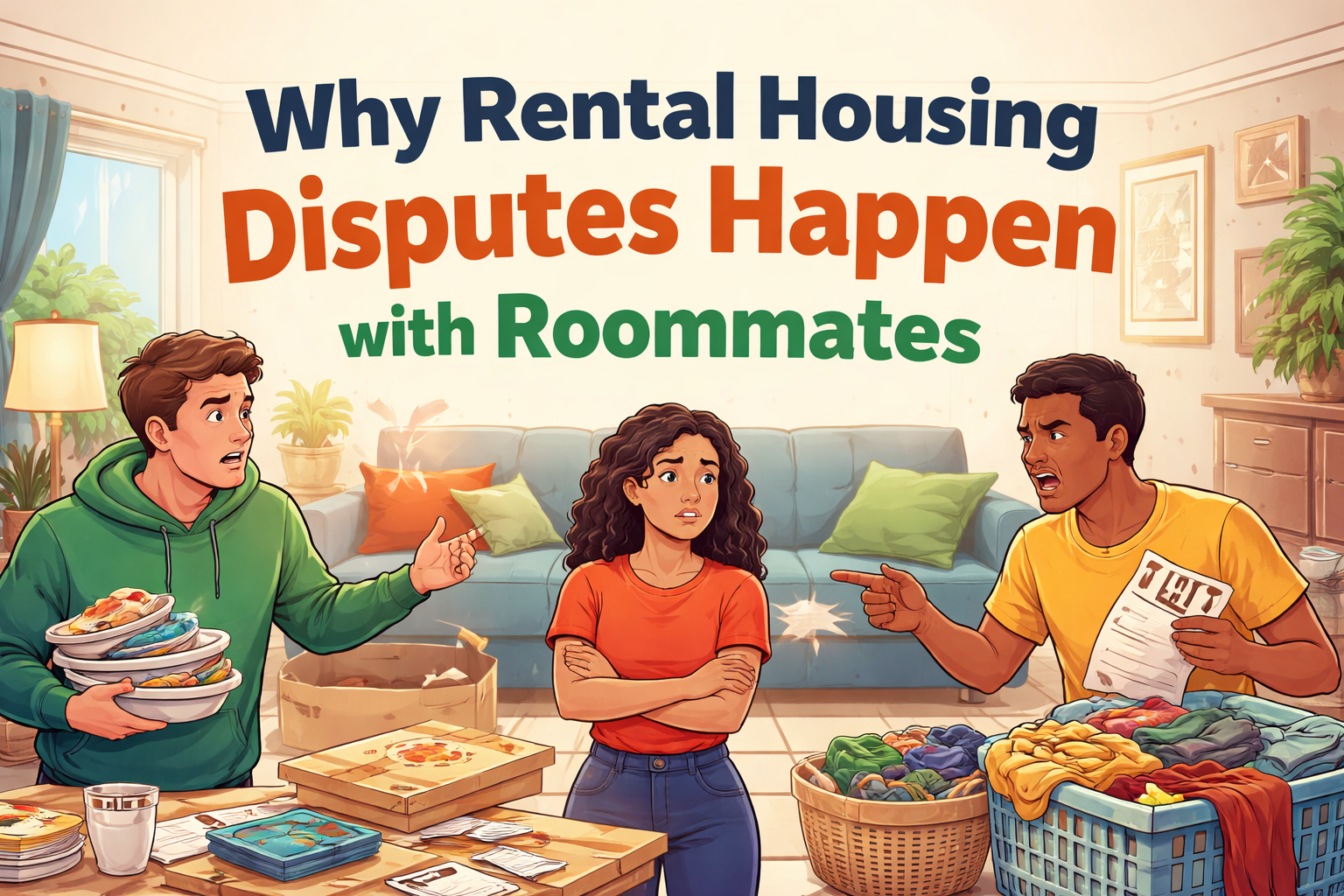
Roommate disputes don’t usually start with some big dramatic betrayal. They start with tiny stuff. A late Venmo. A sink full of dirty dishes. Someone’s partner “basically living here.” Then the lease gets involved. And now it’s not just awkward. It’s expensive.
We see this constantly at Rental Secrets. Renters come to us thinking it’s a personality problem. Half the time it’s a system problem. The lease. The money flow. The mismatch in expectations. Fix the system and the tension drops fast. Not always. But usually.
The lease turns friends into business partners
Here’s what I tell people when they say, “But we’re friends.” Cool. Now you’re also co-signers in spirit, whether you like it or not.
Joint and several liability is the silent troublemaker
Most roommate leases make everyone responsible for the full rent. Not your “share.” The full amount. So if one person flakes, the landlord doesn’t care who promised what in your group chat. They’ll come after whoever pays. Or whoever has the strongest credit. Or whoever responds to emails. That’s how this goes.
When we work with clients on this, the first thing we check is whose name is on what. Leaseholders. Co-signers. Guarantors. Anyone not on the lease. Because disputes explode when the legal reality doesn’t match the roommate reality.
Roommate agreements are helpful until they aren’t
A separate roommate agreement can calm things down. Chores. Utilities. Guest rules. Noise. But it doesn’t override the lease. I’ve watched people wave their roommate agreement like it’s a court order. It’s not. It’s still useful, though. It gives you a script when emotions are running the show.
If you want the bigger picture on how leases actually work for both sides, our rental housing guide for renters and landlords lays it out in plain English. The goal isn’t to “win.” It’s to stop being surprised by the rules.

Money fights are rarely about money
Real talk. The dollar amount is the spark. The feeling is the gasoline. People want fairness. People want respect. People want to not feel like someone’s parent.
Unequal incomes create unequal stress
If you’re a young professional with a solid job, living with two students, their lack of income may become an issue. Students are generally good people. But their cash flow can be chaotic. As a result, rent may show up late. Utilities are always “next week.” Since you’re more stable, you might start covering gaps to avoid fees. Then resentment will hit. Hard.
This is why we push budgeting conversations early. Not lectures. Just clarity. “Can you reliably pay on the 1st?” is a different question than “Do you have rent money?”
Utilities, subscriptions, and the death by small charges
Rent is obvious. Everything else gets fuzzy. Electricity spikes. Someone runs the AC like it’s free. Wi-Fi gets upgraded without asking. Then there’s streaming services. Toilet paper. Cleaning supplies. The stuff nobody remembers until they’re angry.
One small tactic that works way better than it should. Pick a default system and stick to it for three months. Splitwise. A shared card. One person pays and everyone auto-pays them. Whatever. Consistency is what keeps it from turning into a trial.

- Set one rent transfer day (a few days before rent is due)
- Agree on a utilities split method (equal, by room size, or usage)
- Decide how shared household items get purchased
- Put late fee responsibility in writing between roommates
- Pick one app for tracking (and actually use it)
People move in and out emotionally before they move out physically
This part gets messy fast. Someone checks out. Stops cleaning. Stops communicating. Starts “sleeping over” elsewhere. But their stuff is still in the hallway. And their name is still on the lease.
Guests and partners are the classic pressure point
Most roommates don’t mind a guest. They mind a new unofficial roommate. The toothpaste in the bathroom. The constant shower use. The extra car in the driveway. And the vibe shift. The home stops feeling like their home.
Landlords care too, just for different reasons. More wear and tear. Higher utility usage in some setups. More noise complaints. And sometimes a straight lease violation if occupancy limits are clear.
In our experience, the cleanest way to handle this is boring. Set a guest policy. Nights per week. Notice rules. Quiet hours. And yes, you might feel weird saying it out loud. Do it anyway.
Roommate turnover triggers fees and lease traps
Swapping roommates sounds simple until you hit the paperwork. Many leases require landlord approval for replacements. Some require a full new lease. Some tack on an admin fee. Some refuse changes mid-term.
And if your roommate bails without being formally removed, you can end up in a weird limbo where you’re chasing someone for money, but they’re still legally tied to the unit. Or worse. They’re not paying and you’re still fully on the hook.
If you’re dealing with shared-living rules more broadly, our roommates and shared living resources page is where we keep the practical stuff. The scenarios. The scripts. The boring details that save you later.
Communication breaks down because nobody wants to be the bad guy
This bugs me because it’s so predictable. Everyone waits. Everyone hopes it fixes itself. Then someone snaps over a trash bag. Not the rent. Not the broken agreement. A trash bag.
Passive roommate culture creates active disputes
People hint instead of asking. They clean angrily. They slam cabinets. They complain to everyone except the person involved. It’s understandable. Confrontation feels risky when you share a kitchen.
But avoidance has a cost. It builds a story in your head. “They don’t respect me.” Maybe. Or maybe they’re clueless. Or overwhelmed. Or honestly broke and embarrassed. And this story may have no basis in reality – so ask and find out.
The landlord gets pulled in at the worst time
Landlords and property managers often hear about roommate conflict only when it’s already radioactive. Someone wants out. Someone stopped paying. Someone is threatening a chargeback. Now the property manager has to play referee while also enforcing the lease. Fun.
We’ve helped landlords reduce this by setting expectations up front. Clear house rules. Written procedures for roommate changes. A simple protocol for maintenance requests so roommates aren’t fighting about who “should’ve called.” That sort of thing. Tenant retention goes up when the living situation feels stable. Even if it’s shared.
Negotiation mistakes turn small conflicts into expensive ones
Most people argue from emotion. Totally human. Also usually ineffective. Especially with landlords. Especially in writing.
Threats and ultimatums backfire
“We’ll withhold rent.” “We’ll sue.” “We’re leaving next month.” I get why people say it. They want control back. But once you threaten, the other side stops listening and starts documenting. That’s the moment your dispute becomes a legal file.
At Rental Secrets, our approach is market-based and calm. What’s the lease say? What does local demand look like? What outcome does the landlord actually care about? Lower vacancy risk. On-time payments. Less property damage. Fewer complaints. You can negotiate around that.
One roommate negotiating alone creates distrust inside the home
I’ve seen this one go sideways. One roommate emails the landlord asking for a rent reduction or permission to sublet. They don’t tell the others. The landlord replies. Now everyone’s stressed. People feel blindsided.
Even if the idea was good, the execution was rough. Shared housing needs shared strategy. It’s not about permission. It’s about alignment.
When we help renters negotiate, we usually start by mapping the stakeholders. Who benefits? Who carries risk? Who’s most likely to follow through? Then we write the message so it sounds like adults who have a plan. Landlords respond better to that. Most of the time.
FAQs for Why rental housing disputes happen with roommates
What can a landlord do when roommates are fighting but rent is still paid?
Usually, not much. Landlords can enforce lease terms (noise, unauthorized occupants, damage, illegal activity). But they can’t force roommates to be polite. The best move is prevention: clear occupancy rules, a process for adding or removing residents, and a written communication channel for issues that affect the property. When the conflict starts affecting rent reliability or the unit condition, then action becomes more straightforward.
Can I make my roommate pay their share if I covered the full rent?
You can try, and sometimes it works. It depends on what you can prove. A written roommate agreement helps. So do payment records and texts where they acknowledge the amount owed. But the landlord relationship and the roommate relationship are separate. The landlord can still hold you responsible for the full rent under a typical joint lease. That’s why we recommend setting up a system before the first late payment happens. After the fact gets emotional fast.
Disclaimer: This article does not constitute legal advice.