


A virtual tour can be enough. Sometimes it’s the smartest move you can make. And sometimes it’s how people end up wiring “deposit money” to a stranger in another state. So yeah. Let’s talk about when you can confidently stop at the screen. And when you really, really can’t.
When a virtual tour actually gives you the truth
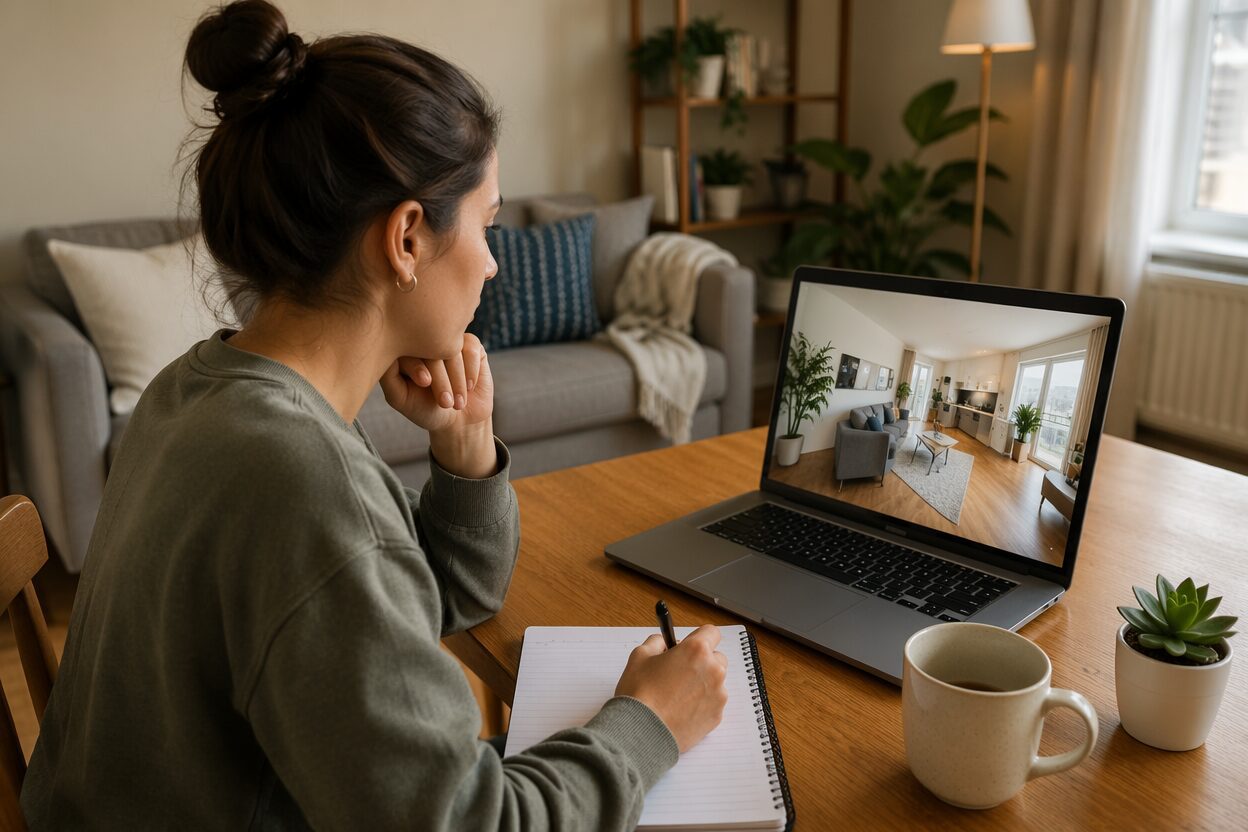
Look, a good virtual tour can show you a lot. Layout. Light. Noise level if they open a window. The vibe of the hallway. Even how beat up the baseboards are (landlords forget to hide that stuff). But the tour has to be real. Not a slideshow of six flattering angles from 2019.
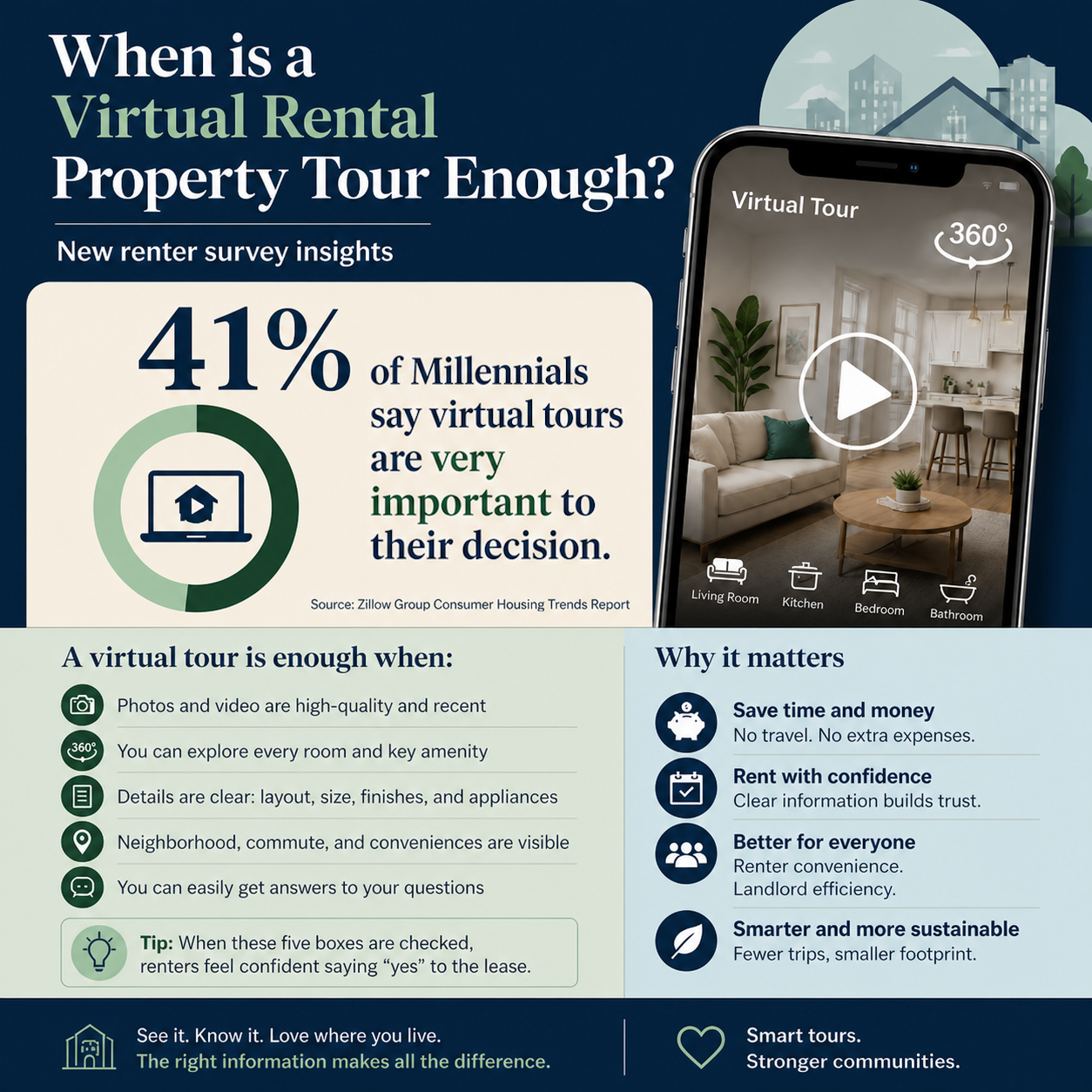
Signs it’s a legit, current walk through
When I work with clients on this, the first thing I check is whether the tour behaves like a person is holding a phone. Slight shake. Normal pacing. Awkward pauses. You know. Human behavior.
What you want to see:
- A single continuous video or 3D scan that doesn’t jump around weirdly
- The person filming can show a live time cue (today’s paper, phone lock screen, lobby sign)
- They open closets, cabinets, and the fridge (yes, the fridge)
- They walk from the unit to the hallway and toward the exit so you can clock the building vibe
- They show the view out of each main window, not just the “pretty” side
Situations where virtual is usually fine
Honestly? If it’s a professionally managed building with an established leasing office, a real address, and a verifiable website, virtual can be perfectly fine. Especially if you’re moving for a job and can’t fly in twice. Same if the unit is in a big complex that’s basically cookie-cutter. Floor plan A is floor plan A. The only mystery is condition.
And for budget-smart renters, there’s a hidden upside. A solid virtual tour saves you money. No weekend gas burns. No taking time off. No “application fee roulette” across ten places you’ll never actually choose.
Red flags that mean virtual won’t cut it
Real talk: scammers love virtual-only. It’s their favorite constraint. They’ll push urgency. They’ll act annoyed when you ask questions. They’ll try to make you feel “high maintenance.” This bugs me every time because careful renters aren’t high maintenance. They’re just not interested in donating money to a thief.
Virtual only is not the same as virtual first
Virtual-first is normal. Virtual-only with pressure is sketchy. A legit landlord or property manager should be able to offer a live video call walkthrough, a third-party showing, or at least a verifiable showing schedule. Even if the unit is occupied, there’s usually a way. Not always. Usually.
We’ve seen the same pattern a lot at Rental Secrets. The listing looks great. The price is suspiciously low. And the “owner” is conveniently out of town, but very eager to take your deposit to “hold it.” Nope.
Specific red flags we don’t negotiate with
These aren’t “maybe” flags. They’re “close the tab” flags.
Watch for:
They won’t show the exterior of the building. They dodge the address. They can’t answer basic questions like who pays utilities or what the lease term is. Or they ask for payment via wire, gift card, crypto, or some nonsense that can’t be reversed. If they refuse to do a live video call because “the connection is bad.” Come on.
If you want more scam-prevention tactics and how to sanity-check listings, our virtual tours and scam prevention resources are where we keep the practical stuff.
How to get what you need from a virtual tour
So you’re open to virtual. Cool. Don’t just watch the tour like it’s a Netflix trailer. Treat it like an inspection. You’re trying to spot cost surprises. The stuff that hits your budget in month two.
Ask for a live walk through with your script
I used to think pre-recorded 3D tours were enough. Turns out they’re only enough when the unit is in good shape and the manager is transparent. A live call is where you learn whether someone’s hiding problems.
Here’s a script we’ve used with clients:
“Can you do a quick live walk-through from the unit door, through the kitchen and bathroom, and then move on to the views from the two main windows? Also can you show me under the sinks and the breaker panel?”
That last part, breaker panel, makes people nervous in a good way. It separates pros from amateurs. And it’s a subtle tell. If someone’s legit, they might say, “Sure, give me a second.” If they’re faking it, they’ll act offended.
Focus on the money questions, not the pretty ones
Budget renters sometimes get distracted by paint color and staged pillows. Totally understandable. But what actually drains your wallet are things like poor insulation, old windows, a broken laundry situation, and parking policies with surprise fees.
During the tour, ask to see:
Heat source (baseboard, forced air, mini split). Window condition up close. Water pressure (have them turn on the shower and kitchen tap). Cell signal if you’re remote-working. Laundry room machines and pricing. Trash area (gross trash areas usually mean bad management, sorry). And yes, inside the oven. I’ve seen ovens that look like science experiments.
When renters should insist on seeing it in person
Sometimes, virtual is just not enough. Not because you’re picky. Because your downside risk is high. Families can’t gamble on safety. Students can’t afford a lease mistake. And young professionals relocating can’t get stuck paying two rents because the first place is unlivable.
Old buildings and quirky units deserve a real visit
Anything pre-war. Anything with “charming.” Anything with sloped floors or “unique layout.” Those places can be amazing. They can also come with noise, pests, plumbing quirks, or that one weird smell no camera will ever capture.
Ground-floor units. Units next to trash rooms. Units above commercial spaces. You want to listen. You want to stand there for two minutes in silence. You can’t do that through a curated video.
If you plan to negotiate, you want your own evidence
Here’s the thing. Negotiation goes better when you can point to real, specific issues. Not vague complaints. When we help renters negotiate at Rental Secrets, we’re always looking for objective leverage: visible wear, outdated appliances, noisy street exposure, missing amenities compared to similar listings.
A virtual tour can give you some of that. In-person gives you more. It also gives you confidence, which makes your negotiating tone calmer. And landlords respond to calm.
If you want the full negotiation framework, the guide to rental property tours for budget-smart renters ties the touring process to your rent-lowering strategy. We built it from what actually works in the field.
FAQs for When is a virtual rental property tour enough
Is a 3D tour better than a live video call?
Usually, a live video call beats a 3D tour for trust. A 3D tour can be super clear for layout, but it can also be old. Or selectively captured. On a live call, you can ask for weird angles. Under the sink. Inside the closet corners. Out the window. That’s where problems hide.
Can I sign a lease without seeing the unit in person?
Yes, people do it all the time. Especially for long-distance moves. But we’d want a few safety nets: verified management company, a live walkthrough of the exact unit (not “similar unit”), written confirmation of fees and utilities, and a lease you’ve read carefully. And if anything feels rushed or slippery, slow it down. A legit deal will still be there tomorrow.
Your next step before you send money
Virtual tours are enough when the tour is current, the owner is verifiable, and your budget risk is low. They’re not enough when the listing smells like urgency, the price is too good, or the building type tends to hide problems.
So do this: ask for a live walkthrough and request two or three “prove it” shots. Then decide. Calmly. That’s the move. Because sometimes there’s just no substitute for being there.
Disclaimer: This article does not constitute legal advice.