

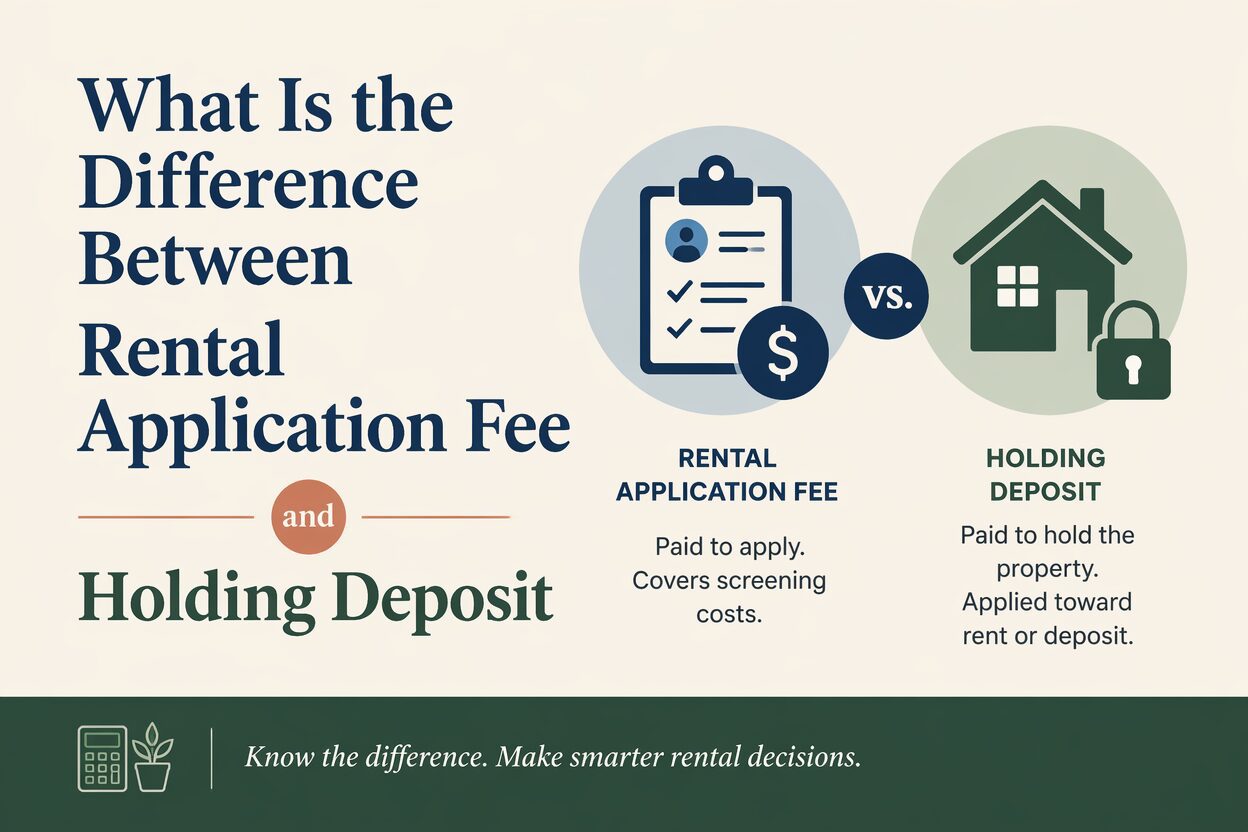
A rental application fee and a holding deposit both show up early in the renting process. They feel similar to your bank account. But they’re not the same thing. And mixing them up creates confusion in the application process and makes the apartment search process more expensive than it would otherwise be.
We see this a lot at Rental Secrets. A renter thinks they “put a deposit down” to apply. The landlord thinks they charged an application fee and separately asked for a holding deposit. Confusion. Bad vibes. Sometimes a lost apartment.
Application fee versus holding deposit in plain English
Here’s the clean distinction we use with clients.
What an application fee is really paying for
An application fee is usually a processing charge. It’s meant to cover things like background checks, credit reports, and the admin time to review your application. Most of the time, it’s nonrefundable. Even if you don’t get approved. Even if you change your mind. Even if something outside your control prevents you from moving forward with the rental.
Real talk. Some landlords price it fairly. Some use it as a soft profit center. Not always malicious. But it happens.
What a holding deposit is actually doing
A holding deposit is money you put down to get the landlord to take the unit off the market for a short window while you finish steps toward moving in (final approval, signing, paying move-in funds).
It’s more like, “We’re serious. Stop showing it.”
And the big detail. A holding deposit is often credited toward your security deposit or first month’s rent if you sign the lease and move-in. If you don’t sign, it might be partially refundable, fully refundable, or totally kept. Depends on the agreement and local rules. It also depends on how clean the paperwork is, and it’s not always clean.

Where each one shows up in the timeline
Timing is how you catch the difference fast. When you’re touring after work, half hungry, trying to do math in your head. Timing saves you.
Typical sequence for an application fee
Application fees show up when you submit your application. Usually right then. Before approval. Sometimes before you’ve even seen a lease.
That’s why we tell renters to slow down for 60 seconds and ask, “What exactly am I paying for?” Not in a confrontational way. Just direct. Because if they’re charging an “application fee” after approval, that’s unusual. Not impossible. Just very unusual.
Typical sequence for a holding deposit
Holding deposits tend to appear after the landlord thinks you’re a good fit. Or when they want to confirm you’re not going to ghost.
I had a client last month (young professional, moving cities) who was asked for a holding deposit immediately after the tour, before they even applied. That’s not automatically wrong. But it’s a flag. It means the landlord is using the holding deposit like a gatekeeper. So we pushed for everything in writing before any money moved. They ended up getting it applied to the security deposit. Clean outcome.
If you want a broader walkthrough of the whole process, our guide to rental housing applications for renters and landlords lays out the usual steps and where people get nickeled and dimed.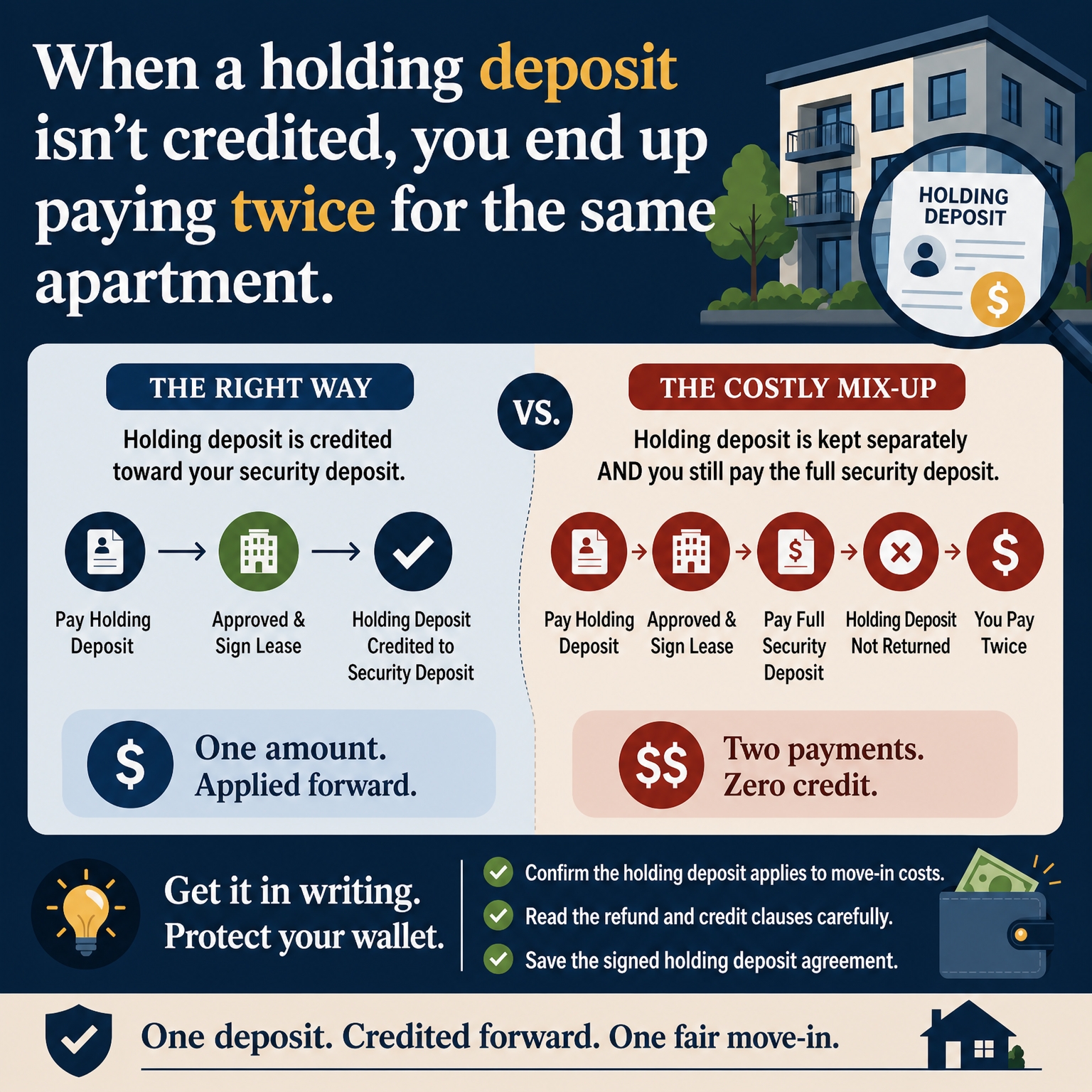
Refundability and what makes you lose the money
This is where most arguments happen. Also where group chats light up with “Is this legal??”
Application fees are usually nonrefundable
Most of the time, an application fee is gone the moment it’s paid. Even if you’re denied. Even if you find a better place the next day. That’s why we recommend you only apply when you’re actually ready to take the place if approved.

One exception that pops up. If the landlord never runs the screening at all and just sits on your application. Some landlords will refund voluntarily if you ask calmly and you’ve got receipts and timestamps. Not guaranteed. But it happens.
Holding deposits depend on the deal you agreed to
A holding deposit can be refundable or not. The deciding factor is usually the written agreement: how long the unit is held, what counts as backing out, and whether the deposit converts into part of your move-in costs.
Look for language like:
- “Nonrefundable if applicant fails to sign lease by X date”
- “Will be applied to security deposit upon lease execution”
- “Refunded if applicant is denied”
- “Refunded minus administrative costs”
- “Holding period ends at 5 p.m. on…”
And yes, the “fails to sign by X date” line matters. People think they have until the weekend. The paper says 24 hours. Then the landlord keeps the holding deposit. It’s brutal. It’s also common.
For a deeper breakdown of the different upfront charges landlords use, we keep a running set of explainers in our rental application fees, deposits, and upfront costs resources. That’s the stuff you want bookmarked.
How landlords think about these charges
If you’re a renter trying to lower costs, this part helps. Because once you understand the landlord’s incentives, you can negotiate without sounding like you’re trying to “win.” You’re just trying to be treated fairly.
Why landlords like application fees
From the landlord side, application fees reduce tire-kickers. They also cover screening costs. And they signal seriousness. But there’s another thing people don’t say out loud. Application fees can also help manage volume. A $0 fee can mean 40 applications. A $50 fee might mean 12. Less chaos.
Landlords and property managers. If you’re reading this. Clear disclosure builds trust. Spell out what you run (credit, criminal, eviction history). Say whether you accept reusable reports. People remember transparency. They renew more often when they don’t feel tricked early.
Why landlords ask for holding deposits
Holding deposits protect the landlord from lost time. If they stop marketing and you disappear, they lost a week of rent. Or more. So they want a commitment device.
Renters hear “deposit” and assume it’s their money waiting safely on the sidelines. Landlords hear “deposit” and think “compensation if you back out.” That mismatch causes the fight.
At Rental Secrets, when we coach renters, we don’t tell people to refuse everything. We aim for clarity plus leverage. You can often get a holding deposit converted into part of your move-in funds, in writing. Or get a denial-based refund clause. Small wording change. Big difference.
What to ask before you pay anything
You don’t need to sound like an attorney. Just ask normal questions. The kind you’d ask if you were buying a used car and didn’t want a weird surprise.
Quick questions for an application fee
Try:
“Is the application fee refundable in any situation?” (You’re listening for an honest “no” plus an explanation.)
“What screenings are you running and when do you run them?” Some places charge the fee, then delay screening for days. That’s not great.
“Do you accept a recent reusable tenant screening report?” Sometimes you can avoid a duplicate fee, especially with smaller landlords. Doesn’t always work. Worth asking.
Quick questions for a holding deposit
Ask these before sending money:
“How long will you hold the unit, and what date and time does that end?” Get a timestamp.
“Where does this money go if we sign?” You want: credited to security deposit or first month’s rent.
“When do we get it back if we’re denied?” Approval risk shouldn’t be on you.
“Can you email the holding deposit agreement before I pay?” This is the whole move.
And a small tactical tip from our experience. If you’re trying to negotiate rent, don’t do it while you’re confused about fees. Clean up the fee conversation first. Then talk price. Otherwise the landlord hears, “this person is going to be a headache.” Even if you’re totally reasonable.
FAQs for What is the difference between rental application fee and holding deposit
Can a landlord charge both an application fee and a holding deposit?
Yes. It happens all the time. The key is whether each charge has a clear purpose and clear terms. Application fee for screening. Holding deposit for taking the unit off the market. What you don’t want is a holding deposit that’s basically non-refundable and not credited to your move in costs.
If I pay a holding deposit, is the apartment mine?
Not necessarily. A holding deposit usually means the landlord intends to stop marketing for a defined period. But you still may need to pass screening and sign the lease. So get the terms in writing. Especially what happens if you’re denied and what happens if the landlord rents it out anyway (yes, that happens too).
Your next move before you hit send
Application fee equals screening cost. Usually nonrefundable. Holding deposit equals “pause the market for me.” Usually credited to move-in costs, unless the agreement says you lose it for backing out.
So before you pay anything, ask for the terms in writing. Keep it simple. Save the screenshots. And if you’re trying to keep rent low long-term, this early stage matters more than people think. It sets the tone for the whole lease relationship. That’s the whole thing.
Disclaimer: This article does not constitute legal advice.