


Talk to a housing lawyer when the problem stops being annoying and starts being expensive. Or risky. Or both. You don’t need a lawyer for every weird landlord text. But you also don’t want to wait until you’re standing in court holding a crumpled lease like it’s a lucky charm.
We work with renters all the time at Rental Secrets. A lot of people come to us wanting lower rent (love that). Then a side issue pops up. A fee. A threat. A “notice.” And suddenly it’s less about negotiation and more about protecting yourself.
When the landlord starts talking notices and deadlines
Look, deadlines change the whole vibe. A landlord can be “just checking in” for weeks, then drop a 3-day notice and act like you’re already out. That’s when we get serious.
Pay or quit notices and rent demands that feel off
Sometimes the amount on the notice is wrong. Late fees stacked on late fees. “Administrative” charges. A mystery $250 because someone “had to come by.” It happens.
When I work with clients on this, the first thing I check is the lease language on fees and the local rules on what’s actually allowed. Cities and states get picky here. Most landlords know it. Some count on you not knowing it.That’s the trap.
But you’re trying to keep costs down, you can’t afford to pay fake charges just to make the noise stop.
Eviction filings or threats that don’t match reality
Real talk: some eviction threats are a bluff. Some aren’t. You don’t always know which one you’ve got until the paperwork shows up.
If you’ve been paying, or you’ve got proof the landlord refused payment, or you’re dealing with a repair issue that made the unit unlivable, a housing lawyer can help you respond in a way that doesn’t accidentally admit something. Tiny wording mistakes can hurt you later. I hate that. But it’s true.
And if you want a bigger roadmap on renter-landlord disputes and fair housing issues, we keep a running resource list here: legal rights and dispute guides for renters and landlords.

When repairs turn into a health and safety problem
Thing is, “maintenance issue” can turn into “legal issue” fast. Mold. No heat. Bad wiring. A lock that doesn’t lock. Stuff that makes you feel unsafe in your own place.
Habitability problems that won’t quit
I used to think every repair dispute was a simple “put it in writing” situation. Turns out some landlords treat written requests like a challenge. They ignore you. Or they retaliate. Or they send someone who doesn’t fix anything and then marks it “complete.”
A lawyer matters when you’re considering steps like withholding rent, repairing and deducting, breaking the lease, or reporting to code enforcement. Those moves can work. For the wrong facts though? They can blow up.
Retaliation after you complained
Here’s a pattern we’ve seen: renter reports a leak. Or calls the city. Two weeks later, rent jumps. Or you get a “lease violation” for something everyone does. Or the landlord suddenly “needs the unit back.” Sure.
Retaliation protections exist in a lot of places, but the details matter. Timing. Documentation. What you said. Where you said it. A housing lawyer can help you package the story so it’s not just your word against theirs.

If you’re a landlord or property manager reading this, this is where tenant relationships either get better or get scorched. We’ve seen solid owners keep good tenants by just communicating and fixing things. It’s boring. It works.
When money disputes go beyond a normal security deposit fight
Security deposits are supposed to be simple. Often they’re not. And when you’re budgeting hard, that deposit is not “nice to have.” It’s a storage unit. It’s groceries. It’s a moving truck.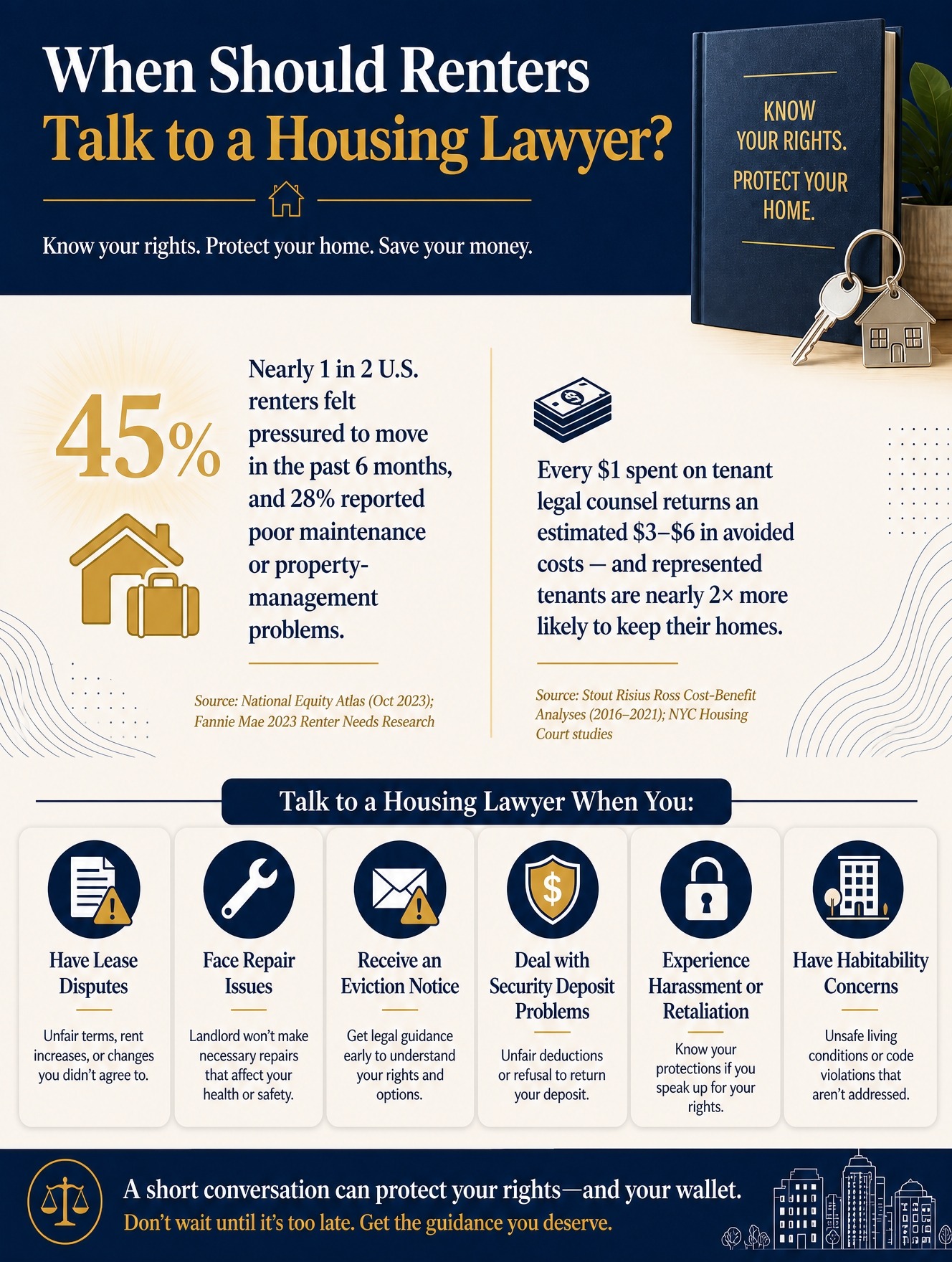
Deposit deductions that look invented
Normal wear and tear versus “damage” is the classic argument. But the ugly stuff is the vague invoice. Or no receipts. Or the landlord charging you for a full repaint because you hung two pictures.
In our experience, the strongest renters do two things early. They document move-in condition like they’re filming a tiny documentary. And they ask for the itemized statement in writing when they move out. Not a phone call. Not a casual text thread that disappears.
A lawyer can help when the deposit rules in your area have strict timelines, penalty amounts, or required documentation. Some places punish bad-faith withholding. Some don’t. You want to know what you’re working with.
Fees, charges, and “rent” that keeps shape-shifting
Another one we see: landlords who advertise one rent number, then add required monthly fees after you apply or after you move in. Amenity fees. Trash fees. “Technology package.” That one always makes me laugh. Not in a good way.
If your monthly total cost is changing and the lease doesn’t clearly allow it, get advice early. Don’t wait until you’ve paid it for six months and it becomes “the usual.”
This is also where our negotiation work at Rental Secrets can save you money before you sign. Lower base rent is great. But controlling add-ons is sometimes the bigger win.
When discrimination or roommate issues get real
Honestly? A lot of renters second-guess themselves here. “Maybe I’m overreacting.” Sometimes you are. Sometimes you’re not. Discrimination can be loud. It can also be quiet and slippery.
Fair housing red flags during screening
If you’re hearing comments about kids, disability accommodations, where you’re from, your religion, your partner, your identity, or anything that feels like “we don’t rent to people like you,” that’s not just rude. It can be illegal.
And discrimination isn’t always spoken. It can show up as impossible requirements that suddenly apply only to you. Or being “next in line” forever.
A housing lawyer can tell you what evidence actually matters. Screenshots. Dates. Who said what. And what agency complaints look like in your area. Those processes can be slow. Still worth it sometimes.
Roommates, sublets, and messy lease responsibility
Now, the roommate stuff. This is where young professionals and students get burned.
You move in with a friend. It’s fine. Then they stop paying. Or they move out and swear they’ll “still Venmo you.” Sure they will.
If you’re on a joint-and-several lease, the landlord can usually chase any one of you for the full amount. That’s the gut punch. A lawyer can help you understand your exposure and whether you can force a lease change, push for a release, or use small claims against the roommate.
How to decide fast without lighting money on fire
Lawyers cost money. We’re not pretending otherwise. The goal is to spend a little to avoid spending a lot. Or losing a case. Or getting an eviction record that haunts you for years. But, it may very well be worth it if you’re experiencing any of the following:
- You got a formal notice (or court papers).
- Your landlord is refusing repairs that affect health or safety.
- You’re being hit with big money demands that don’t match the lease.
- You suspect retaliation or discrimination.
- You’re about to take a serious step like breaking the lease or withholding rent.
Start with a short consult and come prepared
Here’s what makes consults productive (and cheaper). Bring your lease. Bring the timeline. Bring the proof. Not ten minutes of vibes.
What we tell renters to gather:
Lease PDF. Addenda. Photos and videos. Repair requests. Payment receipts. All notices. And the screenshots of the texts where the landlord gets… creative.
Most of the time, a housing lawyer can tell you quickly whether you’re in “simple letter fixes this” territory or “you need legal strategy” territory.
Use negotiation first when it’s still a business disagreement
But sometimes you don’t need a lawyer yet. You need leverage. Market facts. A clean ask.
That’s basically what we do at Rental Secrets. We teach renters how landlords think. What they care about. Vacancy risk. Comparable rents. Concessions. Timing. We’ve seen people shave hundreds off monthly rent just by asking the right way and backing it up.
If you’re earlier in the process and you want to avoid future mess, start with our guide to rental housing applications for renters and landlords. It’s the stuff we wish everyone knew before they paid application fees and signed whatever was put in front of them.
FAQs for When should renters talk to a housing lawyer
Is it worth hiring a housing lawyer for a security deposit under $1,000?
Sometimes, yes. Especially if your area has penalties for wrongful withholding. A lawyer might write a demand letter that gets the deposit returned without court. Or they might tell you it’s a clean small-claims case and you can handle it yourself. The value is clarity. And not wasting months chasing the wrong angle.
Will calling a lawyer automatically make my landlord evict me?
Usually no. Landlords evict when they think it benefits them, not because you Googled a number. The bigger risk is escalation from sloppy communication. A lawyer can actually lower the temperature by keeping everything factual and properly documented. That said, some landlords take everything personally. If yours is that type, you want your paper trail tight.
Your next step
When you’re dealing with basic negotiation, you’ve got options. When you’re dealing with deadlines, court papers, unsafe conditions, or discrimination, get legal advice sooner than your instincts want to. Waiting feels cheaper. It often isn’t.
And if your goal is simpler, lower rent, fewer surprise fees, and less lease regret, that’s our lane at Rental Secrets. We’d rather help you avoid the mess than fight through it after.
Disclaimer: This article does not constitute legal advice.