

Approve the application when you can actually say “yes” with a straight face. Not when you’re tired. Not when you’re spooked. And not when you’re hoping the problems magically disappear after move-in. That’s how both renters and landlords end up stuck. And annoyed.
We work with renters at Rental Secrets on this exact moment. The waiting. The “did I get it?” text spiral. And we also talk to landlords who want fewer headaches and fewer turnovers. So yeah. Timing matters.
Approval timing is about risk and speed
Here’s the thing. Most landlords aren’t trying to be mysterious. They’re trying to avoid two painful outcomes. A non-paying tenant. Or an empty unit that bleeds cash every day.
So when should a landlord approve? When the file is complete and the risk is understood. Not necessarily “perfect.” Understood.
For landlords, the clock starts when the application is complete
Real talk: an application isn’t “submitted” until it’s workable. That means IDs are clear, income docs are readable, references have phone numbers that actually ring, and the screening fee has cleared (if your state allows it).
I had a property manager tell me, “We’re not slow. We’re waiting on the applicant.” Brutal. Also often true.
Landlords should approve quickly once they’ve got what they need because the good applicants disappear. They don’t wait around. They apply to three places, maybe five. They take the first clean yes.
For renters, speed is a budgeting tool
Waiting costs money. Application fees stack up. Hotel nights happen. Storage units get rented. And if you’re trying to reduce rent long-term, delays can push you into the “fine, whatever, I’ll take it” unit that’s $150 more than you wanted.
We usually tell renters: treat application speed like you treat a credit card due date. It’s not “nice to be on time.” It’s expensive not to be.
If you want the bigger picture on how screening typically works, our rental application screening and approval process overview breaks down the flow and what tends to stall approvals.

What counts as an approvable application
Most of the drama comes from mismatches. The landlord expects one thing. The renter assumes another. And nobody says it out loud.
The basic pass is consistency
Income doesn’t have to be glamorous. It has to be consistent with the rent and consistent with the story.
Example. A young professional shows pay stubs that match the employer listed. Great. A student shows a part-time job plus a parent guarantor. Also fine. A family shows two incomes but one is new. Not a deal-breaker. But it does change what the landlord needs to feel safe.
What landlords should be looking for is whether the documents line up. Names. Dates. Amounts. Employer contact. Same address as the ID, or a reasonable explanation when it’s different (people move, shocker).
Landlords should approve when these items are confirmed
We’re not fans of vague “looks good” approvals. Approve when the checks that matter are done. What matters depends on the property, but most of the time it’s:
- Identity verified and the application is complete
- Income verified or guarantor verified
- Credit and background report reviewed against your written criteria
- Prior housing history checked, at least one solid reference
- Move-in timeline and deposit readiness confirmed
Renters. If you’re trying to look “easy to approve,” this is your checklist too. Hand them the evidence before they ask. It may feel unfair. But it works.

And if you want the renter-side playbook, we keep it all in our guide to rental housing applications for renters and landlords. It’s the stuff landlords notice. And the stuff they won’t say out loud.
When landlords should wait before approving
Approving too early is how you end up with a lease you regret. Waiting too long is how you lose the good renter. Fun.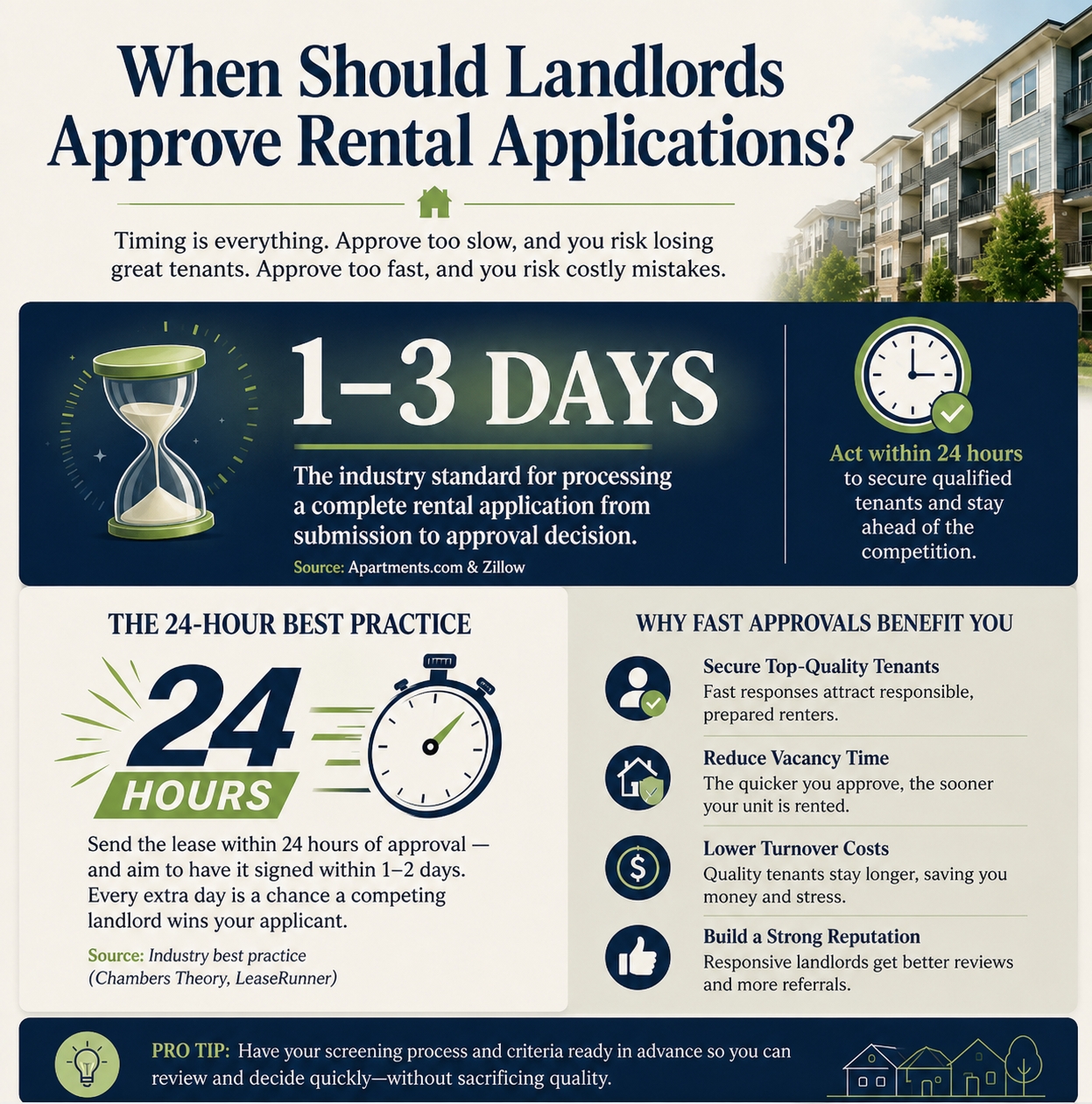
So when is “wait” the right call? When there’s missing info that changes the risk, or when the property is subject to rules that require consistency and documentation.
Incomplete or conflicting info needs a pause
Conflicting doesn’t mean “fraud.” Sometimes it’s just life being messy. New job. Recent breakup. Moving out of a roommate place where utilities weren’t in your name. But the landlord still needs clarity.
If the application says income is $6,000/month and the pay stub shows $3,400, you don’t approve yet. You ask. Same with a rental reference that can’t confirm dates, or an employer that isn’t reachable.
Renters, if you know something looks weird, say it first. Put it in writing. Short. Calm. “My pay changed last month due to commission. Here are the last 3 months plus offer letter.” That kind of thing.
Multiple applicants and fair housing consistency
Landlords have to be careful. You can’t “feel it out” with one person and then apply strict criteria to another. That’s how discrimination claims happen, even when nobody meant harm.
So if a landlord has several applications in at once, waiting until each is processed the same way can be the smartest move. Not because they’re dragging their feet. Because consistency keeps you safe.
This bugs renters, I know. “Why can’t you just approve me?” Because the landlord might have to document why you were chosen. Especially in competitive markets. Especially with property management companies.
How fast is reasonable and what delays really mean
Most approvals, when things are clean, happen fast. Same day. Next day. Two business days. When it stretches, it’s usually one of a few boring reasons.
Normal approval windows and common slowdowns
In our experience, small landlords can approve quicker. Fewer layers. Property managers can be fast too, but they’re tied to process. Verification calls. Software queues. The boss who signs off.
Stuff that slows it down:
Third-party screening reports taking longer than expected. Employer HR that won’t verify over the phone. Former landlords who never answer. Or the applicant paid the fee but the payment is still pending.
And sometimes, honestly, the landlord is deciding between two strong applicants. That’s the awkward one. They might keep you warm while they see if the other person pays the deposit.
Renters can nudge without sounding desperate
Look, you don’t want to pester. But silence kills deals. A simple check-in is fine.
Something like: “Hey, just checking if you need anything else from me. We’re ready to pay the holding deposit today if approved.”
That last part matters. It signals you’re organized. It also tells the landlord you’re not going to vanish for three days while “thinking about it.”
At Rental Secrets, we teach renters to use timing as negotiation fuel too. If you can move fast, you can sometimes ask for something small in return. Slightly lower rent. Waived pet rent. A longer lease at the same rate. Not always. But these are real negotiation angles.
Approve, deny, or conditionally approve
Not every application is a clean yes or no. Most landlords know this. Many renters don’t.
Conditional approvals can be fair and renter-friendly
Conditional approval is basically: “We’re okay with this, but we need a safety rail.”
Examples. A guarantor. A larger security deposit where legal. Proof of savings. Shorter initial lease. Sometimes prepaid rent, but that’s touchy and not legal everywhere.
Renters: conditional doesn’t mean you’re a bad tenant. It usually means your file is thin. This hits students a lot. And people with new jobs, or folks rebuilding credit after a rough year.
Landlords: put the condition in writing. Keep it consistent with your written criteria. And decide fast. Don’t toss out a conditional offer and then take five days to send the lease. That’s how you lose trust before move-in.
Denying quickly is better than soft-denying
Soft-deny is when a landlord just stops responding. It happens. It’s also a mess.
If you’re denying, do it cleanly. Send the adverse action notice when required. Return what must be returned. Keep notes. Everyone moves on.
Renters, if you get denied, ask one calm question: “Was it income, credit, rental history, or something else?” Sometimes they’ll tell you. Sometimes they can’t. But when they do, it helps you fix the next application. Or choose a different strategy, like adding a co-signer upfront.
FAQs for When should landlords approve rental applications
How long should a landlord take to approve an application?
Most of the time, 1 to 2 business days once the application is complete and screening reports are back. Same-day approvals happen when the landlord has simple criteria and the applicant’s file is clean. If it’s dragging past 3 to 5 business days, something is stuck. Missing verification. Competing applicants. Or a process bottleneck.
Can a landlord approve one applicant and still take backups?
Yes, and it’s common. A landlord might approve you, then keep another applicant “in case” you don’t pay the holding deposit or sign the lease by the deadline. The renter-friendly version is when the landlord gives you a clear timeframe. “Approval is valid for 24 hours. Deposit due by 5pm tomorrow.” Clear. Not weird.
Your next move if you want a fast yes
Landlords should approve when the file is complete, the criteria are met, and the decision is documented consistently. Renters should aim to make that moment easy. Almost boring.
If you want to get approved faster and use that speed to negotiate rent more confidently, that’s basically what we do at Rental Secrets. Bring a clean application. Control the timeline. And ask for what you want before you’re locked in.
Disclaimer: This article does not constitute legal advice.