

Start with two decisions. Your real budget. And your non-negotiables. After that everything else gets easier.
Here’s the honest truth. The “finding rentals” part and the “screening” part are the same move. You’re trying to spot a place that’s priced right, run decently, and won’t turn your life upside down.
Also, quick pointer. If you want the bigger picture, we keep it all in our rental housing guide for renters and landlords. Keep this page open. Bounce back and forth. That’s how people actually read.
Get clear on your budget before you open Zillow
Look, most people search for a places to rent on vibes. Then they tour a place they can’t afford. And suddenly they’re doing financial gymnastics to get a rental that doesn’t fit their financial circumstances.
Use a simple rent number that protects your life
We like rules of thumb because they stop the spiral. The classic one is rent at about a third of gross income. It’s not perfect. But it’s a quick guardrail.
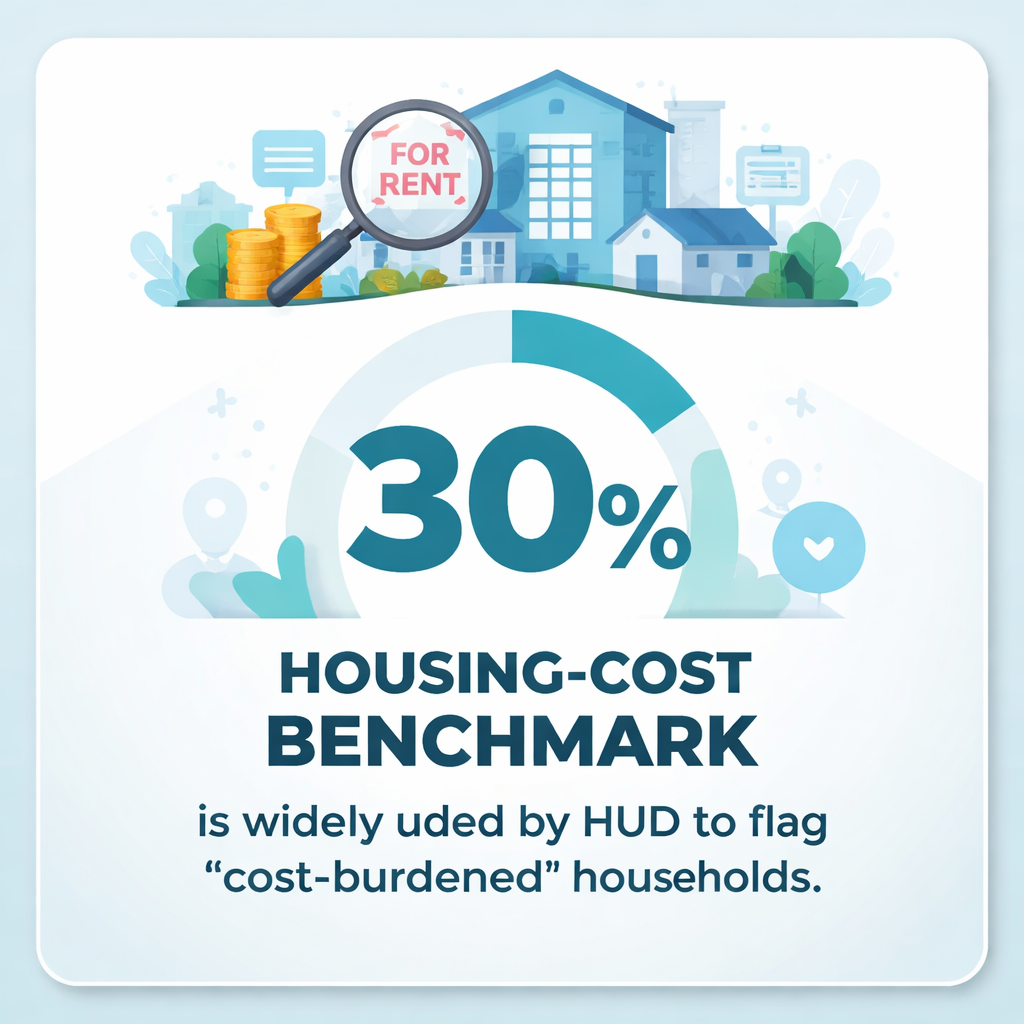
The 30% housing-cost benchmark is widely used by HUD to flag “cost-burdened” households. That’s why landlords, lenders, and assistance programs reference it. It’s baked into how the industry thinks.
Now. If you’re in a high-cost city, that 30% target can feel like a joke. Real talk. So we adjust the move. We pick a rent ceiling that still lets you save something monthly. Even a little. Because the minute you’re saving nothing, every single unexpected expense becomes a crisis.
Plan for the hidden costs that ruin the “affordable”
Utilities. Parking. Laundry. Commuting. Pet fees. Storage. That stuff doesn’t show up in the listing headline. It shows up when your checking account starts flinching. That great deal can evaporate fast once you learn that paid parking, trash, and internet are mandatory.

Finding rentals fast without falling for junk listings
You’re not just searching. You’re filtering out noise. And scams. And lazy property managers who won’t call you back anyway.
Where to search and how to keep it from taking over your week
Pick 2 or 3 sources. That’s it. One big platform. One local source (property management sites, local Facebook groups, university boards). And maybe one “off-market-ish” source like telling friends, coworkers, or classmates you’re looking.
And set a schedule. You don’t need to refresh listings every 12 minutes. You need to be consistent at the times new listings drop. Early morning. Lunch. Early evening. Short bursts. You’ll stay saner.
Spot the common red flags in the listing itself
Bad listings tell on themselves. Missing address. No interior photos. Weirdly emotional descriptions (“must be a good person”). And a price that’s a little too magical for the neighborhood.
Scams love urgency. They also love pushing you off-platform. If someone won’t talk by phone or insists on a deposit before a showing, pause. Hard pause. We’ve seen renters lose weeks of time chasing “landlords” who don’t even own the unit.
If you want more on that, our article on why rental housing scams target apartment hunters gets very specific. The scripts are repetitive. Once you know them, you can’t unsee them.
Screen the property like you’re inspecting a used car
Yes, you’re the one being screened. But you also get to screen them. You’re signing up for months of your life.
Timing the tour so problems actually show up
Touring at 2 p.m. on a sunny Tuesday can hide a lot. Try to see the place when neighbors are home. Or when traffic is loud. Or when the hallway smells like whatever it smells like.

And ask for a second look if you’re serious. Most decent managers won’t mind. If they act offended by basic diligence, that’s a preview of how maintenance requests will go.
We wrote a deeper piece on when to tour rental housing to spot problems. It’s the same idea as test-driving in the rain. You learn more when conditions aren’t perfect.
What to check during the walkthrough
Water pressure. Window locks. Under-sink leaks. Cell signal. Trash area. Mailboxes. The shared spaces matter. A lot. If the building can’t keep the entryway clean, that’s usually not a good sign.
Don’t ignore little stuff like loose handrails. Turns out that “little stuff” is a management style. If they let tiny safety issues linger, the big repairs don’t get urgency either.
Screen the landlord or manager without making it awkward
This part is weird because you’re trying to ask hard questions while still being “the chosen applicant.” Totally get it.
Questions that reveal how they operate
Ask about maintenance response times. Ask how they handle after-hours emergencies. Ask who actually does repairs. In-house team or lowest-bid contractor roulette?
Ask about renewal timing and rent increases. Not because you’re trying to sign a lease today. You’re just trying to learn their pattern.
If you want a list, you can literally copy-paste into Notes before a showing, use our rental housing questions to ask landlords. It’s designed to get real answers, not polite fluff.
Read the friction points carefully
How do they handle communication? Email only? Text only? A portal? A phone call that never gets returned? This sounds small. It’s not. It becomes your day-to-day.
Also, notice how they talk about previous tenants. If it’s all “tenants are the worst,” that’s a warning. Good operators have standards. They don’t put bitterness on display.
Prepare your application like you actually want to win
Most renters treat the application like a chore. Then they’re shocked they lose the unit to someone who was easier to evaluate and approve.
Build an application packet before you fall in love with a place
Have your documents ready. ID. Proof of income. Pay stubs. Offer letter. Bank statements if needed. References. Pet info. Whatever applies to you. The exact list varies, but speed matters.
We keep the typical checklist in what rental housing documents landlords require. It’s not about being perfect. It’s about being complete.
Know how credit screening usually plays out
Credit isn’t just a score. Many landlords look for collections, unpaid utility bills, and patterns of late payments. Some care about debt-to-income. Some don’t. Some use automated screening tools that spit out a risk grade.
FICO reports that 35% of a FICO Score is driven by payment history. That’s why one late payment can sting more than people expect. Especially if it’s recent.
If you’re worried about your profile, don’t guess. Get ahead of it. We break down common approval dynamics in how rental housing credit checks affect approval.
Negotiation starts earlier than you think
Here’s the thing. Negotiation isn’t a dramatic moment at a kitchen table. It’s the whole process. You’re building a case that you’re low-risk and low-maintenance. That’s what landlords actually buy.
What landlords tend to value more than a sob story
Stability. Clean paperwork. Predictable income. Solid communication. A move-in timeline that matches their vacancy. And proof you’ll take care of the unit.
We’re not saying “act fake.” We’re saying present yourself like a professional. Even if you’re a student. Especially if you’re a student. Short. Specific. No over-sharing.
How we approach rent reduction without setting off alarms
Most renters ask for a discount as if they’re asking for a favor. That usually fails. Our approach at Rental Secrets is market-based. We look at local comps, days on market, seasonality, and vacancy pressure. Then we frame a reasonable ask tied to terms that help the owner (like a longer lease, a faster start date, or fewer concessions later).
And yes, sometimes the best “discount” is something else. Free parking. Reduced amenity fees. Free storage space. That stuff changes your real cost. And it’s often easier for them to say yes to.
For landlords and managers reading this
If you’re on the other side of the table, you already know this. Good tenants are hard to find. And expensive to replace.
Make screening transparent and you’ll get better applicants
Publish your criteria. Income multiple. Credit expectations. Pet rules. Deposit rules. People self-select out. Your inbox gets cleaner.
Retention starts at showing, not at renewal
Show up on time. Answer questions directly. Follow through on what you promised during the tour. Renters remember the first month. They decide whether to renew way earlier than you think.
We’ve watched buildings cut turnover just by improving the handoff. Clear move-in instructions. A maintenance contact that actually answers. A simple welcome checklist. It’s boring. But it works.
A practical workflow you can actually follow
Do this in order. Not perfectly. Just in order.
- Set a rent ceiling and a total monthly ceiling.
- Pick 2 or 3 search sources. Schedule short search windows.
- Pre-screen listings. Kill anything with obvious red flags.
- Tour with a checklist. Take photos and notes.
- Ask the manager questions that reveal response style.
- Submit a complete application packet fast.
- Negotiate with comps and terms, not emotion.
And if you get stuck. Like you’re not sure whether to push for concessions, or your application keeps getting edged out, or you’re worried a past credit mistake is killing you. That’s literally the stuff we handle in consulting at Rental Secrets. Sometimes you just need an outside brain for 30 minutes. Then you’re back in control.
Disclaimer: This article does not constitute legal advice.