


Walk out of a rental tour and your brain’s doing math whether you like it or not. Rent. Fees. Deposit. Moving truck. The weird smell in the hallway that makes you think “air purifier?” Yeah. Budgeting starts right there, not after you “think about it.”
We see this with renters all the time at Rental Secrets. People tour three places in a weekend, fall in love with one, and then the budgeting happens in a panic on Sunday night. Let’s not do that.
Right after the tour, do the two numbers that matter
Honestly? You don’t need a spreadsheet yet. You need two numbers. What you can afford. What the unit will actually cost you.
Set your real monthly ceiling
Look, “I can technically pay it” isn’t the same as “I can live my life.” When I work with clients on this, we pick a ceiling that leaves room for normal chaos. Car repair. A friend’s wedding. A week where you’re too tired to cook.
Our rule of thumb inside Rental Secrets is simple. Make the ceiling a number you can pay even in an annoying month. Not a perfect month.
Build the unit’s monthly cost in five minutes
So, right after you leave the showing, open your notes app and do this quick calc. Rent plus the stuff that’s basically rent in a costume.
- Quoted rent
- Parking or garage fee
- Pet rent (and any pet admin fee)
- Trash, valet trash, or “service” fees
- Average utilities you’d actually pay (ask what’s included)
That last one trips people up. A unit with “cheap rent” and electric heat can quietly punch your budget in January. I’ve watched it happen. Tenant was thrilled in September. Miserable by February.

Turn tour notes into a rent negotiation budget plan
Thing is, budgeting isn’t just “spend less.” It’s also “pay less.” And the tour is where you collect negotiation ammo without being weird about it.
Write down what you saw, not what you felt
Real talk: feelings lie. Notes don’t. Right after the tour, capture the concrete stuff you can reference later.
Examples that actually help in a rent conversation:
Was the unit still dirty from the last tenant? Were there mismatched appliances? Old carpet smell? No blinds? A window that stuck? A laundry setup that’s shared and looks like it’s been through things?
And yes, you can still love the place. We’re not trying to talk you out of it. We’re trying to keep you from overpaying for it.
Ask for the fee sheet and the full lease terms early
This bugs me about the rental process. A lot of places tour beautifully, then the fee sheet is dropped on you like a ton of bricks. Admin fees. Package locker fees. Tech fees. Liability waivers. All monthly. All real money.
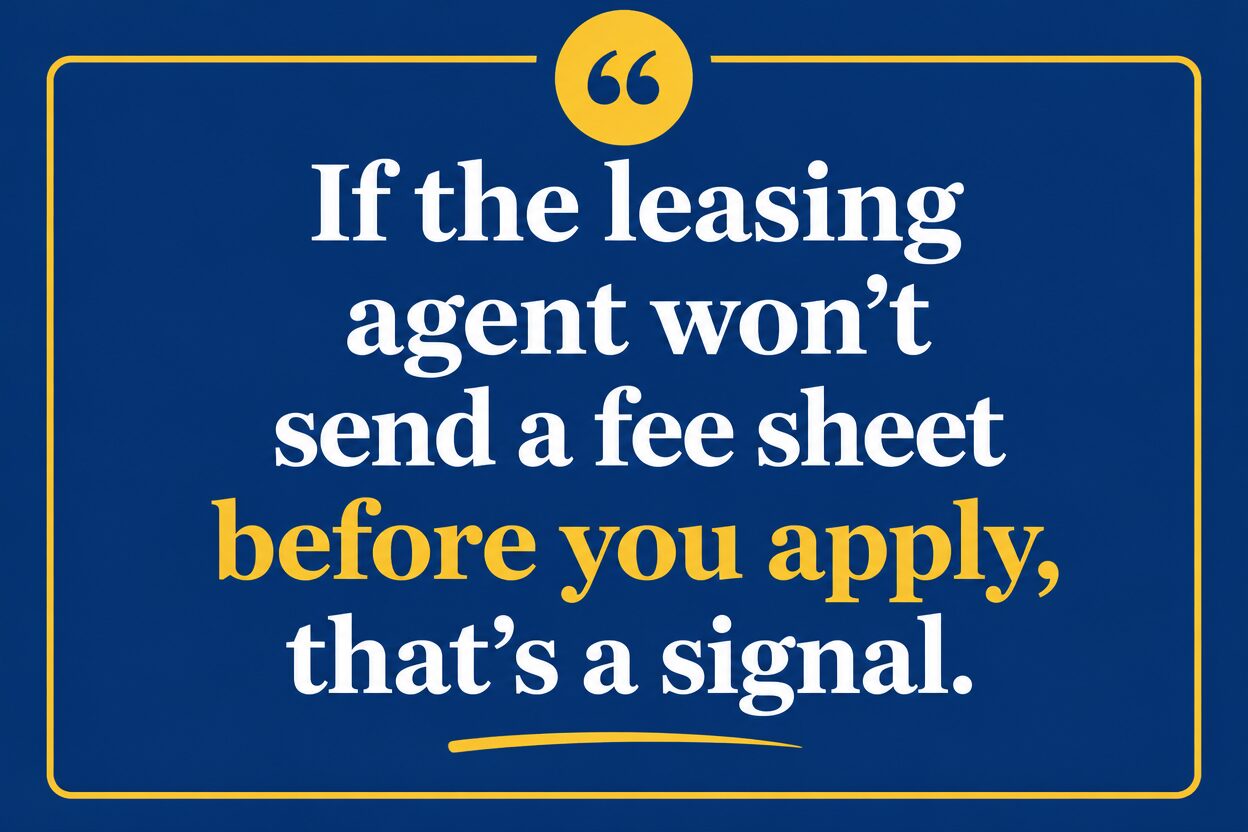
If the leasing agent won’t send a fee sheet before you apply, that’s a signal. Not always a dealbreaker. But it’s a signal.
If you want a structured way to compare what you’re seeing across tours (and what landlords tend to flex on), our rental property tours guide for budget-smart renters lays it out in plain language. It’s the stuff we teach renters when they’re trying to negotiate without lighting the relationship on fire.
Budget for move-in like a grown-up, not like a dreamer
Now, the move-in month. The month that eats savings. Most people budget rent and deposit and then act shocked by the rest.
Separate one-time costs from monthly costs
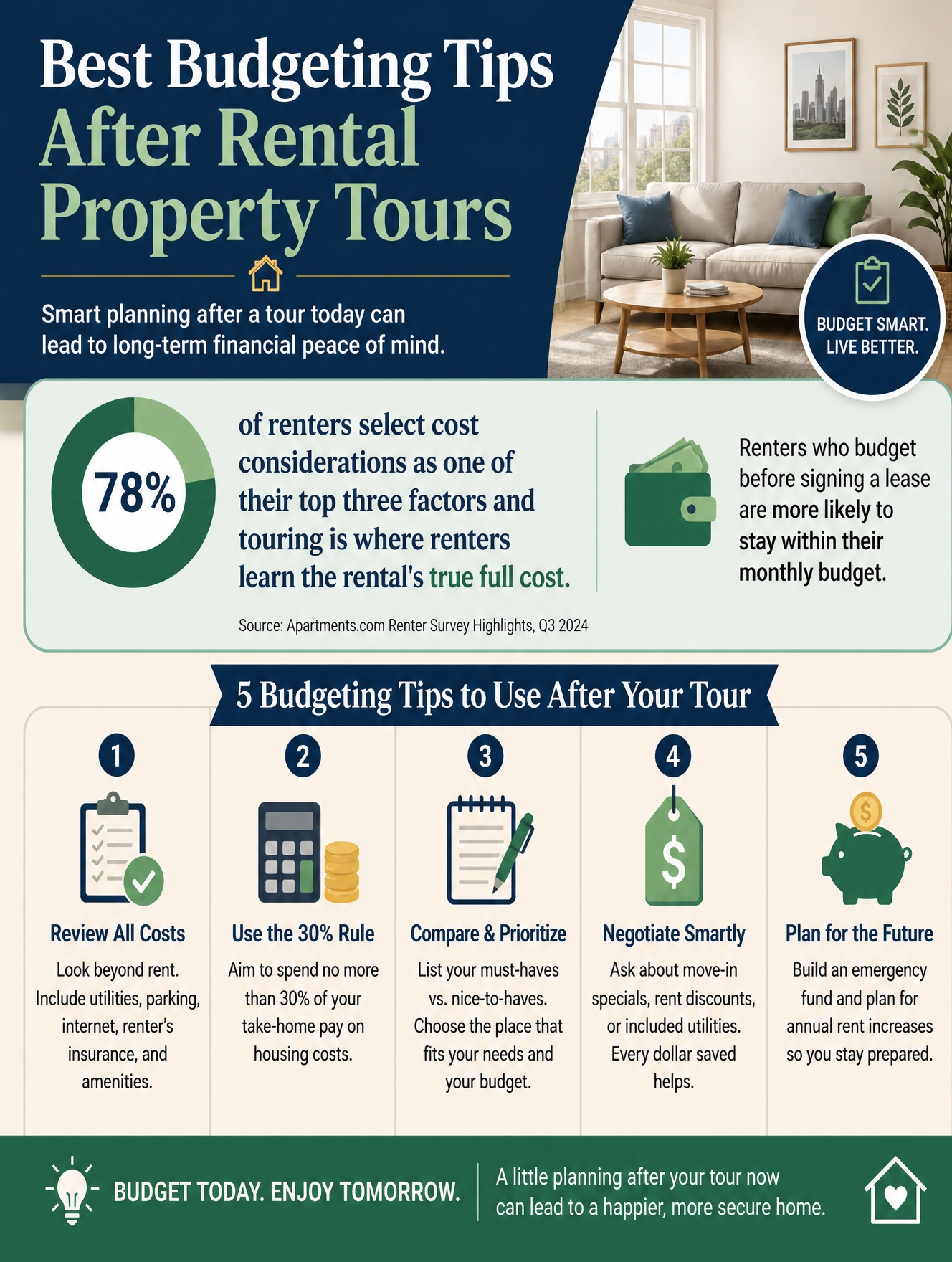
Here’s what I do personally. I keep two buckets. One-time move-in. Ongoing monthly. If you mix them, you’ll think a place is “too expensive” when it’s just front-loaded. Or worse, you’ll think it’s fine and then get squeezed every month.
One-time tends to include deposit, first month rent, any last month rent, application fees, pet deposit, key fobs, and setup costs like internet installation. Sometimes a cleaning fee. Sometimes a “nonrefundable move-in fee” (yep, that’s a thing).
Monthly is where the silent budget killers live. Pet rent. Parking. Storage. Mandatory renters insurance through their program. Utilities that aren’t included but weren’t mentioned clearly during the tour.
Don’t ignore the “quality of life” line items
Small example. I had a client who toured a place with a tiny kitchen and almost no storage. They were like, “Whatever, I’ll make it work.” Two months later they were spending way more on takeout. Not because they’re irresponsible. Because the kitchen made cooking a pain.
So yeah, budget for stuff you’ll actually do. If the unit is far from work, add commuting. If there’s no laundry in-unit, add laundromat time and cost. If it’s a fourth-floor walkup, maybe you’re not buying that heavy bookcase you’ve been eyeing. That’s budgeting too.
Use your tour comparisons to pick the cheapest good option
Most people compare apartments like they’re comparing vibes. We prefer a boring comparison. A little ruthless. It saves money.
Create a three-line scorecard per property
After years of this, we’ve found renters do better with tight criteria. Not 22 categories. Three.
For each place you tour, write:
Monthly all-in cost. The number you calculated, not the advertised rent.
Risk factor. Like “fees unclear,” “maintenance looked slow,” “noise risk,” “parking chaos.”
Negotiation angle. Something you can reasonably ask for. Lower rent. Free parking. Waived admin fee. Longer lease at same rate. A unit upgrade.
That last one matters because it changes how you budget. If you have a real shot at getting $75 off monthly, your ceiling can stretch without pain. Or you can keep the ceiling and bank the savings.
Don’t fall for the cheapest sticker price
But the cheapest rent isn’t always the cheapest life. Places with higher rent sometimes include water, trash, or a decent internet deal. Some have better insulation. Better windows. Better HVAC. That’s money.
One exception. If you’re only staying a few months (sublet, internship, semester situation), then high move-in costs can wreck you. Front-loaded fees hurt more when you don’t have time to spread them out.
If you want more ways to use the tour itself to get a real cost perspective, we’ve got a full section on that in our using the property tour to get a cost perspective page. It’s basically the mindset shift: stop touring like a shopper. Tour like a negotiator with a calculator.
Lock the budget before you apply, then protect it during lease signing
Here’s what I mean. The application is where budgets go to die. People get excited. They apply fast. Then the add-ons start appearing.
Before you apply, ask these three budget questions
Ask by text or email if you can. Paper trail helps.
1) What’s the total due at move-in? Not just deposit. Total.
2) What recurring monthly fees are required? Required is the magic word.
3) What utilities are resident-paid and what’s the average? Average, not “varies.”
If they dodge, you’ve learned something. And if they answer clearly, that’s a green flag for the relationship. Landlords and property managers who are transparent tend to keep tenants longer. Less drama. More renewals. Everyone wins.
At lease signing, watch for budget creep
We’ve reviewed a lot of leases. The sneaky part usually isn’t the rent line. It’s addendums. Mandatory services. “Program” enrollments. Fees for paying rent online. Fees for not paying rent online. I wish I was kidding.
And if you’re negotiating, don’t just negotiate the rent and ignore the fees. Sometimes the easier win is getting a fee waived. Or getting parking included. Or a longer fixed rent term. Rental Secrets teaches renters how landlords think here. The person you’re talking to often has more flexibility on fees and concessions than on headline rent, depending on ownership and occupancy.
FAQs for Best budgeting tips after rental property tours
How do we estimate utilities if the leasing office won’t give numbers?
Ask the current tenant if you can (sometimes you’ll catch them in the hallway). Ask the utility provider for average usage at that address (some will share ranges). And use the building clues. Electric baseboard heat tends to be pricier in cold months. Big single-pane windows too. Top-floor units can run hotter. It’s not perfect, but it keeps you from fantasy budgeting.
Should we stretch our budget for a nicer place if it feels safer or closer to work?
Sometimes, yes. But only if you price it honestly. If it saves you a car, a long commute, or daily rideshares, the “more expensive rent” might be cheaper overall. Safety is personal. So is stress. We’d still cap the rent at a number you can handle in an annoying month. That part doesn’t change.
Your next step after the tour
Do the all-in monthly number today. Not tomorrow. Then pick one place and try for a better deal, using what you observed during the tour and what you learned from their fees and terms. That’s the move. A calm budget. A cleaner negotiation. Less regret.
And if you want help turning those tour notes into actual leverage, that’s basically what we do at Rental Secrets. We’re big on staying respectful. Firm. And weirdly specific.
Disclaimer: This article does not constitute legal advice.