

Walk a rental once. With a roommate next to you. And you’ll realize how fast a “cute place” can turn into a low-key money trap.
Our team at Rental Secrets sees this all the time. You and your roommate tour. You ask about the stainless fridge. You forget to ask about how bills get split, what happens if one of you bails, and whether the neighbor’s subwoofer is basically a third roommate. Real talk, the questions you ask on a tour can save you hundreds a month. Or more.
Start with the roommate reality check
Before you grill the landlord, you and your roommate need to be on the same page. Not “generally.” Like actually.
Ask each other the awkward stuff out loud
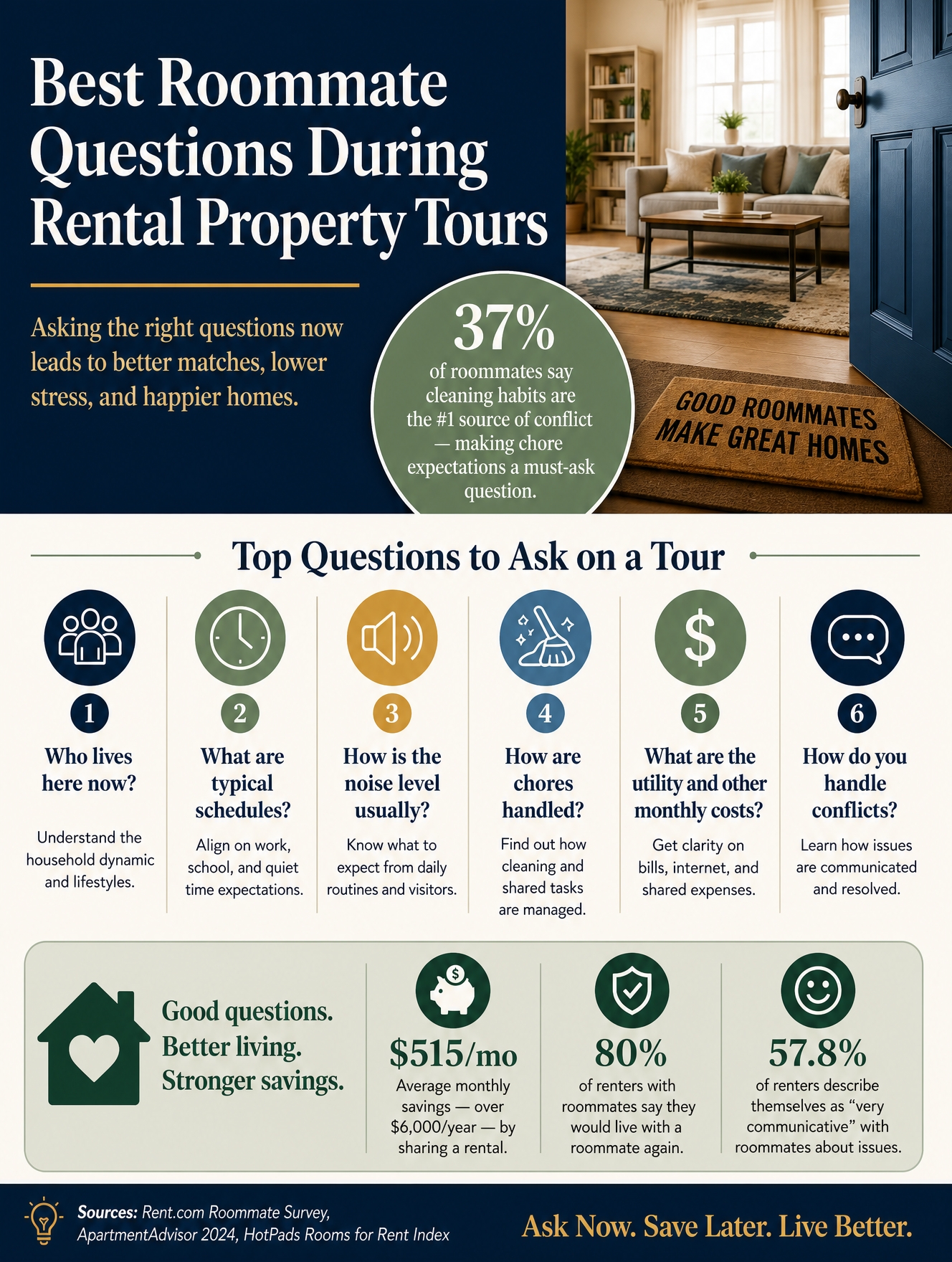
Here’s what I do when I’m coaching roommates. I make them say the quiet thoughts. It feels cringe for five minutes. It’s cheaper than a broken lease.
Try these during the tour, even if you whisper them in the hallway:
- “What’s your real budget ceiling after utilities and fees?”
- “How do we handle guests and partners staying over?”
- “Are we splitting groceries and household stuff, or separate?”
- “What’s a dealbreaker for you? Noise, cleanliness, smoking, pets?”
- “If one of us loses income, what’s the backup plan?”
That last one bugs people. They think it’s negative. It’s not. It’s grown-up.
Decide how you’ll choose a room before you fall in love with the place
I’ve watched friendships get weird over a slightly bigger closet. Not kidding. It tends to happen when nobody sets a rule and you’re standing in the “good room” trying to be polite.
We recommend agreeing on one of these before the tour: coin flip. Highest rent gets biggest room. Or you bid an amount you’d pay for the nicer room and the other person can accept or counter. Simple. A little uncomfortable. Works.

Questions that expose the real monthly cost
Rent is the headline. The monthly total is the story. And landlords know you’re scanning for the headline.
Ask about every recurring charge, not just utilities
On tours, we push renters to ask in a way that forces specifics. So not “Any extra fees?” That gets you a casual shrug. Instead, try:
“Can you list every monthly charge that shows up on the ledger besides base rent?”
Then pause. Let them talk. Some buildings stack on trash, sewer, pest service, package lockers, tech fees, parking, pet rent, and “billing admin.” That last one is my personal least favorite. It’s like paying them to invoice you.
Follow with: “Which utilities are individually metered, and which are billed back?” Submetering and RUBS (ratio utility billing) can swing your costs, especially in older buildings.
Get the deposit and move-in math in writing
Most of the time, roommates are thinking month-to-month. Landlords are thinking move-in cash. That’s where a lot of people get squeezed.
Ask:
“What’s due at signing, and what’s due at move-in?”
And then: “Is the deposit one shared deposit or per-person?” In some places, it’s one deposit for the unit. Which means you can end up chasing your roommate for their share later. Fun.
Also ask: “What conditions typically reduce the deposit return here?” Watch how they answer. If they get vague, take photos of everything during move-in. Every scuff. Every chip.
If you want a broader walkthrough of how we think about tour math and negotiation timing, our rental property tour strategy for budget-smart renters lays it out in plain English.
Roommate-specific lease questions that prevent chaos later
Lease language is where good roommate situations go to die. Not dramatically. Just slowly. Over Venmo requests and unreturned texts.
Joint and several liability and how it hits roommates
Look, “joint and several” is a phrase you want to treat like a flashing warning light. It usually means each tenant is responsible for the full rent. Not just their half.
Ask directly: “Is the lease joint and several, or are we renting by the room?”
If it’s joint and several, ask: “If one tenant leaves, what’s the process to replace them?” Some landlords require a full re-qualify. Some allow a roommate addendum. Some just say “not our problem,” and you’re stuck paying.
Subletting, assignments, and early termination
I used to think subletting questions were “extra.” Turns out it’s the question that keeps people from nuking their savings.
Ask:
“Do you allow sublets or lease assignments? What’s the fee and approval timeline?”
Then: “What’s the early termination policy in real dollars?” Not “two months’ rent” as a concept. Ask what that means with their typical turnaround time and any marketing or repaint charges.
Landlords who have this organized will answer quickly. Landlords who don’t won’t. You’ll hear a lot of “we handle it case by case.” That’s not always evil. It’s just riskier.
Questions that reveal the building and neighborhood vibe fast
You’re not just renting walls. You’re renting the sounds through those walls. And the people on the other side.
Noise, security, and daily-life stuff you can’t fix
Try asking questions that make them describe reality, not features:
“What’s the most common complaint you get from tenants?”
If the answer is “nothing,” we get suspicious. Every property has something. Packages. Parking. Laundry. Late-night noise. Something.
Also ask: “How are quiet hours handled, and who enforces them?” A posted sign isn’t enforcement. A responsive manager is.
Security question that’s not weird: “How often do you re-key between tenants? Is it key, fob, or smart lock?” If they hesitate on re-keying, that’s a no from us most of the time.
Maintenance response tells you the future
Maintenance is where landlord-tenant relationships either get normal or get nasty. You can often tell on a tour.
Ask: “What’s the usual response time for non-emergency repairs, and how do tenants submit requests?”
Then, a follow-up I love: “Can you give me an example of the last repair you handled and how long it took?” That makes them leave marketing mode and go into memory mode.
If you’re touring student-heavy areas or roommate-dense buildings, you’ll probably want more roommate-specific tour ideas too. We keep a bunch of those on our rental property tours for students and roommates page.
How to ask negotiation-friendly questions without being awkward
Negotiation isn’t a confrontation. It’s information collection. That’s it. You’re building your case. Calmly.
Ask questions that uncover flexibility
When I work with clients on this, the first thing I check is what the landlord actually cares about. Speed? Low vacancy? Longer lease term? Less work?
Use questions like:
“How long has the unit been available?”
“Do you have any upcoming vacancies in this building with similar layout but different price?”
“What lease terms do you prefer, and why?”
That last one gets surprisingly honest answers. Some managers will basically tell you what they’ll trade for. A longer lease. Earlier move-in. Auto-pay. Whatever.
Turn tour notes into a rent conversation
Here’s the part people skip. They see flaws. They never connect them to dollars. You can, politely.
Say something like: “We like the place. The base rent is a bit tight for our budget after the fees. If we sign this week, is there flexibility on rent or move-in costs?”
And yes, I said “we.” It signals stability. Roommates who look coordinated feel less risky to a landlord.
At Rental Secrets, we teach renters how landlords think about pricing, concessions, and vacancy. Not in a shady way. In a market-based way. You’re not begging. You’re negotiating with context.
FAQs for Best roommate questions during rental property tours
Should roommates apply together or separately?
Usually together, because the landlord is approving the household income and risk as one package. But if the property offers by-the-bedroom leases, separate applications can make sense. Ask what happens if one person is approved and the other isn’t. That scenario is more common than people think.
What’s the best way to split rent when rooms aren’t equal?
We like a simple method: compare bedrooms by the stuff that’s hard to ignore (size, private bath, closet, natural light, noise). Put a dollar value on the upgrade. Then split the remainder evenly. Keep it written down. Even a one-paragraph roommate agreement helps. It’s not about mistrust. It’s about fewer resentful Venmo notes.
Next step after the tour
Right after you leave, stand outside and do a two-minute debrief. Seriously. The details evaporate fast. Ask your roommate: “What felt off?” and “What would make this a yes?” Write down the answers.
Then email the property with your top five clarifying questions. Get it in writing. That paper trail is your friend when the lease shows up with surprise language.
If you want our full tour approach that feeds straight into a lower-rent conversation, use the rental property tour strategy for budget-smart renters. It’s the same mindset we use with clients. And it works best before you’re emotionally attached to the place.
Disclaimer: This article does not constitute legal advice.