

Most landlords can’t keep your rental application paperwork forever. Legally, the answer depends on what the record is, what state you’re in, and whether the landlord is covered by certain federal rules. But in practice? We see a pretty consistent range. Think 1 to 5 years for most application files. Longer if there’s a dispute. Shorter if the landlord runs a tight, minimalist shop.
And yeah, it feels creepy when you realize how much stuff you handed over. Pay stubs. IDs. Bank statements. Sometimes your entire life story. We’ve helped renters negotiate rent by understanding how landlords think (that’s basically what Rental Secrets does), and this question comes up a lot once people realize applications are not “one and done.”
The real reason landlords keep application records
Look, it’s not always about being nosy. Most of the time it’s about covering their butt.
Fair housing complaints and why paper trails matter
Landlords get nervous about discrimination claims. Fair housing rules are real. And complaints don’t always happen instantly. Someone gets denied. They stew. They talk to a friend. They file later.
So the landlord keeps a file that shows: “Here’s our criteria. Here’s how the applicant scored. Here’s why we picked someone else.” It’s boring. But it’s also their shield.
One weird thing we’ve seen. A landlord rejects three applicants, approves the fourth, then gets a complaint from applicant #2 six months later. The landlord’s only defense is the original notes and screening output. No notes? It turns into a vibes argument. Nobody wants that.
Collection issues and small claims fallout
Application records also help if money gets messy. Application fees. Holding deposits. Chargebacks. “You never disclosed this.” “Yes we did.” Cue the screenshots.
Even if you never moved in, a landlord might still need proof of what you agreed to during the application stage. Especially if they refunded something, or didn’t, and you dispute it.

Common legal timeframes, and why they vary so much
Honestly? People want one number. They want “it’s 3 years.” Clean. Simple. Not happening.
Federal rules that can apply to some landlords
If a landlord is subject to certain federal fair housing enforcement patterns (and especially if they’re using specific funding programs or have particular compliance requirements), record retention can land around 1 to 2 years for application-related materials. But not every landlord is in that bucket. Small landlords renting a single condo often aren’t living under the same admin overhead as a big property manager.
And then there’s the practical side. Even if a rule says “keep it at least X,” lots of operators keep it longer because storage is cheap and lawsuits are expensive.
State landlord-tenant rules and general business record laws
States come in with their own flavor. Some states have consumer reporting rules. Some have landlord-tenant statutes that talk about application fees and documentation. Some don’t say much, but general business record retention norms fill the gap.
In our experience, many property managers aim for about 3 years as a default. It’s long enough to handle most complaint windows and routine disputes. Not so long that they feel like they’re hoarding sensitive data for sport.

One more complication. The “right” timeline can shift based on the statute of limitations for certain claims where they operate. That’s why two landlords in two states can give totally different answers and both be acting reasonably.
What counts as an application record, exactly
Here’s what bugs me. Renters hear “application record” and think it’s just the form. Nope. It’s usually a bundle.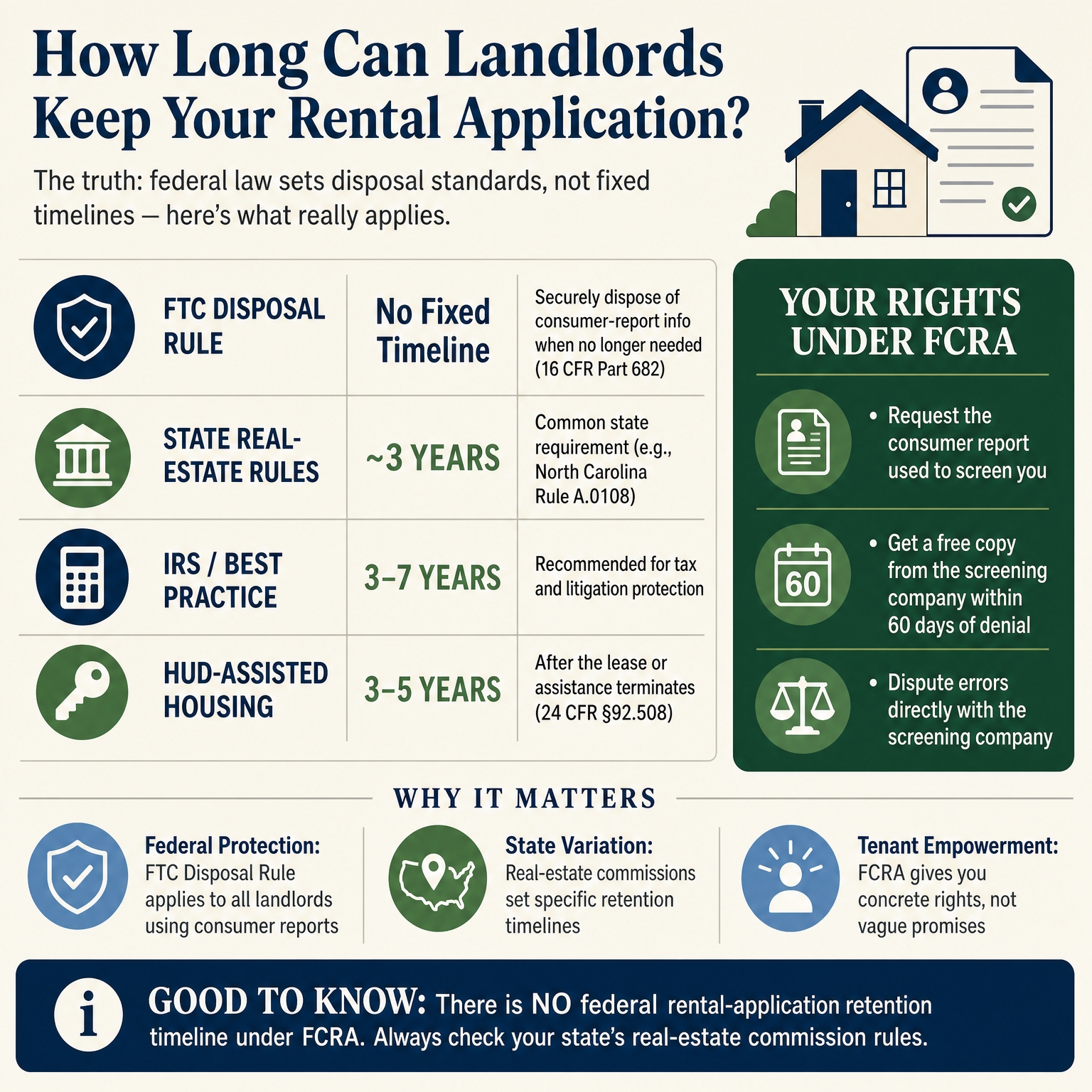
The stuff landlords keep, even when you think they won’t
Application packages often include:
- The application form and any notes or scoring sheets
- Screening reports or summaries (credit, criminal, eviction)
- Proof of income (pay stubs, offer letters, benefit statements)
- ID copies and contact info
- Email and text threads about the unit and conditions
And screening is the big one. A lot of landlords use third-party screening platforms. That means your data may sit with the screening company too, not just the landlord. Two different retention policies. Two different “delete” buttons (or lack of buttons).
Denied vs approved applicants
Denied applicant files often get kept for fair housing defense. Approved applicants are different. Their application usually rolls into the tenant file. That can stick around longer because it connects to the lease, deposits, damages, accounting, and all the post-move-out stuff.
So if you’re asking, “How long can they keep my application,” the annoying follow-up is, “Did you rent the place?” Because that changes the records the landlord generates and the timeline involved.
If you want the bigger context on how applications work and how landlords evaluate them (so you can bargain from a position of strength), our guide to rental housing applications for renters and landlords breaks down the whole process in plain language.
Privacy and data security: what you can ask for and what actually happens
Real talk: retention is only half the problem. The other half is whether they protect it.
Questions we recommend asking before you apply
Yes, you can ask. No, it’s not “being difficult.” If anything, it signals you’re organized.
Ask stuff like: How long do you keep application files? Is it digital, paper, or both? Who has access? Do you redact ID numbers? What happens if you’re denied?
Most landlords won’t have a beautifully written policy ready to send you. But their reaction tells you a lot. Calm and specific? Good sign. Defensive and weird? That’s a clue too.
Deletion requests and the limits
Can you demand they delete it? Sometimes. Some states give stronger rights around personal data. Some don’t. And even where rights exist, landlords can often keep certain records if they need them for legal compliance or to defend against claims.
What we’ve seen work: ask them to delete extra sensitive attachments once a decision is made. Like bank statements. Or a full SSN. Many landlords don’t need the whole document forever. They needed it to verify income that week. That’s it.
And if you want to understand the legal rights angle more broadly, we keep a running set of plain-English resources in our fair housing and application dispute help section. It’s not about scaring anyone. It’s about knowing what’s normal.
How this affects rent negotiation and tenant relationships
This is the part people miss. Record retention isn’t just legal housekeeping. It can affect how landlords behave. And how you negotiate.
Renters: use your clean paper trail as leverage
When we coach renters at Rental Secrets, we talk a lot about credibility. Landlords price risk. Not just rent. Risk.
So when you apply, you’re creating a file that can follow you. A tidy, consistent application package makes you easier to approve. That can translate into negotiating room. Not always. But we’ve seen it. A landlord chooses the “low drama” applicant even at slightly lower rent because vacancy is expensive and renter drama headaches are worse.
I had a renter tell me, “I don’t want to share more than I have to.” Fair. But here’s the twist. If you share a clean, well-organized set of documents and you ask smart questions about retention and privacy, you often come off as stable, not sketchy. That’s useful.
Landlords: shorter retention and better security builds trust
For property managers reading this. Tenants remember how you handled their data. Especially young professionals and families. They’ve dealt with data breaches. They’re tired.
A simple written policy helps. So does a schedule. “We keep denied applications for X months/years, then securely delete.” Say what you do. Then do it. If a renter asks, don’t act insulted.
And please, don’t keep SSNs in a shared inbox forever. That’s not “normal.” That’s an avoidable mess.
FAQs for How long can landlords keep rental application records legally
Can a landlord keep my rental application even if I was denied?
Yes, most of the time. Denied applications are often kept to document the decision in case of a fair housing complaint or a dispute about screening. How long depends on local law and the landlord’s policy. In practice we commonly see 1 to 3 years, sometimes longer if the landlord is conservative about risk or had prior complaints.
Can I request a copy of my application or the screening results later?
Sometimes. You can always ask the landlord for what they have, but they might say no or only share parts. If a third-party screening company was used, your rights may run through that company (especially for credit reporting type disclosures). If you’re trying to fix an error that affected your approval odds, it’s worth pursuing, because the same bad data can keep hurting you.
What we’d do next if this was your application
We’d ask the landlord, in writing, what their retention window is and what they store. Keep it polite. Short. Then we’d limit what you share going forward. No extra docs “just because.”
And if you’re applying to multiple places and trying to keep costs down, don’t ignore the negotiation angle. A strong application and a calm, professional tone can buy you flexibility on rent, fees, or lease terms. That’s the whole thing. It’s not magic. It’s market behavior. That’s what we teach at Rental Secrets.
Disclaimer: This article does not constitute legal advice.