
Rental scams during tours aren’t just annoying. They’re expensive. And they mess with your head because you’re already stressed, comparing rents, trying to stay on budget, maybe juggling class pickup schedules or a new job start date. So yeah. Let’s make this simple. You can tour smart without turning into a paranoid weirdo.
The pre-tour gut check that saves you hours
Look, before you even put shoes on, do a quick reality check. Most scams fall apart when you pressure-test the basics for five minutes.
Does the listing match the market, even a little?
If the rent is way under everything else nearby, your brain wants to believe it. I get it. I’ve watched clients talk themselves into “a miracle deal” because they wanted the numbers to work. I used to think bargains like that were rare-but-real. Turns out they’re usually bait.
Here’s a calmer way to do it. Pull up 3 to 5 comparable listings in the same neighborhood. Same bedrooms. Similar condition. You’re not trying to be an appraiser. You’re just looking for “within the normal range.”
At Rental Secrets, this is where we start anyway, because negotiation is easier when you know what the market is actually doing. A scammer hates market talk. A real owner can handle it.
Do the photos feel recycled?
Same couch. Same angle. Same staging you’ve seen in another city. That’s a thing.
We’ve had renters send us screenshots where the “unit” was clearly a short-term rental photo set. Fancy towels. Weirdly perfect lighting. No personal clutter anywhere. It’s not proof, but it’s a smell.
If you want more on what legit tours look like (virtual and in-person), our virtual tour and scam prevention resources are where we keep the practical stuff.

Red flags you can spot during the tour without being awkward
Thing is, scammers count on you feeling embarrassed to ask basic questions. So ask them. Politely. Like you’re ordering coffee.
The key test and the access test
If they can’t access the unit, that’s bad. If they “forgot the key,” also bad. If they want you to tour the outside only and “we’ll do inside after you pay the deposit,” that’s not a tour. That’s a setup.
And yes, sometimes a real agent has a lockbox issue. It happens. But the behavior is different. A real professional starts troubleshooting. Calls someone. Reschedules with a clear plan. They don’t push you to send money to “hold it.”
Pressure tactics that feel like a bad used-car lot
Real talk: urgency can be real. Rentals move fast. But fake urgency is a tool.
Watch for lines like “I have ten applicants, but you seem nice” or “Owner’s out of the country, so we have to do this right now.” I’ve heard versions of that for years. It’s almost a script.
One more: refusing to answer boring questions. Legit people answer boring questions all day. Move-in date. Utilities. Pet policy. Parking. If they get cagey, it’s not because you’re annoying. It’s because they don’t know. Or they don’t want a paper trail.

- They won’t show ID or company info, even briefly.
- They want cash, gift cards, crypto, or wire transfers.
- They won’t let you take a video during the tour.
- They rush you past details like lease term and fees.
- They dodge questions about who actually owns the property.
Proof you can ask for that legit landlords don’t mind
Honestly? Most decent landlords and property managers are relieved when you’re careful. It signals you’ll be careful with rent and the unit too.
Ask who you’re dealing with, then verify it
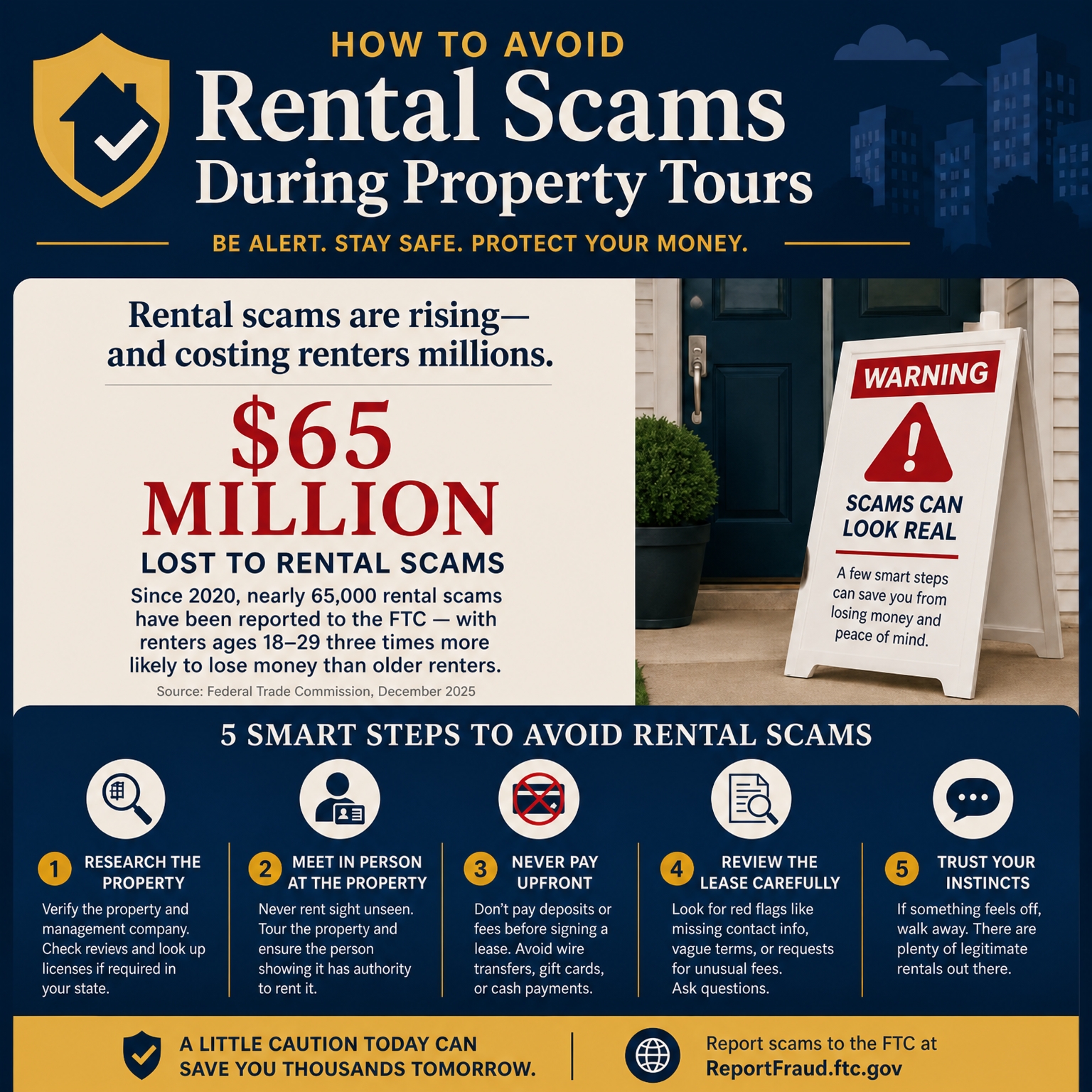
You’re allowed to say, “What’s your full name and your role with the property?” Then pause. Let it be quiet.
If it’s a property manager, ask what company. Google it on the spot. Check that their website matches the email domain. A Gmail address isn’t automatically a scam, but it’s a yellow flag if they claim to be a big management company.
If it’s an owner, ask how long they’ve owned it. Then confirm ownership in public records (most counties have an online assessor or recorder search). You’re not being extra. You’re being normal. If you’ve ever had your card skimmed at a gas station, you already understand this vibe.
Ask for the lease early, like an adult
This is where scammers get twitchy. They want money before paperwork.
We recommend asking for a sample lease or the actual lease draft before you apply. Not after. Before. A legit landlord may say they only provide it once you’re approved, but they’ll still give you the lease terms in writing: rent, deposit, length, fees, when it’s due, how notices work. If you can’t get that? It’s fog. And fog costs money.
If you want a clean checklist for evaluating terms (and using them to negotiate), our rental property tours guide for budget-smart renters lays out what to ask and when. We built it from the same conversations we have with clients who are trying to keep rent from eating their whole paycheck.
Money stuff: the exact moments scammers try to get paid
This bugs me because it’s where people get burned. Not during the tour. Right after, when they’re excited and tired.
Deposits before approval are a trap most of the time
Application fees can be legit. Holding deposits can be legit too. But only with paperwork. And receipts. And clear conditions on what happens if you’re not approved.
Here’s the pattern we see: scammer says you’re “approved” instantly, then asks for a deposit to lock it in. No screening. No ID. No lease. That’s not approval. That’s a payment request.
One exception: Some smaller landlords pre-screen informally and move fast. Fine. Still get something in writing that names the property address, the amount, and what it applies to.
Payment method tells you what they’re trying to do
Cash is hard to trace. Gift cards are basically untraceable. Wire transfers are hard to reverse. Crypto is… crypto.
Most real operators prefer traceable payments too. Online portal. Check. ACH. Card. Something that creates a record. And yes, there are shady legit landlords who want cash. But as a renter trying to protect your budget, your risk tolerance matters. You don’t get a prize for being trusting.
And don’t let anyone talk you into paying to “get the address.” That’s one of the oldest tricks. You’re paying for access to a place that might not even exist.
Virtual and self-guided tours without getting played
Now, a lot of tours are remote. Self-guided lockboxes. Video walk-throughs. Live FaceTime. It can be totally legit. It can also be a scammer’s playground. So you tighten the process a bit.
For live video tours, force real-time proof
Ask them to do small, annoying things on camera. Open the fridge. Show the view out the window. Turn on the faucet. Walk to the mailbox area. Say today’s date out loud while panning to a unique feature (like a weird stain on the carpet). That last one sounds silly. It works.
I had a client last month who got a gorgeous “video tour” that was clearly pre-recorded. They asked one simple thing: “Can you show me the circuit breaker panel?” The person disappeared. Gone.
For self-guided tours, confirm the system is real
Self-guided setups usually run through known platforms. They’ll have identity verification steps. They’ll have support contacts. They’ll have rules about showing your ID and returning keys. A random person texting you a door code is not the same thing.
And if you’re touring a multi-unit building, pay attention to the lobby. Name on the call box. Leasing office signage. Posted fair housing notices sometimes. Little signals. Real buildings leave traces.
Landlords and property managers reading this: being transparent here helps everyone. A clear tour confirmation email. A consistent point of contact. A receipt policy. You reduce scam risk and you look more professional, which helps retention later. Less drama. More renewals.
FAQs for How to avoid rental scams during property tours
Is it ever okay to pay a holding deposit before seeing the unit?
Sometimes, but it’s rare and it needs structure. In our experience, the safer version is: you’ve verified ownership or company legitimacy, you’ve seen a live tour (or toured in person), you have written terms for the holding deposit, and you get a receipt that identifies the address and the payer. If any of that is missing, we’d slow down.
What if the person showing the place says they’re doing it for a friend or relative?
That can be legit. It can also be a convenient story. Ask who will sign the lease. Ask who receives payment. Ask for the owner or manager to email you from a verifiable address confirming the arrangement. If they can’t connect you to the actual decision-maker, the risk of going sideways is drastically increased.
Your next move after the tour
So, after you leave the property, don’t send money while you’re still standing on the sidewalk. Go sit. Drink water. Pull up the address. Verify who owns it. Ask for the lease terms in writing. That little pause saves people.
And if you’re trying to keep rent low without taking on extra risk, that’s basically our whole thing at Rental Secrets. We help renters read the situation like a landlord would. Pricing, pressure tactics, timing. The unglamorous stuff that keeps you from getting played.
Disclaimer: This article does not constitute legal advice.