

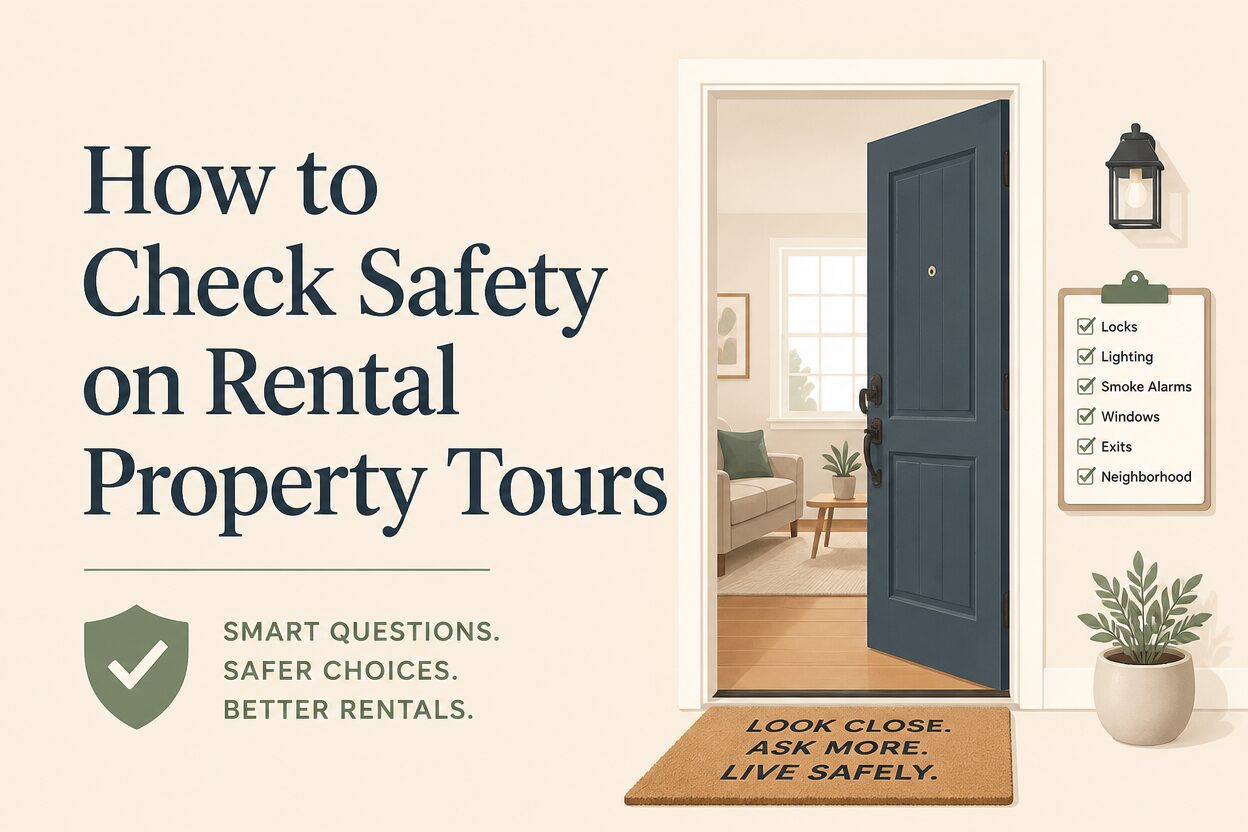
Start with safety. Every time. Cheap rent isn’t a deal if the place (or the tour) puts you in a sketchy situation. We’ve worked with renters long enough to see the same patterns pop up. And yeah, a lot of them happen during the tour, not after you move in.
So here’s how we check safety on rental property tours. Not the polite version. The version you’ll actually use on a Tuesday night after work when the landlord is “running late.”
Before you even show up, do a quick safety screen
Look, you don’t need a private investigator vibe. You just need a few guardrails so you’re not walking into weird stuff.
Confirm the showing details like you mean it
We recommend getting the full address, the unit number, and the name of whoever’s meeting you. Actual name. Not “Mike from maintenance.” And get a callback number. Not just email.
And ask one simple question: “Are you the owner, the manager, or the current tenant?” Their answer changes what’s normal. A current tenant showing a room in a shared house can be fine. A “tenant” showing a vacant unit with a no keys story. That’s when we pause.
Do a two-minute reality check online
Pull up the address on Maps. Check the street view. You’re not judging the neighborhood’s vibes like a movie critic. You’re checking basics. Lighting. Busy road. Is it a dead-end alley? Is the building clearly a building?
Then search the address plus “property management” or “rent.” You’re looking for consistency. Same rent range. Same photos. Same unit layout. A listing that feels like it was copied and pasted from five different places. That bugs me.
If you want more structure around tours in general (especially for roommates and student setups), we keep an ongoing rental tour tips for students and roommates page. It’s the stuff people forget to ask when they’re trying not to look awkward.
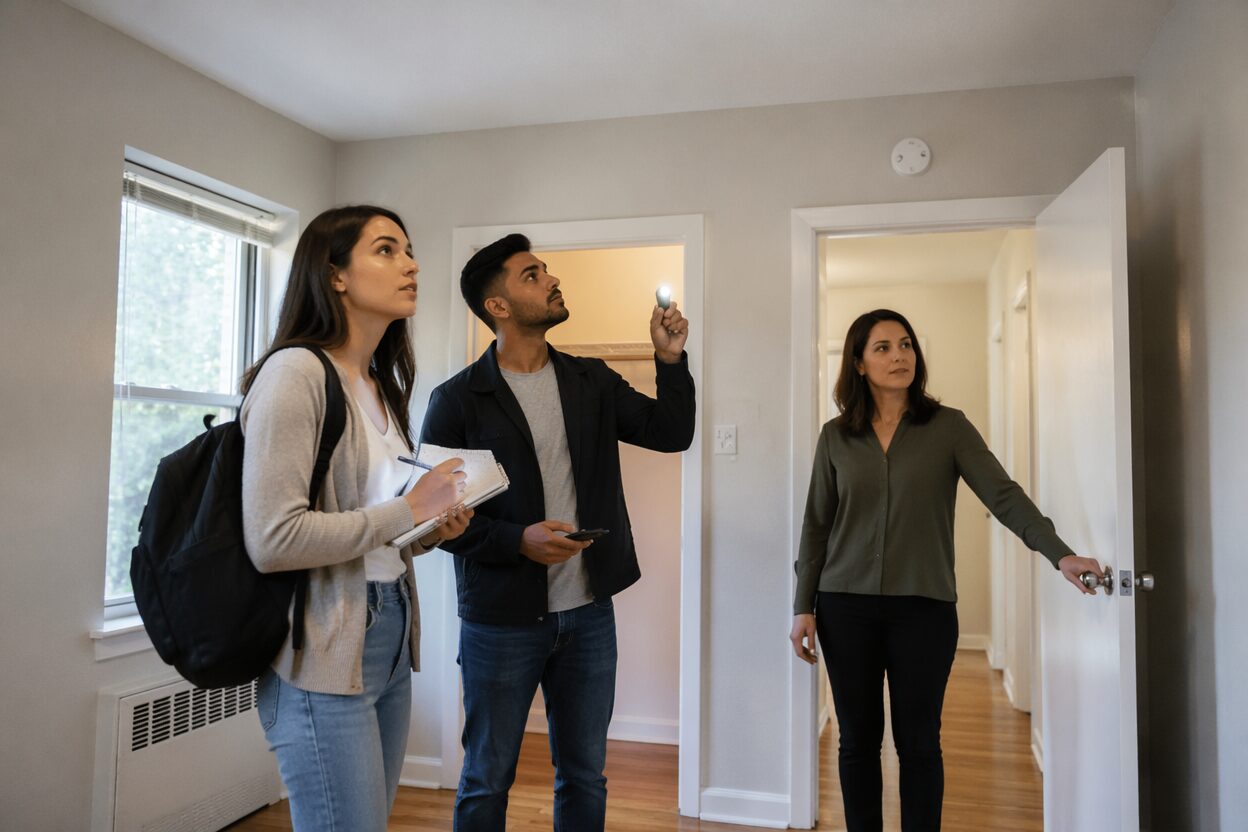
When you arrive, trust the environment, not the sales pitch
So, you’re on site. This is where most people get distracted by the shiny stuff. New countertops. Cute staging. And they ignore the parking lot that feels like a horror movie intro.
Approach like you’re checking a friend’s place
Before you walk in, look around. Are there working exterior lights? Can you see the building numbers clearly? Is the entryway visible from the street? Or are you walking through a narrow side path with tall fences and zero sightlines?
I had a client last month, grad student, super budget-focused, touring a “deal” unit behind a main house. The path to the door was a tight corridor with no lighting and no clear address marking. Landlord shrugged. “Just bring a flashlight.” Nope. That’s not cute. That’s a safety problem.
Watch how access is controlled
Pay attention to doors and locks before you ever talk about rent. Building entry. Unit entry. Any shared laundry area. Mailbox area.
Here’s what tends to be fine: a keyed entry, a fob system, a code that changes, or a lockbox the manager opens in front of you and re-locks after. Here’s what tends to be not fine: “The door doesn’t really lock but nobody bothers you here.” Or the front door propped open with a rock. That’s the whole thing.
And yeah, sometimes it’s temporary. Contractors. Move-outs. But you’re not buying the explanation. You’re buying what your life will feel like at 10:35 pm.
Inside the unit, focus on safety hardware and the stuff people hide
Thing is, interior safety isn’t just crime-related. It’s also fire, air, water, and basic building upkeep. The unsexy stuff. The stuff that costs landlords money. So it’s the stuff some landlords avoid fixing.
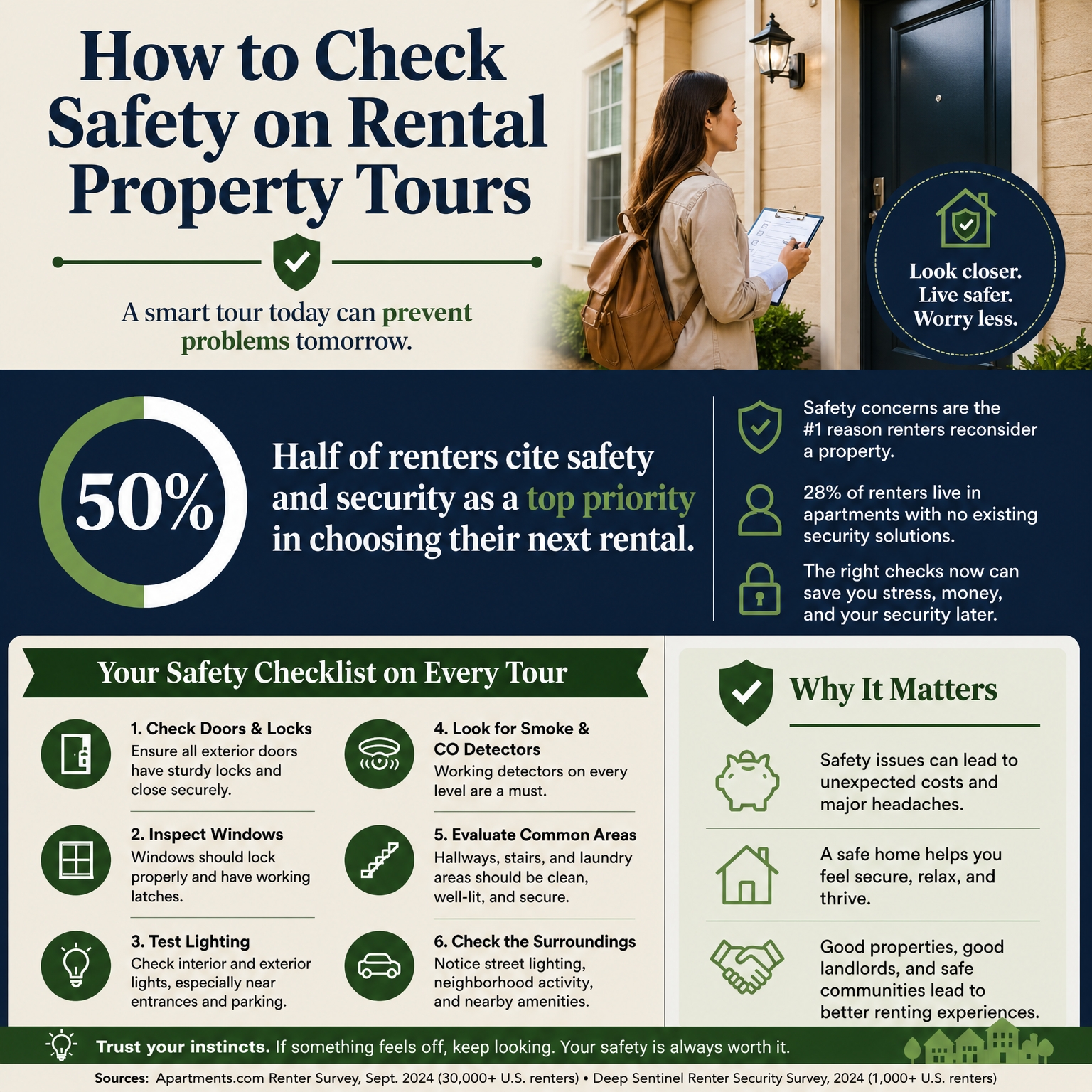
Do a tight check of the door and windows
Close the front door. Lock it. Unlock it. Do it twice. You’re listening for slop in the latch and feeling whether it catches cleanly.
Windows too. Especially on the ground floor. Do they latch? Do they stay up? Are there window stops? If it’s a sliding door, check the track and the lock. Sliding doors love to pretend they lock. Sometimes they don’t.
Don’t skip smoke, CO, and electrical weirdness
Ask where the smoke detectors are and whether they’re hardwired or battery-operated. Check for a CO detector if there’s gas heat, a gas stove, or an attached garage. Sometimes landlords “forget.” They don’t forget. They’re hoping you won’t ask.
Now glance at outlets and the panel. You’re not an electrician. You’re looking for obvious danger signs. Scorch marks. Loose outlets. A panel that looks like it survived a flood. Extension cords running everywhere. That’s usually a clue the place doesn’t have enough circuits.
- Test the front door lock and deadbolt (twice).
- Open and close every accessible window.
- Locate smoke and CO detectors and ask when they were last checked.
- Look under sinks for leaks and moldy smells.
- Scan outlets and switches for damage or wobble.
And look under the sinks. Always. If you smell that sweet-musty odor, you know. The landlord might call it “old house smell.” Sure. Sometimes. But sometimes it’s water damage that’ll wreck your stuff and your sinuses.
Ask questions that reveal safety culture fast
Real talk: the building’s safety is partly the building. It’s also the person managing it. Their habits matter. Their response time matters. Their honesty matters. When we coach renters at Rental Secrets, we push questions that force specifics. Not vibes.
Use the maintenance timeline question
Ask: “If the lock breaks or a window won’t close, what’s the typical turnaround?” Listen for a real answer. “Usually within 24 to 48 hours.” Fine. “We try.” Meh. “My handyman’s busy.” That’s a preview of your winter heater situation.
Then ask: “Do you have an emergency line for nights and weekends?” If they act annoyed. Not great. Emergencies don’t schedule themselves.
Ask about rekeying and past incidents
This one feels awkward. Do it anyway. “Do you rekey between tenants?” A professional manager will answer instantly. A small landlord might say yes, or might say they change the locks when needed. The scary answer is a dodge. Or a joke. Or “the last tenant returned the keys.” That’s not a system.
You can also ask, casually: “Any break-ins or safety issues in the last year?” They might not disclose everything. But their reaction tells you a lot. Defensive. Minimizing. Or straightforward.
For renters trying to keep costs down, here’s the hidden link: safer buildings tend to be better managed. Better-managed buildings tend to have fewer surprise fees and fewer move-out battles. That’s part of how we think about negotiating too. You’re not just negotiating rent. You’re negotiating friction.
Protect yourself during the tour, especially when touring alone
Honestly? Touring can be a personal safety risk. Especially for students, younger renters, or anyone going to view a room in a shared place with strangers already inside. You don’t need to be paranoid. Just deliberate.
Control the meeting setup
We recommend meeting in daylight when possible. If the only option is after dark, choose a time when the area is busy. And tell someone where you’re going. Text them the address and the contact name. Basic. But it works.
And don’t get in anyone’s car to “go see the other unit.” That’s a hard no for our team. Drive separately and meet them there.
Walk through like you want to leave easily
When you enter, notice exits. Keep your phone accessible. Don’t set your bag down in a back room while you “just peek at the closet.” Sounds dramatic. It isn’t. It’s just smart.
I used to think this was overkill. Turns out it’s not. One of our renters got pressured during a tour to go into a basement unit “real quick.” No lights on. Door locked behind them. It ended fine. But it didn’t need to happen at all.
One more thing. If anyone pushes you to apply on the spot, especially with cash, especially before you’ve seen a lease, treat that as a warning flare. High-pressure tours tend to hide low-quality management. Not always. But often enough.
If you want the bigger picture on touring strategy and how we connect it to negotiating (because yes, tour observations can absolutely support a rent ask), read our rental property tours guide for budget-smart renters. We built it from what we see in real negotiations. The landlord thinking is baked in.
FAQs for How to check safety on rental property tours
Is it rude to test locks and windows during a showing?
No. You’re not breaking anything. You’re checking livability. Any landlord or property manager who gets weird about you testing a lock is telling on themselves. Keep it calm. “Mind if I check the window latches?” Then do it.
What’s the biggest safety red flag that people ignore because the rent is low?
Bad access control. A building entry that doesn’t latch. A unit door with a flimsy lock. Keys that “might” be floating around from past tenants. Cheap rent can cover a lot of compromises. That one can follow you home every night.
Your next move after a safe tour
Once a place passes your safety sniff test, save your notes right away. What you saw. What they promised. What felt off. Then decide whether you’re negotiating, walking away, or asking for fixes in writing before you apply.
That’s where Rental Secrets comes in. We help renters connect the dots between what landlords do on tours and what they’ll do after you sign. And we use that insight to push for better terms. Lower rent sometimes. Better safety commitments almost always.
Disclaimer: This article does not constitute legal advice.