

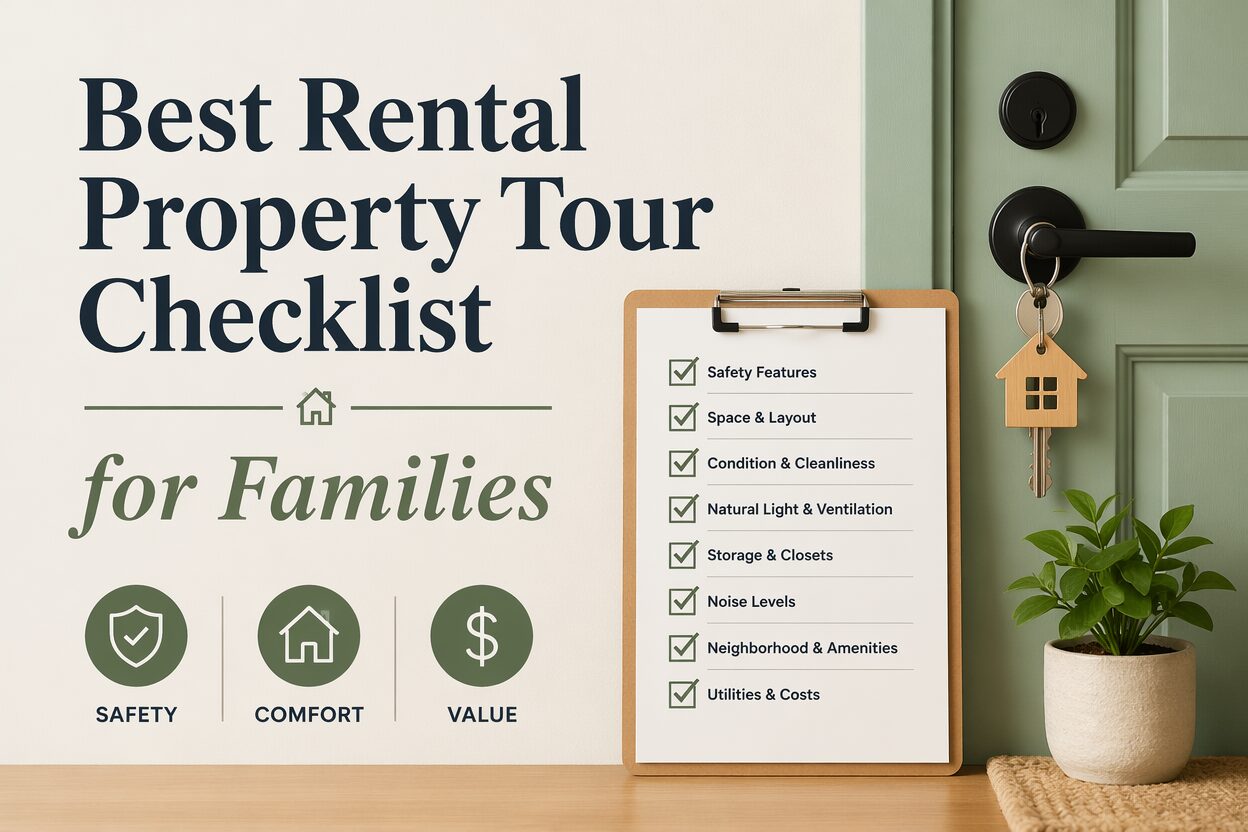
Bring this checklist on the tour. Seriously. Families get distracted by the cute breakfast nook and then realize two weeks later the bedroom window won’t open. Been there. (Not fun.)
We built this for the real version of touring. Kids bouncing. Someone’s on a lunch break. The agent is talking fast. You’re trying to figure out if the rent works with your budget without looking like you’re doing math in your head. You are. We are too.
Before you walk in, set the money rules
Look, the tour starts before you ring the buzzer. The best “deal” can still wreck your budget if the utilities are wild or the parking costs extra. And families get hit with the sneaky stuff more than anyone. Laundry. Storage. Fees. The “required” resident portal. That kind of thing.
When we help renters at Rental Secrets, we don’t start with the kitchen. We start with the monthly number. Rent plus the boring extras. Because that’s what you’re negotiating against.
Write down your must-haves and your hard no’s
Keep it short. Three to five items. Otherwise you’ll talk yourself into anything because the place “feels right.” Feelings are expensive.
- Maximum all-in monthly cost (rent + utilities estimate + parking + fees)
- School and commute limit (minutes, not vibes)
- Safety baseline (locks, lighting, windows, entry access)
- Kid logistics (stroller parking, elevator, noise, play area)
- Move-in timing (flexible or fixed)
Bring a tiny kit that saves you later
I used to show up with just a phone. Turns out that’s not enough. Now I bring a small tape measure, a phone charger, and a sticky note with my questions. Because your brain will blank when someone’s standing there waiting for you to react.
And yes, take photos. But don’t just take pretty photos. Take “proof” photos. The water heater label. The breaker panel. The window gaps. The parking sign that says “tow zone.”
If you want a bigger walkthrough strategy for bargain-hunting (not just this family checklist), we keep it in our rental property tour guide for budget-smart renters. It’s the same approach we use when we’re helping people ask for rent reductions without sounding desperate.
Entryway and living spaces that make or break family life
Most tours start in the living room. Fine. But families should start at the front door. That one door decides your stress level for the next year.
Front door, locks, and the stuff nobody glamorizes
Test the lock. Turn it. Wiggle it. Does it stick? Does the deadbolt feel loose? If it’s a keypad, ask how codes are reset between tenants. If they dodge the question, that’s information.
Check the peephole height. Real talk, if you’ve got kids home with a sitter sometimes, you want them to be able to see who’s outside without opening the door.
And lighting. Walkways. Parking lot lights. Stairwells. We’ve seen plenty of “nice” buildings with a dark side entrance that feels like a dare.
Noise tells the truth fast
Stand still for 20 seconds. No talking. No scrolling. Just listen.
Do you hear the upstairs stomp? Street noise? A barking dog that’s probably been barking for years? Families don’t get to pretend noise doesn’t matter. Nap time is a thing. Homework is a thing. Your sanity is definitely a thing.
Quick move: open a window and listen again. Then close it. If the sound barely changes, you just learned a lot about insulation and window quality without any fancy tests.
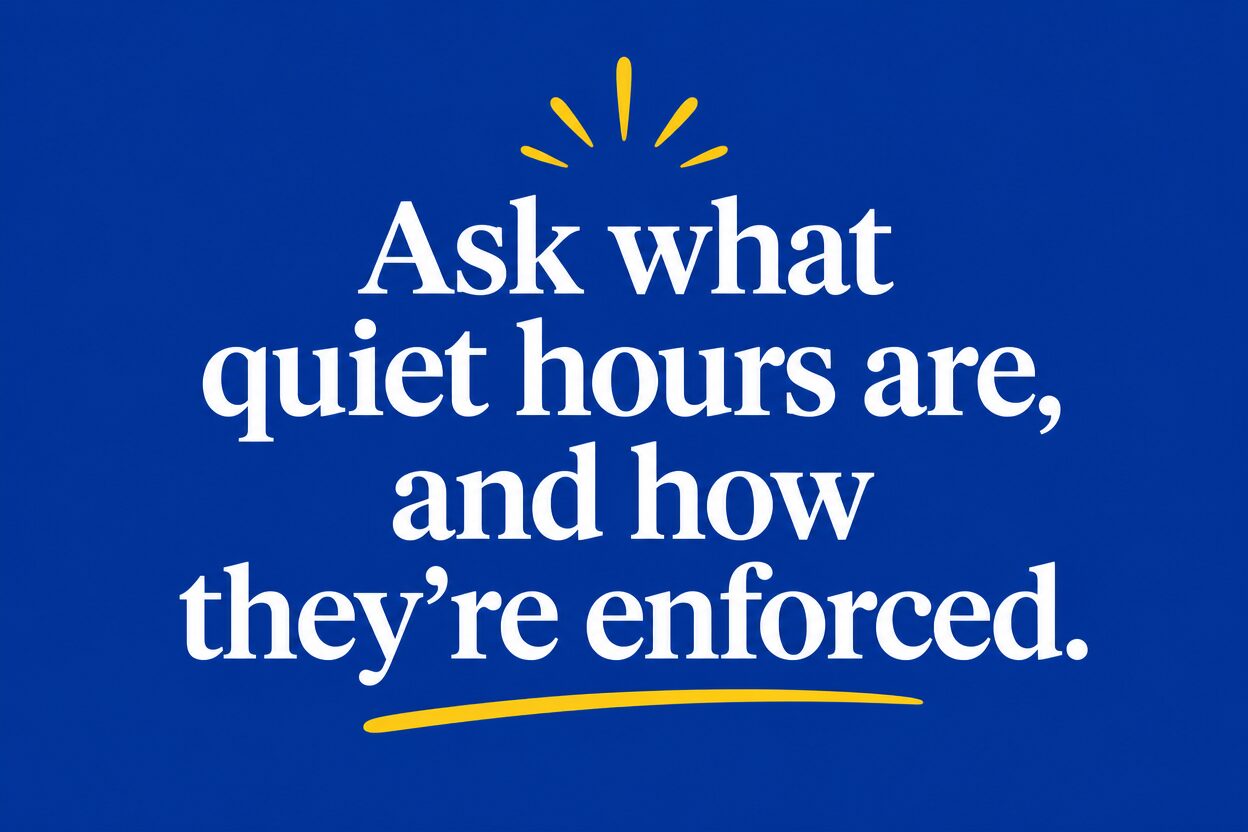
Ask what quiet hours are, and how they’re enforced. Not “do you have quiet hours.” Everyone says yes. Ask what happens when someone ignores them.
Kitchen and bath checks that catch expensive surprises
Kitchens sell apartments. Bathrooms reveal them.

On tours, property folks sometimes rush you through the bath like it’s a closet. Don’t let them. Water issues cost money. And time. And you don’t have spare time if you’re juggling kids and work.
Run water like you mean it
Turn on the shower. Hot. Let it run. Flush the toilet while it’s running. Then turn on the sink. You’re watching for pressure drops and weird noises.
I had a client who fell in love with a place that had “great water pressure.” During the tour. Then, every night at 7 pm (peak building time), it turned into a trickle. That’s the kind of thing you can sometimes sniff out by asking one blunt question: “Do tenants complain about hot water or pressure at peak times?”
Look under every sink. Not just for leaks. For sloppy repairs. Swollen wood. That crusty ring on the shutoff valve. Landlords who stay ahead of maintenance usually keep the under-sink area clean and dry.
Appliances and ventilation are budget items, not just conveniences
Ask the age of the fridge, dishwasher, and HVAC. If they don’t know, look for manufacturer stickers. Older appliances tend to mean higher electric bills. Not always. But often enough that it matters when you’re cost-conscious.
Turn on the kitchen fan. Hold your hand under it. Feel anything? If it’s weak, cooking smells stick around. So does moisture. And moisture turns into mold conversations. Nobody wants those.
In the bathroom, check for an exhaust fan. Turn it on. Put a square of toilet paper up to it. It should grab and hold. If it drops, that fan isn’t doing much work.
Bedrooms, kids spaces, and the safety reality check
Families don’t just need “a bedroom.” You need a place where kids can sleep, where you can store stuff, and where nobody’s climbing out a sketchy window or pulling a loose blind cord.
Windows, outlets, and the bedtime details
Open every bedroom window. All the way. Then close it. Lock it. If it doesn’t lock cleanly, ask if they’ll fix it before move-in, in writing. Not “we can look at it.” In writing.
Count outlets. You’ll feel silly doing it. Do it anyway. Older units sometimes have two outlets per room and you’ll end up with power strips everywhere. That’s annoying. It’s also a safety issue with kids.
Check closets for depth and doors that actually slide. Tiny thing. Big impact when you’re storing strollers, winter coats, and the random bins families accumulate like it’s a hobby.
Lead paint, pests, and other un-fun topics
If the building is older, ask about lead disclosures. You’re not being “difficult.” You’re being normal. Families have extra protections here. Use them.
And pests. Ask directly: “Any history of roaches, bed bugs, or mice in this unit or the building in the last year?” Watch the reaction. If they answer fast and specific, good sign. If it turns into a speech about how “cities have bugs,” that’s not an answer.
Peek behind the stove if you can. Look in the corners of cabinets. Check for droppings. It’s not glamorous. But you’ll sleep better.
If you’re touring your first few places ever, you’ll probably like our rental property tour checklist for first-time renters too. Same idea, just a little more baseline stuff so you don’t miss the obvious.
Lease, fees, and negotiation notes to collect during the tour
Here’s what most people miss. The tour is also an interview. You’re not only checking the unit. You’re checking how the property is run. That affects repairs, renewals, and whether your rent jumps next year.
Ask the questions that reveal landlord thinking
We teach renters to listen for patterns. Owners and managers care about vacancy, stability, and low drama. If you can signal you’re organized and long-term minded, you’ve got room to negotiate. Often more than you think.
Ask things like:
“How long did the last tenant stay?” Long stays usually mean the place is livable and the management isn’t chaotic.
“How many applications are you expecting?” This hints at demand. High demand means less wiggle room on price. Low demand means you can press.
“What’s the total move-in cost, item by item?” You want deposit, admin fees, pet fees, parking, storage, trash, water, and any “package” fee.
“What’s your typical renewal increase?” They might not give a number. But their tone matters. Some managers say, “We try to keep people.” Others say, “It’s market.” You can guess which one hurts.
Document everything like a calm, slightly annoying adult
Take notes right after you walk out. Not later. Later turns into mush.
And get promises in writing. If they say, “We’ll repaint,” ask them to email it. If they say, “We’re replacing the carpet,” ask when. If they say, “We can add a lock,” ask if it’s permitted and who pays.
Our experience at Rental Secrets is that negotiation goes better when you’re specific. Not aggressive. Specific. “We love the unit. The rent is close. If you can include parking or reduce the admin fee, we can apply today.” That tone works because it’s practical.
FAQs for Best rental property tour checklist for families
How long should we spend on a rental tour with kids?
Most of the time, 20 to 30 minutes is enough for the unit. Longer tours can actually get worse because kids melt down and you stop paying attention. What works better is two passes. First pass is a quick scan. Second pass is your checklist: water, windows, noise, locks, fees. If you need more time, ask for it. A decent manager won’t rush you.
What’s the biggest red flag families ignore on tours?
Noise and maintenance responsiveness. Families notice square footage and schools. Then they ignore the fact that the building feels chaotic. Or the manager can’t answer basic questions. Ask how repairs are submitted and what the typical turnaround is for urgent stuff (no heat, leaks). If they can’t explain the process clearly, that tends to show up later when you really need help.
Your next step before you apply
Go sit in your car. Open your notes. Decide if the place fits your all-in number and your day-to-day reality. Not the fantasy version.
If the unit is close but not perfect, that’s where smart negotiation lives. We see it all the time. Ask for a concession that actually lowers your cost. Reduced rent, free parking, waived fee, upgraded appliance, longer lease with a smaller increase. Pick one. Be clean about it.
And if you want the bigger strategy for touring and negotiating like you understand how landlords think, that’s exactly what we build at Rental Secrets.
Disclaimer: This article does not constitute legal advice.