


Send the follow-up. Don’t overthink it. A simple, well-timed nudge can be the difference between “we’re still reviewing” and your application quietly aging out in someone’s inbox.
And yes, you can do it without sounding desperate. Or annoying.
Timing that actually makes sense
Look, most renters either follow up too fast (same day) or way too late (a week later when the unit’s basically gone). The sweet spot is boring. But it works.
Our go-to follow-up schedule
When I work with clients on this, here’s what we usually do.
- Day 1 after you apply: quick confirmation message (only if you didn’t already get a receipt).
- Day 2 or 3: ask for status and whether they need anything else.
- Day 5: one more nudge, plus a deadline on your side (politely).
- After Day 7: assume it’s a “no” unless you have a strong signal otherwise. Keep moving.
Most property managers are juggling showings, maintenance calls, and ten people asking, “Is it still available?” Your follow-up is partly a reminder. But it’s also a test. Do they run a tight process or a messy one?
When to speed it up
Sometimes you don’t have the luxury of waiting. Like when the listing says “applications reviewed as received.” Or you toured and they told you they’re deciding within 24 hours.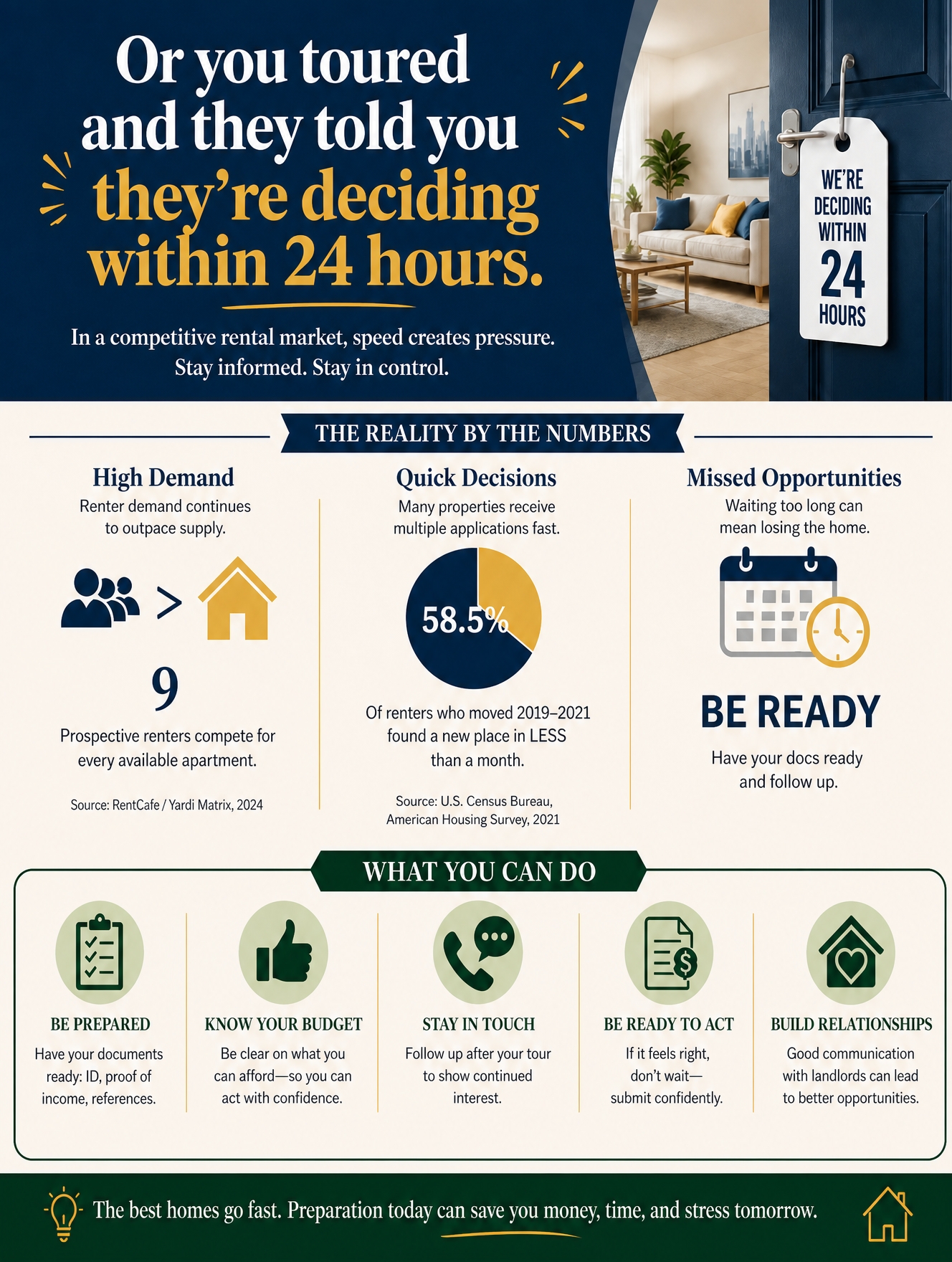
In those cases, follow up within the timeframe they gave you. Not sooner. That part matters. People remember the person who listened.
If you want the bigger picture on how approvals tend to work, our rental application screening and approval process walkthrough lays out the behind-the-scenes flow. It makes the timing piece feel a lot less random.

What to say without sounding like a robot
Real talk: most follow-up messages are way too long. They read like a college application essay. Don’t do that.
Your follow-up has one job. Make it easy for them to respond. That’s it.
Text or email scripts you can steal
Short and clean (Day 2 or 3):
Hi [Name], it’s [Your Name]. Just checking in on the application for [Address/Unit]. Anything else you need from me to finish the review?
Add a little urgency, without being weird (Day 5):
Hi [Name], quick check-in on [Address/Unit]. We’re trying to plan our move timing, so I wanted to see where things stand. If you still need anything from us, happy to send it today.
If you toured and connected well:
Hey [Name], thanks again for showing us the place. We’re still really interested in [Unit]. Just wanted to see if you have an update on the application timeline.
Notice what’s missing? A sales pitch. Nobody needs “We’re quiet and respectful and love the natural light.” Save that for the showing.
One line that helps more than you’d think
Try this add-on once. Not every time.
“If it’s easier, I’m free for a quick call today.”
Property managers live on the phone. Some of them hate email back-and-forth. This gives them an escape hatch.
How landlords read your follow-up
This part surprises renters. Your follow-up isn’t just “asking.” It’s a signal.
Landlords and managers are thinking: Will this person be easy to work with? Will they pay on time? Will they melt down over a small delay?
What follow-ups signal in the real world
After years of this, here’s what tends to land well.
One or two concise follow-ups: Organized. Serious. You’re on top of your move.
Five messages in 36 hours: High-maintenance vibe. Even if you’re perfectly nice, it can read as chaos.
Overly emotional follow-ups: Risky. I get it. Housing is stressful. But “PLEASE we need this” can make an owner nervous. They don’t want a tenant who feels unstable before the lease even starts. And this wipes out your negotiation power as well.
Helpful follow-ups: Best kind. “We can provide pay stubs again” or “Our co-signer is ready to sign.” That’s progress, not pressure.
Landlord side: responding fast builds trust
We’ll say this clearly because some of our readers are property managers too. If you’re slow to reply, renters assume the worst. They move on. Or they show up defensive before move-in. Not ideal.
A quick “Got it, reviewing by Friday” reduces your inbound messages. It’s also just decent.
Smart follow-ups that can help you negotiate later
Here’s the sneaky part. Following up well doesn’t just help you get approved. It can set you up to pay less.
Because negotiation usually happens when you have options. And options happen when you keep applications moving instead of waiting in silence.
Keep your options open on purpose
I used to think applying to one place at a time was “more respectful.” Turns out it’s a good way to get stuck. In competitive markets, you can end up with no unit and a wasted week.
We recommend running two applications in parallel when the timing is tight (as long as you can afford the fees and you’re not lying to anyone). Then you can make decisions like an adult with a budget. Not like someone who feels cornered.
At Rental Secrets, we talk a lot about how landlords think in terms of risk and vacancy. When you understand that, your follow-up changes. You stop asking for “updates” and start offering clarity. Timelines. Documents. Clean communication. That stuff reduces perceived risk. Lower risk can mean more flexibility later. Sometimes that’s concessions. Sometimes it’s a rent number that magically becomes negotiable.
A follow-up that plants the seed for concessions
Use this only if you truly mean it. Don’t bluff.
Hi [Name], checking in on [Unit]. If we’re approved, we can sign quickly and start on [Date]. Let me know if that start date works on your end.
Why this works. You’re offering speed. Speed reduces vacancy days. Vacancy days cost money. Owners notice. And later, when you ask about a slightly lower rent or a waived fee, you’re not a stranger. You’re the person who made the process easy.
If you want the full framework for that landlord-brain approach, our guide to rental housing applications for renters and landlords goes deeper than we can here. It’s the stuff we keep repeating to clients because it keeps working.
Red flags and what to do when you get ghosted
Ghosting happens. Sometimes it’s accidental. Sometimes the unit is already spoken for and they don’t want to deal with angry follow-ups. Either way, you need a plan.
Red flags that usually mean you’re not getting it
A few patterns we’ve seen over and over:
They won’t confirm they received your application. Even after you ask. That’s messy management at best.

They keep saying “tomorrow” with no movement. People who can approve a tenant can also send a two-sentence email.
They ask for strange payment methods. Gift cards. Wire transfers. “Holding deposits” before approval. No thanks.
They keep collecting documents but won’t explain the next step. That can be incompetence. Or something worse.
What we do when there’s no reply
Send one last message that’s calm and gives an endpoint.
Hi [Name], just making sure I’m not missing anything. If we don’t hear back by [day/time], we’ll assume the unit moved forward with another applicant. Thanks for your time.
That line does two things. It signals you’re reasonable. And it creates a small deadline without threatening anyone. Funny enough, this often gets a reply within an hour.
And if it doesn’t? You move on. Protect your budget. Protect your time. The best rent deal in the world isn’t worth a landlord who can’t return a message before you’ve even signed.
FAQs for How to follow up after a rental application
Should I call or email a landlord to follow up?
Email is cleaner as it creates a paper trail. Calling is faster when they’re actively processing applications. In our experience, a good combo is email first, then a call the next day if you don’t hear back (especially for larger apartment communities where leasing teams live on phones).
Is it bad to apply to multiple rentals at once?
Not at all. It’s common, especially in competitive markets. The line you don’t cross is dishonesty. Don’t claim you’re “ready to sign today” in five places if you can’t. But having two active applications can keep you from getting boxed into a rental you can’t afford.
Your next move
Follow up once. Then again, politely. Keep it short. Make it easy for them to say yes or no.
And keep your options alive. That’s where the negotiating power comes from. That’s also where your budget stops getting pushed around.
Disclaimer: This article does not constitute legal advice.