

Fair housing law shows up in rental applications in a really specific way. It’s less about “nice vibes” and more about what a landlord can ask, how they can decide, and how consistent they have to be when they say yes or no.
And yeah, this matters even if you’re just trying to shave $150 off rent. Because the minute screening gets sloppy or biased, you can get denied for reasons nobody admits out loud. Or you can get approved but with worse terms. That’s money.
Protected classes and the stuff landlords cannot base decisions on
Look, the core of fair housing is simple: landlords can’t treat you differently because you’re in a protected group. That covers the application, screening, and approval process. Not just the tour. Not just the lease signing.
Federal protected classes that come up during applications
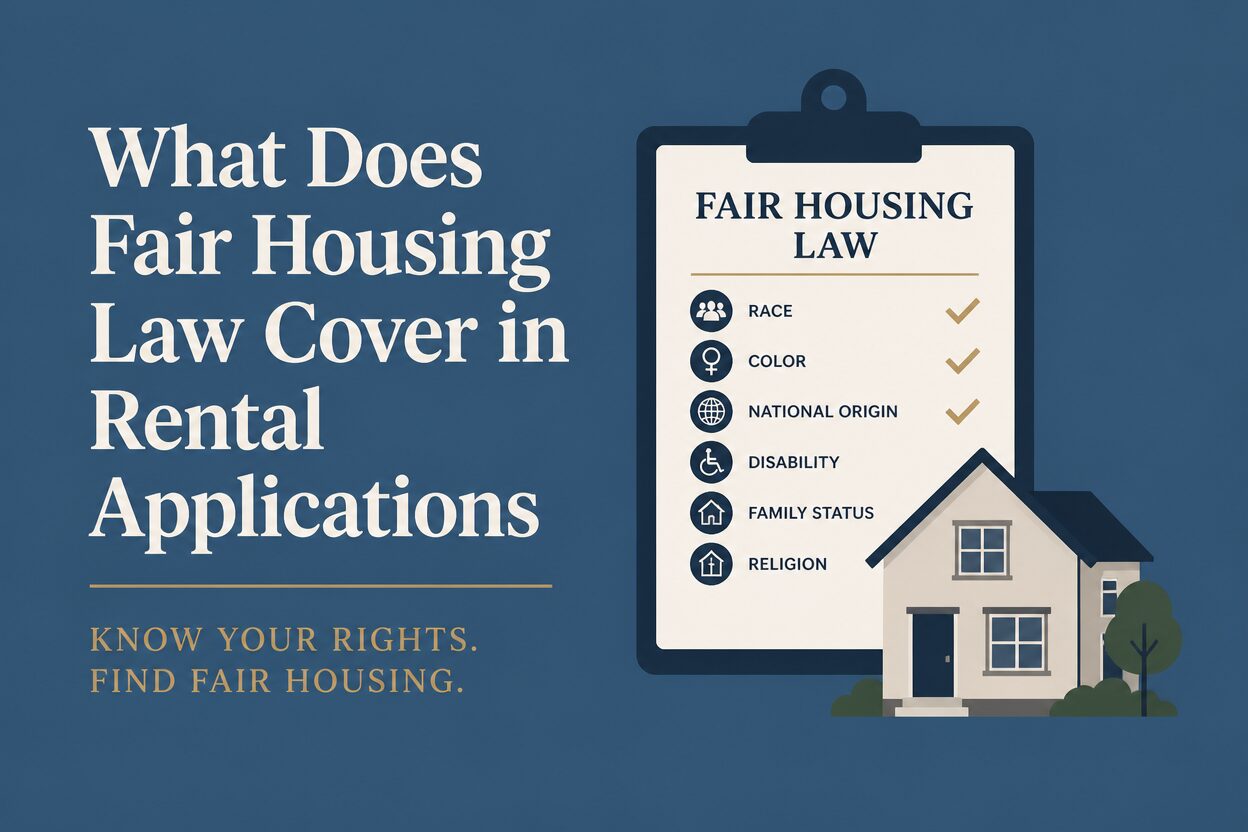
Under the federal Fair Housing Act, landlords generally can’t deny you, charge you more, demand extra deposits, or set different rules because of:
- Race
- Color
- National origin
- Religion
- Sex (including sexual harassment issues and, in practice, often gender-related discrimination)
- Familial status (kids under 18, pregnancy, custody situations)
- Disability
That last one. Disability. It pops up constantly in applications, because it connects to service animals, accommodations, and “can you work with this applicant’s situation” questions.
State and city add-ons that change the game
Real talk: the federal list is the floor, not the ceiling. Lots of states and cities add protections like source of income (vouchers), sexual orientation, gender identity, marital status, age, immigration status, and even things like lawful occupation. We’ve seen landlords assume they’re “following fair housing” because they know the federal list. Then a local ordinance nails them.
If you’re a renter trying to budget, those local protections can be the difference between getting shut down for having a housing voucher versus getting a real shot at the place. And if you’re a landlord, knowing your local list keeps you out of a headache spiral.

What landlords can ask on an application and what gets them into trouble
Here’s what I tell people when they show me an application that feels… off. The question isn’t always “is this illegal on its face.” It’s “why are they asking, and will they apply it the same way to everyone.” Intent matters sometimes. Impact matters a lot.
Questions that are usually fine
Most of the time, landlords can ask about income, employment, credit history, rental history, references, and whether you’ve had evictions. They can ask how many people will live there. They can ask for ID to verify you’re the applicant. Normal screening stuff.
But. The moment the questions drift into protected territory, it gets risky fast.
Questions that tend to raise fair housing red flags
Examples we see that create problems:
Family questions with a weird tone. “Are you pregnant?” “Are you planning to have children?” “Is the baby yours?” That’s familial status territory. It’s not their business.
Religion and culture probes. “What church do you go to?” “What holidays do you celebrate?” “Where are you originally from?” Even if it’s small talk, in an application context it can look like screening.
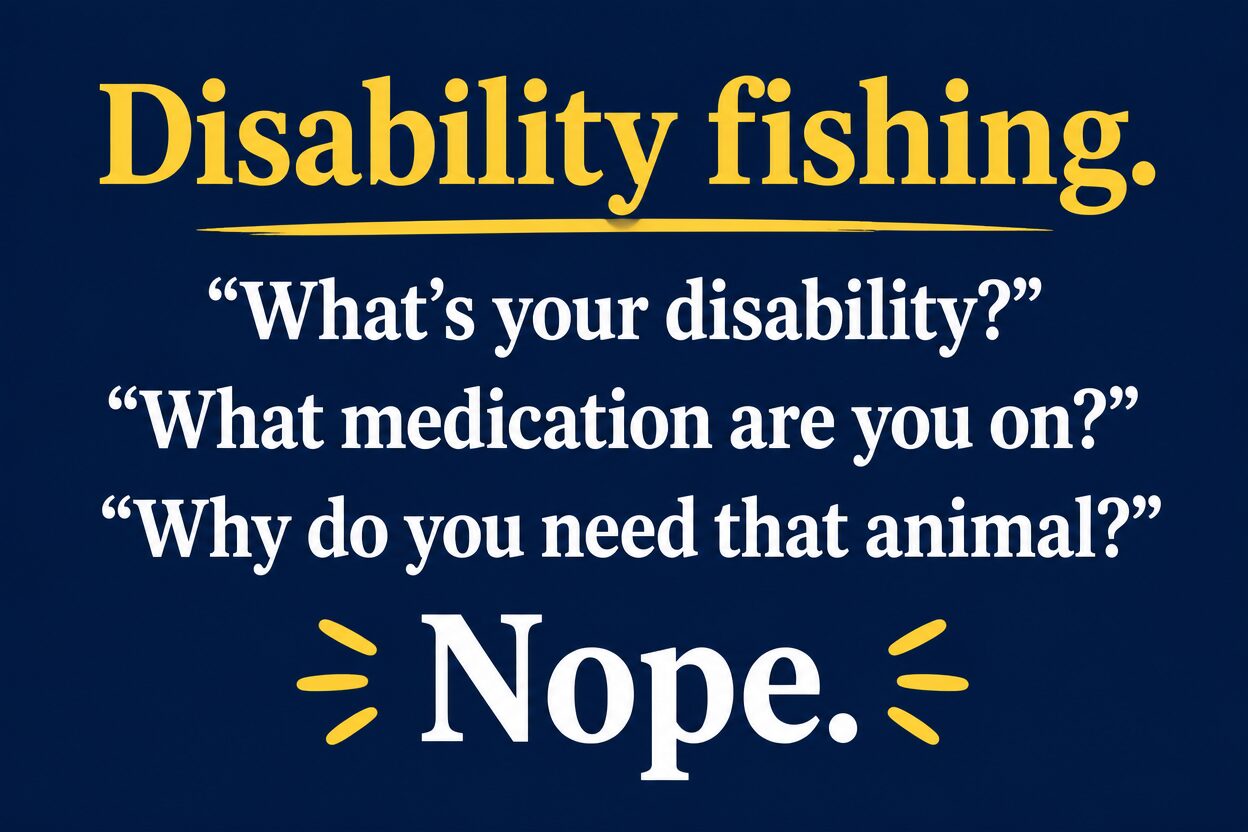
Disability fishing. “What’s your disability?” “What medication are you on?” “Why do you need that animal?” Nope. The process for accommodations has its own rules, and it’s not a free-for-all interrogation.
Gender and relationship stuff. “Are you married?” “Is that your boyfriend?” “Are you a single mom?” Again, not relevant to whether you’ll pay rent and follow the lease.
Landlords reading this: if you want better tenant relationships (and fewer fair housing complaints), keep your application tight. Ask only what you need to decide. Period.
Renters: if you’re trying to keep costs down, clean approvals matter. When we work with clients at Rental Secrets, we push for clean, simple screening conversations. It reduces the odds of getting boxed out for something unrelated to paying rent.
Screening criteria must be consistent or it can turn into discrimination
Thing is, fair housing isn’t only about what someone says. It’s about patterns. Consistency. Receipts.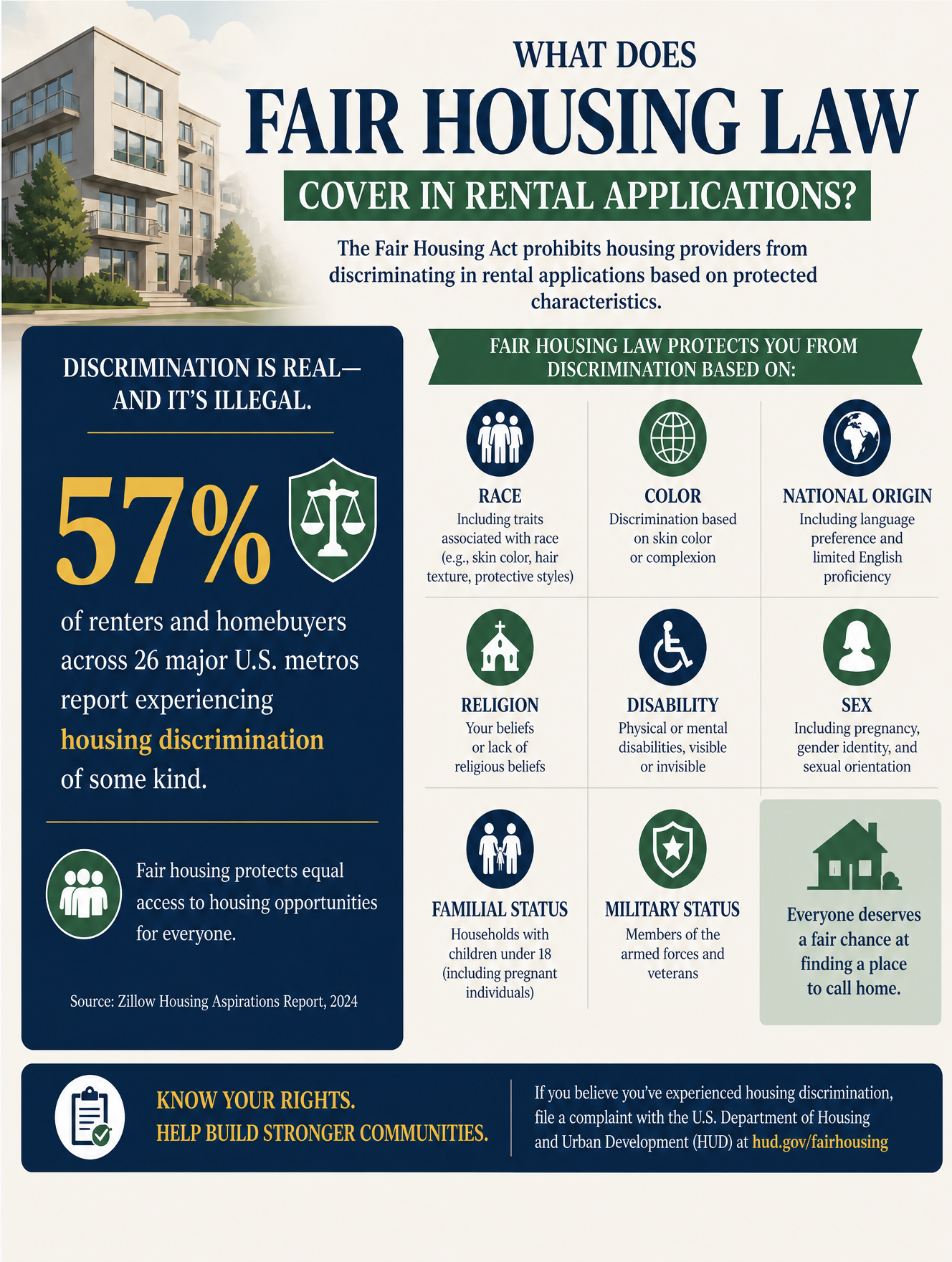
Consistency is the quiet rule most landlords forget
A landlord can have standards. Credit score minimums. Income requirements. Rental history rules. That’s fine. What blows things up is when they bend those standards for some applicants but not others.
I had a client who got denied for “credit.” Clean history, just thin. Then they saw the unit go to someone with a worse score (and yes, they found out). What happened next was messy. The landlord didn’t have written criteria. They made judgment calls on the fly. That’s where fair housing risk lives.
Disparate impact shows up in common screening policies
Some policies look neutral but tend to hit certain groups harder. Criminal background screening is a big one. Blanket bans can trigger fair housing issues, especially when they’re not tied to a real, individualized risk assessment. Same vibe with overly strict credit rules when the landlord won’t consider compensating factors.
Now, landlords do have a right to protect their property. Nobody’s arguing they should accept dangerous behavior. But “we don’t rent to anyone with anything” is usually where trouble starts.
If you want a deeper breakdown of how applications and screening fit together, our step by step rental application guide for renters and landlords is where we’d send you next.
Reasonable accommodations and what fair housing changes for disabled applicants
Honestly? This is the area where everyone gets confused. Renters feel like they have to overshare. Landlords feel like they’re being forced into something. Neither is quite right.
Reasonable accommodation vs reasonable modification
Accommodation is a change in rules or policies. Like allowing a service animal or an emotional support animal even with a no-pets policy. Or giving a reserved parking spot close to the unit. Or changing how rent is paid if a disability affects timing (this one can be tricky, but it comes up).
Modification is a physical change to the unit. Grab bars. Ramps. Lowered peepholes. Stuff like that. Who pays depends on the housing type and the situation. But the starting point is that the request has to be reasonable and connected to the disability-related need.
How the application stage should handle disability-related requests
Landlords generally can’t ask you to disclose a diagnosis on the application. They can request reliable documentation in some accommodation situations. Not always. And not in a “tell me your private medical history” way.
And yes, assistance animals are their own thing. A pet policy doesn’t automatically control. Fees can be different too. A “pet rent” charge for an assistance animal can be a problem, because it’s not a pet. But damages caused by the animal? That’s usually still on the tenant. Normal accountability.
Renters: keep it short. Clear request. Clear connection to the need. Don’t send your whole life story unless you want to.
Landlords: respond fast. Document the process. Don’t ghost. Ghosting is how people end up filing complaints.
Advertising, waitlists, and the sneaky parts of applications people ignore
Most folks think fair housing starts when you hit “submit application.” Not always. It can start earlier. Like the listing. Or the pre-screen call. Or how the waitlist is managed.
Ad language can be a fair housing problem before anyone applies
“Perfect for young professionals.” “No kids.” “Quiet Christian building.” “Must speak English.” That kind of thing can steer people away. Even if the landlord later claims they “treat everyone the same.” The damage is already done.
And steering is real. Sending families to the ground floor only. Showing certain applicants fewer units. Suggesting a “better fit” neighborhood. That’s not harmless advice. It can be discrimination.
Application fees and holding deposits need clean rules
This bugs me because it’s where money leaks out of people’s budgets. Application fees that feel like a lottery. Holding deposits that disappear with vague excuses. Fair housing law doesn’t always set fee amounts (that’s often state law), but the fairness piece is about consistency and not using fees as a gatekeeping trick against protected groups.
If you want the bigger legal-rights angle, we keep related topics organized here: fair housing and rental application dispute resources. It’s where we point people when the situation is turning into a fight.
FAQs for What does fair housing law cover in rental applications
Can a landlord deny me because my income comes from a housing voucher or child support?
Depends on where you live. Federally, “source of income” isn’t always protected. Many states and cities do protect it, and vouchers are often explicitly covered. Child support can be treated as income for qualification, too. If a landlord accepts income but refuses it only when it comes from a certain source, that can create legal exposure under local rules, and sometimes under broader discrimination theories if it’s used as a proxy.
Is it discrimination if a landlord requires higher income or a co-signer because I’m a student?
Student status itself usually isn’t a protected class under federal law. But the way it’s applied can still cause issues. For example, requiring co-signers only from certain groups, or making assumptions tied to age, national origin, or familial status. Also, schools often bring international students into the mix, and sloppy policies can start looking like national origin screening. Clean written criteria helps everyone here. So does being upfront about alternatives (extra deposit where legal, longer lease, guarantor standards applied to everyone).
Your next move if something feels off
So what does fair housing law cover in rental applications? A lot. The questions asked. The standards used. The way exceptions get handed out. Even the tone of the listing.
If you’re a renter, keep screenshots, save emails, and ask for the written screening criteria. That one move alone can change how a landlord behaves. And if you’re a landlord or property manager, write the criteria down and follow it. Boring. Effective.
When we’re helping people through Rental Secrets, we focus on two things at once. Getting approved. And getting approved on terms that don’t wreck your monthly budget. Fair housing rules are part of that reality, whether anyone says the words out loud or not.
Disclaimer: This article does not constitute legal advice.