

Walk the unit like you’re about to hand over a chunk of your paycheck for the next 12 months. Because you are. A rental tour isn’t a vibe check. It’s a cost check. And a hassle forecast.
We’ve sat through enough tours at Rental Secrets to know what people miss. And yep. The stuff you miss is usually what makes rent feel “cheap” on paper and expensive in real life.
Start with the money traps, not the cute stuff
Look, granite counters don’t pay your electric bill. Start where your budget gets punched in the face. Utilities, fees, and anything that sounds like “standard policy.”
Ask the boring questions out loud
I used to feel awkward asking about every fee. Like I was being “difficult.” Turns out landlords respect clear questions. Most of the time. And if they don’t? That tells you something too.
Ask:
- What utilities are included. And which ones are on you.
- What’s the average monthly cost for what’s not included (they might dodge, but ask anyway).
- Any recurring fees: trash, pest, parking, package, “admin,” “billing,” whatever.
- Deposit breakdown: security deposit, pet deposit, holding deposit (and what’s refundable).
- Move-in specials. And what you lose if you renew or break early.
And don’t let “it depends” end the conversation. Push for ranges. Or ask what the last tenant typically paid.
Get clear on the lease terms before you fall in love
Thing is, a “great price” can be glued to a weird lease. Short term premium. Auto-renew language. Rent bumps written in like it’s nothing.
We recommend snapping a photo of any posted fee sheet. Ask for the sample lease too. If they won’t provide a sample lease, we get curious. Not paranoid. Curious.
If you’re trying to negotiate, this is the moment to think like the owner. How long has it been sitting vacant? Is it a slow season? That’s the stuff we coach inside Rental Secrets. Timing changes everything.

Do a physical walkthrough like a picky roommate
Honestly? Your eyes are useful, but your hands are better. Open things. Turn things. Flush things. A polite tour is how people end up with a door that doesn’t latch for 10 months.
Walls, floors, and windows tell the real story
Windows. Open them. Do they stick? Do you feel air leaking? Drafty windows are basically you paying to heat the outdoors.
Floors. Walk every edge. Soft spots can mean water issues. Or cheap patch jobs.
Walls and ceilings. Look for paint bubbles, stains, or that “someone tried to cover something up fast” texture. I had a client last month who ignored a faint ceiling stain because the unit smelled like fresh cookies. Two months later? Upstairs leak. Surprise.
Test the fixtures fast
Don’t overthink it. You’re not doing an inspection. You’re checking for obvious headaches.
Turn on:
Kitchen faucet. Hot and cold. Same for the bathroom. Watch how long hot water takes.
Flush the toilet. Listen for a running refill that doesn’t stop. That sound is money.
Flip light switches. Try outlets with your phone charger (I keep one in my bag for tours). If half the outlets are dead, you’re going to hate working from home. Or charging anything.

Appliances and systems that quietly wreck your budget
Now, the sneaky part. The apartment can look fine and still cost you more every month because the systems are old, loud, or inefficient. Most people don’t ask. We do.
 HVAC and heating questions that actually matter
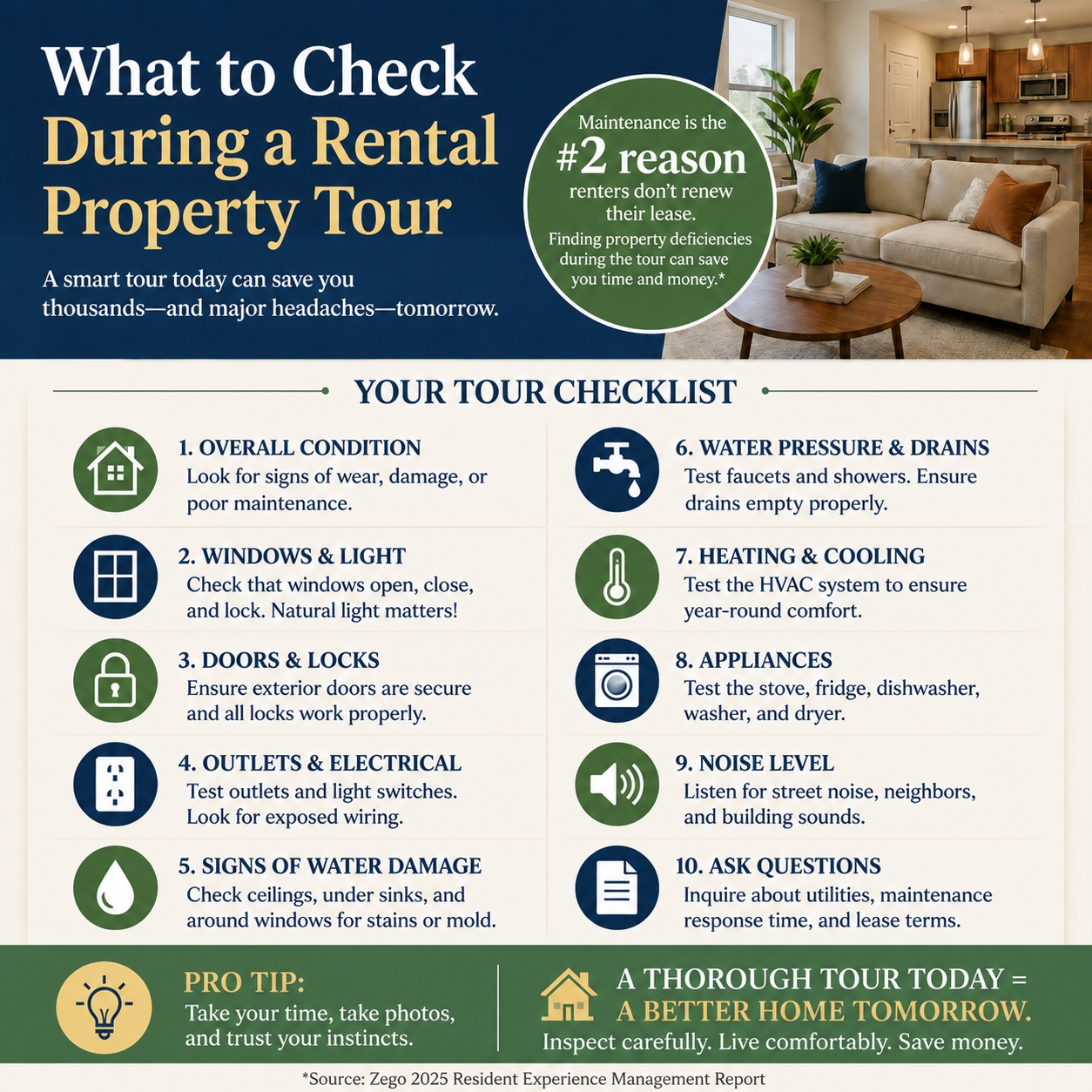
Ask how heating and cooling work. Central air? Window units? Baseboards? Heat pump? Those details change your monthly numbers.
Then ask the age of the HVAC system. They might not know. Fine. Look at the unit label if you can see it. A system that’s ancient tends to run longer. And struggle. And break when it’s 98 degrees out.
Also. Where’s the thermostat? Is it in a weird location (like right by the kitchen)? That messes with temp readings and comfort. You’ll compensate by cranking it. Been there.
Water pressure and hot water are quality of life stuff
Real talk: weak water pressure becomes a daily annoyance. And it can hint at bigger plumbing issues.
Check shower pressure. Not just the sink. And ask where the water heater is located. In-unit water heater vs shared building system can change reliability. Shared systems can be fine. But when they’re not, everyone’s mad at once.
Washer and dryer? If it’s shared laundry, ask what it costs per load. If it’s in-unit, ask if they service it or you do. Some leases push appliance repairs onto tenants. That’s not always common, but it happens.
If you want a deeper walkthrough strategy, we’ve got it in our rental property tour guide for budget-smart renters. We built it from what actually comes up in negotiations and move-in disputes.
Safety, noise, and neighbors you can’t return
But wait. Before you get hypnotized by the staged living room. Step outside. Listen. Smell. Look around like you’re coming home at 11 p.m. after a long day.
Noise is expensive in its own way
Noise doesn’t show on the listing. You feel it later. Work calls. Babies. Studying. Trying to sleep.
During the tour, pause and just stand there for 20 seconds. No talking. Can you hear the freeway? Upstairs stomping? The neighbor’s TV? That “quiet building” claim gets tested right there.
Ask what the walls and floors are made of. Concrete vs wood framing. Concrete tends to be quieter. Not always. But usually.
Safety basics without getting weird about it
Check that exterior doors close cleanly. Deadbolt works. Windows lock.
Ask about building access. Key fob? Code? Is the code shared with vendors? Some places rotate codes. Some don’t. Guess which ones get more random entry attempts.
Peek at the parking setup too. Lighting. Sight lines. If you’ve got kids, look for safe paths. If you’ve got a bike, ask about storage and theft history. They might answer vaguely. That’s still info.
If you’re touring a multifamily building, ask how they handle noise complaints. Formal process? Or “just talk to your neighbor.” The second one sounds friendly. Sometimes it’s a mess.
Documentation and negotiation moves that save real money
Here’s what I wish more renters did. Treat the tour like the beginning of a paper trail. Not a casual hangout.
Take photos like you’re future-you
Take pictures of anything you’d want fixed. Scuffs. Cracks. Stains. Missing blinds. Loose handles. Even if it “doesn’t bother you.” It might bother your security deposit later.
And ask, on the spot, “Will this be repaired before move-in?” Get the answer in writing after. Email works. Text works. Anything you can save.
Negotiate with specifics, not vibes
When we help renters at Rental Secrets, we don’t tell them to say “can you do better?” and hope for magic. We use specifics. Vacancy. Competing listings. Concessions. The property’s pain points.
Try these angles:
Ask for a lower rent if you can move in fast. Owners like reduced vacancy.
Ask for one-time credits instead of a rent cut if they’re firm on advertised price. Credits can be easier for them to approve.
Ask them to include something that reduces your monthly burn. Parking, storage, pet rent, internet package. Pick the thing you’d pay anyway.
One exception. In super tight markets, you might not get price movement. You can still negotiate terms. Like a longer lease with locked increases. Or waived fees.
If you want more tour checklists and negotiation tactics that don’t feel awkward, our rental property tour checklist for first-time renters page pulls a lot of this into quick decision tools.
FAQs for What to check during a rental property tour
How long should a rental tour take if I’m doing it right?
Usually 15 to 30 minutes for the unit itself, longer if you’re touring amenities and parking. The trick is pacing. Don’t rush the systems checks (water, HVAC, windows). Those take two minutes and save you months of annoyance.
What’s the one thing renters forget to ask that costs the most later?
Fees and utilities. Not the obvious stuff either. Things like trash billing programs, mandatory internet packages, or pet rent that never ends. Renters get focused on base rent and miss the add-ons. Then their “great deal” is suddenly not.
Your next step after the tour
Go sit in your car and write down what felt off. Seriously. Your brain forgets fast once you tour the next place.
Then compare apples to apples. Base rent plus recurring fees plus realistic utilities. That’s the number that matters. If you want help spotting where a landlord has wiggle room, that’s exactly what we do at Rental Secrets. Not magic. Just pattern recognition. And timing.
Disclaimer: This article does not constitute legal advice.