

Schedule tours when you can see the place honestly. Light. Noise. Smells. And yes, the way the manager treats you when they’re not “on.” That’s the whole thing.
We’ve helped a lot of renters shave real dollars off rent just by timing tours better and using what they notice to negotiate. At Rental Secrets, we’re a little obsessed with how landlords think. Timing is part of the game.
Pick tour times that reveal the truth about light and noise
Look, midday tours are the landlord’s favorite for a reason. Everything looks clean. Bright. Less sketchy. It’s the Instagram version of the apartment.
But you’re trying to avoid expensive surprises. So we recommend you tour at times that stress-test the place.
Tour once during daylight and once near dusk
Daylight shows you what’s actually going on with windows, heat gain, and whether the living room is basically a cave. Dusk shows you a different set of problems. Parking gets weird. Hallway lights flicker. That one neighbor starts blasting something bass-heavy.
I had a client last month who loved a unit at 2 p.m. Came back at 7:30 p.m. and heard the train horn like it was inside the kitchen. Same address. Different reality.
Rush hour tours are underrated for noise and commute reality
Honestly? Do at least one tour during the time you’d normally be coming home. You’ll hear traffic. You’ll feel the street. And you’ll learn if “plenty of street parking” turns into a 20-minute scavenger hunt.
And if you’re a student or you work early shifts, flip it. Tour when you’d be studying or sleeping. The point is simple. See the place when you actually need it to function.

Use the market calendar to time tours for negotiation power
Thing is, the best time to tour isn’t always the best time to sign. You can separate those. Tour early. Decide calmly. Negotiate when the listing gets nervous.
Our team at Rental Secrets sees this pattern over and over. Landlords price high when demand is peaking and they’ve got a line of applicants. They soften when days-on-market start stacking up. Not always. Usually.
Tour early in the month, negotiate later when you can
Most property managers are slammed the first week or two of the month. Lots of move-ins. Lots of maintenance tickets. They’re not in a patient mood. And you’re less likely to get thoughtful answers.
Later in the month can be different. The owner starts thinking about vacancy days. A unit that sits empty is loud. Financially loud. That’s when simple asks land better. A small rent cut. A longer lease at the same price. Upgraded blinds. Whatever matters to you.
We talk through these timing moves in our guide to touring rentals and using what you find to negotiate. It’s not fluff. It’s how you stop paying for someone else’s pricing fantasy.
Know the seasonal vibe in your city
Summer tends to be chaos in a lot of markets. Families moving. New grads. Interns. Students. That’s when touring is competitive, and landlords can be picky.
Late fall and winter? Often calmer. Tours can be easier to schedule. And the vibe shifts. You might get an actual conversation instead of a rushed showing with seven other people behind you.
One exception. College towns. Their “season” has its own rules. Tour timing matters more there than almost anywhere.
Schedule tours to catch maintenance problems before they catch you
Real talk: a pretty tour means nothing if the plumbing’s moody and the building manager ghosts repair requests.
Tour timing can help you spot that stuff. Not perfectly. But better than touring once on a sunny Saturday and calling it a day.
Tour right after a heavy rain if you can
This is one of those insider moves that feels almost unfair. Rain reveals leaks. Window sealing issues. Musty smells that magically “weren’t there” yesterday. Basements tell on themselves.
I used to ignore this. Turns out water is the ultimate snitch. If you can line up a tour after a storm, do it.
Do a weekday tour when staff is actually working
Weekend tours can be fine. But you won’t always see the machine behind the building. Weekdays let you watch how the office operates. Phones ringing. Maintenance staff coming and going. Package chaos. That stuff matters if you’re trying to keep your life calm.
And ask a simple question that tells you a lot: “What’s your typical turnaround time for non-emergency repairs?” Then pause. Let the silence do some work.
- Try to see the unit once in daylight and once after 6 p.m.
- Book one tour on a weekday to gauge management responsiveness
- After rain, check windows, ceilings, and corners for damp smells
- Listen in the bedroom with the door closed for 30 seconds
- Walk the route from parking or transit like you’re coming home
Tour scheduling tricks that save you money and reduce decision stress
So, touring is also about your brain. When you’re hungry, tired, and late, you’ll overpay just to make the search stop. I’ve watched it happen. I’ve done it myself years ago. Not proud.
We recommend setting up your tours like a mini buying process. Not intense. Just intentional.
Batch tours in two-hour blocks
Three tours across three days sounds relaxed. It isn’t. You forget details. You start mixing kitchens together in your head. And then you choose based on vibes. Vibes are expensive.
Batch two or three tours back-to-back. Same day. Similar neighborhoods if possible. Take the same five photos each time. Kitchen. Bathroom. Inside the closet. View from bedroom window. electrical panel if you can spot it. You’ll compare faster.
Leave a gap before you apply
Here’s what I mean. Tour. Go sit in your car. Or a coffee shop. Write down what annoyed you. What you loved. What felt off.
Then apply. Not while you’re still standing in the living room with the leasing agent smiling at you. That pressure is real. And it pushes people into bad lease terms.
If you’re new to renting, our first-time renter tour checklist collection helps you keep your head on straight. Especially when listings move fast and you’re trying not to panic.
How landlords and property managers can schedule tours that build trust
Now, if you’re reading this from the owner side. Respect. Good scheduling is tenant retention. It’s fewer misunderstandings. Fewer “you never told me that” moments. And fewer expensive turnovers.
Tenants who feel tricked leave. Tenants who feel respected stay. It’s not complicated. It’s just rare.
Offer at least one evening slot and one weekend slot
Young professionals can’t always tour at 11 a.m. Parents have kids to pick up. Students have labs. When you only offer mid-day weekdays, you’re selecting for a narrow slice of people. Sometimes that’s fine. Often it backfires.
Even one evening a week changes the tone. It signals you get it.
Set expectations before the showing
This bugs me when managers don’t do it. Tell people what they’re actually seeing. Is it the exact unit or a similar one? Is parking assigned or “best effort”? Are utilities flat or metered?
When you’re clear up front, renters show up less defensive. Then negotiations get calmer, too. That’s better for everyone.
FAQs for When should you schedule rental property tours
Is it rude to ask for a second tour at a different time of day?
Nope. It’s normal. You can say it plainly: “We liked the unit. We want to see it once in the evening to check noise and parking.” Most reasonable managers understand. The ones who get weird about it? That’s information.
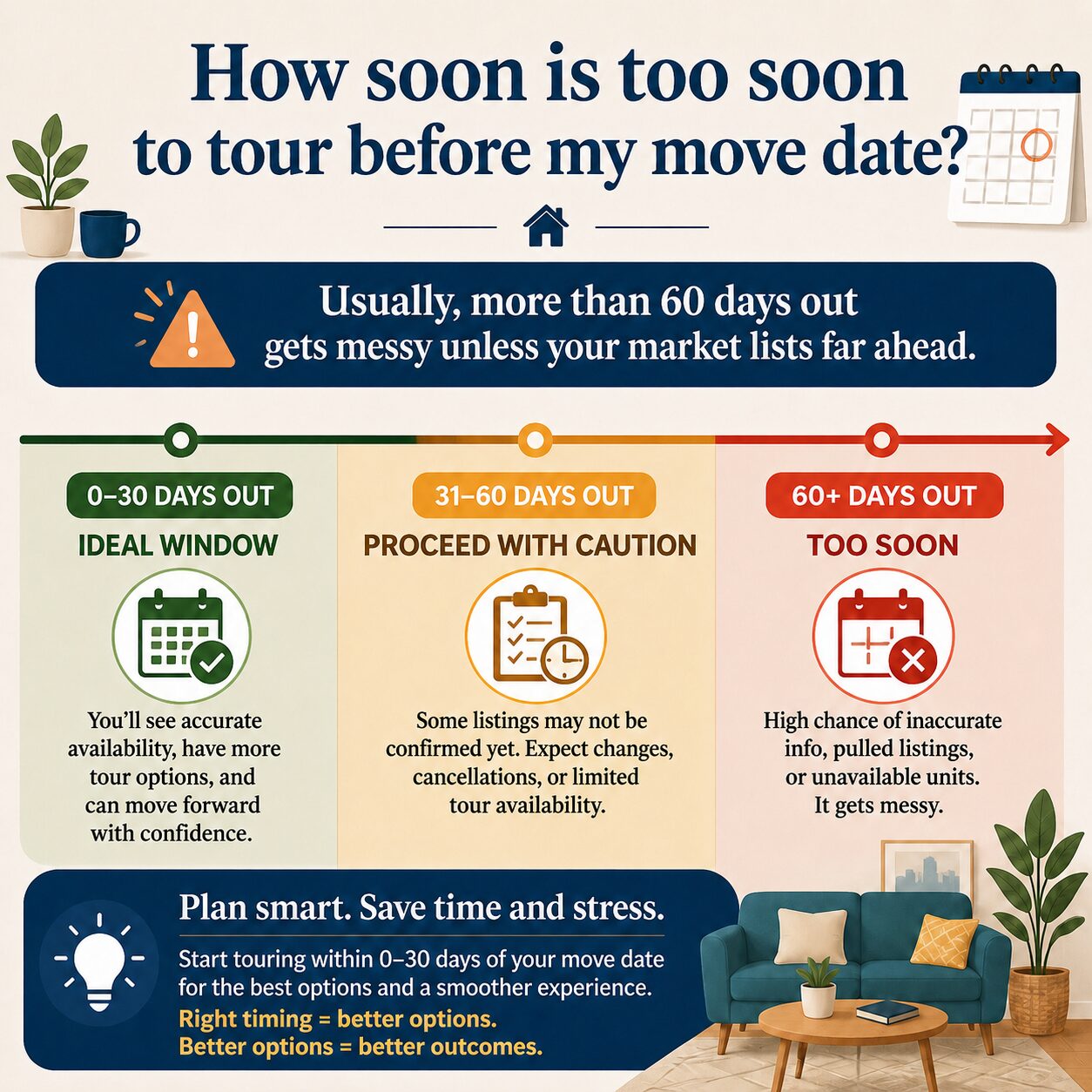
How soon is too soon to tour before my move date?
Usually, more than 60 days out gets messy unless your market lists far ahead. Units change. Availability shifts. Pricing shifts too. But touring early can still help you learn neighborhoods and building types. Just don’t emotionally commit to a specific unit that early unless the landlord can actually hold it for your timeline.
Next step: Schedule tours like you mean it
Tour timing isn’t just a calendar detail. It changes what you notice. And what you can negotiate.
Pick one daylight slot. Pick one evening slot. Add a weekday visit when you can. Then use what you learn to ask for better terms. That’s where the savings usually show up.
Disclaimer: This article does not constitute legal advice.