

Ask for the right stuff in a virtual tour, and you save real money. Not “maybe” money. Actual dollars you won’t bleed later on repairs, surprise fees, or a unit that looked cute on camera and rough in real life.
We’ve watched renters fall for the same little gaps over and over. The tour skips one corner. The audio cuts out when you ask about the heater. The landlord “forgets” to show the hallway. You don’t need to be paranoid. You just need a tighter request list.
Start by controlling the camera and the pace
Look, the biggest trap is letting the host run a highlight reel. That’s not a tour. That’s marketing. You’re paying with your future stress.
When I work with clients on this, the first thing I ask is: who’s driving the tour? If it’s not you, you’re missing things.
Recording the virtual tour is step one
Request that the virtual tour be recorded. It gives you a record of the tour, puts the property manager on record, and gives you something to refer to when making your final rental decision.
Ask for a live walk through, not a stitched video
Pre-recorded videos can be fine. But they’re easy to curate. Live video forces reality to show up. It’s harder to hide poor maintenance, noise, and the “oh yeah that door doesn’t close” stuff.
So say it plainly: “Can we do this live on FaceTime/Zoom and I’ll call out where to point the camera?” You’ll sound confident. You’ll also get a better read on how they respond to normal requests. That’s a tenant relationship preview, honestly.
Make them show the boring routes
Have them walk from the building entrance to the unit. Slowly. Same with the route from the unit to trash, mail, parking, laundry. These “in-between” areas are where red flags live. Locked gates propped open. Smelly dumpsters. Sketchy lighting. Or a stairwell that tells you the building’s basically unmanaged.
And yes, ask them to pan down at the floor while walking. I know it feels weird to request. Do it anyway. Trip hazards, warped flooring, sticky carpet. That’s not picky. That’s you protecting your deposit.
Request proof of condition like you’re protecting a security deposit
Real talk: security deposits are where a lot of renters get quietly robbed. “Normal wear and tear” becomes “we’re charging you for everything.” A virtual tour is your first line of defense.
Have them do close-ups, then pull back
Close-ups alone are useless. Anyone can film a clean patch of countertop. You want the close-up, then the wide shot to prove where it is.
We ask for this sequence in kitchens and baths:
- Under every sink. Camera goes inside the cabinet. Slow pan.
- Baseboards near toilets and tubs. Water damage loves those edges.
- Window sills and corners. Mold and condensation marks show up there first.
- Ceilings under upstairs bathrooms. Stains tell stories.
- Inside the fridge and oven. Not glamorous. Very revealing.
One time I had a client who almost signed on a place that looked freshly renovated. Great lighting. Perfect angles. Then we asked for an under-sink shot. Boom. Swollen particleboard, active drip, and a bucket. The landlord tried to laugh it off. We moved on. Saved them months of headaches.
Ask for an “everything turns on” test
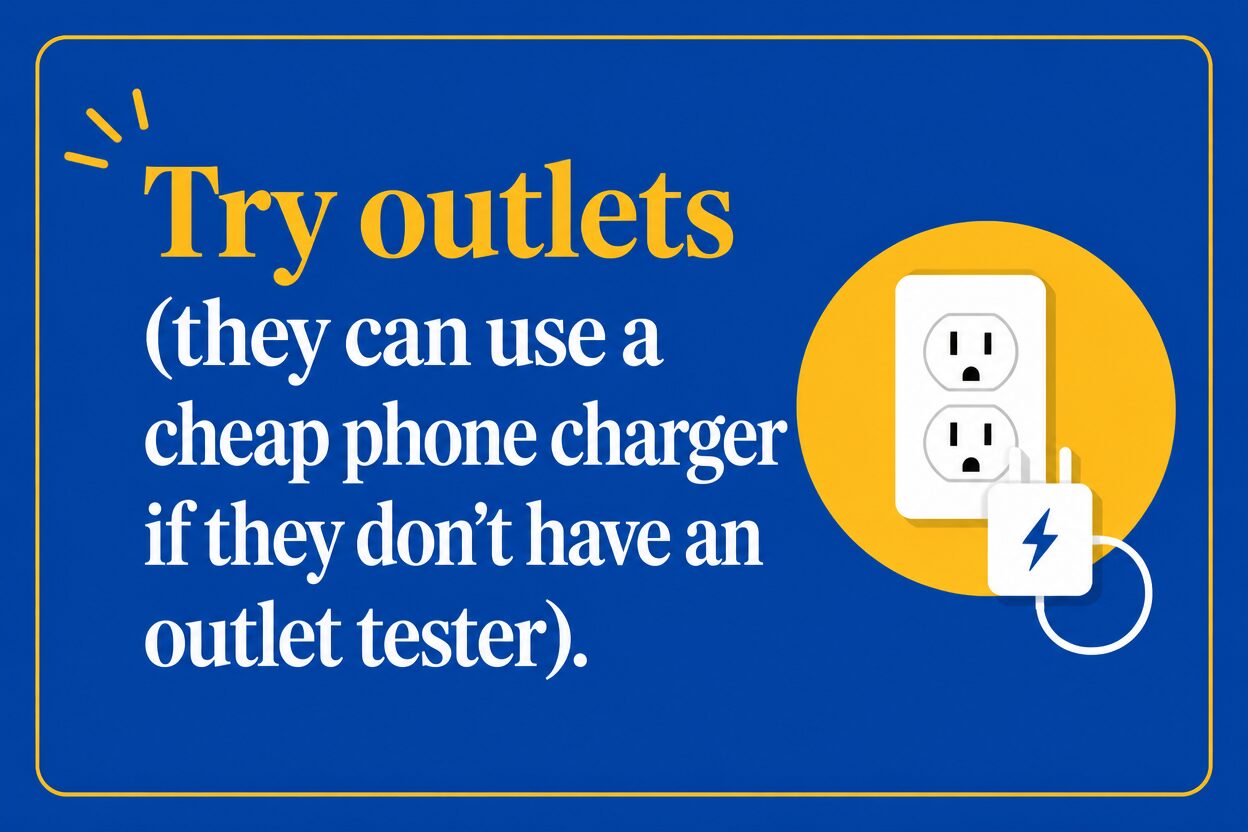
Don’t assume anything works. Ask them to turn on every faucet. Run hot water long enough to prove it gets hot. Flush the toilet. Turn on all burners. Test the microwave. Run the garbage disposal if there is one. Flip lights. Try outlets (they can use a cheap phone charger if they don’t have an outlet tester).
And ask to see the smoke and CO detectors. On camera. Working. You’d be surprised how often this gets skipped.
If you want a broader safety angle, we keep more scam and verification tips over on our virtual tour and scam prevention resources. Spread out reading. Save yourself.
Ask the questions that expose monthly costs
Everyone focuses on rent. Rent is just the headline number. The monthly burn rate is what wrecks budgets.
Our team at Rental Secrets spends a lot of time on this because it’s where negotiation lives too. If you can map the true costs, you can push back smarter. Not emotionally. But with math.
Utilities and billing rules, not just “included or not”
Ask exactly how utilities are billed. Separate meters? Ratio utility billing system (RUBS)? Flat fee? Owner-paid with a cap? Get the policy. Not a vibe.
And ask for a screenshot of the last 2 to 3 months of utility charges for that unit (or a similar unit). Some landlords will do it. Some won’t. Their reaction is information.
Fees that show up after you’re excited
This is the part that bugs me. A listing says $1,850. Then you find out there’s a $75 “tech fee,” $35 for trash, $20 for “pest,” $15 for package lockers, and parking is “optional” at $150. Cool. Now it’s not $1,850.
So ask for the full recurring monthly fee schedule. Not the move-in costs. The recurring stuff.
Also ask about renter’s insurance requirements. Some properties require certain liability limits. That changes your monthly number a little. It matters when you’re budgeting tight.
Don’t ignore sound, light, and airflow
Virtual tours lie about comfort. Cameras make dark rooms look bright. Microphones hide street noise. And nobody films the unit at 7:30am when the garbage truck shows up.
Do a “quiet check” and a “window check”
Ask them to stand silently for 20 seconds in the bedroom with windows closed. Then open. Then close again. No talking during the check. You want raw audio.
Next, have them show you each window opening and closing. Locks included. Screens included. If the window doesn’t open, that’s a big ventilation issue. Sometimes it’s also a safety issue.
And ask which direction the unit faces. North-facing can be fine. But if you’re trying to avoid high heating bills in winter, or you work from home and need daylight, orientation matters. We’ve negotiated rent credits before based on comfort issues that were obvious once we asked for the right view.
HVAC reality check
Ask where the thermostat is. Ask what type. Central air, window units, mini-split, radiant heat. Then ask to see the actual equipment, not just the thermostat. Filters. Vents. Baseboards. Old wall heaters.
Here’s a small but telling request: “Can you put your hand by the vent so we can see airflow moves something?” A tissue works. A piece of paper. I know. Slightly awkward. Also very effective.
Make the tour double as a negotiation setup
A virtual tour isn’t only about avoiding scams. It’s also your chance to gather bargaining chips without sounding like you’re collecting bargaining chips. Subtle difference. Same outcome.
Ask for the lease and addenda before you apply
We recommend asking for the full lease draft and every addendum before you pay an application fee. Pet addendum. Parking addendum. Utility addendum. Rules and regs. Early termination. Renewal terms.
If they won’t share anything until after you pay, pause. That’s not always a scam. But it’s a control move. And it tends to show up later when you ask for repairs.
Get “yes” on camera when it matters
You don’t need to record them like a gotcha. But you can ask clear questions and take notes immediately.
Try this: “Just to confirm, the listed rent includes X, and the only recurring monthly fees are Y and Z. Right?” Let them agree out loud. Later, if a surprise fee pops up, you’ve got a clean timeline. That alone can prevent a lot of nonsense.
If you want the bigger playbook on thinking like a landlord when you negotiate, our main guide on rental property tours for budget-smart renters goes deeper on what owners notice, what they’ll flex on, and when your leverage is strongest.
FAQs for What to request in a virtual rental property tour
What if the landlord refuses a live virtual tour?
It happens. Sometimes they’re out of state or using a leasing assistant with strict rules. Ask for a compromise: a single-take video (no cuts) starting at the building entrance, walking all the way through, and ending outside again. Plus a time-stamped photo set of the trouble spots (under sinks, windows, appliances, electrical panel if accessible). If they still won’t, we usually tell renters to treat it as higher risk and only proceed with strong verification and a refundable holding policy.
How do I know the unit in the video is the actual unit I’m renting?
Ask them to show the unit number on the door or near the entry, then keep the camera rolling as they enter. Inside, have them show a unique detail that matches the listing photos (a window layout, a built-in, a view). You can also ask for a quick shot out the window toward a recognizable landmark. If they get cagey, that’s a clue. Not proof. But a clue.
Your next step before you fall in love with the listing
Request the boring footage. Ask for the tests. Push for the real monthly cost picture. That’s how you avoid the “this seemed fine on Zoom” regret.
And if you want help turning what you find into a rent conversation that actually works, that’s what we do at Rental Secrets. We teach you how landlords think. Then you ask better questions. Then you negotiate like you belong there.
Disclaimer: This article does not constitute legal advice.