


Rental application fees exist because screening costs money. And because owners want you to have some skin in the game. Both can be true at the same time. Sometimes it’s fair. Sometimes it’s… not cute.
We’ve helped renters negotiate rent cuts and better terms through Rental Secrets, and this topic comes up constantly. You’re staring at a $50, $75, even $150 fee and thinking. Wait. For what? A PDF and a “thanks for applying” email?
What landlords say the fee pays for
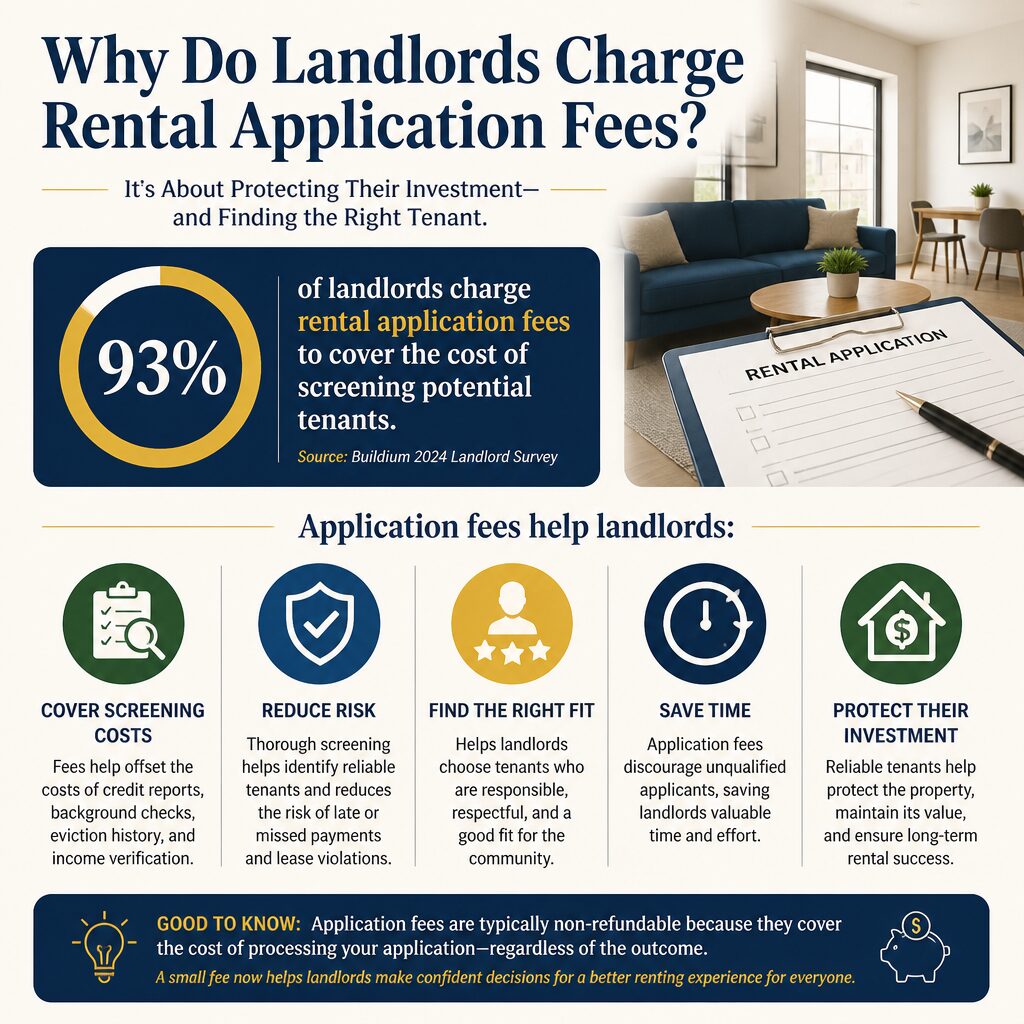
Look, a legit screening process has real line items. Most landlords aren’t just vibing it out. They’re buying reports, paying staff time, and trying to avoid an eviction six months from now. Because that’s their nightmare.
Background checks and credit reports cost them per person
Most of the time, the fee covers a credit report, criminal background check, and sometimes an eviction history search. Those reports aren’t free. Even for big property managers with bulk pricing, it’s still a per-applicant cost. And when you’ve got three roommates applying separately? That’s multiple pulls.
One thing that surprises people. Some systems charge extra for “identity verification” or “fraud detection.” That’s become more common lately because fake pay stubs are everywhere. Owners got burned. Now everyone pays extra because of a few bad apples.
Admin time and process overhead is a sneaky part of it
I used to think “admin” was just a lazy excuse. Turns out, it adds up. Someone has to field calls, chase down documents, verify employment, call previous landlords, and log everything in a leasing system.
And yes, some owners bake that labor into the application fee. Especially smaller landlords. It’s not a huge corporate machine. It’s usually a person with a day job. And a spreadsheet.

The real reason fees exist: it filters applicants
Honestly? Application fees also function like a bouncer. Not always consciously. But it’s what happens.
Fees reduce tire-kickers and serial appliers
Some renters apply to five places at once because the market feels chaotic. I get it. But from the landlord side, that creates a mess. They run screening. Then you vanish because you signed somewhere else.
A fee slows that down. It makes people pick. Or at least pause. And landlords love pause.
It creates a little commitment before they spend time on you
Here’s the thing. Landlords don’t want to “process” ten half-serious applicants. They want one solid tenant who will pay on time and not disappear. So the fee becomes a commitment signal. Not a perfect one. Just a signal.
And we’ll say the quiet part out loud. It can also deter lower-income applicants, even if they’d be great tenants. That’s why fee policies can get ugly fast.

When an application fee is reasonable and when it’s a cash grab
Real talk: not every fee is shady. But some absolutely are. After years of seeing leases and fee sheets, our team has a quick sniff test.
Green flags that suggest the fee is legit
A reasonable setup tends to look like this. The fee amount is clearly stated. They tell you what it covers. And they only collect it when they’re actually going to run screening.
- They provide a written fee policy before you apply
- They explain what reports they pull and when
- They screen in order and tell you your place in line
- They don’t charge extra surprise “processing” add-ons
- They give you a receipt and the name of the screening vendor
Red flags that usually mean you’re funding their marketing
When I work with clients on this, the first thing I check is whether the unit is actually available. Because the sketchy move is collecting a bunch of application fees for a place that’s basically already promised to someone else.
Other red flags. They pressure you to apply immediately, before a showing. They won’t answer basic questions about approval standards. They charge an application fee per adult plus a separate “admin fee” plus a “holding fee” and act like that’s normal. It might be common. That’s not the same thing.
If you want more context on how these up-front costs tend to stack, we laid it out over on our rental application fees and upfront costs page. It helps you spot when the math is getting weird.
How renters can reduce the hit and negotiate smarter
So what do you do when the application fee is non-refundable and you’re already trying to keep your moving budget from exploding? You get strategic. You don’t just pay and pray.
Ask the right questions before you apply
Try this script. Quick. Calm. Not apologetic.
“Can you tell me the approval criteria and whether you’re screening multiple applications at once or in order?”
If they say “we take the first qualified applicant,” ask where you are in the queue. If you’re applicant number seven, that fee is basically a lottery ticket. And not the fun kind.
Another question I like. “Has anyone already applied?” Some managers will dodge. Some will tell you the truth. The dodge is information too.
Use your prepared package to avoid multiple applications
This is where budgeting meets leverage. The fewer times you apply, the fewer fees you burn. Sounds obvious. But most people don’t treat “being ready” like a cost-saving tactic.
We recommend keeping a renter packet ready to go (pay stubs, offer letter, bank statement if needed, landlord references, photo ID). Then you can apply only when you’re confident the unit fits and the landlord is actually ready to process you.
Rental Secrets teaches renters how landlords think. That mindset shift matters here. Owners move toward certainty. If you show up organized, you often get clearer answers and faster decisions. Not always. But usually.
What landlords and property managers can do to keep trust
If you manage rentals, application fees can be a relationship-killer. Even when they’re justified. Especially with young renters who’ve already been hit with tuition bills, daycare costs, or just the general cost of being alive.
Be transparent about screening and stop charging “hope fees”
This bugs me. Charging five applicants when you already know you’re going with the first one. That’s how you get angry reviews and fair housing complaints. And then your leasing team spends Friday nights responding to one-star Google comments.
A cleaner approach is simple. Screen one at a time. Or disclose that you’re screening multiple and refund the unused reports when possible (depending on your vendor and local law). People can handle “no.” They hate “we took your money and also ignored you.”
Consider alternatives that still protect your time
Some operators use a pre-qualification step before collecting fees. A quick income check. A credit score threshold. A short call. It saves everyone money and drama.
And if you’re trying to improve retention, think about how the move-in experience feels. Nickeling people up front makes the whole relationship start off tense. You can be strict and still be respectful. Those aren’t opposites.
If you’re a renter trying to see the bigger picture, our guide to rental housing applications for renters and landlords walks through what gets checked, what you can prep, and how to avoid paying for dead-end applications.
FAQs for Why do landlords charge rental application fees
Are rental application fees refundable?
Usually no. Most fees are labeled “non-refundable” because the landlord is paying for screening reports and staff time. A few places refund if they never run your screening or if the unit is no longer available, but that depends on local rules and the property’s policy. Ask before you pay. Get it in writing.
What’s the difference between an application fee and a holding fee?
An application fee is for screening. A holding fee is money you pay to take the unit off the market for a period of time while you finish steps like signing the lease. Holding fees are often applied to your security deposit or first month’s rent if you move in. If you back out, you may lose it. The exact terms matter. A lot.
Your next move when fees feel out of control
Application fees aren’t going away. But you can stop bleeding money on low-odds applications. Ask where you are in line. Confirm the unit is really available. Apply only when the deal makes sense.
And if you want a more landlord-minded way to approach the whole process, that’s the lane we live in at Rental Secrets. Less guessing. More control. Better outcomes.
Disclaimer: This article does not constitute legal advice.