

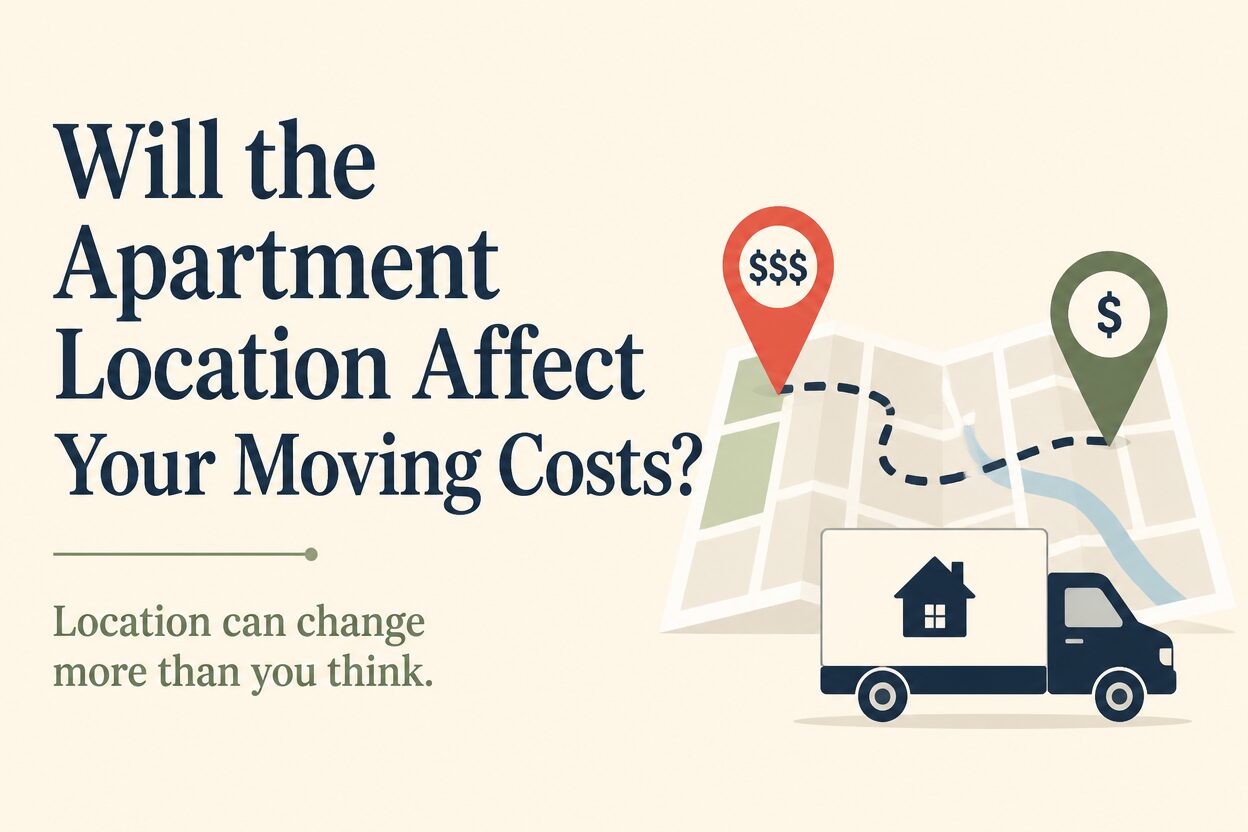
Yes. Location can swing your moving bill way more than most renters expect. I’ve seen people budget $600 and land at $1,800 because the place was “only 20 minutes away” but on the wrong side of traffic, stairs, and parking rules.
So let’s talk about what actually changes when the apartment’s location changes. Not the vibes. The invoice.
Distance is obvious but the route is what gets you
Everyone thinks miles. Movers think minutes. And obstacles. That’s the whole thing.
City miles are expensive miles
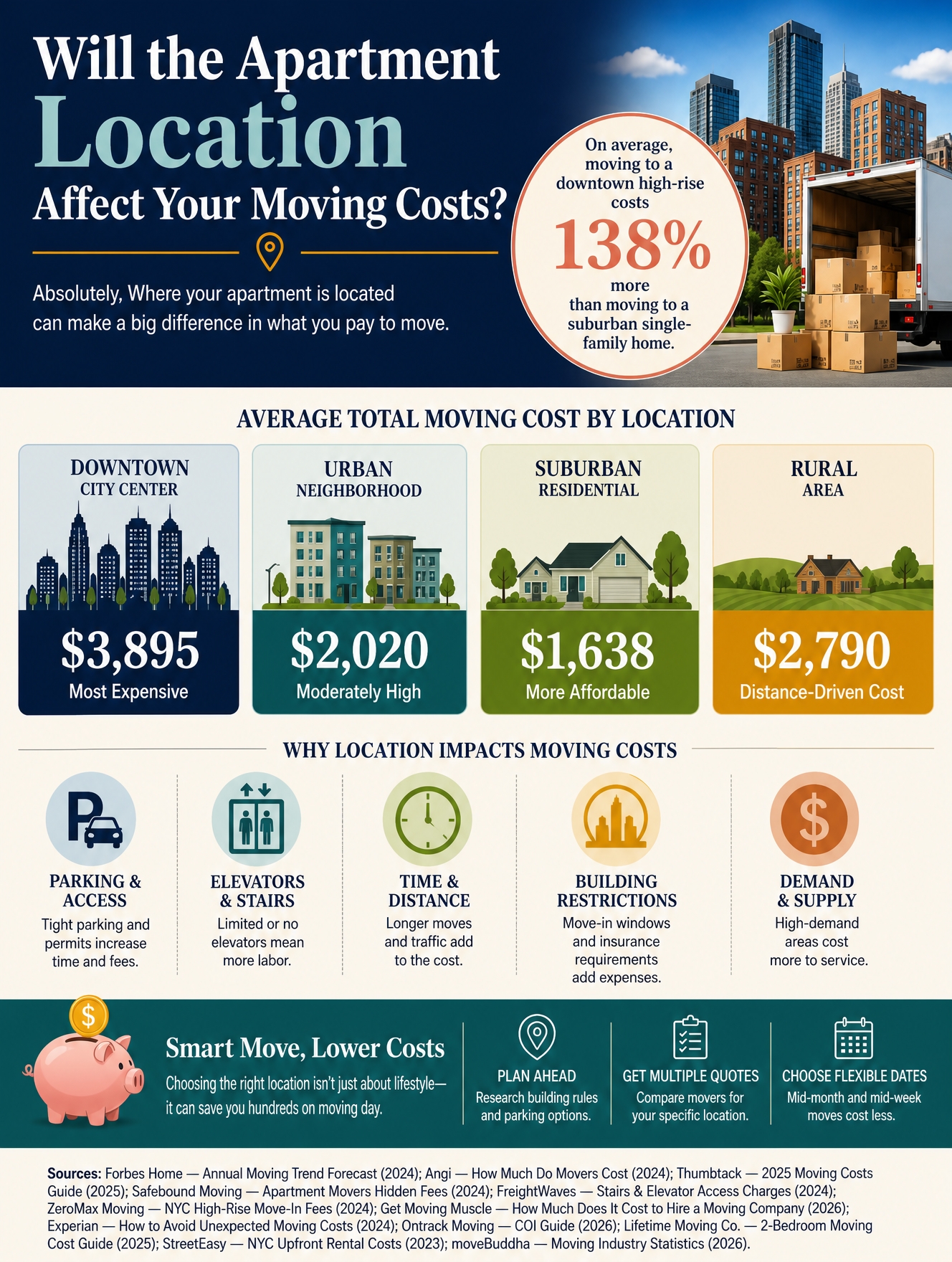
A five-mile move across town can cost more than a 25-mile move in the suburbs. Why? Loading docks you can’t use. Streets you can’t park on. Elevators that require reservations. Security desks that “just need a minute” and suddenly it’s 25 minutes.
When I work with clients on this, the first thing I check is the route at the actual move time. Like, Tuesday at 9 a.m. Not “Sunday afternoon with no traffic.” Real talk.
Tolls, bridges, and weird access zones
Some locations quietly add cash costs. Tolls. Bridge fees. Congestion charges. And sometimes movers charge extra if they know they’re going into an area where they’ll get ticketed unless they bring a second person just to watch the truck.
I had a client last month moving into a downtown core. The building was gorgeous. But the street had a loading window. Two hours. After that, tickets. The mover priced in the risk. That was the “location fee,” even if they didn’t call it that.
If you’re tour-shopping right now, our rental property tours guide for budget-smart renters has a simple way to map these hidden route costs before you fall in love with a place.
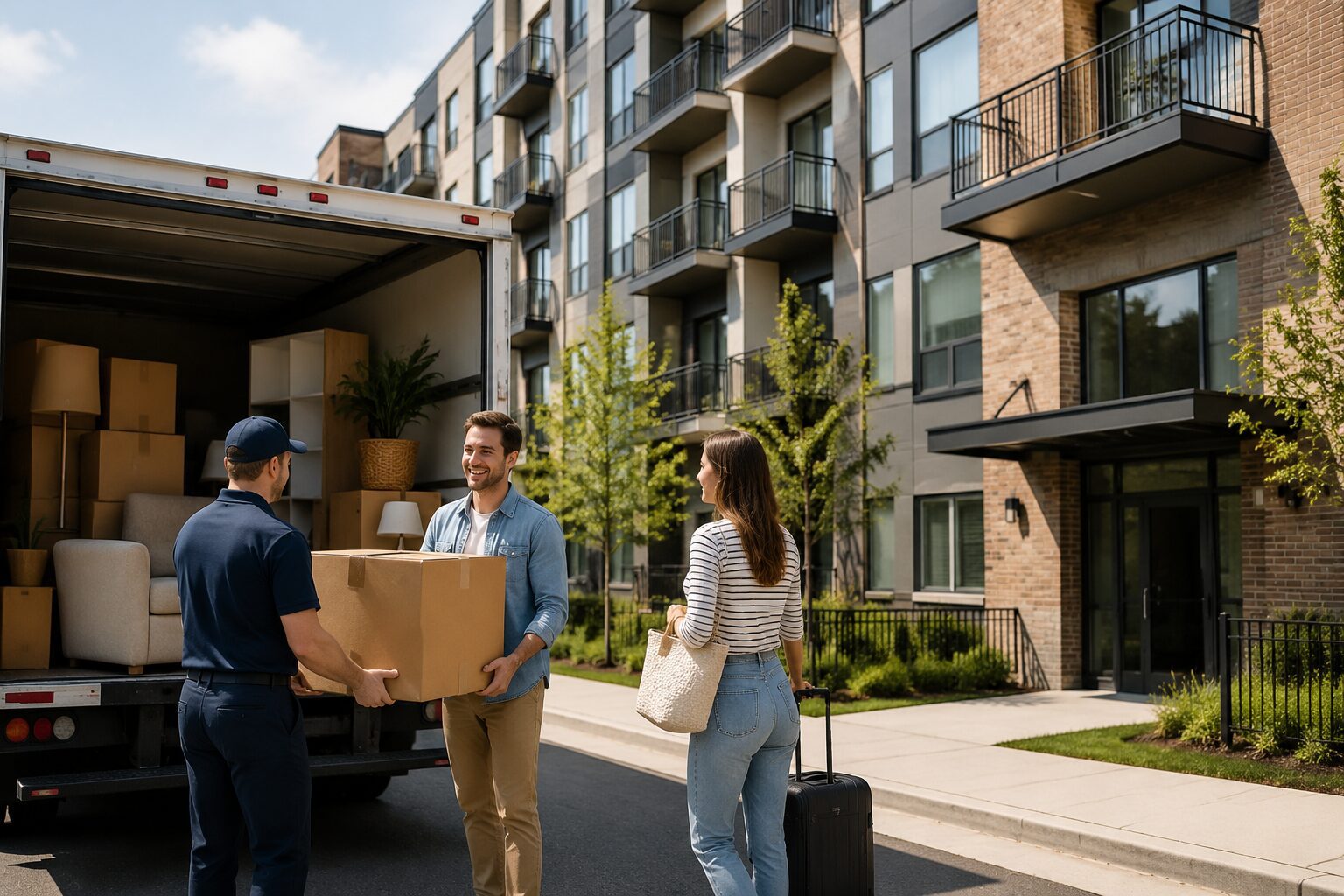
Parking and walk distance can add an hour fast
This one bugs me because it feels so unfair. Same stuff. Same boxes. Very different bill.
Long carries change the labor math
Movers price labor in time. If the truck can’t get close, you pay for “carry.” That can be a long hallway, a courtyard, a gate code situation, or a building where the only legal spot is half a block away.
And it’s not just the new place. The old place counts too. Street parking at your current apartment might be fine. The destination might be the nightmare. Or vice versa.
Permits and reserved spots are sneaky line items
Some neighborhoods require a temporary parking permit. Some buildings require you to reserve the loading dock. Some cities make you rent barricades. It’s not glamorous, but it’s real money.
Here’s a quick checklist we use at Rental Secrets when we’re trying to forecast moving costs from a tour. It’s not perfect. But it catches the big surprises.

- Where will the truck legally sit, and how far to the door?
- Any time window restrictions for loading?
- Permit required for street parking or reserved space?
- Are there gates, key fobs, or a security desk that can slow access?
- What’s the elevator situation, and do you have to book it?
Notice what’s missing? The rent amount. Because this is about location mechanics, not the monthly payment. Different problem.
Stairs, elevators, and building rules are location problems in disguise
People call these “building issues,” but location drives the building type you end up in. Downtown high-rise. Walk-up near campus. Garden-style in the suburbs. Each comes with its own moving bill personality. Yeah, I said personality.
Walk-ups near popular areas can be brutal
Students see a third-floor walk-up near campus and think “cute and cheap.” Then moving day arrives. Narrow stairs. Tight turns. No landing. And movers start talking about extra labor or extra crew.
I used to think stairs were just a small surcharge. Turns out, not always. A bad stairwell slows the entire move. That’s what costs.
High-rises can be efficient or a total mess
A high-rise with a freight elevator you can reserve? Love it. A high-rise with one tiny elevator that’s shared with everyone moving out on the 1st? Different story.
Some buildings require Certificate of Insurance paperwork from the movers. Some require protective pads. Some require move-in deposits. Those rules are more common in certain parts of town and certain building classes. Location sets the stage.
If you’re trying to compare options, we keep a bunch of cost-perspective tour questions inside our using the property tour to get a cost perspective section. It’s basically the stuff renters forget to ask until it’s too late.
Your location choice changes what you can DIY
Not every move needs full-service movers. But the neighborhood can decide that for you.
DIY works great until the street hates you
A U-Haul is cheap. Parking it legally in a dense area isn’t. Some renters end up circling for 45 minutes, then carrying everything from two blocks away. That “cheap move” becomes an all-day cardio event. Plus a ticket.
And if your friends are helping, they’re not going to love a location with no parking and six flights of stairs. They’ll still show up. They’ll complain the whole time. You’ll owe them better pizza and beer than usual.
Storage and staging costs follow location patterns
Moves with gaps happen more in competitive neighborhoods. Lease ends on the 31st. New place starts on the 1st. No overlap. So you need storage for a night or two. Or a place to crash. Or both.
Areas with tight rental inventory tend to create more of these timing headaches. That’s not a universal rule. But it’s common enough that we plan for it.
Landlords and property managers, this is where you can win tenant goodwill. Flexible move-in scheduling. Clear loading instructions. A reserved spot for two hours. Tenants remember that stuff. It reduces friction. And frankly, it helps retention because the move-in experience doesn’t feel like punishment.
How to use location to negotiate without sounding weird
Here’s the part renters skip. You can sometimes turn moving costs into leverage. Not always. But often enough.
Use your real costs as your anchor
We’re not fans of random lowballing. It’s messy. What works better is showing you understand the market, and you understand your cash outlay.
Example: “We love the unit. The move-in costs for this neighborhood are higher for us because of parking and building restrictions. If we sign a 12-month lease this week, can you do $X off the first month or waive the admin fee?”
That’s not emotional. It’s practical. Most landlords get it. Some won’t budge. But you’ve at least made a clean ask with a reason.
Offer something landlords actually value
In our experience at Rental Secrets, the best trade is stability for price. Longer lease term. Stronger move-in date. Quicker decision. Autopay. Those are real benefits to an owner who’s doing the math.
One exception. If the unit is already priced below market and they’ve got backup applicants, your location-based sob story won’t move the needle. Then the win is different. You negotiate fees. You negotiate parking. You negotiate small upgrades. Or you walk and keep shopping.
FAQs for Will the apartment location affect your moving costs
Is moving within the same city always cheaper than moving to another city?
Nope. Same-city can be pricier if it’s dense, hard to park, elevator-restricted, or time-windowed. Cross-city can be smoother if it’s basically highway travel, easy driveways, and straight shots to the doors. Movers care about time and risk.
How can I estimate moving costs during a property tour?
Take 3 minutes outside the building. Stand where a truck would sit. Look for signs about loading and parking. Ask the leasing agent about elevator reservations and move-in hours. Then call one mover and describe the access, not just the address. You’ll get a more realistic quote, fast.
Next step before you sign a lease
Location affects moving costs when it affects time, access, and rules. That’s what you’re paying for. Not the zip code itself.
Before you apply, do one tiny thing. Pretend it’s moving day. Where does the truck go? How far do your boxes travel? What’s the bottleneck? Get that clear, and your budget stops getting ambushed.
Disclaimer: This article does not constitute legal advice.