

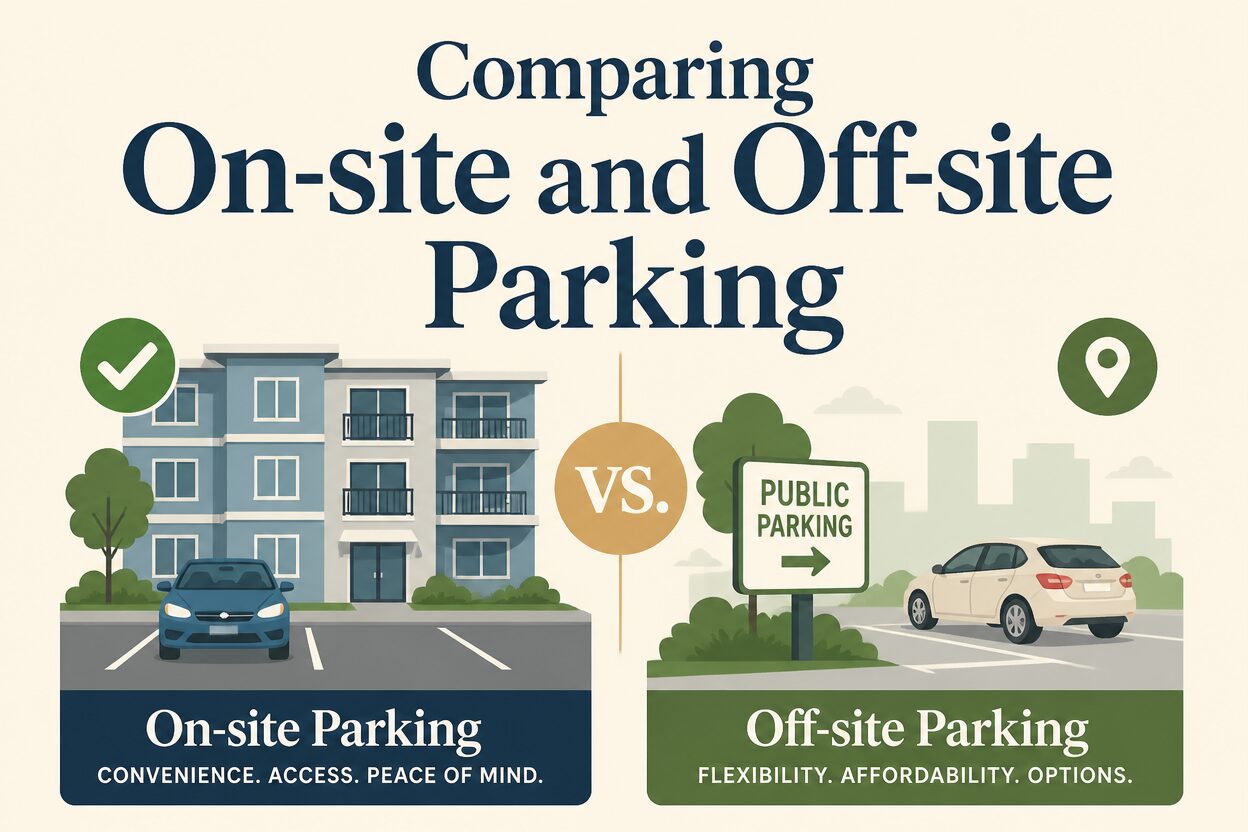
Parking can quietly jack up your housing cost. Or make your life annoying. Sometimes both. And when you’re touring rentals, it’s easy to treat parking like a footnote. Don’t. I’ve watched people negotiate $75 off rent and then casually sign up for a $150 parking situation. Painful.
On-site parking feels convenient until you read the fine print
On-site parking sounds like the easy button. Park where you live. Walk in. Done. But the details matter more than the vibe.
Assigned, unassigned, or reserved
Here’s what I look at with clients right away. What kind of spot is it, actually? “On-site parking available” can mean a guaranteed numbered spot. Or it can mean a free-for-all at 10:30 pm where you’re circling like a tired shark.
And landlords know the difference. They’ll price it differently. They’ll also describe it differently. “Plenty of parking” is one of those phrases that makes me squint.
Security is real, but it’s not magic
Gated garages are comforting. Good lighting helps. Cameras help too. But don’t assume “secure garage” means “no theft.” Most of the time, the weak spot is the garage door timing, the side door, or people tailgating in. You know the move.
So ask blunt questions. Have there been break-ins? Are bikes getting stolen? Do they have a towing company on speed dial? The answers won’t be perfect. But you’ll hear how they handle problems.
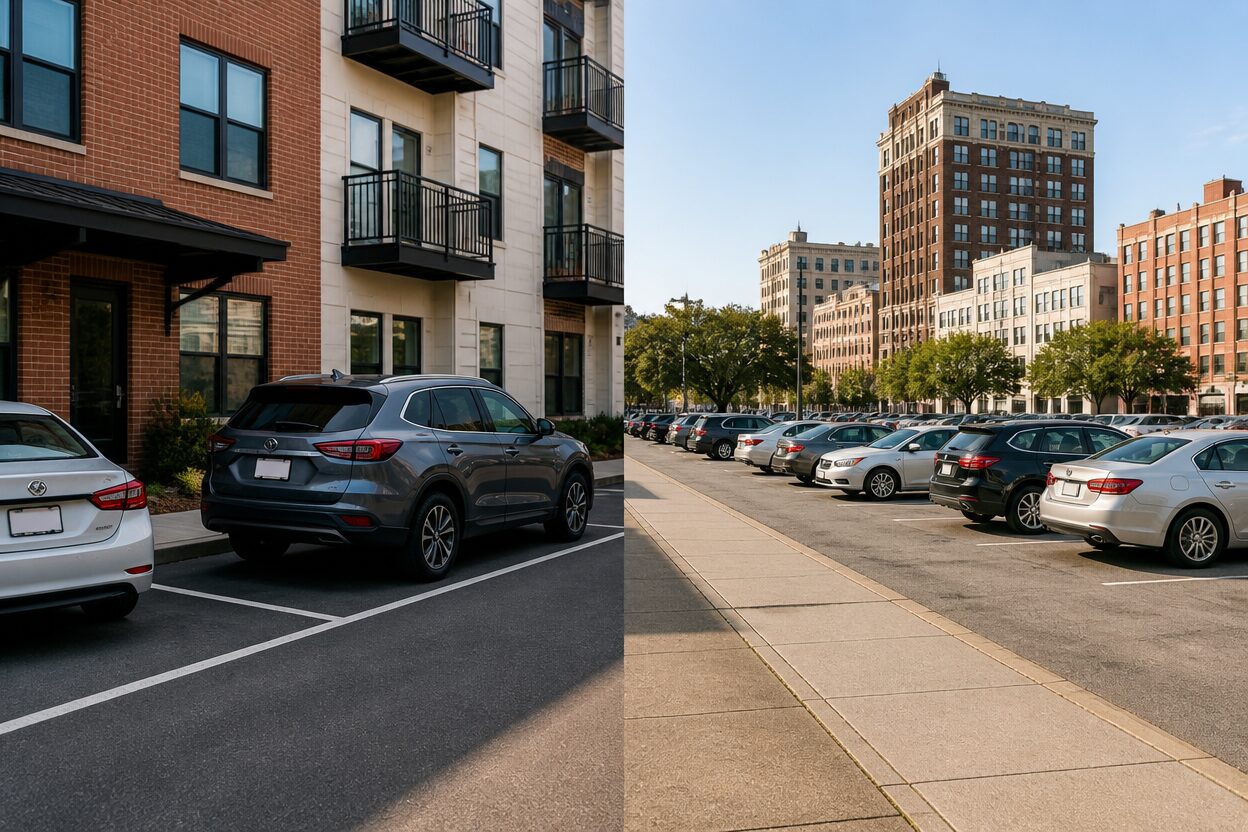
Off-site parking can be cheaper, but the commute cost sneaks in
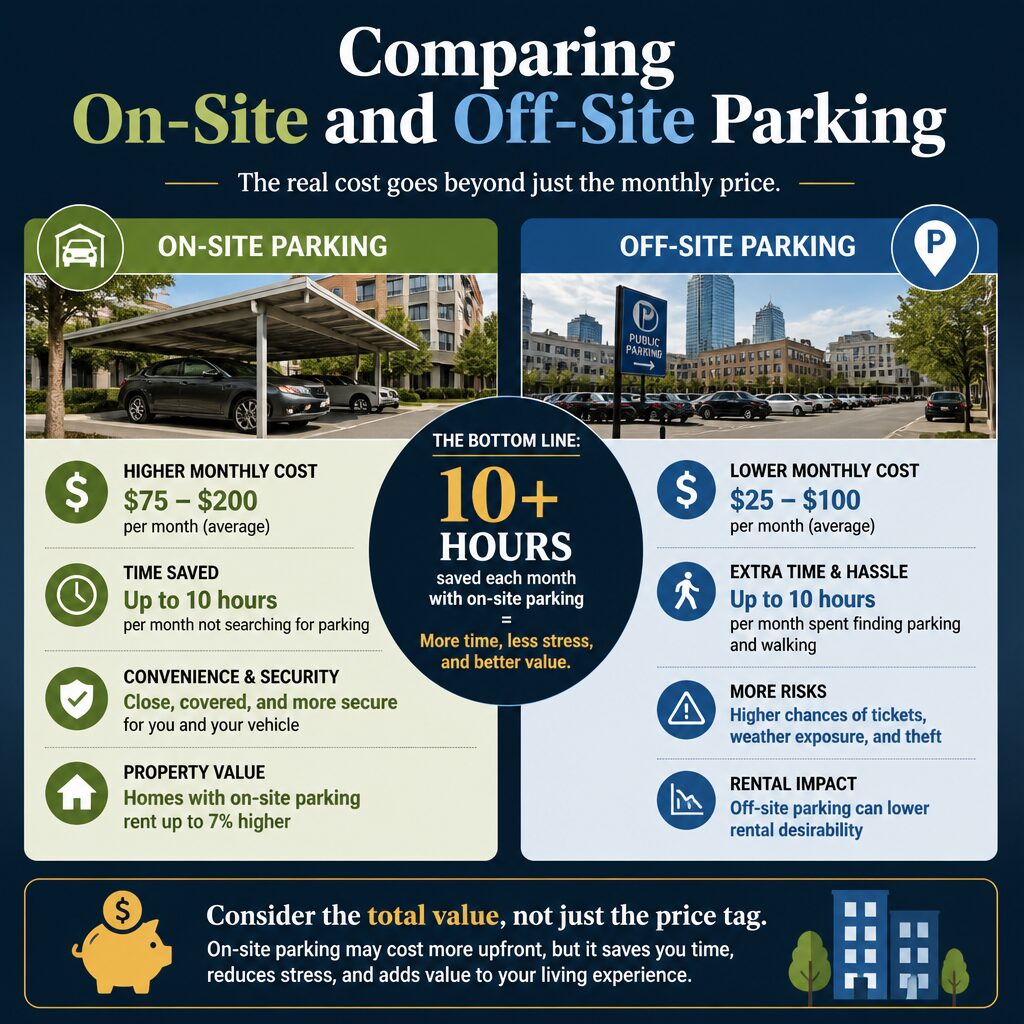
Off-site parking is where budgets get interesting. It can save you money. It can also eat your time. And time is money, even if your spreadsheet doesn’t say it out loud.
Distance changes everything
Two blocks feels fine at noon. Try it in the rain with groceries. Or after a late shift. Or with a toddler who’s decided walking is a personal insult.
I had a client who thought they were being smart by taking a cheaper off-site lot. After week two, they were paying for rideshares on nights they couldn’t find street parking near the lot. That “savings” evaporated fast.
Street rules and permit zones can wreck your plan
Off-site often means street parking or a separate lot. Street parking depends on signage, enforcement, and neighbors. Some cities have resident permits. Some have sweeping days that will absolutely humble you once a month.
And if you’re a student or you’re new to the area, you might not know the rhythm yet. That’s normal. It’s also why we recommend doing a drive-by at the exact time you’d come home. Not at 2 pm during a tour. That’s a fake reality.
What parking really costs when you add up the weird stuff
Real talk: the monthly fee is only the headline. The “weird stuff” is where you win or lose.
Fees, deposits, and surprise rules
Parking can come with separate contracts, separate deposits, and separate penalties. I’ve seen $50 key fob replacement fees. I’ve seen garages that charge for additional remotes. I’ve seen towing policies that are overly strict.
Ask for the parking addendum. Not a verbal explanation. The paper.
The risk budget people forget
This part sounds dramatic until it happens to you. Tickets. Tows. Break-ins. Damage from tight garages. Even just curb rash from squeezing between columns. Off-site has its own risks too. Street parking dings. Higher theft in certain blocks. Walking home alone late at night.
If you’re trying to reduce housing costs, parking is part of your total housing number. Same as utilities. Same as renter’s insurance. Our team at Rental Secrets looks at it that way when we help renters negotiate. Landlords do the same math. They just don’t call it that.
- Monthly parking fee (and whether it can increase mid-lease)
- One-time costs like deposits, key fobs, permits
- Time cost of walking, waiting for gates, hunting for spots
- Risk cost of tickets, towing, theft, damage
- Flex cost when you have guests, roommates, or a second car
And yes, you can negotiate some of this. Not always. But more often than people think. Especially in softer markets.
If you’re mapping out what to ask during showings, our renter-friendly property tour guide for saving money has a clean checklist you can actually use without feeling weird about it.
How to evaluate parking during a tour without being awkward
Most renters don’t want to sound “high maintenance.” I get it. But parking questions are normal. You’re not asking for a marble fountain. You’re asking where you’ll put your car every day.
Questions we ask that get honest answers
I’ll share what I say, basically verbatim.
“Is the spot assigned to my unit, or is it first-come?” Then I pause. Let them fill the silence.
“What happens if someone parks in my spot?” You’ll learn whether they tow, warn, or shrug.
“Can you show me the exact spot?” This is a big one. Some buildings have “off-site” that’s actually a different property. Or “garage” that’s a mechanical stacker situation they forgot to mention. That last one can be a dealbreaker if your car is taller, or if you’re not interested in playing Tetris at 7 am.
Do the unglamorous test
Open your car door in the garage. Seriously. If you can’t get out without folding yourself into a pretzel, that’s your daily life.
Also check the path from spot to unit. Lighting. Cameras. Stairwells. Where the elevator exits. I used to ignore this. Turns out it matters a lot when you’re coming home late or carrying stuff.
For more tour tactics like this, we keep the broader walkthrough approach on our apartment tour strategies page. That’s where we put the stuff that actually changes outcomes. Not the fluffy advice.
Negotiation moves landlords actually respond to on parking
Parking can be a lever. Sometimes it’s the easiest lever. Because it feels separate from rent. Landlords like that. You can use it.
Ask for parking concessions the right way
Don’t just say, “Can you waive parking?” That can work. Usually it works better with a reason that’s market-based.
Try something like: “We’re deciding between a couple places. If you can include one spot, we can apply today.” Clean. Direct. You’re giving them a trade.
Or: “Can you do the first 3 months free on parking?” That one lands well when they don’t want to touch headline rent. Same net effect for you. Different psychology for them.
When off-site becomes a bargaining chip
If the building only has off-site, you’ve got more room. Because off-site is, frankly, less desirable for many renters. The manager knows that. They just don’t want to say it.
We’ve negotiated things like discounted off-site rates, guaranteed permits, or a second spot at a reduced price for roommates. Works great when vacancy is creeping up. Different story when it’s a waitlist building and they’ve got three backup applicants.
Watch for lease language that makes parking worse later
This bugs me. Parking is sometimes written as “month-to-month” even when your rent is a fixed term. Translation: they can raise parking whenever. Or take it away. Or relocate you.
Ask: Is parking guaranteed for the full lease term? Is the rate locked? If not, you’re taking a risk. Maybe it’s still worth it. Just name it.
FAQs for Comparing on-site and off-site parking
Is on-site parking always safer than off-site?
Nope. Often it’s safer. But not always. A poorly lit garage with easy access can be worse than a busy, well-lit street with good foot traffic. The right question is: what’s the theft and damage history, and how does management respond when it happens?
Can I negotiate parking if the listing says the price is fixed?
Usually, yes. Not guaranteed. But we’ve seen plenty of “fixed” parking fees turn flexible when you’re ready to apply, especially if you’re a strong applicant and timing matters to them. Ask for inclusion, a discount, or a few free months. And get it in writing in the lease or addendum. Verbal promises fade fast.
Your next move when parking affects your budget
Pick the option that lowers your total monthly cost without making your weekdays miserable. That’s the real test. If on-site parking costs more but saves you 20 minutes a day, it might be the cheaper choice in your actual life.
And when you’re touring, treat parking like rent. Ask direct questions. Read the addendum. Push a little. That’s what we do at Rental Secrets, because small line items are where landlords quietly make their margins.
Disclaimer: This article does not constitute legal advice.