

Rental application rejection can feel random. Like you got picked last in gym class. But most of the time, there’s a legal reason behind it. Sometimes it’s a fair one. Sometimes it’s sloppy screening. And sometimes it’s straight-up illegal but dressed up as “not a fit.”
We’ll walk through what landlords and property managers can legally consider, what they can’t, and how you can protect your wallet and your time. (Because paying $50 for an application just to get ghosted? That stings.)
The legal basics landlords can actually use
Look, landlords aren’t allowed to reject you for “vibes.” Not officially. They need criteria that connects to risk, ability to pay, or property rules. Most leases live or die on predictability. Rent paid on time. No chaos. No surprise roommates.
Income and ability to pay
This is the big one. If a landlord uses an income requirement and applies it consistently, it’s usually legal. Think “3x the rent” rules. Sometimes 2.5x. Sometimes a fixed dollar amount. The part that matters legally is consistency. Same standard for everyone.
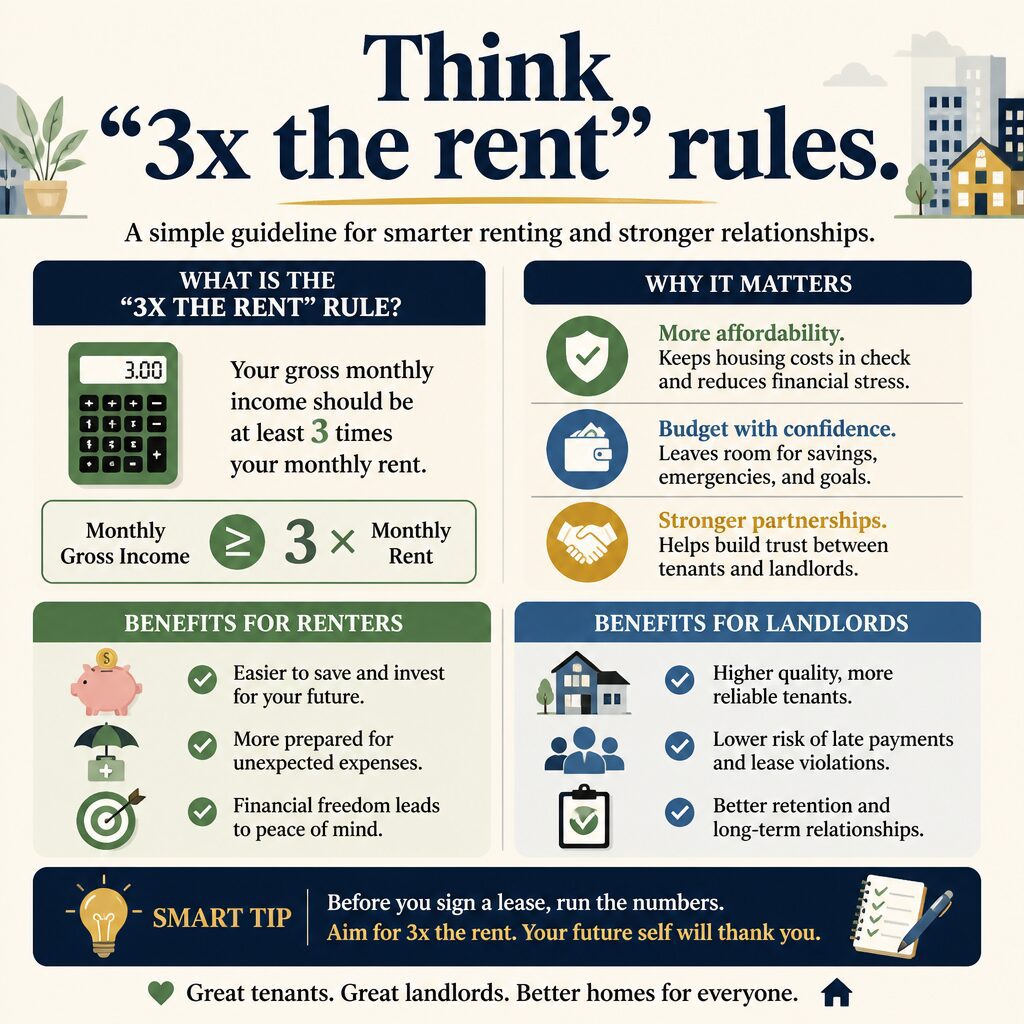
Here’s where it gets messy. Income rules can drift into discrimination if they’re a cover for screening out certain groups. So landlords have to be careful. Many aren’t. Some don’t even realize it.
Credit history and debt patterns
Credit checks are generally allowed. And yes, a low score can be a legal reason to deny. But the landlord should be looking at the story, not just the number. Late payments. Collections. High revolving utilization. Prior rental-related debt. That stuff makes screening software scream.
I used to think “credit score is everything.” Turns out it’s not. We’ve seen plenty of approvals with mid credit when the rest of the file is clean and the renter communicates like a normal adult.
Clean up that credit score with our partner, Rental Kharma. Want the bigger context? Our guide to how rental applications get evaluated breaks down what landlords notice fast (and what they ignore).

Criminal history and background checks are allowed, but not unlimited
Real talk: a lot of landlords treat background checks like a moral judgment. But legally, it’s supposed to be a safety and liability decision. That difference matters.
Convictions versus arrests
Many jurisdictions restrict using arrests that didn’t lead to conviction. And even where it’s allowed, using arrests as an automatic denial is risky. It tends to create fair housing problems because arrest rates aren’t evenly distributed across communities. That’s the ugly reality.
Convictions are more commonly used. Still. “Any conviction ever” blanket policies can get landlords in trouble depending on location and how it impacts protected groups.
How time and relevance should factor in
In our experience, the fairest screenings look at three things. How long ago. How serious. And whether it relates to property safety. A ten-year-old non-violent offense is a different story than a recent violent conviction. That’s not me being soft. That’s risk math.

Landlords who don’t do this nuance tend to lose good tenants. And they end up with more vacancy churn. Which costs money. That’s one reason Rental Secrets pushes landlord-mindset thinking. It’s not just about getting approved. It’s about understanding what makes you “easy to say yes to.”
Rental history can legally make or break you
This one surprises students and first-time renters. Because you’re thinking, “I’ve never rented. That should be neutral.” Landlords often treat it as unknown risk.
Prior evictions and landlord references
Past evictions are usually legal to consider. Especially recent ones. A lot of property managers won’t touch an applicant with an eviction in the last 3 to 7 years. Even if it was pandemic-era chaos. Even if it was a roommate who imploded the situation.
And landlord references matter. Sometimes too much. Some landlords will say anything when called. Petty stuff. Revenge stuff. I’ve heard it.
Lease violations and unpaid balances
If you owe a prior landlord money, that’s a common legal denial reason. Unpaid rent. Damages. Lease break fees. If it’s in collections, it’s even worse because it shows up twice (credit + rental history).
We recommend pulling your own reports when possible and cleaning up obvious errors before you apply. You can’t negotiate what you can’t see.
- Prior eviction filings or judgments
- Outstanding rental balances or collections
- Documented lease violations (noise, unauthorized occupants)
- Bad or unverifiable landlord references
- Gaps that look like you’re hiding something (even when you’re not)
One more thing. Some denials happen because a landlord can’t verify your story. Employer won’t pick up. Pay stubs look edited. References don’t respond. It’s not personal. It’s the application clock running out.
Occupancy limits, pets, and policy denials that are usually legal
Not every rejection is about money or history. Sometimes it’s a rules mismatch.
Occupancy standards and local code
Landlords can follow occupancy limits tied to building code, health and safety rules, or their insurer. The tricky part is when they set arbitrary limits that don’t match the unit size. A “two people max” rule for a two-bedroom can raise questions. Especially if it’s used inconsistently.
Families run into this a lot. And it’s stressful. You’re trying to budget. You’re trying to keep kids in the same school. Then you get a rejection that feels like a shrug.
Pets, smoking, and other house rules
No-pet policies are generally legal. So are breed restrictions in many places (even though we see them cause endless drama). Smoking bans too. Same with “no cosigners” or “must view the unit in person” policies.
But service animals and assistance animals are different. Landlords usually must make reasonable accommodations under fair housing rules, even with a no-pet policy. And no, they can’t slap on “pet rent” the same way. That’s where a lot of landlords mess up without meaning to.
If you want a deeper look at renter protections and dispute angles, we’ve got a solid overview in our fair housing and rental application rights section. It’s written for real people, not law school study group vibes.
Illegal reasons get disguised as legal ones
Now the uncomfortable part. Some rejections aren’t legal. The landlord just won’t say the quiet part out loud.
Protected classes and fair housing red lines
Federal fair housing law generally bans discrimination based on race, color, religion, national origin, sex, familial status, and disability. States and cities often add more protections (source of income, sexual orientation, gender identity, age, immigration status, you name it). So the legal answer depends on where the property is.
What does discrimination look like in real life? Not always a blunt statement. It’s subtle. “We went with someone else” after they saw your kids. “Unit just got taken” after you asked about a ramp. “Income doesn’t qualify” even though your paystubs say otherwise. That kind of thing.
Retaliation and inconsistent screening
This bugs me. Inconsistent criteria is where landlords get themselves into trouble. Saying they require 700 credit, then approving a 640 because the person “felt responsible.” Or denying you for a tiny issue while ignoring the same issue for another applicant. That’s the kind of pattern that becomes evidence.
Also, retaliation can be illegal. If a current tenant applies to transfer units and gets blocked because they complained about repairs? Risky for the landlord. Same idea if you requested a fair housing accommodation and suddenly the unit “isn’t available.”
And yes, sometimes the rejection reason is simply “someone applied five minutes earlier.” That’s legal. Annoying. But legal.
FAQs for What legal reasons allow rental application rejection
Do landlords have to tell you why you were rejected?
Sometimes. If they used a consumer report (credit, background, eviction screening) and took “adverse action,” federal law usually requires an adverse action notice with info about the reporting agency and your rights to dispute. But if they rejected you for a non-report reason (like occupancy limit or incomplete application), they may not have to give details.
Can a landlord reject you for using a housing voucher?
Depends on your location. Some states and cities treat voucher use as protected “source of income,” which means denial can be illegal. Other places allow landlords to refuse. This is one of those topics where local rules change everything, fast.
Your next move after a rejection
So what do you do with all this? You tighten the application file before you apply again. You ask for the adverse action notice when screening reports were used. You keep records. Screenshots, emails, dates. Small stuff that becomes big later.
And if your goal is lower rent, not just “any approval,” we use this same screening logic at Rental Secrets to help renters present a stronger profile and negotiate from a position of calm strength. Less panic applying. More control. That’s the whole thing.
Disclaimer: This article does not constitute legal advice.