

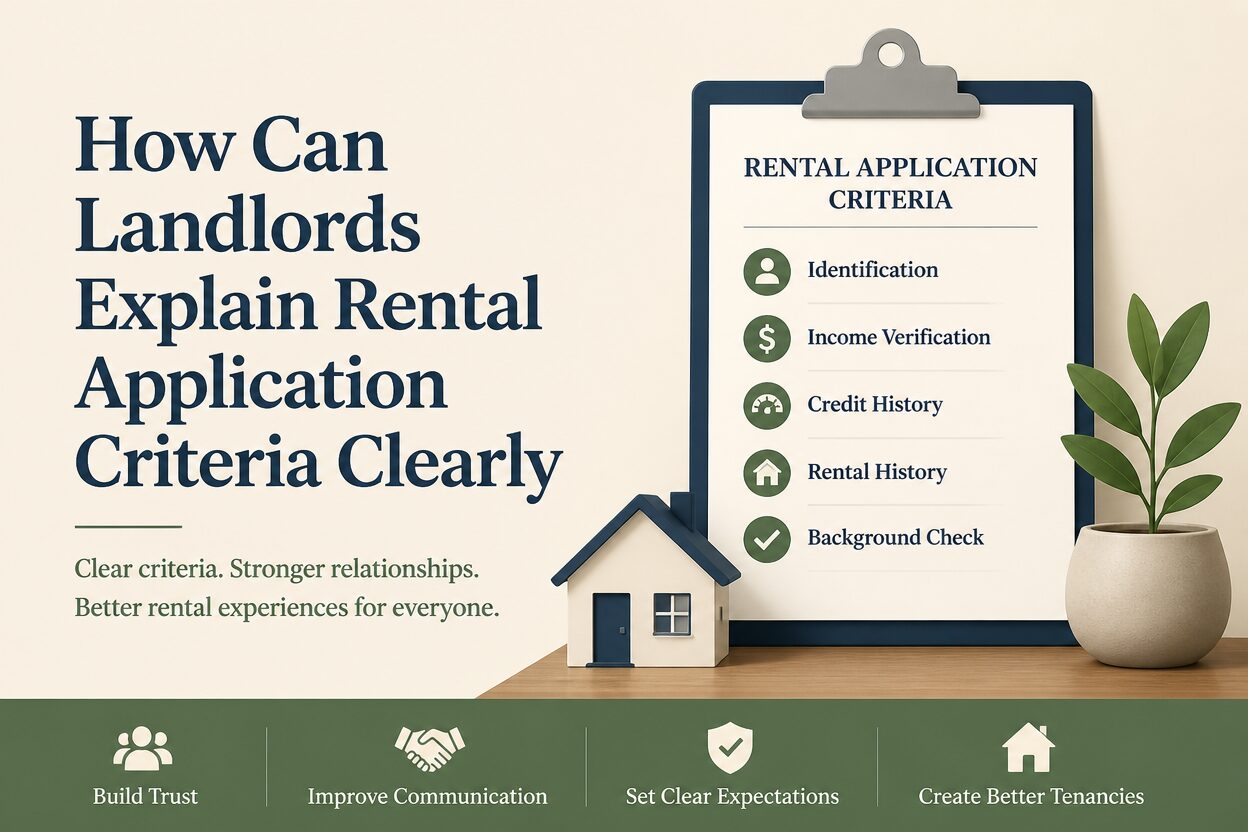
Put the criteria in writing. Up front. In plain English. That’s the move.
I’ve watched landlords lose good applicants because the rules felt like a mystery quiz. And I’ve watched renters overspend on application fees because nobody told them what “qualified” even meant. That’s a bad vibe for everyone. So let’s make it simple, predictable, and fair.
Say the quiet part out loud without sounding harsh
Look, renters aren’t allergic to standards. They’re allergic to surprises. Like paying $45 to apply and then learning you needed a 700 score. Cool. Love that.
Most of the time, landlords get vague because they’re trying to stay flexible. I get it. But “flexible” reads as “we can reject you for anything” when you’re the applicant. Especially if you’re a student with a guarantor, a young professional with a thin credit file, or a family juggling childcare costs and moving costs. Tight budgets. No time for riddles.
Use normal words, not landlord-speak
Replace “must meet our screening standards” with actual standards. The goal isn’t to sound tough. It’s to sound consistent.
We recommend writing criteria the way you’d explain it to a friend who’s never rented before. Because plenty of applicants haven’t. Or they’ve only rented from one person and learned one set of rules.
Explain why a rule exists, briefly
Renters accept “we need reliable payment history” way faster than “company policy.” One sentence is enough. Don’t write a novel. Just don’t make it feel random.

Put numbers on the big three: income, credit, and rental history
Here’s what I tell landlords and property managers: if you can’t put a number on it, you’re not really communicating it. You’re hinting.
And for renters reading this. When you see numbers, you can budget. You can decide whether to apply, negotiate, or move on. That alone saves money. Our team at Rental Secrets sees application fees quietly wreck people’s moving budgets. Two “maybe” applications turn into $100 gone. Poof.
Income rules that don’t feel like a trap
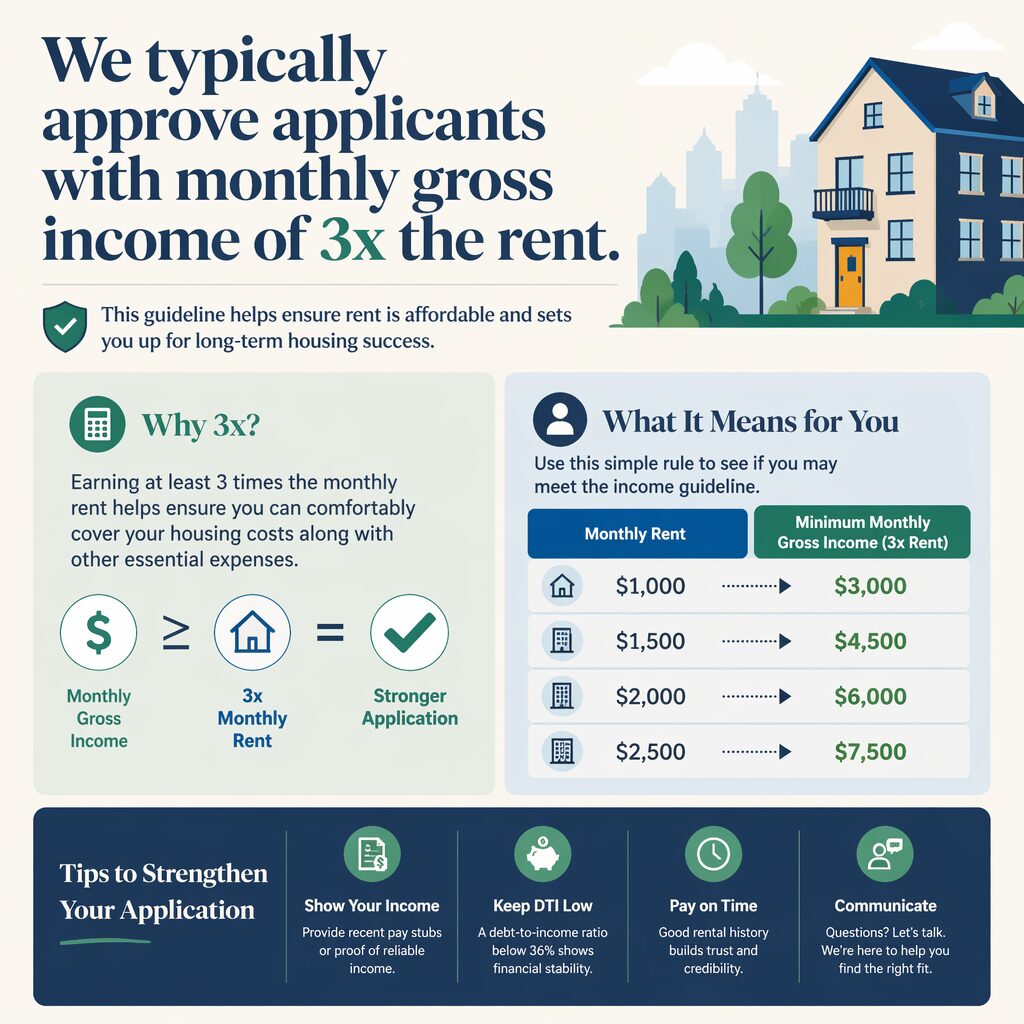
Spell out the rent-to-income ratio and what “income” means in your world. Gross or net. Base pay only or bonuses included. Do you accept offer letters? Do you accept bank statements for self-employed applicants? It matters.
Example language (steal this): “We typically approve applicants with monthly gross income of 3x the rent. We can consider 2.5x with strong savings or a qualified guarantor.”
Credit standards, with a reality check
This is where people get weird. Some owners secretly care about score. Others care about collections. Others care about evictions more than anything. Just say which one you care about.
Also. Don’t pretend a thin file is “bad credit.” A 22-year-old with one credit card and no missed payments isn’t the same as someone with five charge-offs. Call that out. Applicants will trust you more.

Real talk: if you do have a hard minimum score, put it on the listing. If you don’t, say what you do look at. Late payments in the last 12 months. Outstanding landlord debt. Recent bankruptcies. Whatever it is.
Show the whole process so people can plan and not panic
The fastest way to create angry emails is to hide the steps. People assume the worst. Especially when they’re on a deadline and their current lease ends in ten days. Been there. It’s stressful.
We recommend laying out the timeline like a little checklist, right on the listing page and again in the application confirmation email. Not fancy. Just clear.
List what you’ll verify and what you need from them
- IDs needed (and whether you accept passport or student ID)
- Proof of income options (pay stubs, offer letter, benefits letter)
- How do you contact employers and past landlords
- What counts as a “complete” application
- Typical decision time (24 hours, 3 days, whatever is true)
That last one is huge. If your decision time is “usually 48 hours,” say that. If it’s “we batch applications on Fridays,” say that too. People will stop refreshing their inbox every seven minutes.
Fees and refunds need to be painfully clear
This bugs me. Landlords bury the fee details. Then applicants feel scammed. Even if the fee is legitimate.
Explain what the fee covers (screening report, admin time) and whether any part is refundable. If it’s nonrefundable, say it early. Like, before they enter their card. And if you’re in a place where the law restricts application fees or requires disclosures, follow that. Obviously.
For renters who want to get smarter about how these processes usually work, we keep a bigger walkthrough in our main guide to rental housing applications for renters and landlords. It’s the stuff people wish they knew before spending money.
Write your exceptions policy so it feels fair, not random
Here’s the tricky part. Most landlords do make exceptions. A co-signer. Extra deposit where allowed. Higher savings. Shorter lease. But they don’t say that publicly because they don’t want everyone asking.
But silence backfires. Applicants assume “no exceptions.” Or they assume “exceptions only for certain people.” Neither one builds trust. And trust is basically tenant retention’s weird cousin. You don’t get renewals without it.
Say what compensating factors you consider
You don’t have to promise approval. Just explain what can help. Example: “If you’re under our income guideline, we may still consider you with strong savings, a guarantor, or a longer job history.”
And yes, renters will ask questions. That’s fine. That’s better than having renters pay to apply blindly.
Be careful with deposits and “extra months upfront”
Depending on your state, asking for extra deposit or multiple months upfront can be restricted. Even when it’s legal, it can price out the exact stable renters you want. Families with decent income but tight cash flow. Students with financial aid timing. Young professionals paying off a car note.
When I work with clients on negotiations, I’ll often suggest alternatives that feel safer for the landlord but don’t drain the renter’s bank account. Bigger security deposit where allowed. Shorter lease with an option to renew. Automatic payments. Those kinds of trade-offs tend to land better. Rental Secrets talks about that landlord mindset a lot, because once you understand what risk they’re actually trying to control, you can offer the right kind of reassurance.
Communicate rejections and approvals like a decent human
Approvals are easy. Rejections are where reputations get made. Or trashed.
Most renters don’t expect you to bend rules. They expect you to be respectful and clear. Especially if they’re new to renting and this was their first “real adult application.”
Give a short reason category, not a vague shrug
“Not selected” is the landlord version of “it’s not you, it’s me.” People hate it.
You don’t need to litigate the details. But a category helps: income didn’t meet guideline, unverifiable employment, negative landlord reference, incomplete application, or credit criteria not met. That’s enough for someone to learn, move forward, and become a better applicant in the future.
If you used a screening company and took adverse action based on that report, follow the Fair Credit Reporting Act process. Provide the notice. Include the consumer reporting agency info. Don’t wing it.
Tell people what they can do next
Small thing. Big impact. “You’re welcome to reapply with a guarantor” or “If you can provide additional proof of income, reply to this email.”
Even when the answer is no, giving a next step lowers the temperature.
For more landlord communication tactics and retention-friendly policies, we’ve got more in rental housing applications and landlord communication resources. That’s where we keep the practical stuff. The templates. The scripts. The “what do we say when…” situations.
FAQs for How can landlords explain rental application criteria clearly
Should landlords put credit score minimums in the listing?
Usually, yes. If you truly have a hard minimum, put it in the listing so people don’t waste money. If you don’t have a hard minimum, say what you actually evaluate (recent late payments, collections, eviction records, landlord debt). Renters read “no minimum” as “it’s a coin flip” unless you clarify.
How can renters ask about criteria without sounding like a problem?
Keep it practical. “Before I apply, can you confirm the income guideline and what documents you accept for proof of income?” That’s normal. Or “My credit file is thin but clean. Do you consider guarantors?” Landlords who communicate well won’t be offended. They’ll be relieved you’re organized.
Next step: make the criteria boring
Boring is good here. Predictable. Easy to follow.
Landlords get fewer angry calls. Renters save money and time. And when the relationship starts with clarity, renewals get easier later. We’ve seen it over and over. Put the rules where people can see them. Then stick to them.
Disclaimer: This article does not constitute legal advice.