

You can get denied for an apartment. Sure. But you shouldn’t get denied because of who you are. Or because a screening report is wrong. Or because a landlord gets sloppy and “goes with their gut.” This page is about the guardrails. The legal rights. The weird little disputes that pop up right in the middle of a housing search.
And yes, we’re Rental Secrets. We aren’t lawyers, but we teach renters how landlords think. So we also care a lot about clean process, fewer blowups, and better long-term renter relationships. Landlords win there too.
If you want the bigger process stuff, start here: our main guide to rental housing applications for renters and landlords. This page zooms in on fair housing, rejection reasons, and what to do when things feel off.
Fair housing basics that actually matter on applications
Fair housing laws aren’t about being “nice.” They’re rules. Federal rules. Plus state and local add-ons that can be even more strict. Most disputes start because someone forgets that last part.
Protected classes and what landlords cannot do
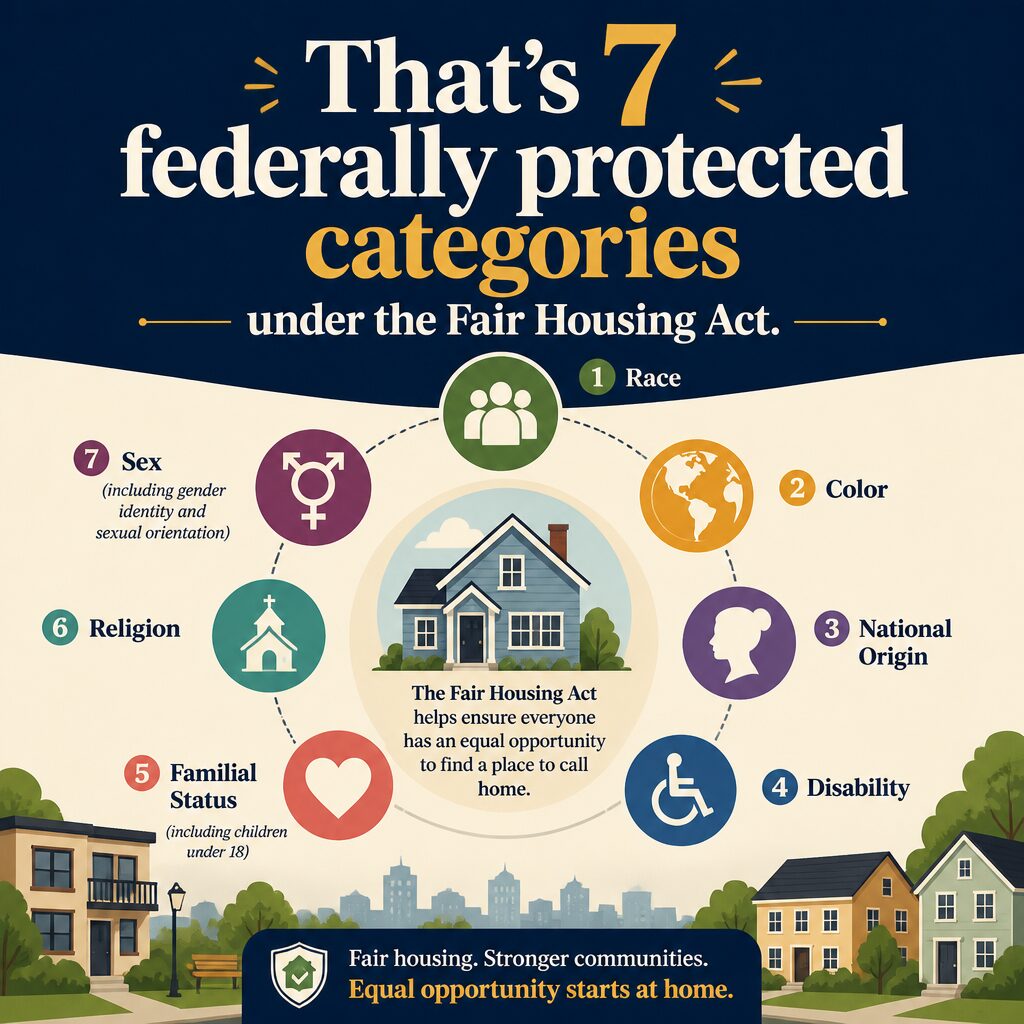
At the federal level, the Fair Housing Act blocks discrimination based on race, color, national origin, religion, sex (including sexual harassment), familial status, and disability.
That’s 7 federally protected categories under the Fair Housing Act. When you’re filling out an application, any decision tied to one of those is trouble. Even “we didn’t mean it that way” trouble.
Now the messy part. States and cities often add more. Source of income. Sexual orientation. Gender identity. Immigration status protections in some places. “Student status” sometimes. That’s why blanket advice online can be wrong in your ZIP code.
Disparate treatment versus disparate impact
Real talk: most people think discrimination only counts when a landlord says something obviously gross. That’s “disparate treatment.” Easy to understand.
But “disparate impact” is the sneakier one. A policy that sounds neutral, but hits a protected group harder. Like an occupancy rule that effectively pushes out families. Or a screening model that screens out disability-related income patterns. (SSI timing can be different. We’ve seen that exact confusion.)
Landlords don’t have to be cartoon villains to create liability. They just have to run a policy that isn’t necessary, or can’t be justified, and causes uneven harm. That’s the part that surprises people.
Reasonable accommodations and reasonable modifications
If you’re a renter with a disability, you can ask for a reasonable accommodation. That’s a change in rules or process. You can also ask for a reasonable modification. That’s a physical change to the unit, usually paid by the tenant (sometimes not, depending on housing type and funding).
Examples we see a lot: assistance animals where pets aren’t allowed, a reserved parking spot, an alternative way to provide documentation, more time to turn in a form when a medical issue is involved. Simple stuff, usually.
And landlords. Don’t wing it here. Document the request. Respond quickly. Ask only for what’s necessary. We’ve watched small delays turn into formal complaints because nobody wanted to send a clear email.

Legal reasons applications get denied and the ones that cause fights
Some denials are clean. Others are “technically legal” but still a bad idea. And then there are denials that look legal on paper but aren’t. That’s where disputes live.
Common legal reasons for denial
Usually, denial reasons fall into a few buckets: credit history, income verification problems, rental history (like evictions), criminal background (where allowed and properly handled), incomplete application, or failing to meet occupancy rules.
But here’s the thing. The reason has to be real. Consistently applied. And supported by the same screening standards used for everyone else. When I worked with a property manager years ago, the “standard” changed depending on how friendly the applicant seemed. It felt harmless at the time. It wasn’t.
We’re big on written criteria. A simple one-page screening policy saves relationships. It also saves time. And it keeps you from accidentally discriminating because your memory is selective. Everyone’s is.
Credit denials and what landlords have to do next
If a landlord uses a consumer report (credit, background, eviction search) to deny you or to approve you with worse terms (higher deposit, guarantor requirement, shorter lease), the Fair Credit Reporting Act usually triggers an “adverse action” notice.
Most consumer reporting agencies must investigate disputes within 30 days under the FCRA. That deadline matters because apartment hunting moves fast. You don’t want a “we’ll get back to you next month” situation while units disappear.
That notice typically includes the reporting agency’s info and tells you you can dispute the report. It doesn’t mean the landlord has to reverse the decision. But it does mean you get a clear path to challenge errors.
Criminal background checks are not a free-for-all
This is where landlords accidentally step on rakes. Blanket bans (like “any felony ever”) tend to be risky. The EEOC has warned for years that broad criminal record exclusions can create racial discrimination concerns because arrest and conviction rates aren’t evenly distributed across groups.
Many jurisdictions also restrict what can be considered, how far back, and whether arrests (not convictions) can be used. Some require an individualized assessment. Some don’t. It varies. A lot.
Renters. If you’re worried about your record, asking “what’s your screening standard?” isn’t rude. It’s practical. And landlords. Being upfront reduces wasted applications and angry phone calls later.
Familial status and occupancy rules
Families get tripped up by occupancy limits. And landlords get tripped up writing them.
There’s a common rule of thumb floating around: two people per bedroom. It’s not a federal law. HUD has treated “2 per bedroom” as generally reasonable in many situations, but context matters (unit size, layout, age of kids, local codes).
The rule has to be applied consistently regardless of the ages of the residents involved. However, sometimes we see this tight limit only when kids are involved. That’s where it starts to look like a familial status problem. And it gets ugly fast.
How disputes actually happen during rental screening
Most conflicts aren’t dramatic at first. They start as silence. Or vague messages. Or a weird excuse that doesn’t match what you turned in.
The classic problems renters run into
Here are the big ones we see:
- Application fees taken, then the unit is “suddenly rented” with no explanation
- Different standards for different applicants (income multiplier shifts, deposit changes)
- Wrong identity matched in a background check (name twins are real)
- Old evictions that should’ve dropped off, or sealed records still showing up
- Landlord asking illegal questions (pregnancy, religion, “where are you really from?”)
And a quick landlord note. If you’re screening multiple applicants at once, spell out your process in writing. “First qualified application” or “we screen in the order received.” Pick one. Use it every time. The fastest way to earn a fair housing complaint is to look random.
What to document when something feels discriminatory
Look, I’m not saying assume the worst. But don’t assume the best either. Treat it like a budgeting receipt trail. You want clean records.
What we tell renters to capture:
- Dates and times you applied, toured, and followed up
- Copies of the listing and any written criteria
- Email and text screenshots
- Names of staff you spoke to (even “Mike at the front desk” helps)
- Any adverse action notice you receive
One small thing. Keep your tone calm in writing. I know. That’s annoying. But calm messages age well when a third party reads them later.
Fixing errors on background and credit reports
Bad reports are common. Not because everyone’s lying. Because data is messy. Court records lag. Addresses get mixed. “Jr.” becomes “Sr.” Social security numbers aren’t in every county’s criminal records. It’s a whole thing.
What renters can do right away
Start by getting a copy of the report used. The adverse action notice should tell you where it came from. Then:
- Dispute with the reporting agency in writing and keep proof you sent it
- Attach documents, not essays (court disposition, payment proof, ID)
- Ask the landlord if they’ll accept a corrected document directly while the dispute runs
Sometimes a landlord will hold the unit. Sometimes they won’t. That’s reality. But we’ve seen landlords make exceptions when the applicant shows a clean paper trail and communicates fast. That’s also reality.
What landlords should do to avoid repeat disputes
Use reputable screening vendors. Set a consistent process for “borderline” results. And keep a clear adverse action workflow so nobody forgets to send the notice.
Also. Train staff not to editorialize results to applicants. “Your background check was scary” is not a business communication. It’s gasoline.
When to talk to a housing lawyer or file a complaint
Sometimes you can solve this with a couple emails. Sometimes you can’t. The trick is knowing when you’re past the “polite misunderstanding” stage.
Signals it’s time to escalate
We tend to recommend escalation when you’ve got one of these:
- Clear protected-class comments (even “jokes”)
- A pattern of shifting requirements with no written standard
- Refusal to consider a reasonable accommodation without engaging
- Denial based on a report they won’t disclose or explain
For fair housing issues, you can often file a complaint with HUD or your state/local fair housing agency. For credit/background errors, you may end up in the FCRA dispute channel first. Different lanes.
HUD generally requires federal fair housing complaints to be filed within 1 year of the alleged discrimination. That clock sneaks up on people. Especially when they’re busy, stressed, and just trying to find a place to live.
Small negotiation moves that prevent legal drama
This is where our Rental Secrets brain shows up. A lot of legal conflict is really a communication failure wrapped around money stress.
Renters. Ask for the screening criteria before you apply. Ask how they handle multiple applications. Ask what documents count for income. A landlord who answers clearly is usually a safer bet. Even if the rent is a hair higher.
Landlords. Offer a transparent “second look” process. Not a guarantee. Just a process. Like, “If you believe the report is incorrect, send us documentation within 48 hours and we’ll review.” That one sentence reduces angry calls. It also reduces vacancies, because qualified renters don’t storm off.
Recordkeeping and privacy during applications
Application files are full of sensitive info. IDs. Pay stubs. Social security numbers sometimes. Treat it like you’d treat your bank login. Seriously.
How long records can be kept
Retention rules vary by state and by what kind of property you run. But landlords often keep records long enough to defend against discrimination claims or disputes.
Even when the law doesn’t force a specific timeline, we like a simple internal policy: keep what you need, for as long as you truly need it, and delete the rest securely. And tell applicants what you’re doing. People relax when they know their data won’t live forever in somebody’s inbox.
Security basics that prevent headaches
Don’t email full IDs around internally. Don’t store applications on a shared laptop with no password. Don’t let paper files sit out at the leasing desk. I’ve seen that. It made my skin crawl.
Use access controls. Limit who can see what. And if you must collect SSNs, have a reason and a secure workflow. Otherwise you’re just taking on risk for no payoff.
Clear takeaway
Fair housing rules and application disputes aren’t abstract. They show up when someone’s desperate for a place, or when a landlord is trying to fill a vacancy quickly and cuts corners. The best move is boring. Written criteria. Consistent screening. Clean documentation. Fast fixes when reports are wrong.
And if you want the full application playbook, with negotiation tactics we’ve seen work in the wild, head back to our main guide to rental housing applications for renters and landlords. That’s where we connect the legal side to the practical stuff that helps you pay less rent and sleep at night.
Disclaimer: This article does not constitute legal advice.