

Rental applications usually require a guarantor when the landlord thinks your income or credit won’t reliably cover the rent. That’s the whole thing. It’s not personal. It’s risk math.
And yeah, it hits students and first-time renters the hardest. You’ve got the budget. You’ve got the plan. But the application wants paperwork and proof, not vibes.
If you want the broader flow of how applications get screened, our main guide to rental housing applications for renters and landlords lays out what owners and property managers actually look at.
The usual triggers that make a landlord ask for a guarantor
Look, most landlords aren’t out here trying to make your life difficult. They’re trying to avoid a nonpayment situation that takes months to unwind. So they lean on a guarantor when your file has what I call “blank spots.” Not red flags. Just unknowns.
Your income is under the rent threshold
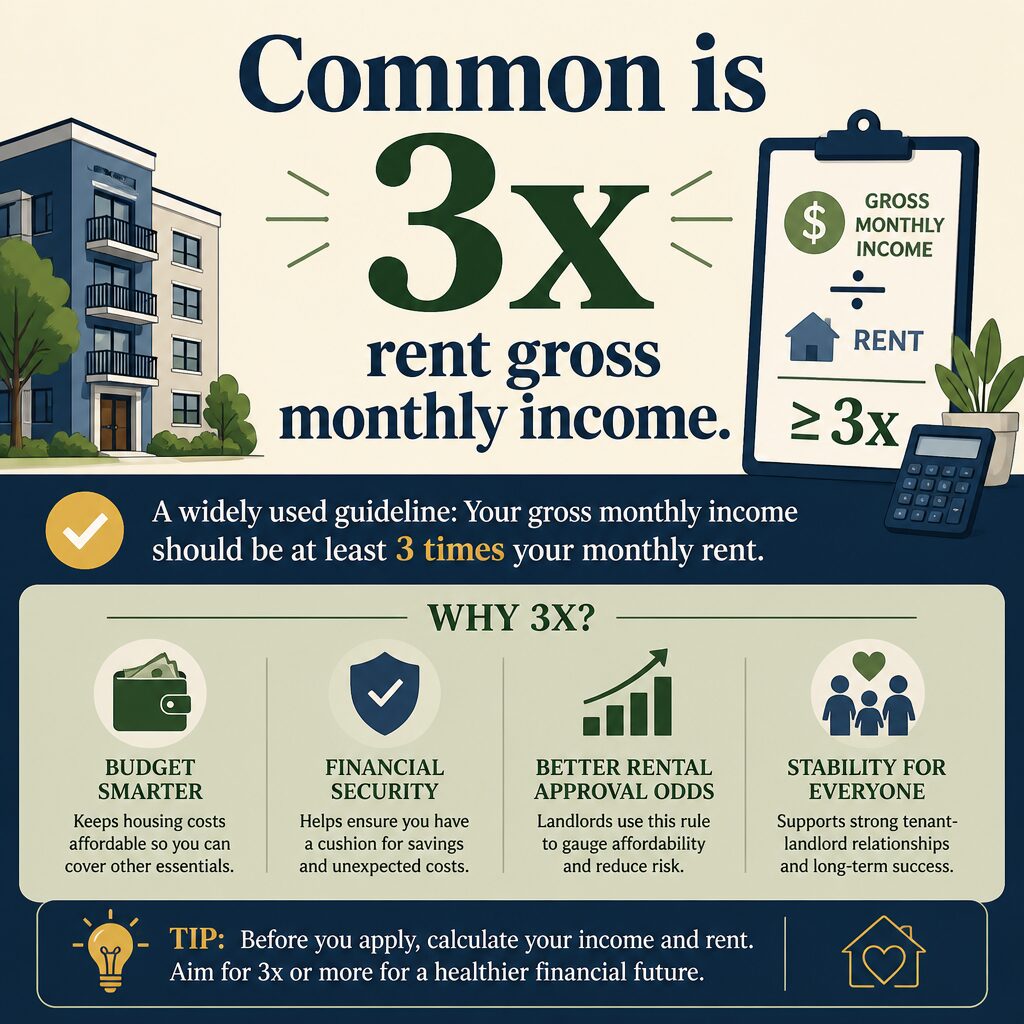
Most places use an income multiplier. Common is 3x rent gross monthly income. Sometimes 2.5x. Sometimes 4x in hot markets. If you’re short, even by a little, the guarantor request tends to pop up fast.
I had a client last month with a strong job offer but a start date three weeks out. The landlord didn’t care that the job was real. They cared that paystubs weren’t. So, guarantor.
Your credit history is thin, new, or bruised
Thin credit is different from bad credit. Landlords often treat them the same anyway. Annoying, but true.
Students and young professionals get caught here all the time. You’ve paid everything on time. You just haven’t had enough accounts long enough for the score to look “proven.”
Bruised credit is another story. Medical collections. One missed card payment from two years ago. A messy breakup where someone stopped paying the shared utility bill. Stuff happens. The landlord sees a number. They ask for a backstop. Thin and bruised credit is where Rental Kharma shines, bringing in strategies to heal that bruised credit report.

Situations where a guarantor is basically expected
Honestly? Some applicant profiles get auto-sorted into “needs a guarantor” no matter how responsible you are. It’s not fair. It is common.
Students applying near campus
Purpose-built student housing and near-campus rentals often require a guarantor by policy. Not because you did anything wrong. Because their tenant base is mostly people without long credit histories and without full-time income.
And sometimes they’ll require each roommate to have a guarantor. Even when you’re splitting rent. That one surprises people.
First apartment after moving to a new city
No local rental history. New job. New address. That combo makes landlords itchy.
We’ve seen this with interns, travel nurses, and recent grads. Even when the income is solid. The file just feels “too new.” So they want a guarantor. Or they’ll offer an alternative, like a higher deposit. Depends on local rules.
If you’re in a student or first-time renter situation, the rental housing application tips for students and first-time renters section is where we park the practical stuff. Less theory. More of what actually gets approved.
What landlords are actually trying to protect with a guarantor
Real talk: landlords worry about two things. Payment reliability. And how expensive it’ll be to fix a problem.
A guarantor is a shortcut that answers both.
They want a second payer with a clean profile
The guarantor is usually required to have strong credit and higher income than the tenant. Sometimes, a much higher income. Because the guarantor is the “break glass in case of emergency” person.
And yes, they’re on the hook. Typically for unpaid rent, fees, and damages up to the lease limit. The exact language matters. I’ve seen guarantee agreements that cover extensions and renewals automatically. Sneaky.
They’re trying to reduce eviction risk
Evictions cost money even when the landlord wins. Filing fees. Attorney time. Missed rent. Turn costs. Having a guarantor reassures the landlord that they can avoid that whole nightmare.
I used to think a guarantor was mostly about “bigger deposit without calling it a deposit.” Turns out it’s more about speed. If rent is late, a guarantor can be contacted immediately. That changes behavior fast.
How to avoid needing a guarantor or at least negotiate the ask
So what do you do if you don’t have a guarantor? Or you have one, but you don’t want to drag your aunt into your housing situation. Totally valid.
Build a stronger application packet
When we work with renters at Rental Secrets, the first thing we check is what the landlord will actually believe. Not what you know is true. Owners love documents that reduce uncertainty.
- Recent paystubs or an offer letter with start date and salary clearly stated
- Bank statements showing cash reserves (even one month of rent helps)
- Prior landlord references with dates and payment history
- Proof you’ve paid rent on time (Ledger, Venmo history, Portal screenshots)
- A short note explaining any weird credit item in plain language
Keep it tight. Two pages of extra stuff is helpful. Twenty pages is chaos.
Offer an alternative that feels equal to the landlord
This part depends on local laws. Some states cap deposits. Some cities regulate fees. But in many places, landlords can consider alternatives like:
A higher deposit (within legal limits). Prepaying a month or two. A shorter lease term. Or a slightly higher rent amount. Not my favorite option, but it sometimes beats finding a guarantor.
Here’s the negotiation angle most renters miss. The landlord doesn’t want a guarantor specifically. They want to feel safe. So you pitch safety. That’s the language they speak.
And if you’re also trying to lower rent, don’t mix that request into the same breath as “I don’t have a guarantor.” Separate conversations. Timing matters. Our team at Rental Secrets coaches people on this sequencing because it’s where deals die for no good reason.
FAQs for When do rental applications require a guarantor
Do landlords always accept a guarantor instead of stronger income or credit?
Usually, yes. But not always. Some buildings have hard rules from ownership or their insurance. Some property managers get burned once and then tighten the policy forever. And some just don’t want the extra paperwork.
If they won’t accept one, ask what they will accept. More deposit. A co-signer on the lease instead of a guarantor agreement. Prepay. A shorter term. Get them talking.
What’s the difference between a guarantor and a co-signer for a rental?
In everyday conversation people mix the words. But leases sometimes treat them differently.
A co-signer is often added as an actual tenant party. They may have rights under the lease, and they’re liable the same way you are. A guarantor often doesn’t get occupancy rights. They’re just guaranteeing payment. Still liable. Just not living there.
And the paperwork can be totally separate. I’ve seen guarantor forms that are stricter than the lease itself. So yeah, read it. Even if it’s boring.
Your next move if a guarantor comes up
Don’t panic. A guarantor request is common, especially early in your renting life. Treat it like a negotiation prompt. Not a rejection.
Ask why they need it. Offer proof that targets that concern. And if you’re trying to keep rent low, bring in a strategy that speaks to how landlords price risk and vacancy. That’s what we teach at Rental Secrets. Landlords have patterns. Once you see them, you can work with them instead of feeling stuck.
Disclaimer: This article does not constitute legal advice.