


Parents get pulled into student rental applications fast. Usually right when the “we found a place” text hits. And suddenly you’re looking at income requirements, guarantor forms, weird screening questions, and a deadline that feels like a pop quiz.
Here’s the stuff we want you to know before you co-sign anything or email over documents you’ll regret sending.
Landlords are screening for risk, not vibes
Look, a lot of parents think the application is about whether your kid seems responsible. It’s not. Most landlords and property managers are running a risk check. Can rent get paid on time? Will the unit get trashed? Will they have to chase people down?
That mindset explains almost every “annoying” requirement you’ll see.
The three things they care about most
In our experience, most student applications boil down to three buckets. Income. Credit. Rental history. Students tend to be light on all three. So the landlord reaches for the lever they can pull. A guarantor.
And yeah, sometimes they also care about roommate count, pet policies, and whether the student’s job is steady. But those are usually secondary.
Why the bar can feel higher for students
This bugs people. A working adult gets approved with a 650 score and paystubs. A student with scholarships and family support gets grilled. It feels backward.
But the paperwork trail for “family support” is messy. Landlords prefer simple. W-2 pay. Credit score. Prior landlord reference. They’re not trying to be mean. They’re trying to avoid surprises.
If you want the big picture on how applications tend to work on both sides, we keep a running explainer in our main guide to rental housing applications for renters and landlords. Handy when you’re staring at a form thinking, “Why are they asking that?”

Co-signing is a real contract, not a favor
Real talk: Co-signing is one of the most common ways parents get burned. Not because their kid is “bad.” Because life happens. Roommates bail. Jobs change. Someone forgets to Venmo. And YOU are the safety net.
What you’re usually promising
Most guarantor agreements aren’t just “cover one missed month.” They often say you’re responsible for the full lease obligations. Rent, late fees, damages, legal costs. And that obligation doesn’t always end with the original lease. Sometimes it continues with renewal if the paperwork is sloppy. Read that sentence again. Full lease obligation.
I had a client whose daughter’s roommate moved out mid-year. The remaining roommates kept paying. Kind of. One month got short. The landlord didn’t negotiate. They went straight to the guarantor. It was a $420 gap. Plus fees. That’s how it starts.
How to limit your exposure without starting a family fight
You can ask for boundaries. You won’t always get them. But you can ask.
- Ask if the guaranty can be capped (example: two months’ rent).
- Ask if it can end after 12 months with a clean payment history.
- Ask for a requirement that the landlord notify you after the first late payment.
- Ask if a larger deposit can replace the guarantor (some places allow it, some don’t).
- Ask for the guarantor to apply only to your student’s portion in a joint-and-several setup (rare, but worth the ask).
And yes, landlords hear these requests. The better ones don’t freak out. They just decide what they can accept.
Paperwork traps that cost families money
Now, the stuff that creates chaos. The “we need this today” messages. The missing document. The fee that keeps getting paid again because someone used the wrong link.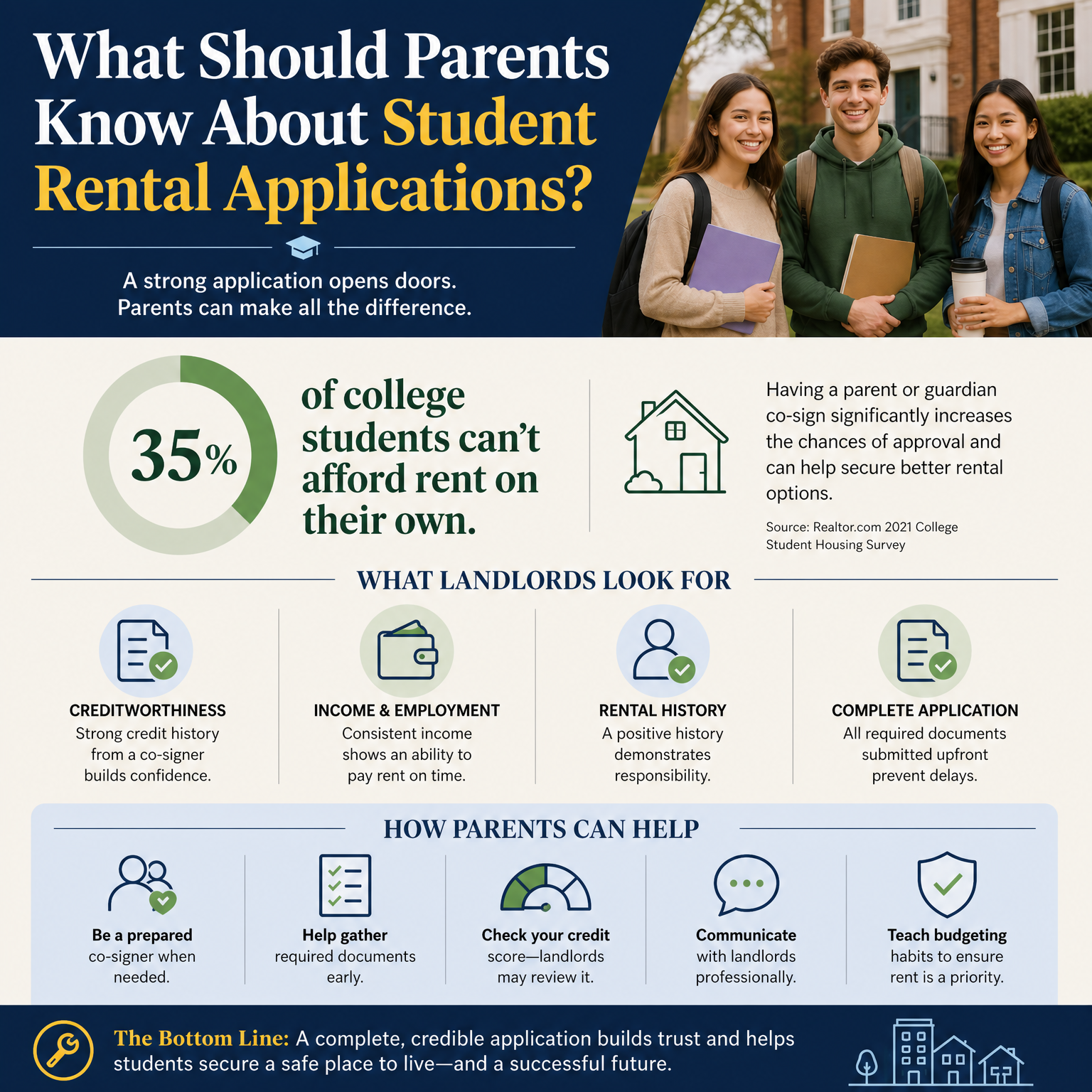
We’ve seen the same traps over and over.
Application fees and screening fees add up fast
Honestly? Paying multiple application fees for multiple apartments is the student version of lighting cash on fire. Sometimes you have to. Usually you don’t.
We recommend picking one or two top choices and getting a clear list of requirements before submitting. Ask the leasing office: “Is the unit actually available and being held with this application?” You’d be shocked how often the answer is fuzzy.
For landlords reading this, quick side note. Transparent fee policies and a clear timeline help prevent angry parent calls. It also reduces chargebacks. Everyone wins.
Document oversharing can backfire
Parents love sending everything. Full tax return. Full bank statements. Social Security card photo. Please don’t.
Send only what they request. Redact account numbers when you can. Use a secure upload portal if they have one. Email attachments float around longer than anyone admits.
And if the landlord asks for something that feels off (like a full SSN by email), ask if there’s an alternate way. Most professional managers have a portal. Mom-and-pop landlords vary. Some are great. Some are disorganized.
Negotiation is possible, even for students
So, can students negotiate? Yes. Not always on the sticker rent. But on terms. And parents can help without taking over this excellent teaching moment.
This is basically what we teach at Rental Secrets. We study how landlords price. How they decide who gets concessions. What signals “easy tenant” versus “future headache.” Then we use that to ask for a better deal without sounding like we’re haggling at a flea market.
What actually moves the needle
Timing matters. Vacancy matters. Unit condition matters. A place that’s been sitting is a different conversation than one with a waitlist building.
When I work with clients on this, the first thing I check is days-on-market and how many similar units are still available. If the building has five nearly identical listings, you’ve got room. If it’s the only one, you’re mostly negotiating for cleaner terms, not lower rent.
Parents can also help package the application. A clean guarantor profile. Clear proof of funds. Quick responses. That “low friction” feeling is worth money. Landlords don’t say it out loud. But they feel it.
Concessions are often easier than rent cuts
We’re not saying you’ll always score a discount. But you can often get something.
Examples we see succeed: waived admin fees, reduced parking, a smaller pet fee, a flexible move-in date, a modest upgrade (like repainting a scuffed room). You ask nicely. You ask once. You give a reason. Then you stop talking.
If you want more student-specific angles, we keep them collected on our rental housing applications resources for students and first-time renters. That page gets updated when new screening patterns pop up.
Roommates and joint leases get messy fast
Here’s the part nobody wants to think about. Roommates.
Most student rentals are joint-and-several liability. Translation: each tenant is responsible for the whole rent, not just their “share.” If one roommate disappears, the landlord can legally go after the others. And yes, the guarantors too, depending on the paperwork.
What we ask students to decide before applying
Who’s paying utilities? Who’s setting up autopay? Who’s the point person with the landlord? Who’s buying renters insurance? Stuff like that. Boring. Crucial.
Roommate issues aren’t just “personal”. They’re part of the housing process, and they’re financial. Every time.
Parents can set one rule that saves the year
One rule: rent gets paid first. Not after concert tickets. Not after spring break plans. First.
We’ve seen families avoid disasters by having the student keep one month of rent as a buffer. Not a lecture. Just a default. It’s like keeping a spare tire. You hope you never need it.
FAQs for What should parents know about student rental applications
Should we co-sign, or is it better to pay a bigger deposit?
Depends on what the landlord allows. Some states limit deposits. Some properties have firm “guarantor required” rules for students. If a larger deposit is allowed, it can limit your long-term exposure compared to a broad guaranty. But you’re tying up cash. And deposits don’t always cover damages plus missed rent. We usually ask the property what alternatives they accept before deciding.
What credit score does a parent guarantor need?
Most of the time it’s less about one magic number and more about the whole file. Payment history. Debt-to-income. Any recent collections. A parent with a decent score but a high debt load can get denied. Same with a high score plus a recent eviction on record (rare, but it happens). If you’re unsure, ask what their guarantor criteria are before your kid pays the application fee.
The takeaway and what we’d do next
Parents don’t need to run the whole process. But you do want to slow down the risky parts. The guarantor agreement. The roommate liability. The fee spiral.
If you’re sitting with an application open right now, our next step would be simple. Confirm the unit is truly available. Get the full list of requirements in writing. Then decide whether you’re negotiating price or negotiating terms. Either one can save real money.
Disclaimer: This article does not constitute legal advice.