

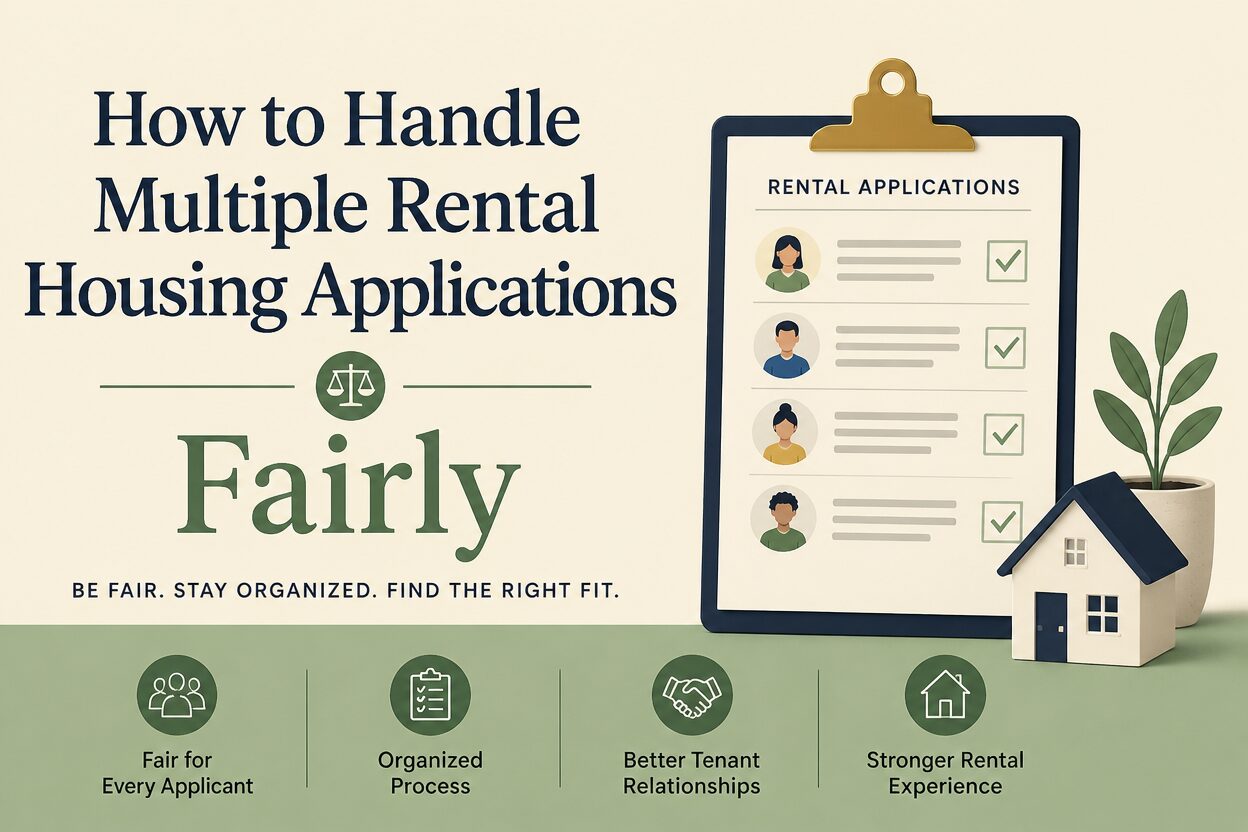
When multiple rental applications hit your inbox at once, it gets messy fast. Feelings get involved. Timelines get tight. And if you handle it casually, you can end up being unfair without meaning to. Worse, you can end up looking discriminatory even when you weren’t trying to be.
We’ve seen this from both sides. Renters stressing because they did everything “right” and still got ghosted. Landlords trying to pick a solid tenant and accidentally creating a paper trail they’ll regret.
Fair is not random and not vibes
Look, “fair” doesn’t mean you pick the person you like most. It also doesn’t mean you flip a coin. Fair means you decide how you’ll judge applications. Before you read them. Then you actually stick to it.
This bugs me, honestly. A lot of property managers think fairness is just “I treated everyone the same.” But if your process is sloppy, “the same” turns into “whoever caught me in a good mood.” That’s not a process. That’s a mood swing.
Build your scoring rules before you open the first PDF
Our team’s practical rule: write down your screening criteria in plain language, then score it. Credit range. Income multiple. Rental history. References. Whatever matters for your property. And yes, you can weigh things differently. Just don’t invent the weights after you’ve seen who applied.
I had a client who used to do the classic “first qualified applicant gets it” thing. Sounds fair, right? Turns out it created chaos. People would rush incomplete applications just to be first. Then he’d end up bending rules to “help” the nicer applicant. He switched to a simple scorecard. The drama stopped.
Know what you can’t use, even casually
Don’t write down anything about protected classes. Don’t joke about it in texts with your leasing agent either. You’d be surprised what ends up in screenshots.
Also. Don’t ask for extra stuff from one applicant but not others. Same documentation list for everyone. Same deadlines. Same communication pace. That’s where fairness starts to look real.

Set expectations upfront so renters don’t spiral
Renters hate the silent treatment. And landlords hate the follow-up texts that feel like a hostage negotiation. This is fixable with one thing. A timeline.
When we coach renters through Rental Secrets, we tell them to ask early: “What’s your review timeline and decision process?” It’s a polite question. And it forces the process out into the open.
Use a clear message template and stick to it
Here’s a simple approach we’ve seen work most of the time. You acknowledge receipt. You state what’s next. You give a decision window. And you say whether you’re reviewing in order received or comparing applicants as a batch.
Batch review is usually calmer. “We’re accepting applications until Tuesday at 5pm, then choosing from qualified applicants.” Renters can handle that. It’s the mystery that makes people panic.
Explain the fee situation like an adult
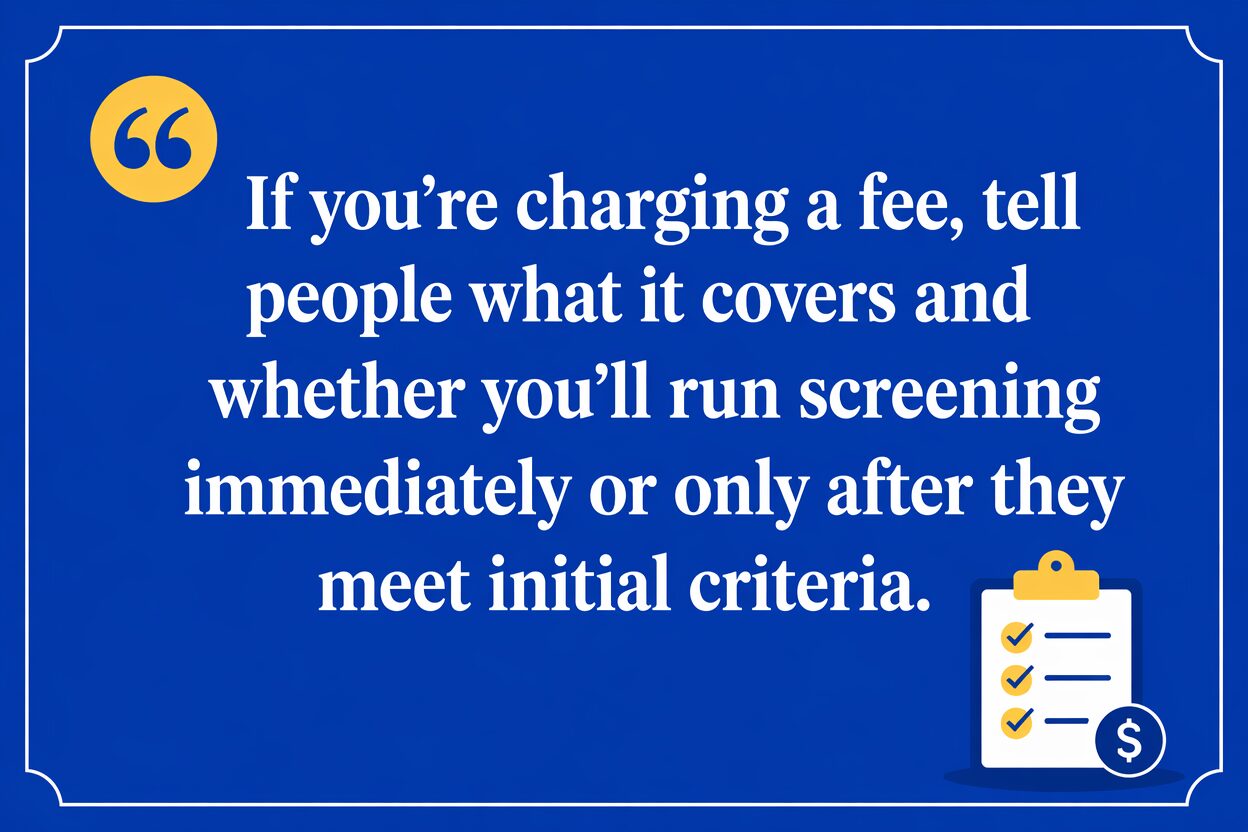
Application fees are where trust goes to die. If you’re charging a fee, tell people what it covers and whether you’ll run screening immediately or only after they meet initial criteria. And if you can cap how many you accept, do it. Even a soft cap. It’s just decent.
Renters. If you hear “apply fast, we’re running them as they come in,” ask whether they’ll refund screening fees if they never run your report. Some places will. Some won’t. But asking tells them you’re paying attention.
If you want more renter-side tactics like this, we’ve got them laid out in our step-by-step rental application playbook for renters and landlords. It’s the stuff we wish everyone knew before they hit submit.
Choose a selection method that holds up later
Here’s what actually matters. When someone challenges your decision (or just leaves a nasty review), you want to be able to show a consistent method. Not a story you made up after.
Three methods that tend to stay fair
Different properties need different approaches. A high-demand studio is not the same as a single-family home where you care about long-term stability.
- First fully qualified: Only if your “qualified” definition is strict and written down. Otherwise it turns into favoritism.
- Batch compare with a scorecard: Our favorite for fairness and fewer complaints. Everybody gets evaluated against the same sheet.
- Waitlist of qualified applicants: You pick your top choice, then keep a short list in case they flake. Clean and efficient.
- Conditional approval: Approve pending a missing item (like proof of income). But use it carefully. Offer the same grace window to everyone.
I used to think “first come first served” was the gold standard. Turns out it mostly rewards people who can drop everything at 2pm on a Tuesday. That’s not always the tenant you want. And it’s not exactly fair to a nurse on shift.
Document the boring stuff
Keep notes like you’re writing to your future self who forgot everything. Date received. Date screened. Result. Reason codes that are neutral (income below requirement, prior eviction on record, incomplete documentation by deadline). Don’t editorialize. No “seems sketchy.” No “bad vibes.”
Landlords and managers: this kind of documentation also protects you if an owner later asks why you didn’t pick the highest-income applicant. You’ll have the actual reason. Maybe their references didn’t check out. Maybe their timeline didn’t match your move-in date. Real reasons. Not excuses.
Communicate like you want a long-term tenant
Even if you pick someone else, the people you reject talk. Online. In friend groups. In local forums. The way you communicate becomes part of your reputation, whether you like it or not.
And from the renter side, this is where you can stand out. Not by begging. By being easy to work with. Clear. Quick. Respectful.
How to reject without creating enemies
We recommend short, polite, and final. Don’t debate. Don’t overshare. You can say, “We selected another applicant.” You can add, “based on our screening criteria.” That’s enough.
If the applicant asks for specifics, you may have obligations depending on what you used (credit report adverse action rules, for example). But casually giving detailed comparisons like “someone else had better income” can backfire. Keep it clean.
How renters can follow up without getting flagged
Here’s a script that works more often than it should: “Hi, just checking in. Happy to provide anything else you need. What’s your decision timeline looking like?” Simple.
And yes, negotiation can happen here. Not always. But sometimes. Rental Secrets is built around the reality that landlords think in market terms. Vacancy cost. Turnover hassle. Risk. If you’re a strong applicant, you can (politely) ask about rent flexibility, lease length options, or a move-in date that helps them. The trick is saying it like a normal person, not like a hostage negotiator.
If you want more on the communication side, we keep a bunch of landlord-tenant messaging tactics in our landlord communication and retention resources. Stuff you can copy, tweak, and send.
Common fairness traps that sneak up on good landlords
Thing is, most unfairness isn’t cartoon-villain discrimination. It’s shortcuts. It’s inconsistent exceptions. It’s letting one applicant slide because they called you ten times.
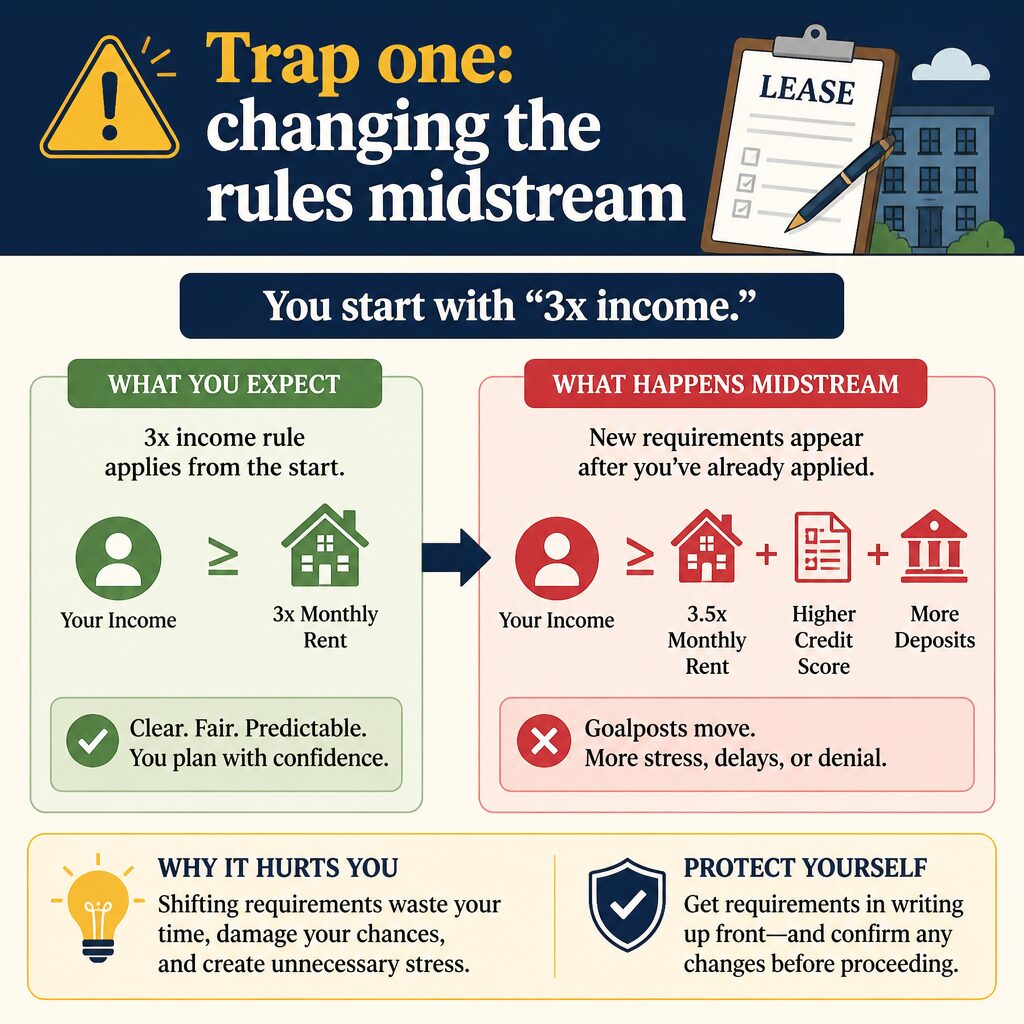
Trap one: Changing the rules midstream
You start with “3x income.” Then an applicant with 2.6x income feels relatable, so you accept a co-signer. Then the next person with 2.6x asks for the same and you say no because you’re tired. That’s how complaints start.
If you allow co-signers, state it. If you don’t, don’t “special case” it. Or decide you’ll allow it for everyone under specific conditions and write those down.
Trap two: Inconsistent required documents
One person submits pay stubs. Another submits a bank screenshot. Another submits a job offer letter. All of those can be legit in the right context. But you need a consistent acceptance rule. Otherwise you’re basically grading handwriting.
Renters, real talk: if you’re self-employed or paid in irregular chunks, you’re not doomed. You just need to package your proof like you’re helping the landlord say yes. Clean PDFs. Simple math. A short note. We’ve coached a lot of freelancers through this. The ones who win are the ones who make it easy.
FAQs for How to handle multiple rental housing applications fairly
Is first-come, first-served legally required?
Usually, no. Most places don’t require strict first-come, first-served. What they do require is non-discrimination and consistency. If you advertise first-come, first-served, though, you should follow it. Or update your policy and message it clearly going forward.
Can landlords accept multiple applications and still be fair?
Yes. Fairness comes from the method, not the count. Accepting multiple applications is normal in hot markets. The key is telling applicants how the review process works, not running screening fees on people you won’t actually consider, and applying the same criteria to everyone you evaluate.
What we’d do next in real life
Landlords: write your screening criteria down today. Send a clear timeline message to every applicant. Keep notes that are boring and consistent.
Renters: ask about the process early, submit clean documents, and follow up once like a calm adult. If you want a negotiation edge, that’s where Rental Secrets comes in. We teach you how landlords think so you can time your asks and frame them in a way that actually lands.
Fair process. Clear communication. Less stress on both sides. That’s the whole thing.
Disclaimer: This article does not constitute legal advice.