

Disputing a background check error can feel like trying to fix a typo on someone else’s spreadsheet. Except the typo is your housing. And the clock is ticking.
We’ve helped renters clean up reports fast enough to save an apartment. We’ve also seen people lose a place over something dumb. Like a misdemeanor that belonged to a guy with the same name. Stuff happens. Let’s get you back in control.
Spot the problem before the landlord locks in a no
Look, the worst version of this is when you find out after you’re denied. The better version is catching it early. But either way, the steps are similar.
Know what report you’re actually dealing with
Most rental screenings aren’t just “a background check.” It’s usually a bundle: criminal search, eviction history, credit-based info, address history, sometimes income verification. Different vendors. Different data sources. Different ways to dispute.
Here’s a quick reality check from our experience at Rental Secrets. Property managers often click a button in a portal. They don’t see the messy backend. You do. So you’ve got to identify the screening company name and the specific item that’s wrong.
Get your copy, even if you didn’t think to ask
If you were denied, charged a higher deposit, needed a co-signer, or got hit with worse terms because of the report, you’re usually entitled to an “adverse action” notice under the Fair Credit Reporting Act (FCRA). That notice should tell you the consumer reporting agency (CRA) and how to request your report.
No notice? Ask for it. Be annoyingly polite. “Hey, can you forward the adverse action notice and the screening company contact info?” Simple.
And if you want to dig into the bigger legal-rights side of rental applications, we keep more of that in our fair housing and dispute resources for rental applications. It’s the stuff people forget to learn until they’re already stressed.

Move fast with a clean dispute packet
Real talk: speed matters. Units don’t wait. Landlords don’t pause their leasing calendar because your report is wrong. So we treat disputes like an emergency. Not a weekend errand.
Write a dispute that’s specific, not emotional
I’ve seen renters send a five-paragraph story about how unfair this is. Totally understandable. Also not helpful. The CRA needs something they can verify. Dates. Case numbers. Addresses. The exact line item that’s wrong.
Your dispute should say:
- What item is inaccurate (quote it exactly from the report)
- Why it’s wrong
- What the correct info should be
- What documents prove it
- How to contact you
Keep it tight. One page is fine.
Include proof that actually matches the error
This part trips people up. A random screenshot doesn’t move the needle. You need documents tied to the record.
Examples that tend to work:
For criminal record mix-ups: court disposition showing “dismissed” or showing it’s not you. Booking record corrections help too. For eviction errors: court docket printout showing the case was against someone else, or it was dismissed. For address history issues: utility bill or lease showing the real address and dates.
And yes, redact what you don’t need to share (like full account numbers). But don’t redact so much the document becomes useless.
Dispute with the screening company and keep the landlord warm
Two tracks. You need both.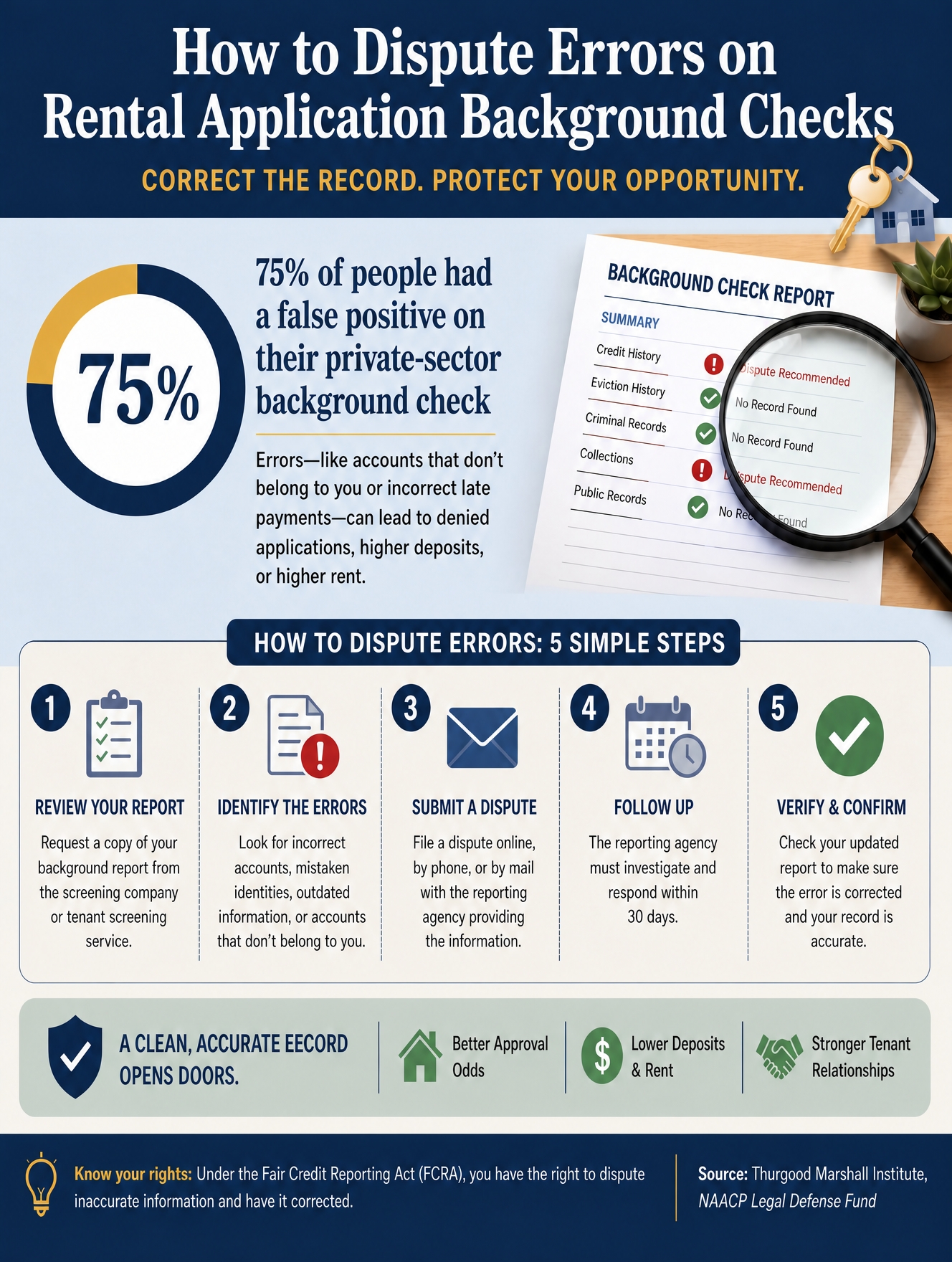
Track one: File the dispute with the CRA
Most CRAs let you dispute online. That’s convenient. It’s also not always your friend. Online forms can limit what you can say and what you can upload.
Our team usually prefers sending a letter too (email or certified mail depending on the CRA). It creates a clean paper trail. It also forces you to be organized.
Under FCRA, the CRA generally has 30 days to investigate after they receive your dispute (sometimes shorter in certain situations). In rental timing, 30 days can be brutal. That’s why the second track matters.
Track two: Talk to the landlord like a normal human
This bugs me, but it’s true. Some landlords won’t “hold” a unit. They’ll just move on. You can still increase your odds by being proactive.
Message them something like:
“Hey, I pulled the screening report and there’s an error (looks like a record for someone else / an outdated case status). I’ve submitted a formal dispute with the screening company today and can share that documentation now. Is there a way to keep my application open while the correction is processed?”
Short. Calm. You’re giving them a path to say yes.
And if you’re juggling multiple applications to avoid getting boxed out, we talk through that strategy in our guide to rental housing applications for renters and landlords. Our angle at Rental Secrets is always the same. Think like the person approving you. Then make it easy for them.
Handle the most common error types without spinning out
Not every error disputes the same way. The “proof” changes.
Criminal record errors and identity mix-ups
Same name. Similar birthday. Old address. Boom. You’re suddenly explaining charges you’ve never heard of.
What actually works: match on identifiers. Ask the CRA what identifiers were used to match the record. If the record is tied to a different middle name, different date of birth, or different address history, call it out. Provide your ID. Provide the court document that shows the defendant details don’t match you.
One thing we’ve seen: a record is “technically real” but the disposition is missing. That’s huge. An arrest without the dismissal attached reads scary. Dispute to update the outcome, not just to delete the record.
Eviction and landlord-tenant case weirdness
People hear “eviction” and panic. But lots of landlord-tenant filings never become an actual eviction. Some are dismissed. Some are settled. Some are filed and then the tenant moves and the case goes nowhere.
The dispute here is usually about status and accuracy. “Filed” versus “judgment.” Wrong county. Wrong person. Wrong unit number. Tiny details, big consequences.
Get the docket from the court directly. Don’t rely on a third-party summary. Courts are clunky websites, but that docket is gold.
After the dispute, use the correction to renegotiate and protect your budget
Once the CRA corrects the report, you’re not done. You’ve got an opening. Use it.
Ask the landlord to rerun or reconsider, the right way
Some landlords can re-open your application with the updated report. Some have to start a fresh screening. Ask what’s simplest for them.
Also ask for the fee to be waived if you have to rerun it because of an error. Not everyone agrees. But we’ve seen plenty of managers say yes when you’re reasonable and you’ve got the correction in writing.
Turn a clean report into better terms
This is where our Rental Secrets brain kicks in. A corrected report doesn’t just help you get approved. It can help you avoid “risk pricing.” Extra deposit. Higher rent. A co-signer requirement.
So you go back and say, “Now that the report is corrected, can we revisit the deposit amount?”
Not aggressive. Just direct. You’re protecting your cash flow. That’s rent money. That’s groceries. That’s your emergency fund not getting wrecked by a paperwork error.
FAQs for How to dispute errors on rental application background checks
How long does a rental background check dispute take?
Most of the time, the CRA has up to 30 days to investigate once they receive your dispute. Sometimes it moves faster. Sometimes it drags. The quickest cases are the ones with clear documents that match the exact error. Vague disputes tend to stall.
Can a landlord deny me while the dispute is in progress?
Yeah, they can. That’s the ugly part. They’re usually not required to hold the unit. That’s why we push the two-track approach: file the formal dispute and also communicate with the landlord immediately with proof. You’re trying to keep your application alive long enough for the correction to land.
Your next move
Pull the report. Circle the exact wrong line. Build a tiny dispute packet and send it today, not “this week.” Then message the landlord with the calm version of the story.
If you want to play this with the same mindset landlords use, that’s basically what we teach at Rental Secrets. Less guessing. More control. And fewer expensive surprises right when you’re trying to keep housing costs down.
Disclaimer: This article does not constitute legal advice.