

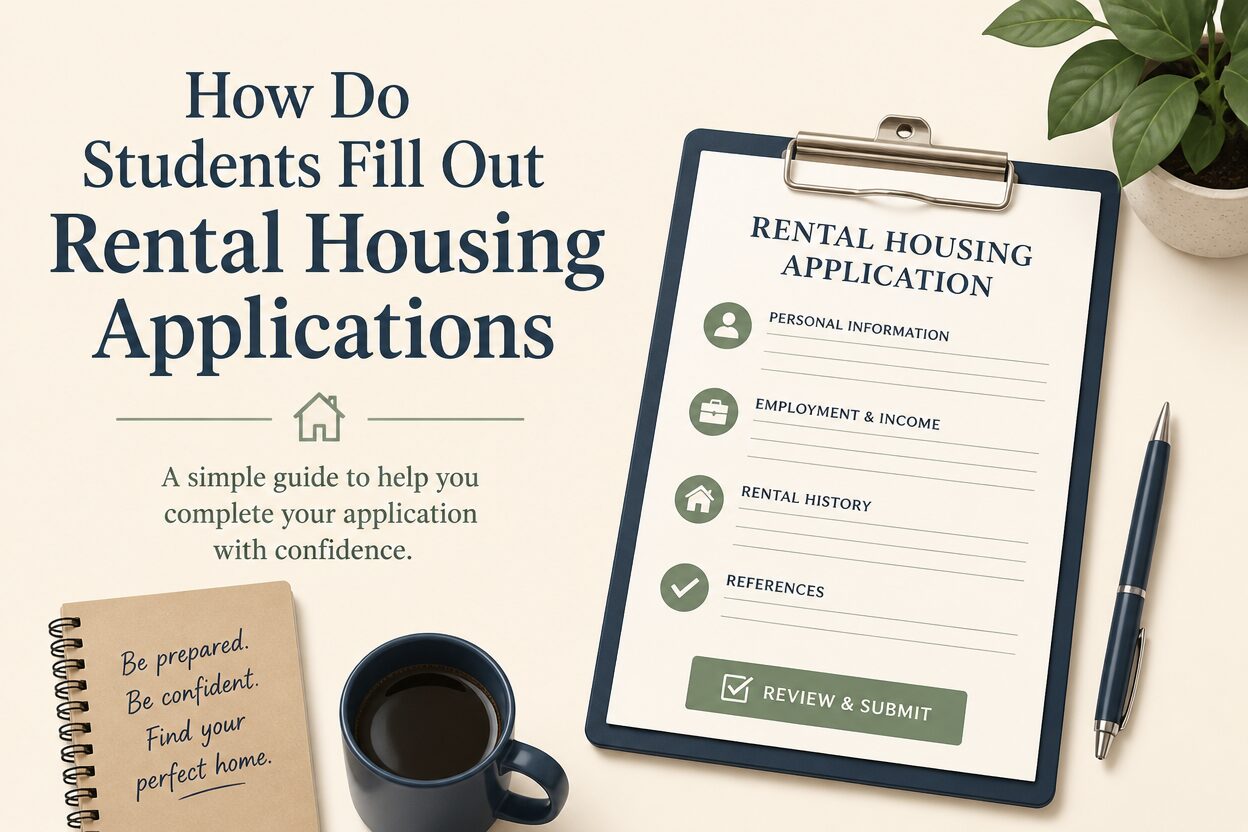
Students usually lose rentals for boring reasons. Missing paperwork. Sloppy answers. Or they look “high maintenance” to a landlord who’s juggling ten applications at once. The fix isn’t complicated. It’s just prep. And a little strategy.
What landlords actually scan for in a student application
Look, most landlords aren’t reading your application like a novel. They’re skimming for risk. Payment risk. Property risk. Drama risk. That’s the whole thing.
When we work with renters at Rental Secrets, we see the same pattern. Students who get approved fast don’t have magical credit. They look organized. They look predictable. In a good way.
The three questions behind every form
Even if the application is five pages long, it’s usually trying to answer three things:
Can you pay? Income, aid, savings, guarantor, whatever. Just show the money story clearly.
Will you take care of the place? Rental history helps. So does a calm vibe. Over-sharing can backfire.
Will you follow the lease? They’re reading your tone. Seriously. Half the “decision” happens before the credit check even runs.
Why students get judged differently
Real talk: some landlords assume students will be loud, late on rent, or move out mid-lease. Not fair. Also. It happens enough that they’re jumpy.
Your goal is to make it easy for them to say yes. That means clean documentation, quick responses, and no weird gaps they have to guess about.

Before you apply, build your application packet
So, don’t wait until you tour a place to start hunting for documents. You’ll be competing with someone who already has everything in a folder. That person wins. A lot.
I had a client who lost a great two-bedroom near campus because their co-signer was “traveling” and couldn’t find last year’s W-2. By the time it showed up, the landlord had moved on. Brutal. Avoidable.
What you should gather ahead of time
Keep this as PDFs on your phone and in a cloud folder. Name files clearly (not “scan_0032”).
- Photo ID (front and back if it’s a license)
- Proof of income or funds (pay stubs, offer letter, bank statement, stipend letter)
- School enrollment proof (registration, student portal screenshot, acceptance letter)
- References (previous landlord if you have one, or a supervisor)
- Guarantor packet (ID + income docs + their basic info)
That last one matters. A guarantor who’s slow is perceived by the landlord as you being slow.
How to present non-traditional income without sounding sketchy
Students cobble money together. Scholarships. Part-time work. Family support. Summer savings. That’s normal.
But the application form rarely has neat boxes for that. So we recommend a simple one-paragraph note you can paste into “additional comments” (or attach as a short cover letter). Keep it plain:
“I receive $X/month from a part-time job and have $Y in savings. My tuition is covered by scholarship/aid. My guarantor, [Name], will also be on the lease as a co-signer.”
No drama. No long story. Just numbers and sources.
Filling out the form without tripping the red flags
Thing is, a rental application isn’t only about facts. It’s also about consistency. Tiny mismatches trigger follow-ups. Follow-ups slow things down. And then you’re second place.

If you want the big-picture view of what applications are really asking for, our main guide to rental housing applications for renters and landlords is where we’d start. It helps you see the landlord side without guessing.
Common student mistakes we see every week
Here’s what bugs landlords (and property managers) more than you’d think.
Leaving blanks. If something doesn’t apply, write “N/A” or “none.” Blank looks like you dodged it or rushed through.
Unverifiable contact info. Your old roommate isn’t a landlord reference. If you list them anyway, expect an eye roll.
Inconsistent addresses and dates. Your ID address, your application address, and your pay stub address are all different? That happens. But explain it in one sentence.
Using jokes in serious fields. “Employment: Professional napper.” Please don’t. I know it’s funny. It’s also a quick way to look immature and get denied.
How to answer the hard parts
Rental history: If you’ve only lived in dorms, say that. Add housing office contact info if you can. Or list a resident advisor as a reference. Not perfect. Better than pretending.
Credit check permission: Most of the time it’s required. If you’re worried about a thin file, don’t hide it. Pair it with a guarantor and stronger up-front documentation. Our partner Rental Kharma has some strategies that can help.
Number of occupants: Be exact. Landlords get twitchy about “we’ll figure it out later.” That reads like extra roommates are coming.
Guarantors, roommates, and the money math
Now, let’s talk about the part students hate. Co-signers. Roommates. Splitting rent. It’s awkward. It’s also where approvals get won or lost.
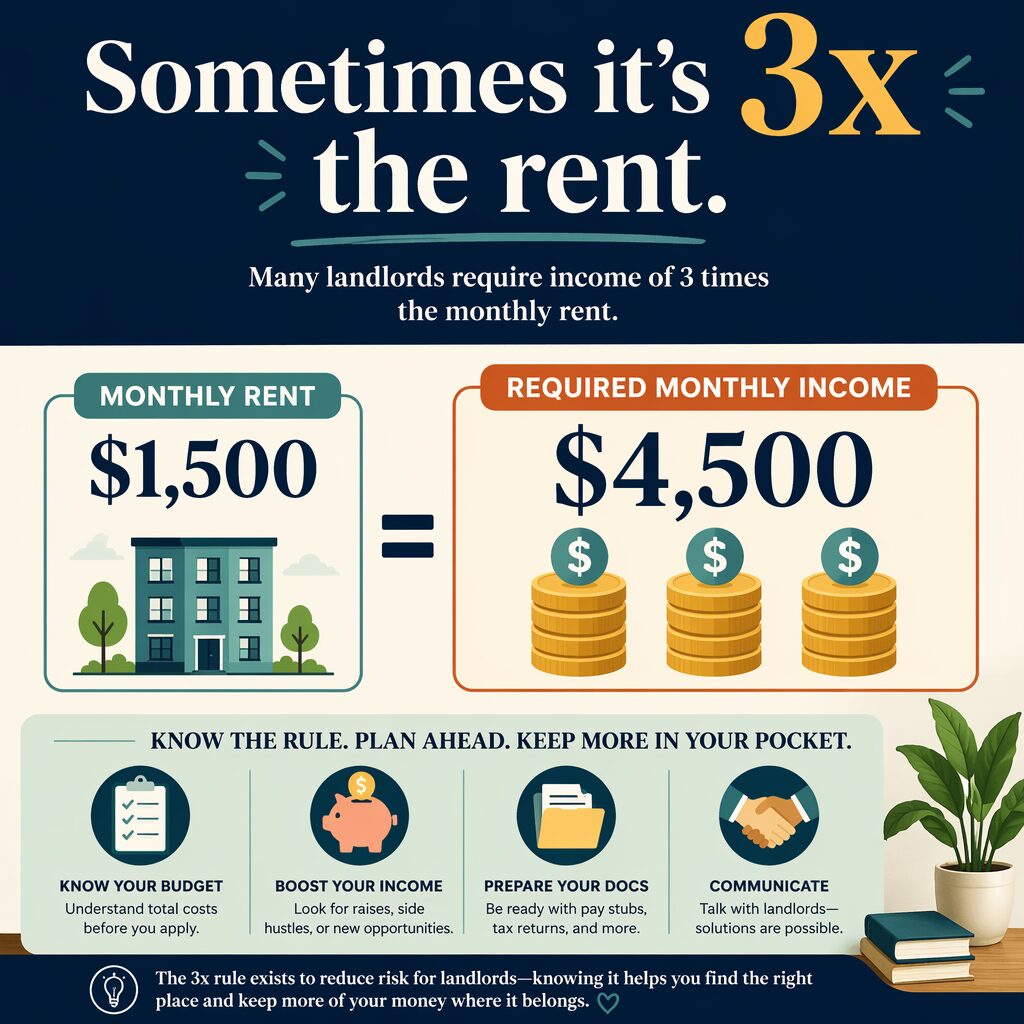
Landlords typically run a simple rent-to-income check. Sometimes it’s 3x the rent. Sometimes 2.5x. Student applicants rarely hit that alone. So you’re building a combined story.
How guarantor screening usually works
Guarantors often get screened like a tenant. Credit. Income. Sometimes even their own housing payment obligations show up in the review.
We recommend you prep your guarantor like they’re applying for an apartment too. Because they are. Kind of.
One exception. Some larger property managers use third-party guarantor services instead of personal co-signers. Those can be pricey. Useful sometimes. Annoying other times.
Roommate applications and the weak link problem
Here’s the messy truth. One roommate can sink the whole group.
And you don’t always know who that will be until the screening comes back. If you’re trying to keep costs down, you might be tempted to pack the place with more roommates to lower everyone’s share. That can work. But occupancy limits and screening standards can kill it fast.
What actually works. Pick roommates who are boring on paper. Steady job. Clean background. Responsive communication. That’s rent savings right there because it expands which properties will even consider you. And you don’t get surprised at the last minute.
Using the application process to negotiate rent and fees
Honestly? Most renters treat the application like a test they can only pass or fail. We don’t see it that way at Rental Secrets. The application is also a signal. It tells the landlord how smooth you’ll be as a tenant. And smooth tenants can negotiate.
Not always. Some buildings have fixed pricing and strict policies. But smaller landlords? Different story.
Timing and phrasing that gets a better response
Don’t negotiate before you look qualified. That’s backwards. Get your packet in. Tour. Ask smart questions. Apply quickly. Then bring up pricing once they’re already picturing you living there.
Try something like:
“We’re ready to sign quickly and keep this easy. If we do a 12-month lease starting [date], is there any flexibility on the rent or move-in fees?”
Short. Calm. No threats. No essay.
What you can often negotiate besides base rent
Sometimes the best savings aren’t the headline rent number. They’re the little charges that stack up.
Application fee. Admin fee. Parking. Pet rent. Storage. Early move-in. Even a one-time cleaning fee. Some landlords won’t budge. Some will, especially if the unit’s been sitting.
If you want more student-specific angles, we keep a bunch of related breakdowns in our rental housing applications for students and first time renters resource page. It’s where we park the tactical stuff that doesn’t fit on a generic checklist.
FAQs for How do students fill out rental housing applications
Do students need a job to get approved for an apartment?
Not always. Most of the time you need a convincing way to pay. That could be a part-time job plus savings. Or a stipend. Or a guarantor with enough income and solid credit. What doesn’t work is vagueness. “My parents help” with no numbers and no co-signer info tends to stall out.
What should students put for rental history if they only lived in dorms?
Put the dorm address and list the campus housing office as the contact if possible. Add dates you lived there. If the form forces a “landlord name,” use the housing department name. And add a note that it was university housing. Clean and honest. Landlords are used to it.
Your next move
So, how do students fill out rental housing applications? Fast. Consistent. With paperwork ready before anyone asks.
If you do one thing this week, build the packet and get your guarantor lined up. Then apply like you mean it. That alone cuts your stress. And it puts you in a stronger spot to negotiate when the timing’s right.
Disclaimer: This article does not constitute legal advice.