

The tour isn’t just a chance to fall in love with a kitchen faucet. It’s your one free inspection window. And it’s also where you pick up negotiation ammo, whether you realize it or not.
At Rental Secrets, we think of a property tour like checking the whole machine, not just the shiny part you’ll post on Instagram. The hallways. The parking situation. The vibe. The management “tells.” Yeah, that’s a thing.
And if you’re trying to cut housing costs, this matters even more. Bad building basics turn into surprise expenses. Time expenses too. Missed work. Extra commutes. Weird fees you didn’t see coming.
Why the tour is really about risk
Here’s the thing. Most renters are touring with their eyes. Landlords are renting with their spreadsheets. We want you thinking a little more like them. Not because it’s fun. Because it saves you money.
Landlords sell the unit but you live with the building
When I work with clients on this, the first thing I ask is: what are you actually buying with your rent? Privacy. Sleep. Predictable costs. A routine that doesn’t break every week.
The unit can be perfect and the building can still drain you. Noise from a busy stairwell. A trash area that attracts pests. A laundry room that’s always “out of order.” Stuff that doesn’t show up in listing photos.
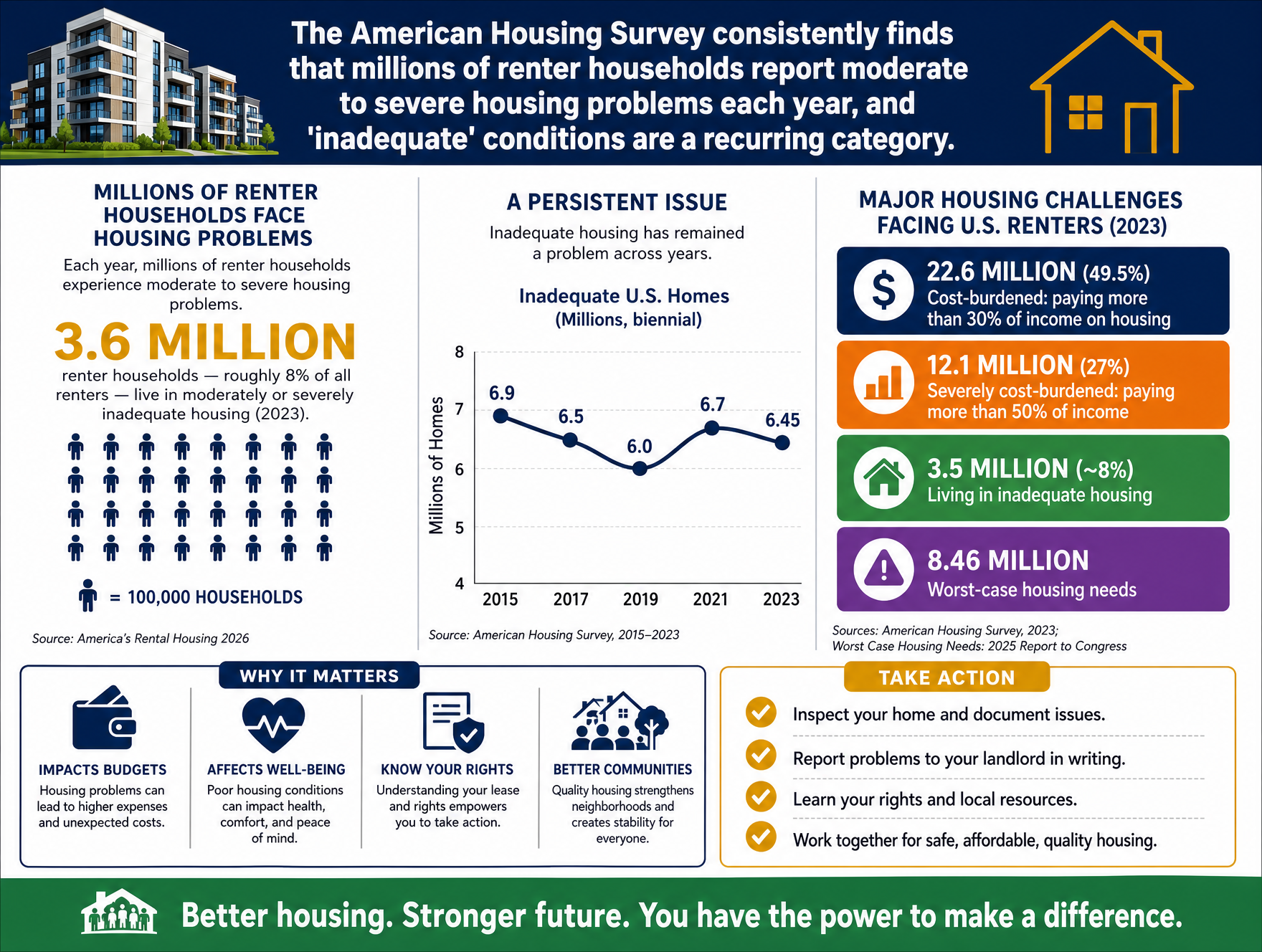
And yep, renters underestimate that. The American Housing Survey consistently finds that millions of renter households report moderate to severe housing problems each year, and “inadequate” conditions are a recurring category. That’s not abstract. That’s you calling maintenance for the third time.
A tour is your cheapest due diligence
Real talk: once you sign, your leverage shrinks fast. On tour day, you’re still a potential customer. People behave better. They answer emails. They smile. That’s the version of management you’ll get at their best.
So we use that moment. We look for how they run operations. How they handle questions. Whether they dodge. Whether they document.
If you want the bigger framework for touring like a cost-conscious renter, our rental property tour strategy for budget smart renters lays out the full approach we teach.

What to watch beyond the unit
I used to think the unit mattered 90%. Turns out it’s closer to 60% most of the time. The rest is the stuff you can’t remodel with a weekend trip to Target.
Common areas tell the truth
Hallways. Stairwells. Mail area. Package room. Elevator. Look at the corners, not the center. Is the baseboard scuffed to death? Are light fixtures burnt out? Are there obvious patch jobs that never got painted?
These spaces show whether maintenance is proactive or reactive. And reactive maintenance is where your time goes to die.
Also. Smell matters. Stale trash smell in the lobby usually means the trash setup is messy. You’ll feel that on a hot day. You’ll pay for it in stress.
Want to go deeper on how the unit fits into the bigger picture? We wrote a separate piece on how individual apartments fit into the apartment community. It’s a surprisingly big deal.
Parking and storage are budget landmines
Parking is one of those things everyone shrugs at until they’re circling the block at 11:30 pm. Or paying tickets. Or hauling groceries three blocks because “there’s usually a spot.”
On the tour, ask to see the actual spot. Not “parking is in the back.” The spot. The gate. The lighting. The walk to your door.
Also ask how it’s enforced. Is it assigned? Stickered? Towed? Towing rules are where messy buildings get mean.
And if you’re choosing between options, we’ve got a full breakdown of comparing on-site and off-site parking. It’s not just convenience. It’s risk and time.
Amenities are marketing until you prove otherwise
I’m not a fan of “amenities” as a selling point unless you can actually use them. A gym that’s always crowded. A pool that’s closed half the year. A coworking room that looks cute but has terrible Wi‑Fi.
Ask simple questions. What are the hours? Are there guest rules? Is it reservable? Is it under renovation “soon” (which can mean forever)?
This matters because the point of amenities is that they replace something you’d otherwise pay for or commute to. If they don’t, you’re just funding a brochure.
We dug into that here: will you actually use the apartment community amenities. Spoiler. Most people don’t use them like they think they will.
Talk to people and look for friction
Now we get to the part renters skip. The human part. It feels awkward. Do it anyway.
Neighbors will tell you what the listing won’t
If you see someone walking a dog or checking mail, say hi. Ask one question. “How’s it been living here?” Then stop talking. Let silence do its work.
In our experience, you’ll get one of three answers. Glowing. Neutral. Or a tiny laugh followed by “well…” That third one is gold.
And yes, it’s not scientific. But it’s a fast reality check. People complain about the things that hit their daily life. Noise. Parking. Safety. Maintenance response time. Surprise fees.
If you want a few scripts that don’t feel cringe, here you go: the value of talking to neighbors on the tour.
Tour the neighborhood like you mean it
The unit might be quiet at 2 pm. What about 9 pm? Or 6:30 am? What about trash pickup days? School drop-off traffic?
Walk the block. Look at lighting. Check where you’d actually park if you came home late. Notice the distance to transit or the route you’d bike. That stuff becomes your life fast.
And here’s a stat that ties directly to why we’re so annoying about location. The U.S. Census Bureau has reported average one-way commute times in the U.S. hovering around 27 minutes in recent years. A “slightly longer” commute compounds. Sleep. Gas. Childcare timing. Your whole week gets tighter.
We also have a dedicated piece on the value of touring the neighborhood. It’s the easiest place to catch regret early.
Use the tour to set up negotiation
Okay. The fun part. This is where Rental Secrets lives. Not gimmicks. Not cheesy lines. Just information that shifts the deal.
Collect specific, calm observations
Don’t do a dramatic “ew” face in the hallway. Keep it clean. Take notes in your phone.
Examples that often matter in negotiation:
- “The hallway lighting is out on the third floor.”
- “The gate didn’t close behind us.”
- “The gym had two treadmills tagged out of service.”
- “The trash area had overflow.”
You’re building a case that the property isn’t at peak condition. That’s not you being difficult. That’s you being accurate.
And accuracy can translate into concessions. A move-in date adjustment. A different unit. A fee waived. Sometimes a rent reduction, depending on the market and vacancy pressure.
Ask questions that reveal policy
Policy is where landlords protect revenue. So we poke there (politely). Ask:
- How are maintenance requests submitted and tracked?
- What’s the typical response time for non-emergencies?
- How do renewals usually work here?
- Are there quiet hours, and are they enforced?
Thing is, you’re listening for clarity. A good operator answers cleanly. A shaky one gets vague fast. “It depends” is sometimes real. But constant “it depends” is a tell.
Watch how they handle small friction
I had a client last month who asked where the dumpsters were. Leasing agent said, “Oh, I’m not sure.” That’s a tiny question. And it got a shrug.
We ended up pushing harder on everything else. Because if they don’t know basic operations during a sales moment, what happens when your heat goes out?
Also, look for red flags that repeat across properties. We keep a running list for renters because patterns show up. Here’s ours: apartment community red flags.
For landlords and property managers reading this
If you’re on the owner or manager side, this might sting a little. Sorry. But it’s useful.
Renters are nervous. Especially students and young professionals watching every line item. Families too. They’re not just choosing a unit. They’re choosing whether you’re going to make their life harder.
Transparent tours reduce churn
When you show the real building, you attract the right residents. When you oversell, you create mismatch. And mismatch turns into non-renewals and reviews.
Operational clarity helps. Simple signage. Clean shared spaces. A clear maintenance process. Residents notice. They talk.
Also, lease-up teams who can explain policies without improvising tend to win trust. That trust becomes patience later when something breaks. Because something always breaks.
Conclusion
The property tour is your one chance to see how the place actually runs. Not just how it photographs.
So yes, admire the countertops. But also watch the hallway. Ask the awkward questions. Talk to a neighbor. That’s how you avoid expensive surprises. And that’s how we at Rental Secrets help renters negotiate from reality, not wishful thinking.
Disclaimer: This article does not constitute legal advice.