

Yep. Some rental applications really do require references. And it can feel weird. Like you’re applying for a job, not trying to pay someone to live in their building.
But references are one of those screening tools landlords use when the numbers are “fine” yet they still don’t feel settled. We see this a lot with students, first apartments, fresh divorces, relocations, or anyone with thin credit. It’s not always a red flag. Sometimes it’s just… paperwork comfort food.
Why landlords ask for references in the first place
Look, a credit score doesn’t tell us whether you’ll blast music at 2 a.m. Or ignore a leak for three weeks. Or treat the place like a storage locker with walls.
References fill in that gap. They’re a character check. A “how did this person behave in the real world?” check. And from the landlord side, it’s also a way to reduce regret. Nobody wants to evict. It’s expensive. It’s stressful. It’s a calendar nightmare.
What references can signal that the application can’t
In our experience at Rental Secrets, the strongest references don’t just say “they’re nice.” They describe patterns. Pays on time. Communicates early. Leaves the unit in decent shape. That kind of thing.
And yes, landlords sometimes use references to filter for low-drama tenants. That’s the blunt version. Most owners don’t have a leasing team. They’re juggling a day job and one rental. So they look for “easy.”
When references show up more often
We tend to see reference requirements pop up when:
- The property is small (mom-and-pop owners love references)
- The market is tight and they can be picky
- You have limited rental history
- Your income is variable (gig work, commission, seasonal)
- The rent-to-income ratio looks stretched
If you’re trying to reduce housing costs, this matters. Because the cheaper units get more applicants. More applicants means more hoops. Annoying. Predictable.

What counts as a reference and who landlords actually call
Real talk: some landlords never call. They just want the application to feel “complete.” Others call every single time and treat it like an interrogation. You won’t know which you’re getting.
Common reference types and how they land
Past landlords are the gold standard. But not always. Some landlords will trash you because they’re salty you moved. Or because they don’t want to lose you. I’ve heard it with my own ears on calls. Wild.
Property managers tend to be more neutral. They’ll confirm basics. Dates. Payment history. Complaints. Damage. They’ve got logs. They’re not as emotional.
Employers can help, especially for young professionals with thin rental history. But employers often won’t share much. HR is cautious. They’ll verify employment and that’s it.
Personal references are hit-or-miss. Some landlords don’t care. Some accept them only as a backup. If a listing says “landlord references required” and you submit your roommate’s cousin, it won’t land well.
What gets asked on the call
When a landlord actually calls, the questions are usually simple. Would you rent to them again? Did they pay on time? Any notices served? Any noise issues? Any damage beyond normal wear? That last part matters. “Normal wear” is squishy. Carpet dents. Scuffed paint. Tiny nail holes. Most owners don’t love it, but they accept it.
If you want the broader context of what usually shows up on applications, our full walkthrough of rental housing applications is the place to start. It’s the stuff landlords look at first, before they even think about references.
How to choose references that actually help you
Thing is, you don’t just pick people who like you. You pick people who can answer the questions landlords ask. Fast. Calm. Specific.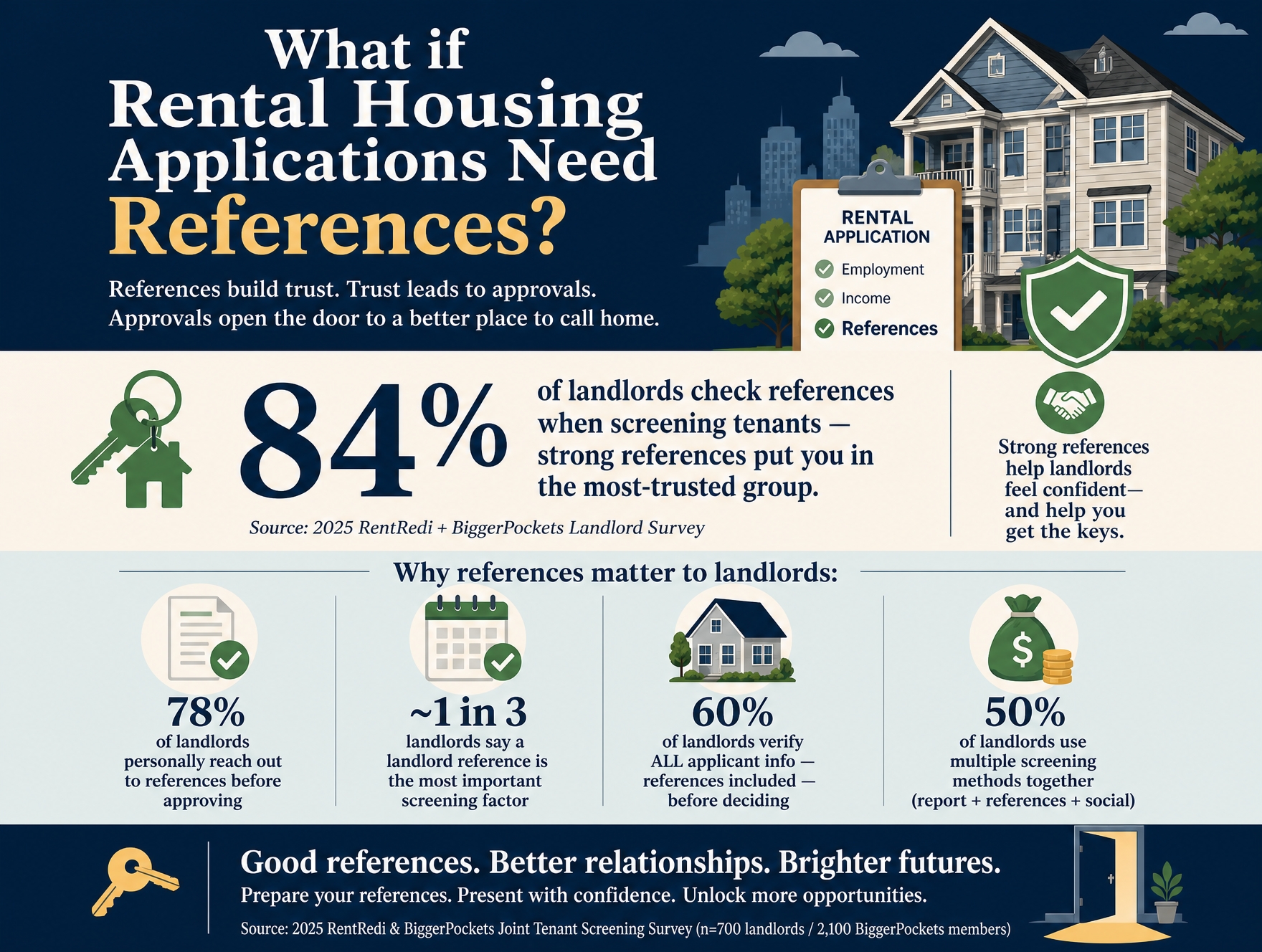
I had a client who kept using a friend as a reference. Sweet friend. Totally unreliable. Missed calls. Voicemail full. Application died on the vine twice. Same week. Same issue. We swapped the reference to a former RA from their dorm (more responsive) and suddenly things moved.
Prepping your references without being awkward
Send a quick text before you apply. Something like: “Hey, I’m applying for an apartment this week. Would you be okay being a reference? They might ask about timeliness, cleanliness, communication.”
That’s it. You’re not scripting them. You’re giving them the topic so they don’t freeze up and say something useless like “yeah they’re chill.”
And give them the correct details. Your full name. The address you rented. Dates. Your landlord’s name if relevant. This is boring, but it prevents the “uhh I think it was 2022?” moment.
If you don’t have landlord references yet
Students and first-time renters hit this constantly. So do families coming out of homeownership. Same for people who were living with relatives.
What usually works:
Use a property-adjacent reference. RA, housing coordinator, building super you interacted with, even a roommate who was the primary leaseholder (some landlords accept it).
Pair it with stronger documents. Pay stubs, offer letter, bank statements (sometimes), a solid renter resume. The idea is to make the application feel “safe” even if the rental history is short. If you want the full list of what tends to be requested, check our rental application requirements and documents overview. That page helps you build a clean packet without over-sharing.
References can affect your rent negotiation, yes really
Most people think references are only about approval. But they can influence your negotiating power. Not always. But often enough that we pay attention to it.
When a landlord feels confident you’re low-risk, they’re more likely to trade price for stability. That’s the quiet part. They’d rather knock $50 off than gamble on someone who might ghost after month three. Especially in buildings with higher turnover costs (older units, lots of maintenance requests, tight margins).
How we use a strong application to push rent down
At Rental Secrets, we coach renters to think like owners. Owners care about predictability. A reference that signals “pays early, reports issues quickly, no drama” supports a rent ask.
And you don’t have to be aggressive. You can say: “We’re ready to sign quickly. We’ve got solid references. If we do a 12 or 18 month lease, is there room to come down on rent?”
That little combo works because it speaks landlord language. Speed. Term length. Risk reduction.
When this won’t work
If there are ten applicants behind you offering full price, a reference won’t magically unlock a discount. Same if the building is run by a corporate manager with a strict pricing model. But for smaller landlords? This is where good references can quietly do the real work.
Red flags, privacy, and how to protect yourself
Honestly? Reference checks can get sloppy. Sometimes landlords ask questions they shouldn’t. Sometimes they overshare. Sometimes they’re fishing.
What’s normal vs what’s pushy
Normal: payment history, noise complaints, damages, whether you followed lease rules, whether they’d rent to you again.
Pushy: probing into medical stuff, family planning, immigration status, or anything that smells like protected-class screening. Also weird: demanding a reference from a current landlord when you’re worried about retaliation. That happens. People get stuck because they don’t want their current place to know they’re leaving.
A practical workaround is offering alternative contacts (previous landlord, property manager, or a neutral third party like a management office). Sometimes you can also provide proof of on-time payments (ledger, screenshots, canceled checks). Not perfect. But it keeps you from lighting a fuse at your current apartment.
Don’t let references become a self-own
Couple of quick safeguards we like:
Ask what they need. “Do you require landlord references specifically, or will employer and property manager references work?” Make them answer.
Keep your reference list tight. Two or three strong contacts beats a messy list of six.
Use email when you can. Some references respond better in writing. Also less chance of a rambling phone call.
FAQs for What if rental housing applications need references
Can I use a roommate as a reference?
Usually only as a backup. A roommate can speak to how you live, but they can’t confirm rent payments unless they were the one paying and you reimbursed them. If you go this route, pair it with something more official. A former property manager. An RA. An employer. Anything that feels less like “my friend says I’m fine.”
What if my previous landlord will give me a bad reference?
Don’t pretend it won’t happen. Plan for it. If you had a real conflict, offer different references and stronger documentation. You can also get ahead of it with a short, calm explanation when asked. No ranting. “We had a disagreement about move-out charges. I can provide my payment history and references from earlier rentals.” Most reasonable landlords can work with that. The ones who can’t? Sometimes that’s a blessing.
Your next move if references are required
So, don’t panic. References are a tool, not a verdict.
Pick two people who answer fast. Prep them with a quick heads-up. Keep your application packet clean. And if you’re trying to pay less, remember this: a low-risk file gives you more room to negotiate. That’s the whole thing. If you want to build that low-risk story the right way, our team at Rental Secrets is always thinking about the landlord side of the table. Because that’s where the rent gets set.
Disclaimer: This article does not constitute legal advice.