
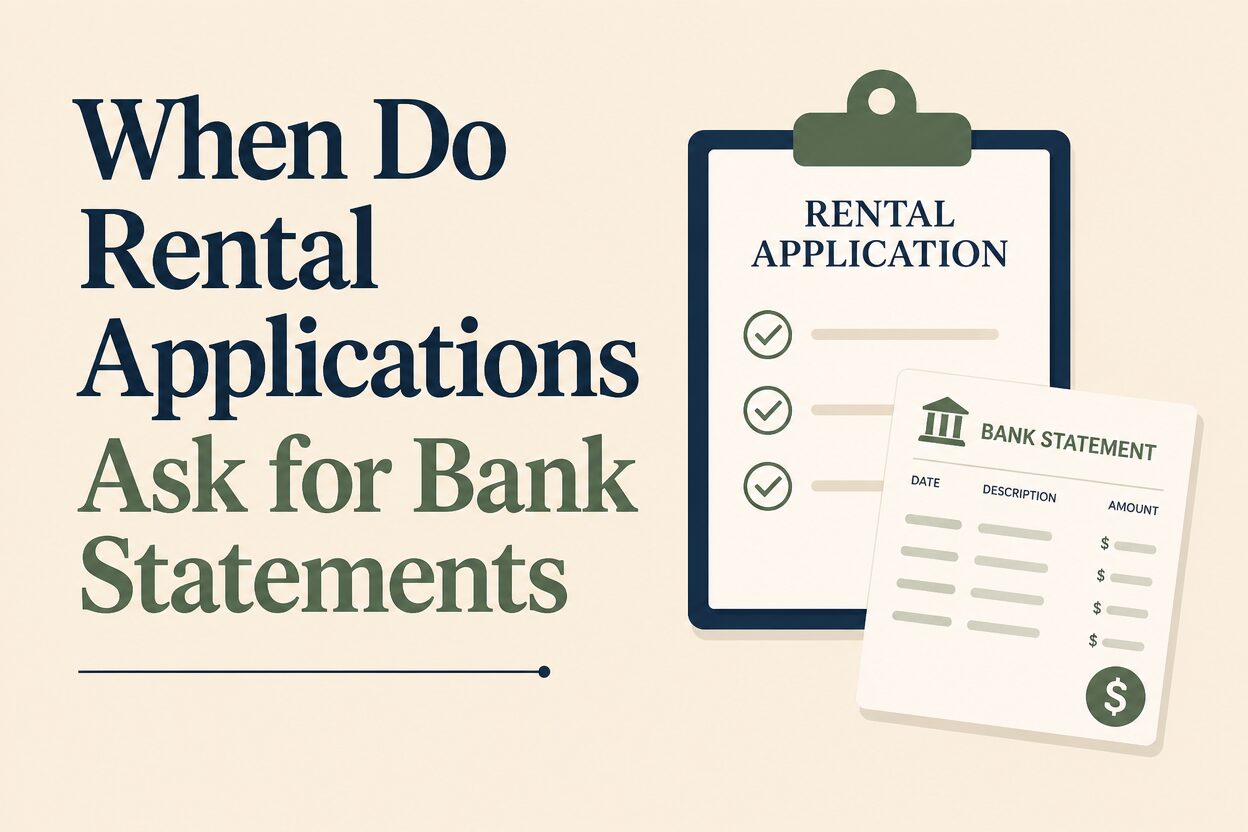
Most of the time, if rental applications require bank statements, they’ll be requested right when you apply. Not after. Not “later once you’re approved.” Right then, when the landlord is trying to decide whether you’re low-risk or a headache.
And yeah, it can feel invasive. Like, why do you need to see my checking account chaos from the last month? I’ve been there. Our team at Rental Secrets has seen this request pop up in very predictable moments. And a few weird ones too.
When bank statements show up in the application timeline
Look, landlords don’t all run the same playbook. But the timing usually follows the money.
At the first application submission
This is the most common. You fill out the application. You pay the application fee. You upload documents. Bank statements might be in that upload list alongside pay stubs and ID.
Property managers love systems. Online portals. Standard checklists. If their portal asks for “last 2 months bank statements,” it’s often because they’ve been burned by fake pay stubs before. That’s the blunt truth.
Right after the showing, before they hold the unit
Some smaller landlords do it differently. They’ll show the place first. Chat with you. Then they’ll say, “Send me your last two bank statements and we’ll move forward.”
That’s usually a screening shortcut. They’re trying to see if you actually have the funds to move in (deposit, first month, maybe last month). Not just whether you can technically afford it on paper.
Honestly? This approach can be faster. It can also get sloppy. Like sending sensitive PDFs over text. Not ideal.
If you want the bigger picture of what shows up when, our renter and landlord guide to rental housing applications lays out the typical timeline and what landlords are looking for at each step.

Why landlords ask for bank statements in the first place
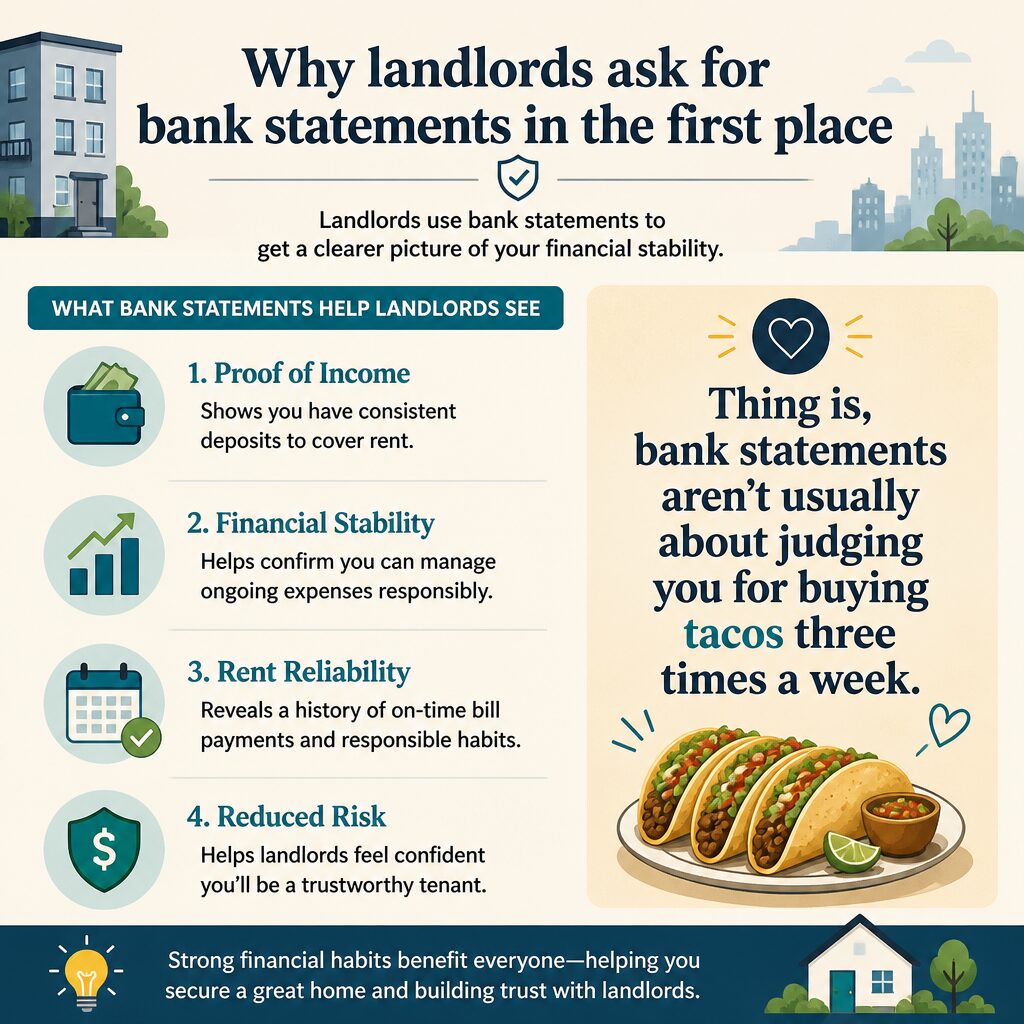
Thing is, bank statements aren’t usually about judging you for buying tacos three times a week. It’s about verifying ability to pay. And verifying the story your other documents tell.
They’re checking for income consistency and real cash flow
Pay stubs show income. Bank statements show whether that income lands in an account. Landlords like to see deposits that match your pay stubs. Same employer name. Same cadence. Every two weeks. Twice a month. Whatever.
And if you’re self-employed, gig-based, tipped, or on commission? Bank statements can matter more than pay stubs. Because pay stubs might not exist. Or they’re messy.
They’re trying to spot risk signals fast
I’m not a fan of landlords playing amateur detective. But it happens. They may look for:
- Recurring overdrafts or negative balances
- Big unexplained cash deposits (can raise questions)
- NSF fees or “returned payment” patterns
- Rent payments to a prior landlord (a quiet positive)
- Funds sitting there for move-in costs
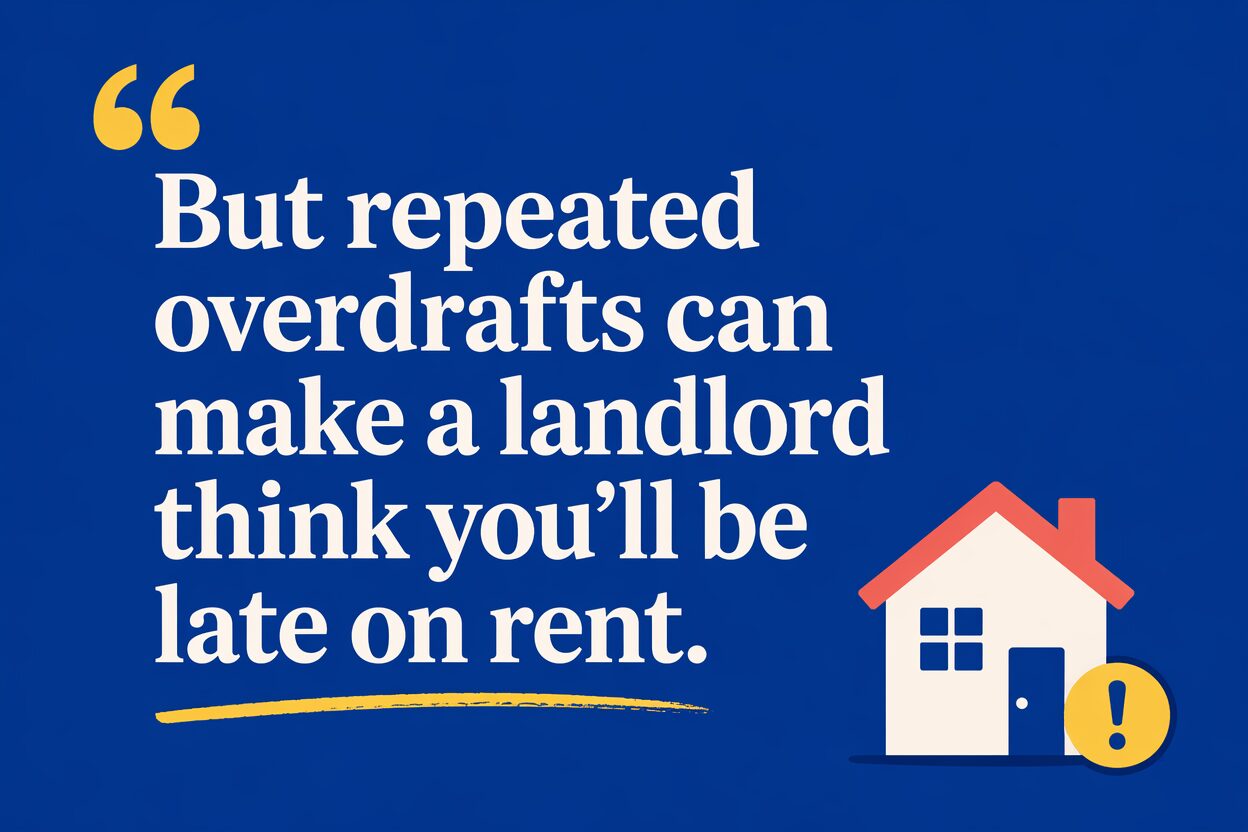
One nuance. A single overdraft isn’t a moral failure. It’s life. But repeated overdrafts can make a landlord think you’ll be late on rent. That’s the jump they make.
We see this most with big management companies. They’re not reading your story. They’re scanning for flags.
Situations where bank statements are more likely
Now, do all applications ask for them? Nope. But some scenarios practically invite the request.
When you don’t have traditional proof of income
Students. New grads. Freelancers. People between jobs. People who just moved cities. Bank statements become the fallback “proof.”
I had a client last month who was starting a new job in two weeks. Great salary. No pay stubs yet. The landlord asked for two things: the offer letter and bank statements to show they could cover the first couple months if anything got delayed. Annoying. Also kind of reasonable.
When the rent-to-income ratio is tight
This is the awkward one. If your application shows you’re close to their income threshold, they’ll sometimes ask for statements to see if you’re sitting on savings. Or if you’re living paycheck-to-paycheck with no buffer.
And yes, this is where negotiation can sneak in. If you’re borderline, a landlord might prefer a slightly higher deposit, a longer lease, or a co-signer instead of rejecting you. That’s the stuff we coach at Rental Secrets. It’s not magic. It’s understanding what they’re actually worried about and offering the version of “safe tenant” they can say yes to.
If you want more detail on the documents that tend to get requested (and what’s normal vs pushy), we keep an updated breakdown on our rental application requirements and documents page.
How many months they ask for and what you can redact
Real talk: you’re allowed to protect yourself. A bank statement request doesn’t mean they get your entire financial life.
Most common request: 1 to 3 months
In our experience, “last 2 months” is the default. Sometimes it’s only the most recent month. Three months happens when the landlord wants to see stability, especially for self-employed applicants.
Six months? That starts to feel like overreach unless there’s a specific reason (like you’re using savings to qualify and they want to confirm it wasn’t a one-time transfer yesterday).
What you can usually redact safely
Here’s what we typically tell renters to hide, unless the landlord explicitly needs it to verify income:
Usually safe to redact: account numbers, transaction descriptions unrelated to income (like medical providers), Zelle/Venmo notes, and specific merchant details.
Be careful redacting: the running balance, deposit amounts, and deposit source lines. Those are often the whole reason they asked.
And don’t get cute with editing. Landlords can tell when something’s been heavily altered. Some will reject you on the spot if they suspect it’s been manipulated. Even if you were just trying to hide your late-night fast food habit.
If they need verification, offer a clean compromise. “I can provide statements with account numbers and non-income transactions redacted, and I can also provide pay stubs and a letter of employment.” Simple. Normal. Not defensive.
How to respond without losing the apartment or your privacy
So you got the request. Your stomach dropped. Now what?
Ask one calm question before you send anything
Try: “What are you using the bank statements to verify. Income deposits, savings, or something else?”
That question does two things. It signals you’re organized. And it forces them to be specific. A surprising number of landlords will say, “Just need to verify direct deposits.” Great. Then you can redact everything else.
Offer alternatives if the request feels too big
Sometimes you don’t want to share statements at all. Fair. Alternatives that often work:
Pay stubs plus an employment verification letter. An offer letter for a new job. Proof of funds screenshot from the bank (with sensitive details hidden). A co-signer packet. Or paying a larger deposit where legal and appropriate (Be careful. Some states cap deposits).
But here’s the catch. In hot markets, landlords can be lazy. They’ll pick the easiest applicant, not the most reasonable one. So we weigh privacy versus speed. That’s the trade.
One more practical thing. Use secure upload portals when you can. Email attachments get forwarded. Texted PDFs get saved to random devices. I’ve watched that go sideways. Not fun.
FAQs for When do rental applications ask for bank statements
Is it normal for a landlord to ask for bank statements before I even tour the place?
It happens, but it’s not the norm. Most landlords want at least a basic showing first. Or a pre-screen call. If they’re demanding bank statements before you’ve seen anything, slow down. Ask for the address, the company name, and a legit application link. Scams love “send me your statements” energy.
Can I get denied for refusing to provide bank statements?
Yeah, you can. Especially with big property managers who follow a strict checklist. Smaller landlords might accept alternatives if you offer them quickly and neatly. The trick is not just saying “no.” It’s saying, “I can’t share full statements, but I can provide X and Y today.” Speed matters.
Your next move if a landlord asks for bank statements
Most rentals ask for bank statements at application time, especially when income is hard to verify or the numbers are close. You don’t have to hand over your entire life. Redact smartly. Ask what they’re verifying. Offer clean substitutes when it makes sense.
And if you’re trying to keep housing costs down, remember this. Strong paperwork can be negotiation fuel. When we help renters, we focus on making you look low-risk on paper. Then we use that to push for better terms. Lower rent, a concession, a smaller increase at renewal. Stuff landlords actually say yes to.
Disclaimer: This article does not constitute legal advice.