

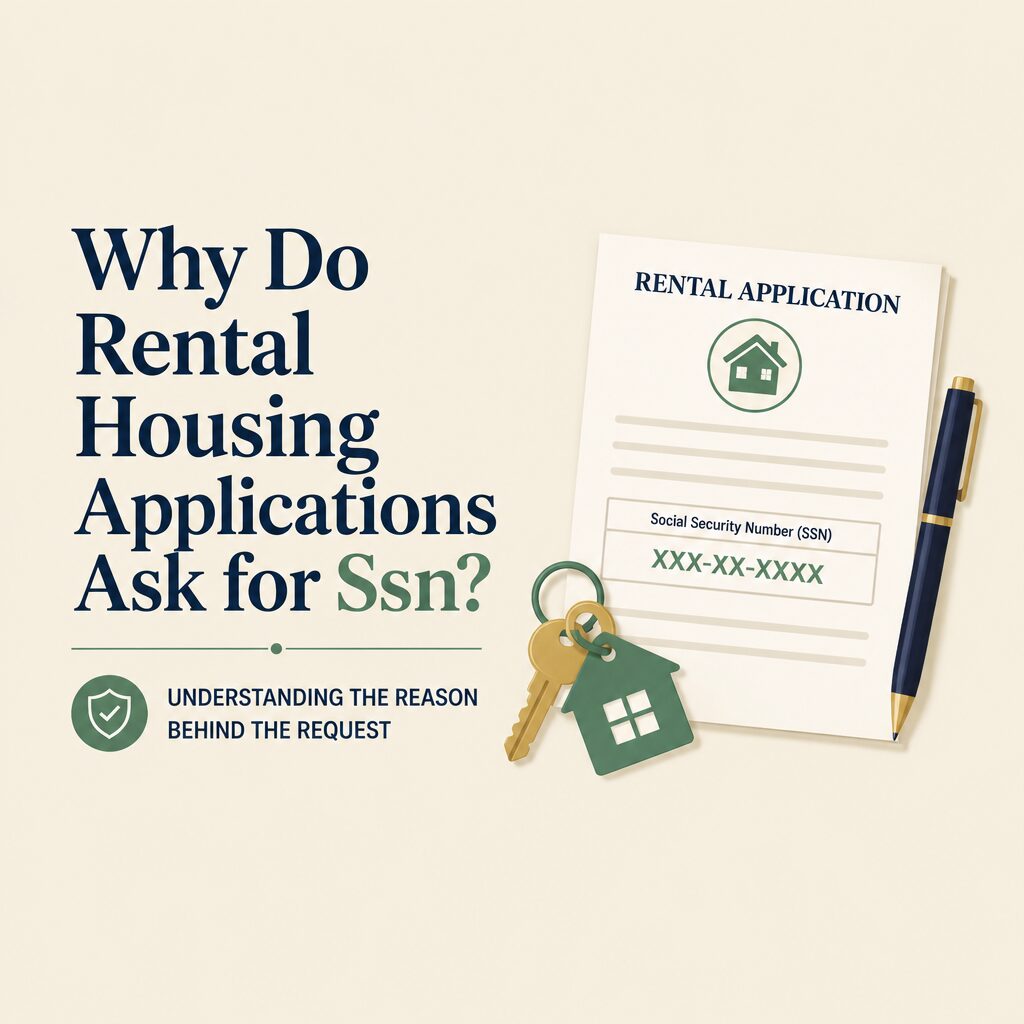
Rental applications ask for your Social Security number because it’s the fastest way for a landlord to confirm you’re a real person, run background and credit checks, and connect the dots between you and your financial history. That’s the whole thing. It’s not always about “trusting” you. It’s about reducing their risk and following their process.
They want to verify you are actually you
Look, rental scams are everywhere. Fake pay stubs. Stolen identities. Applicants using a friend’s info. Landlords see more of that than most renters realize.
When we work with renters at Rental Secrets, one of the first moments of panic is this. “Do I really have to hand over my SSN to a stranger?” I get it. I’ve had clients message us at 11:30 p.m. from a parking lot because they’re about to apply and their gut feels weird.
SSN links your identity across systems
Your SSN is the connector. It helps screening services match the right credit file and the right background record to the right human. Name and birthday aren’t enough. People share names. Addresses change. Typos happen.
And yes, the landlord could ask for other documents. Driver’s license. Passport. Pay stubs. Most do. The SSN is what makes the screening less guessy.
Landlords are trying to avoid expensive mistakes
A vacancy is already expensive. A bad placement can get brutal. Late rent. Evictions. Property damage. Court time. Even “nice” problems like a tenant who stops communicating. A thorough screening is basically their insurance policy.
That’s why the SSN shows up so early in the application. Not because they’re being nosy. Because they’re trying not to get burned.

Credit checks are the obvious reason and also the misunderstood one
Honestly? Most renters think a credit check is just a morality test. Like, “Are you a responsible adult?” That framing bugs me. A credit report is really a data dump. It shows patterns. Payment history. Collections. Open accounts. Sometimes old addresses. Sometimes weird errors.
If your credit report isn’t as flattering as you’d like, reach out to our partner, Rental Kharma. Make your application as positive and easy to approve as possible.
SSN helps pull the correct credit file
Credit bureaus match on multiple identifiers, but SSN is the cleanest match key. Without it, you can still run “soft match” searches. Those tend to be slower, less reliable, and more expensive. Many landlords won’t bother.
And not every landlord even runs credit checks themselves. A lot use third-party screening platforms. Those platforms are built around SSN-based matching. That’s the machine.
Credit info shapes negotiation more than people admit
This is where our work at Rental Secrets comes in. Screening isn’t just pass or fail. It influences leverage. If a landlord sees you as low-risk, you often get faster approvals, more flexible lease start dates, and sometimes room to negotiate.
Real talk: you don’t negotiate by arguing. You negotiate by making the landlord feel safe while still asking for something real. Lower rent. Free parking. A longer lease at a locked rate. Stuff that actually reduces your monthly burn.
If you’re trying to understand the full application flow and how landlords think through it, our full guide to rental housing applications for renters and landlords lays it out in plain language.
Background checks need an identifier that does not wiggle
Now, background checks. This topic gets emotional fast. For good reasons. People have messy histories. Or messy roommates. Or a common name that matches someone else’s record. It happens.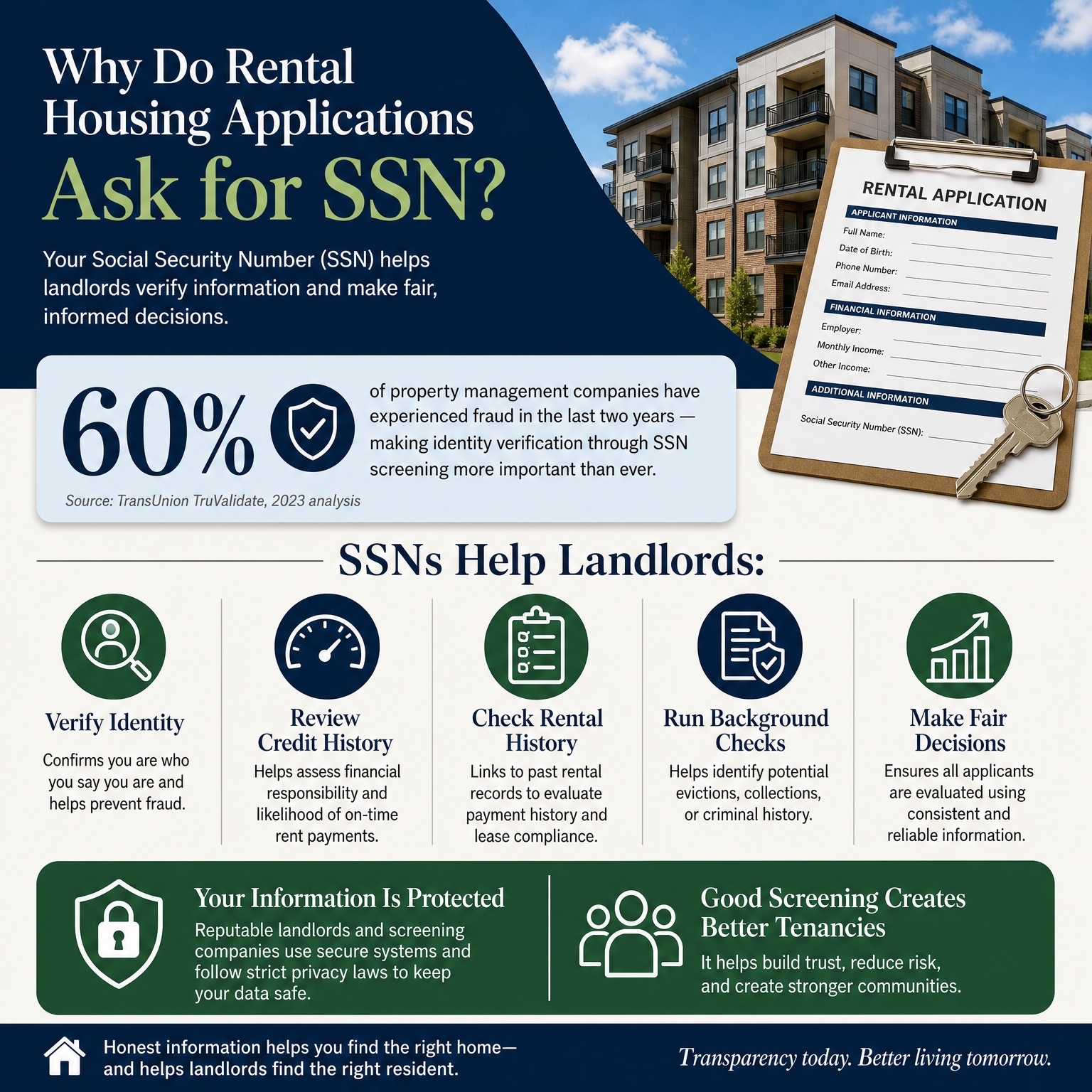
Criminal and eviction searches are easier with SSN
Most screening tools use SSN traces and address history to find jurisdictions to search. That’s how they decide which counties or states to query for records. Without a solid identifier, you get more false positives and more missed items. Both are bad.
Also, eviction records can be inconsistent across counties. Some databases are better than others. A landlord asking for SSN usually isn’t doing it to dig for drama. They’re trying to avoid a mismatch and evaluate your application as fairly as possible.
Past address history matters more than you think
I used to think landlords mainly cared about your score and your income. Turns out, a lot of decisions happen around address history. Does your story make sense? Do the dates line up? Does your employer location match your stated commute? Tiny details.
SSN-based traces often show prior addresses. That can help confirm you lived where you said you lived. It can also surface an old address you forgot. Annoying. But common.
Why landlords ask early and how you can protect yourself
So why do they ask for a social security number on the initial form, before you’ve even toured sometimes? Convenience. Workflow. Some landlords use one application template for every unit, every time. They’re not customizing it for your comfort.
But you’re not powerless here. Not even close.
How to tell if the request is legit
Here’s what we tell renters to check before they hand over sensitive info. Quick checks. Not perfect. But they catch a lot.
- Confirm the address and owner/manager name matches public property records or a reputable listing source
- Tour the unit or at least verify access (lockbox code from a known brokerage, showing agent ID, that sort of thing)
- Ask what screening service they use and whether you can submit through that service directly
- Make sure the application portal is secure (https) and not some random email attachment
- Get the fee amount and refund policy in writing before paying anything
Smart compromises that still get you approved
Sometimes you can provide the last four digits initially. Especially with smaller landlords. Or you can say, “Happy to provide SSN once we’ve confirmed I’m the selected applicant.” That won’t always fly. In competitive markets, it can cost you the unit. Painful but true.
One workaround we’ve seen work: ask to apply through a major screening platform where the landlord never sees the full SSN. Some systems mask it. The landlord gets the report. You keep your number out of their inbox.
Also, if you’re applying to multiple places, keep a simple tracker. Where you applied. Which portal you used. What you uploaded. This sounds nerdy. It prevents the “wait, who has my SSN again?” spiral.
If you’re sorting through paperwork and trying to keep it clean, our rental application requirements and documents walkthrough is a good reference point. Especially if you’re doing this between work shifts or classes.
What landlords and managers can do to make this less sketchy
Landlords, property managers. We’re going to say the quiet part out loud. Asking for SSN feels invasive. Renters aren’t being dramatic. They’re reacting to years of data breaches and shady listings.
And if you want better tenant relationships and fewer drop-offs mid-process, you can fix a lot with small changes.
Explain the why in one sentence
Not a speech. Not legalese. Just: “We use it to run credit and background checks through X service, and we don’t store it after screening.” That one line reduces anxiety. A lot.
Reduce exposure and store less
In our experience, the best operators don’t collect SSNs on paper forms. They don’t accept them over email. They use a secure portal. They limit staff access. They purge sensitive data on a schedule.
Want retention? This is part of it. Tenants remember how you handled their private info. They really do.
FAQs for Why do rental housing applications ask for SSN
Can I refuse to give my SSN on a rental application?
You can. A landlord can also decide not to process your application without it. Some will accept alternatives like last four digits plus additional ID, or a tenant screening report you provide. In hot markets, flexibility drops. Fast. If you’re going to push back, do it politely and offer an option that still lets them screen you.
Is it safe to give my SSN to a landlord?
Safe is a spectrum. A professional property manager using a reputable screening portal is usually a lot safer than emailing a PDF to someone you’ve never met. Ask where the SSN goes, who sees it, and how long it’s kept. If they get defensive or vague, that’s a signal. Trust that feeling.
Your next move
SSNs show up on rental applications because screening systems are built around them. Identity match. Credit file match. Background search. That’s the core.
Your job is to control the risk on your side. Verify the listing. Use secure portals when possible. And when you’re ready, negotiate from a position of strength. That’s what we teach at Rental Secrets. Make the landlord feel safe. Then ask for the deal you actually want.
Disclaimer: This article does not constitute legal advice.