

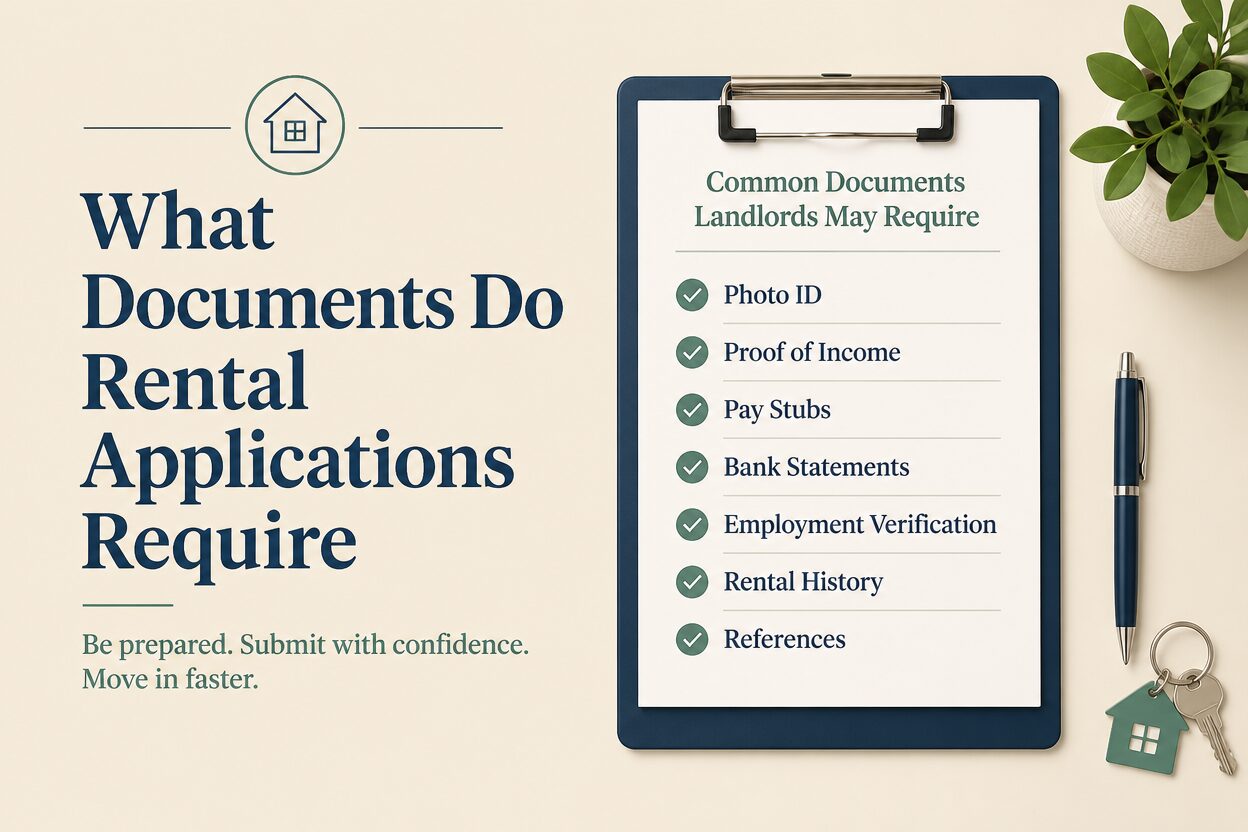
Rental applications feel like a pop quiz you didn’t study for. And the worst part? You usually don’t find out what “materials” you need until you’re standing in a hallway holding your phone like a flashlight.
So here’s the straight answer. Most landlords are trying to verify three things: you’re real, you can pay, and you won’t be a headache. The documents are just the proof.
We’ll walk through what’s commonly required, what’s sometimes required, and what you can prep ahead of time so you’re not scrambling. (I’ve watched people lose a place over a missing pay stub. It’s painful.)
The core documents most rentals ask for
Look, most applications boil down to the same short stack. Some landlords are super formal. Others are more casual. But they tend to ask for a similar set because it answers their basic screening questions.
Photo ID and basic identity proof
Most of the time it’s a driver’s license or passport. Sometimes a state ID. They’re checking identity and, quietly, consistency. Name matches. Face matches. No weird surprises.
If you’re an international student or new to the country, you might get asked for a passport, visa, I-20, or other status document. Not every landlord knows what they’re looking at, honestly. So keep it simple and organized. One clean PDF can calm a lot of nerves.
Proof of income
This is the big one. Landlords and property managers want to see you can cover rent without juggling knives.
Common income docs:
- Recent pay stubs (often last 2 to 4)
- An offer letter (if you’re starting a new job)
- Bank statements (sometimes used when pay stubs are inconsistent)
- Tax returns (more common for self-employed renters)
- Benefits statements (SSI, disability, housing vouchers, unemployment in some cases)
I used to think “proof of income” meant one thing. Turns out landlords treat it like a vibe check. Regular deposits. Stable employer. Numbers that make sense.

Credit and background paperwork landlords may pull
Now we get into the stuff that feels intrusive. But it’s standard. And if you know what they’re doing with it, you can plan.
Credit report authorization
Usually you won’t hand over your credit report. You’ll sign consent and they’ll run it through a screening service. Sometimes they’ll ask you to upload a report you already pulled. That’s less common, but it happens with small landlords.
If you’re cost-conscious (and you probably are), ask whether they accept a recent tenant-screening report you already have. Some will. Some won’t. But asking can save you multiple application fees when you’re applying to a few places at once.
Our team at Rental Secrets has seen renters negotiate here in a sneaky-simple way. Not by demanding. By being organized and offering clean documentation up front. Landlords like low-friction applicants. It makes them feel safe.
Background check consent and address history
This typically includes your current and past addresses, maybe for the last 5 years. They’re looking for evictions, serious criminal history, and patterns that suggest you vanish mid-lease.
One note. Don’t “round” dates because you forgot. Screening reports sometimes show mismatches. That creates delays. Delays kill deals. I’ve seen it. Applicant A and Applicant B look similar, then Applicant A has clean, consistent info. Guess who gets the call back.
If you want the bigger picture on how applications are evaluated and how to position yourself, our complete rental application guide for renters and landlords lays out what’s happening on the other side of the desk.
Rental history and landlord references that actually matter
This section is where a lot of renters get tripped up. Especially students and young professionals who are renting “for real” for the first time.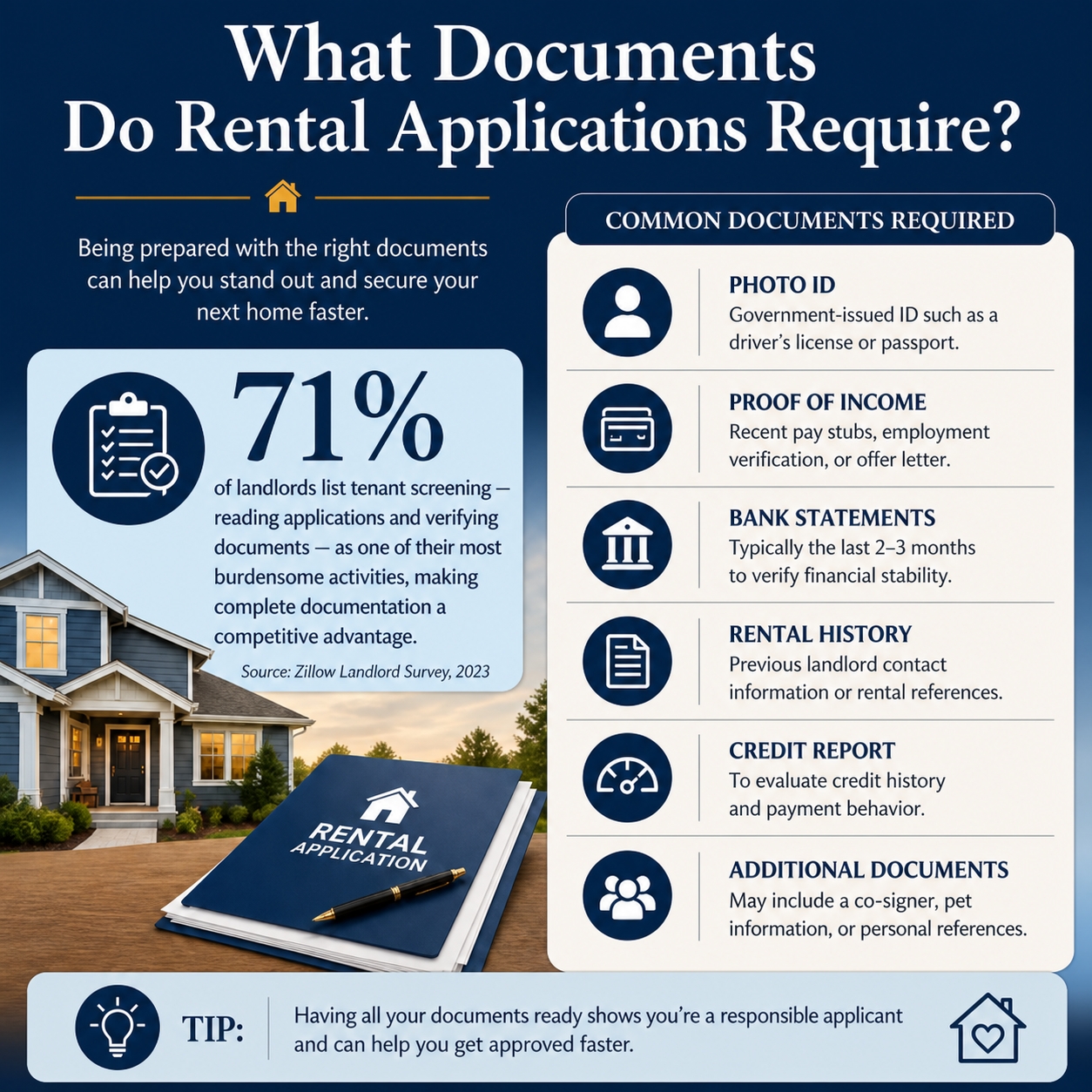
Previous landlord or property manager contact info
They usually ask for the last one or two landlords. Sometimes three. Name, phone number, email, dates you lived there, rent amount.
And yes, they may call. But not always. Big management companies often just verify through a database. Smaller landlords might actually pick up the phone and ask, “Did they pay on time? Any damage? Would you rent to them again?”
Here’s the awkward part. If your current landlord might get weird because you’re moving, you can explain that. In the notes section. Short. Calm. “Current landlord not aware of move yet. Can provide alternate reference.” Most managers have seen that movie before.
Reference letters and alternative references
I’m not a fan of fluffy letters that say you’re “responsible and kind.” Landlords aren’t hiring a babysitter. They want risk reduction.
Useful references for first-time renters:
Employer or supervisor (confirms stability). Academic advisor (for students). Roommate history (only if it’s credible). Even a prior housing office if you lived in campus housing. A letter that includes dates and payment behavior beats a generic character note.
Want more detail on which docs help and which ones are basically noise? We keep an updated breakdown on our rental application documents and requirements page. It’s the stuff people ask us every week.
Special situations that change what you need
This is where applications get personal. Families, freelancers, folks rebuilding credit, renters using a co-signer. Be aware that the document stack shifts depending on your personal situation and our partner Rental Kharma can help with the credit reporting part of that stack.
Self-employed, gig workers, and inconsistent income
Landlords don’t always know how to read self-employment income. They get nervous. So you want to make it easy.
What tends to work:
Last two years of tax returns (or at least the most recent). 1099s. A few months of bank statements showing regular deposits. A client of mine once added a one-page income summary. Not fancy. Just clear. That application got approved fast.
One warning. Don’t dump 80 screenshots into a portal. It looks chaotic. Chaos reads like risk.
Students and renters using a guarantor
If you don’t meet income requirements, the landlord might accept a guarantor or co-signer. That person usually has to submit their own mini-application.
Typical guarantor documents:
Photo ID. Proof of income (pay stubs or tax returns). Credit and background consent. Sometimes proof of assets. Also. A signed guaranty form.
And if you’re a student, you might be asked for enrollment proof. Or a financial aid award letter. Or a parental support letter. It varies a lot by market.
Pets, service animals, and support animals
For pets, expect vaccination records, a pet photo (yes, really), and sometimes a pet screening profile. Plus pet rent and/or a pet deposit. Yes some properties do charge both.
For assistance animals, the rules differ. Landlords can request reliable documentation when the need isn’t obvious. They can’t demand your medical history. Keep it clean. Keep it minimal. Don’t overshare.
How to package your application so you get picked
Here’s what people miss. Landlords aren’t just approving you. They’re comparing you. Side by side. Your docs aren’t just paperwork. They’re a signal.
Make a simple application folder
We recommend building a “ready to apply” folder on your phone and a backup in cloud storage. Name files in a way a busy property manager can understand in two seconds.
Example file names:
“Alex Chen. ID.” “Alex Chen. Paystubs April-May.” “Alex Chen. Offer Letter.” “Alex Chen. References.”
It’s boring. That’s why it works.
Use documentation to negotiate, not just to qualify
Real talk. Being organized can help you negotiate rent. Not always. But often enough that it’s worth doing.
At Rental Secrets, we teach renters how landlords think. A clean application reduces perceived risk. Lower risk can translate into flexibility. A slightly lower rent. A waived fee. A longer lease term at a better rate. Or faster approval so you can stop paying for overpriced temporary housing. Hotels, short-term rentals, and storage units bleed budgets.
I had a renter last month who came in with a tidy packet and a short note explaining their move timeline. The property manager told them, “This was easy.” Two days later the same manager agreed to a smaller rent increase than originally advertised. Was the packet the only reason? Probably not. But it helped.
FAQs for What documents do rental applications require
Can I apply without pay stubs if I just started a job?
Usually yes. An offer letter with salary, start date, and employer contact info often works. Some landlords will also ask for a bank statement to show you’ve got some cushion until your first paycheck hits. If your offer letter is vague, ask HR for a more detailed version. It’s a normal request.
Do I need to give my Social Security number on a rental application?
Most screening systems use it to match your credit and background records. So, commonly, yes. But you can ask how they store it and who has access. A legit property manager should have a clear answer. If the application is a random PDF and they want you to text your SSN? Hard pass. That’s not “being careful.” That’s basic self-preservation.
Your next step
Get your documents together before you tour. That’s the move. You’ll apply faster, pay fewer duplicate fees, and you’ll look like the kind of renter a landlord wants to keep around.
And if you’re trying to lower your monthly cost, not just get approved, bring the same energy to negotiation. Organized paperwork gives you options. Options are where rent drops happen.
Disclaimer: This article does not constitute legal advice.